Artwork
Saint John the Baptist (after The Ghent Altarpiece)
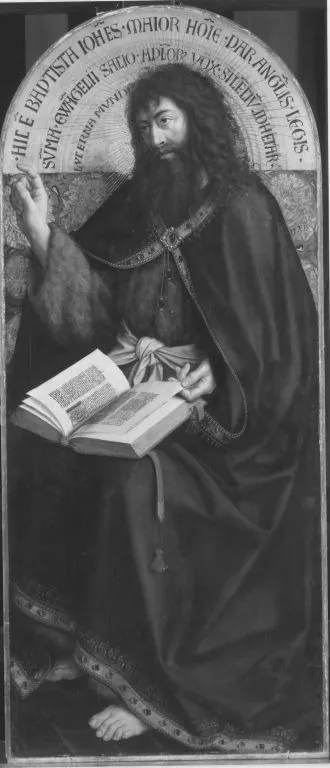
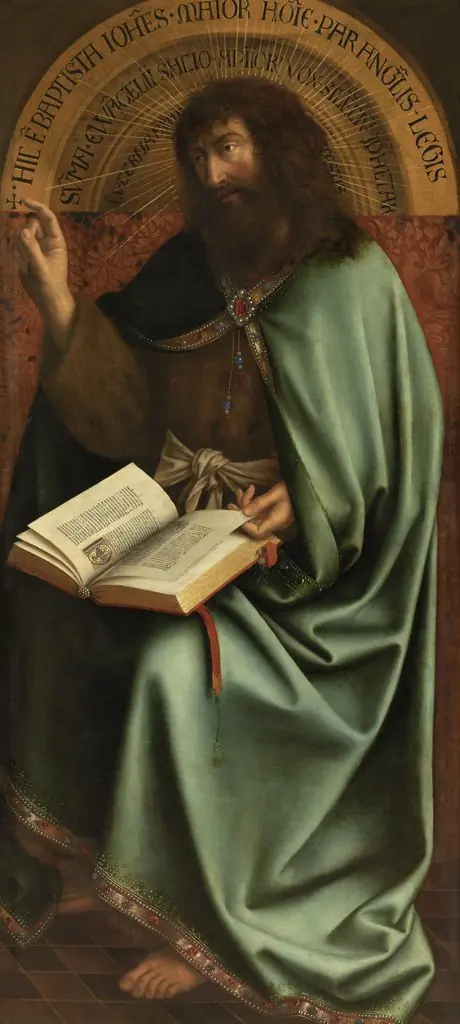
Saint John the Baptist (after The Ghent Altarpiece) is an oil painting by the Northern Renaissance artist Michiel Coxie. It dates from 1557 and is held in the collection of the Alte Pinakothek.
About this work
Overview
Michiel Coxie the Elder, a prominent Flemish painter of the mid‑sixteenth century, executed this oil on canvas in 1557. The work is a devotional image of Saint John the Baptist, derived from the composition of the Ghent Altarpiece. It is part of the Northern Renaissance repertoire and currently resides in the Alte Pinakothek in Munich.
Subject & Meaning
The figure portrayed is a bearded, long‑haired John the Baptist, kneeling on one knee. He holds an open book in his left hand, a symbol of his prophetic voice, while his right hand points upward, alluding to the forthcoming revelation of Christ. A Latin prayer inscribed above the figure reinforces the painting’s liturgical function.
Technique & Style
Coxie employs a clear chiaroscuro, using strong contrasts of light and shadow to separate the dark robe and fur‑trimmed cloak from the flat background. The illumination highlights the texture of the fabrics and gives the saint a solemn, three‑dimensional presence, characteristic of Northern Renaissance attention to detail and naturalism.
History & Provenance
Coxie, who served as court painter to Emperor Charles V and later to King Philip II of Spain, was known for altarpieces, portraits, and designs for stained glass and tapestries. This particular painting entered the collection of the Alte Pinakothek, where it remains on display as an example of his religious output and the diffusion of the Ghent Altarpiece’s iconography.
Artist & collection
Artist
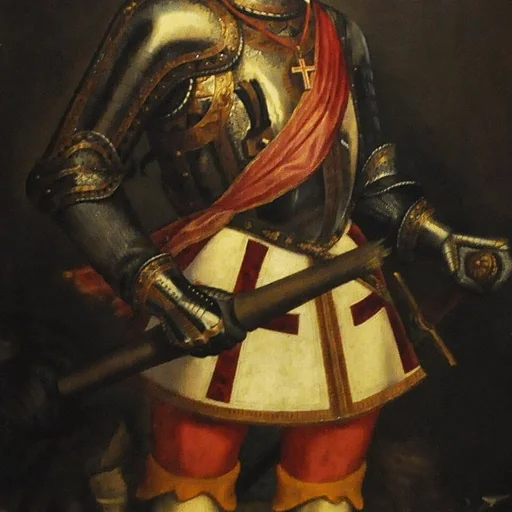
Michiel Coxie the Elder, Michiel Coxcie the Elder or Michiel van Coxcie, Latinised name Coxius (1499 – 3 March 1592), was a Flemish painter of altarpieces and portraits, a draughtsman and a designer of stained-glass windows, tapestries and…

 Saint John the Baptist
 Saint Nicolas
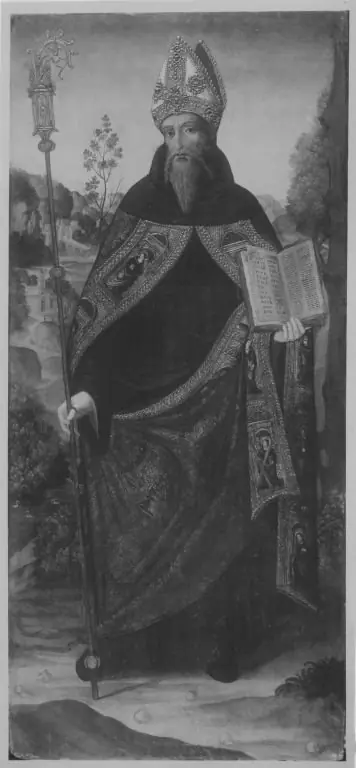 Hl. Augustinus, Bischof von Hippo (?)
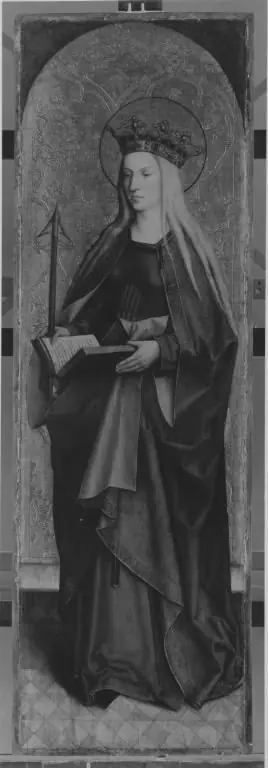 Flügel eines Altares: Die hl. Ursula Rückseite mit hl. Brigitta abgesägt (Inv.-Nr. 1207)
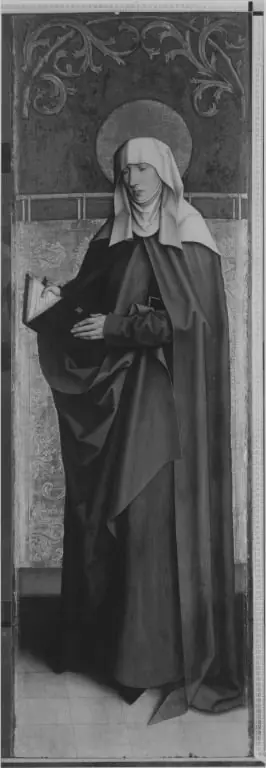 Flügel eines Altares: Hl. Brigitta (abgesägte Rückseite von WAF 1205)
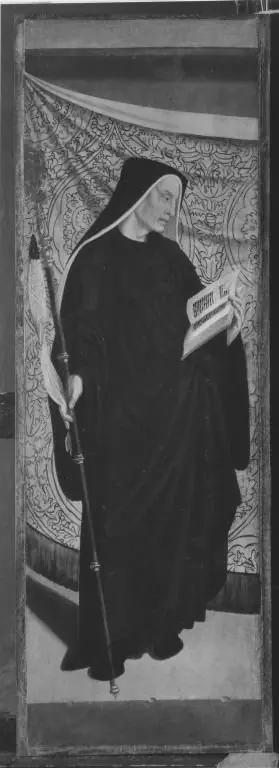 Rinck-Altar II: Hl. Benedikt
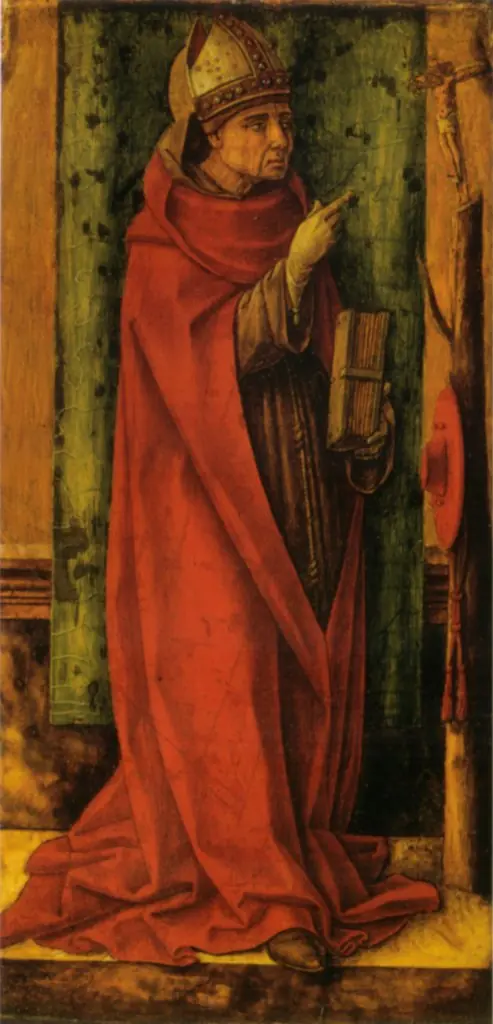 Bonaventure
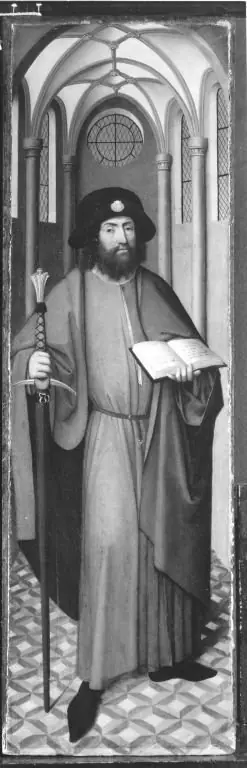 Saint James the Great
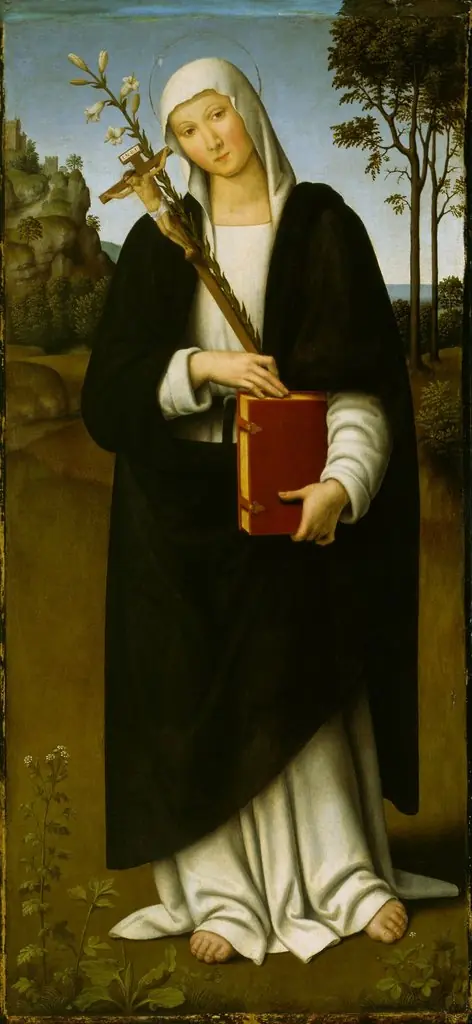 Saint Catherine of Siena
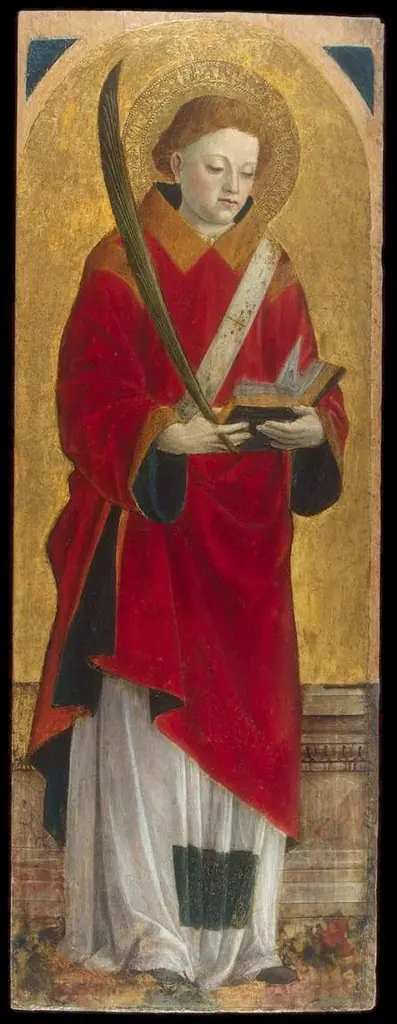 St Stephen (wing of a polyptych)
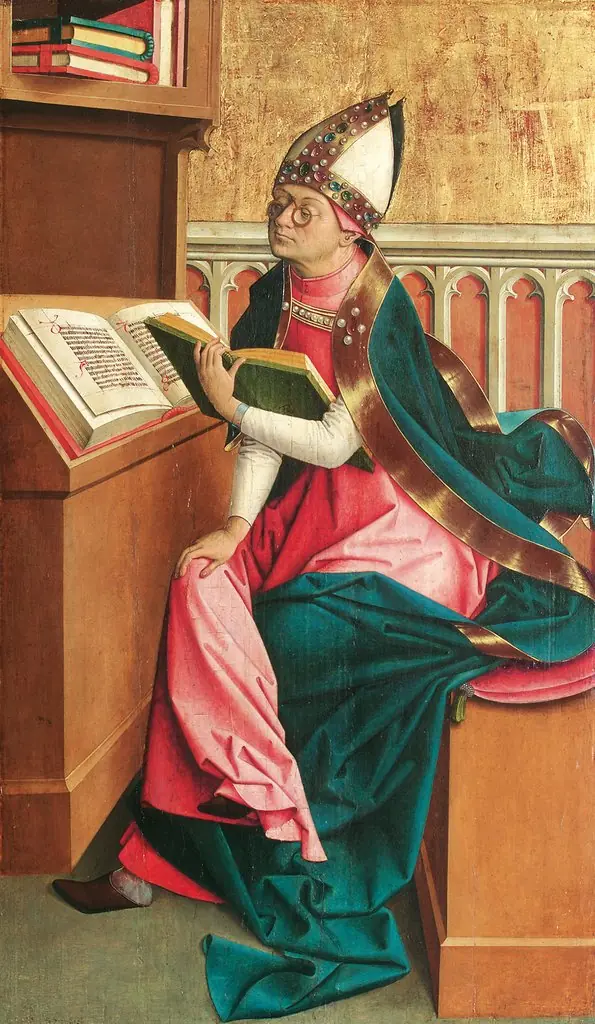 Hl. Augustinus