Artwork
Forest in Fontainebleau
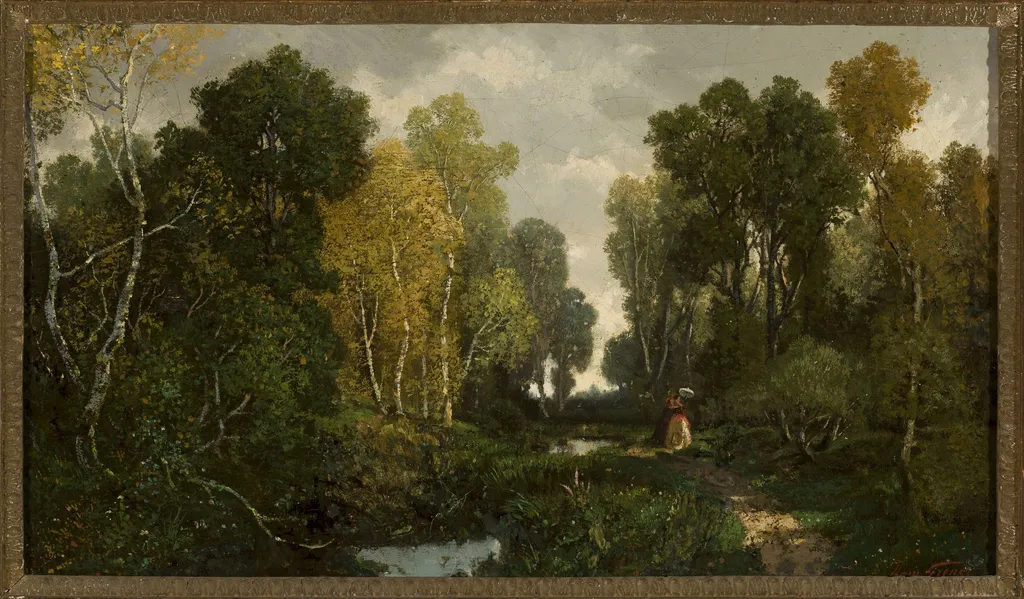
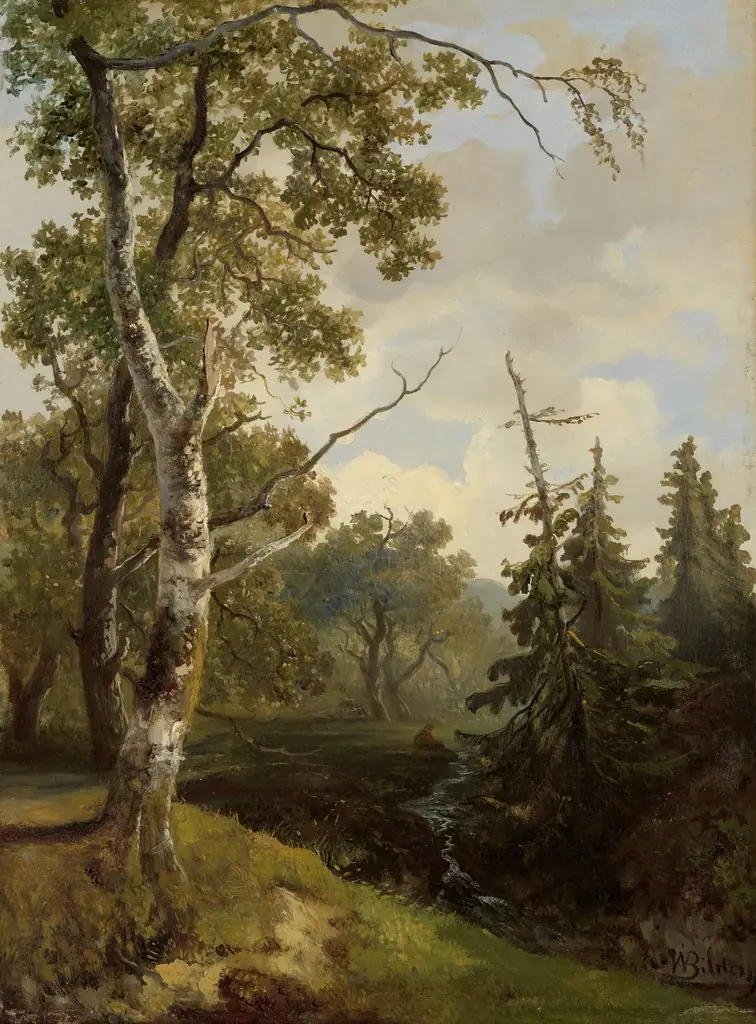
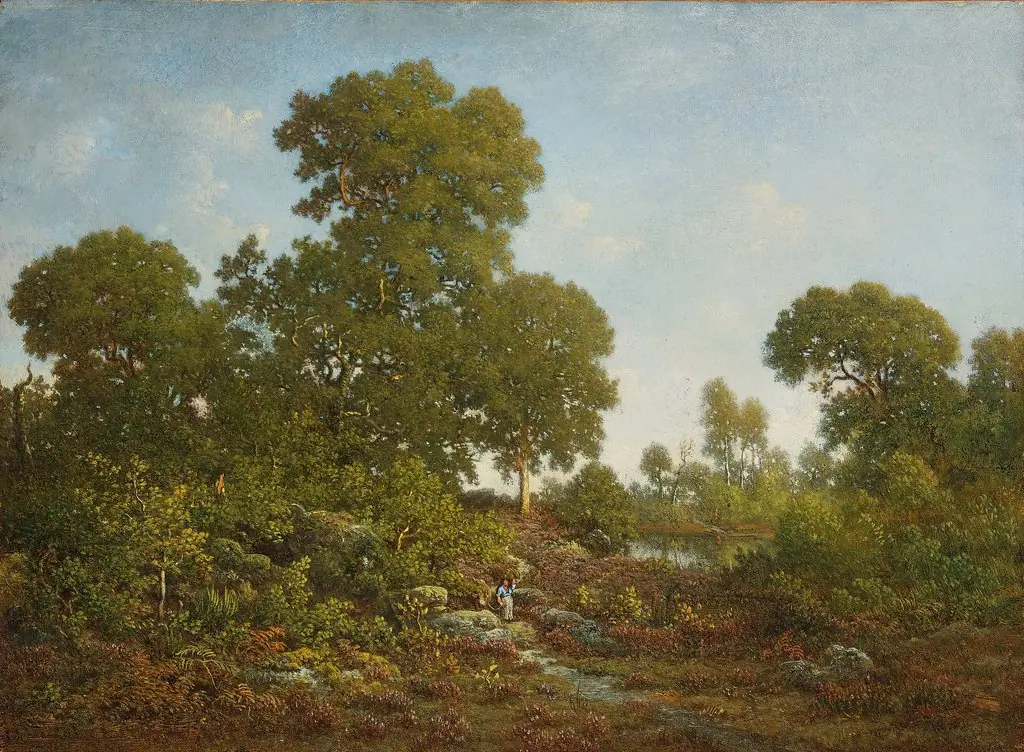
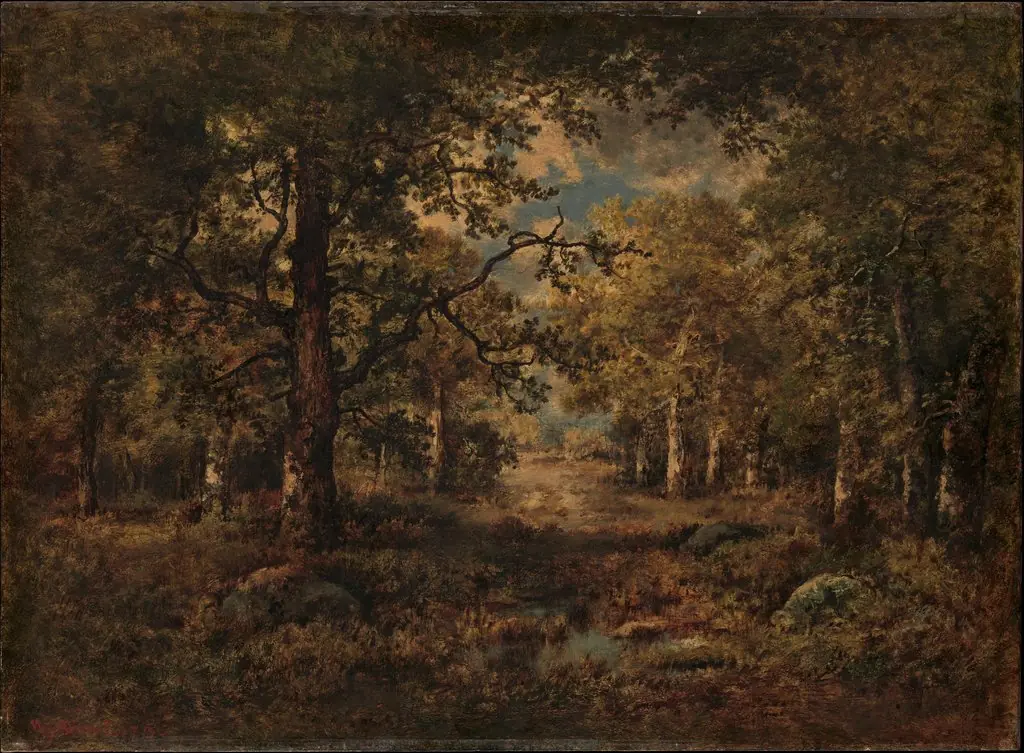
Forest in Fontainebleau is an oil painting by the Barbizon school artist Dominique Adolphe Grenet de Joigny. It dates from 1845 and is held in the collection of the National Museum in Warsaw.
About this work
Overview
The scene is rendered with attention to natural detail and atmospheric tone, reflecting the artist’s engagement with landscape traditions of the period.
Painted in 1845 by Dominique Adolphe Grenet de Joigny, this oil-on-canvas work captures a quiet woodland in Fontainebleau. The scene is rendered with attention to natural detail and atmospheric tone, reflecting the artist’s engagement with landscape traditions of the period. It resides today in the National Museum in Warsaw, where it is preserved as part of a broader collection of 19th-century European paintings.
Subject & Meaning
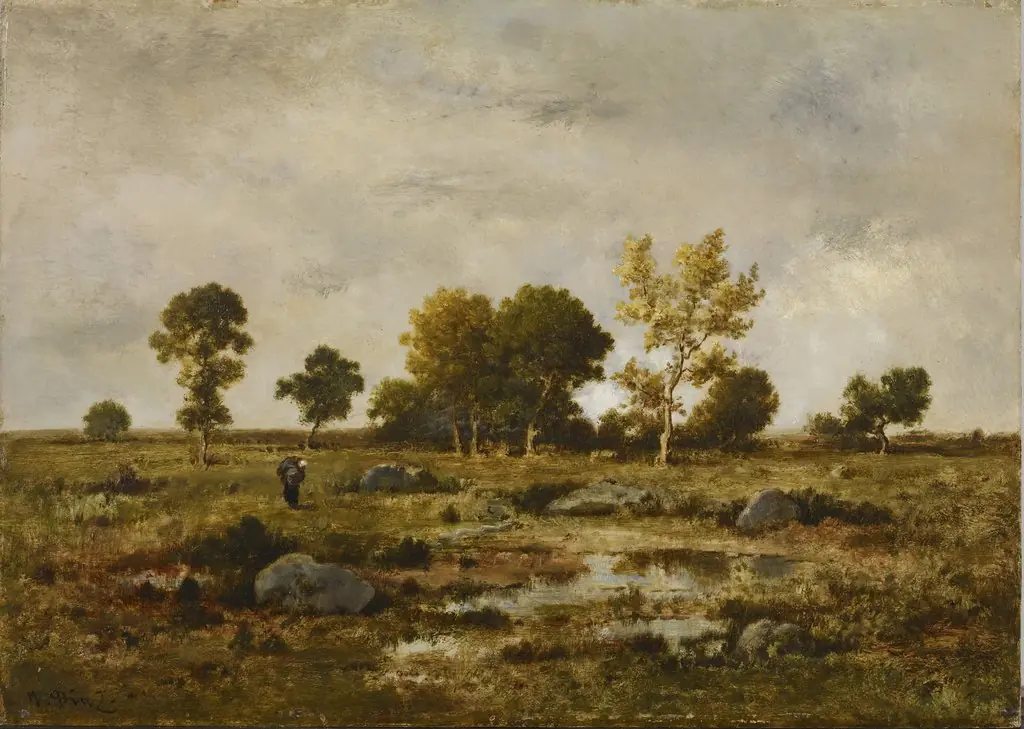
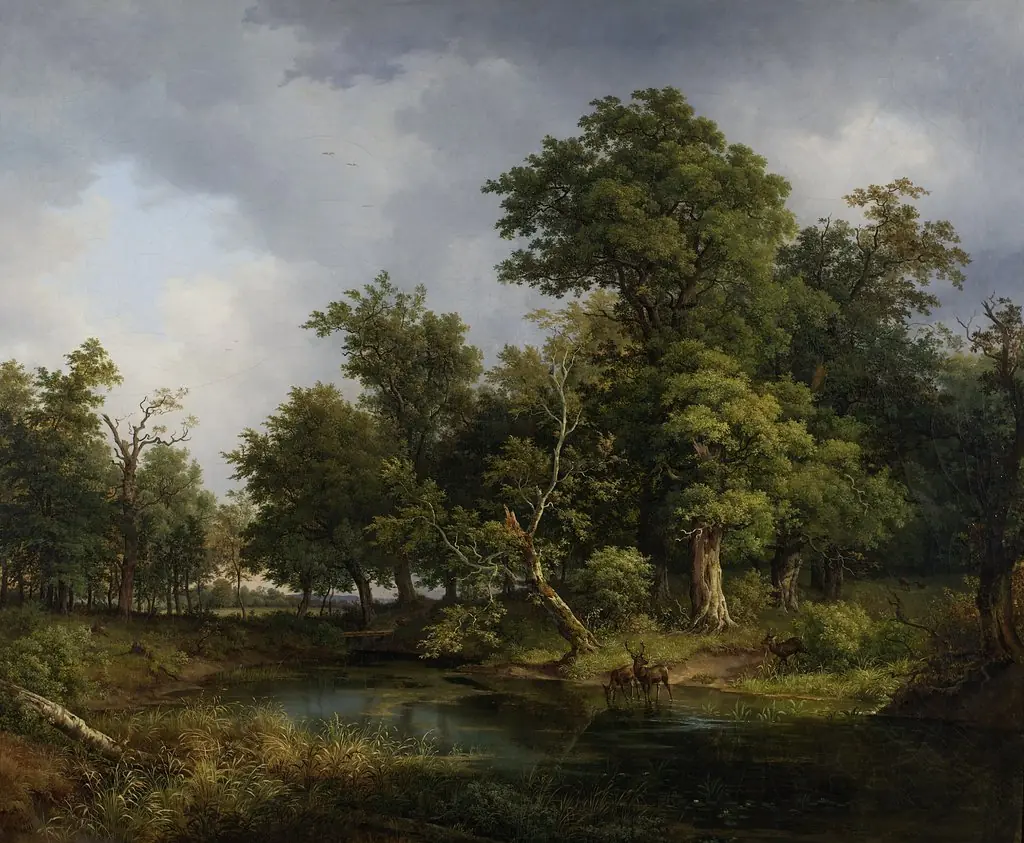
The painting depicts a secluded forest path, with a narrow stream winding through the undergrowth and two distant figures moving along it. The figures, small and unobtrusive, suggest human presence without narrative focus. The seasonal shift implied by amber-hued leaves and overcast skies evokes transience, aligning the scene with contemplative views of nature common in mid-19th-century French art.
Technique & Style
Grenet de Joigny employed layered glazing to achieve subtle tonal transitions in the foliage and sky. Variations in green, ochre, and gray create depth without sharp outlines, while diffused light softens the boundaries between tree trunks and shadowed ground. The technique enhances the painting’s moodiness, emphasizing atmosphere over detail, and reflects a preference for naturalistic rendering over idealized composition.
History & Provenance
The painting entered the National Museum in Warsaw’s collection in the 19th century, likely through acquisition or donation. Its presence there reflects the museum’s interest in European landscape traditions beyond Polish subjects. No documented exhibition history or significant ownership changes are recorded prior to its inclusion in the museum’s holdings.
Context
Created during a period when French artists increasingly turned to naturalistic landscapes, the work aligns with the Barbizon School’s ethos—though Grenet de Joigny was not formally associated with them. The emphasis on mood, seasonal change, and unidealized nature mirrors broader trends in European painting, where direct observation of the environment gained prominence over mythological or historical themes.
Legacy
Though not widely exhibited or studied today, the painting remains a quiet example of mid-19th-century landscape practice. It contributes to understanding the reach of French naturalism beyond its most famous adherents. Its preservation in Warsaw underscores the transnational circulation of artistic works during a time of growing public museum collections across Europe.
Artist & collection
Artist
Dominique Adolphe Grenet de Joigny
Dominique Adolphe Grenet de Joigny (1821–1885) was an artist, born in Joigny.