Artwork
Untitled
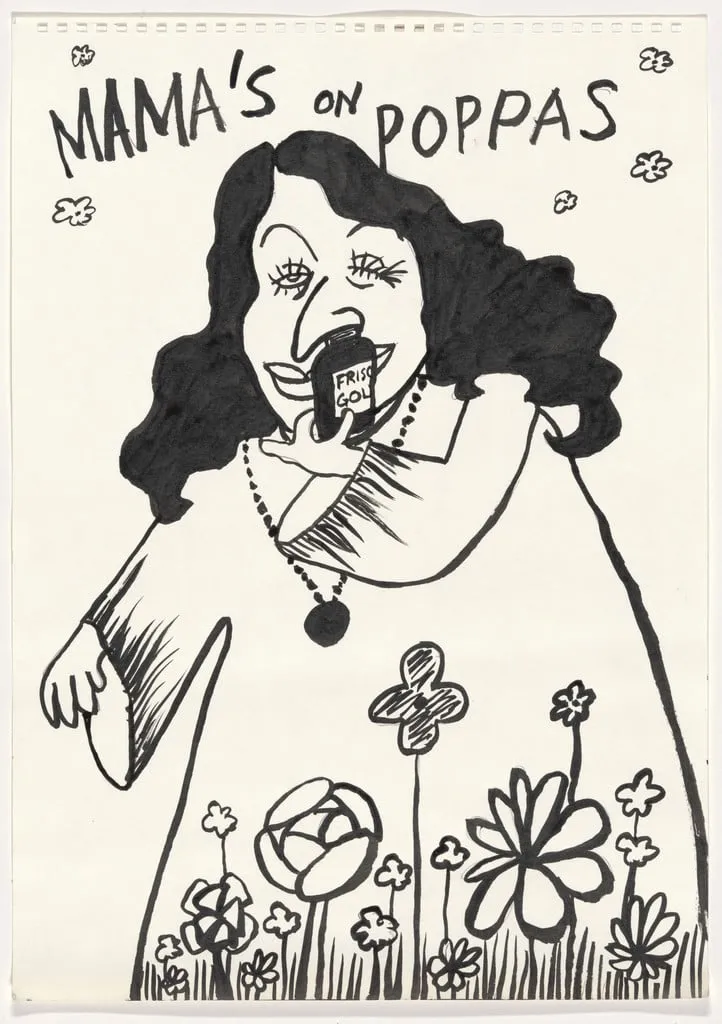
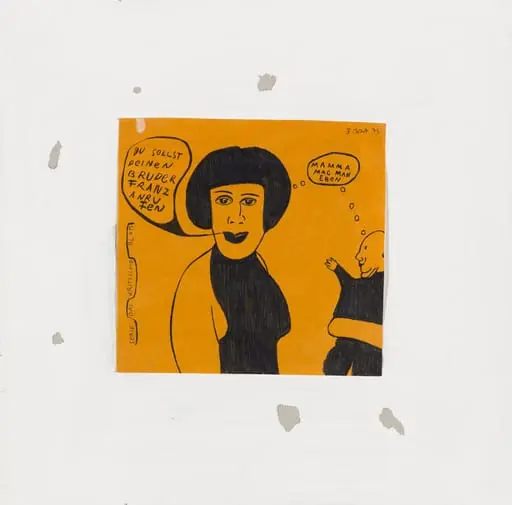
Untitled is a graphite drawing by Donald Urquhart. It dates from 2000 and is held in the collection of the Museum of Modern Art.
About this work
Overview
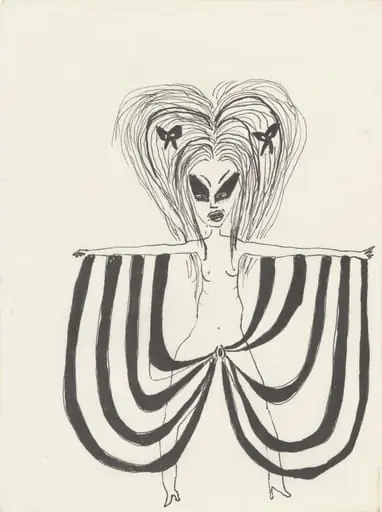
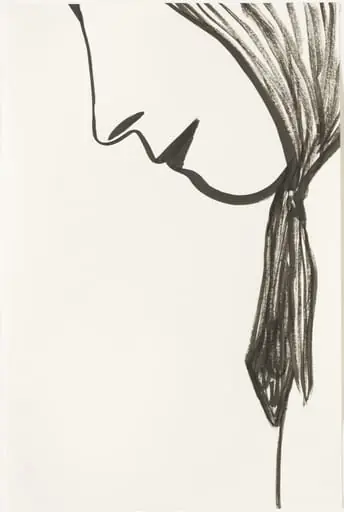
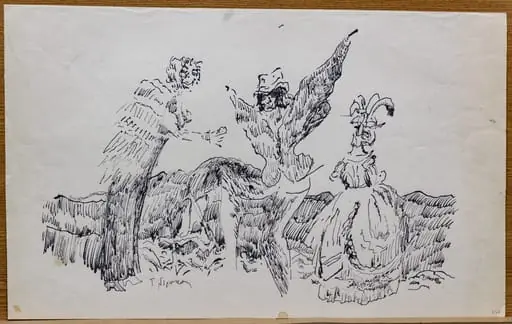
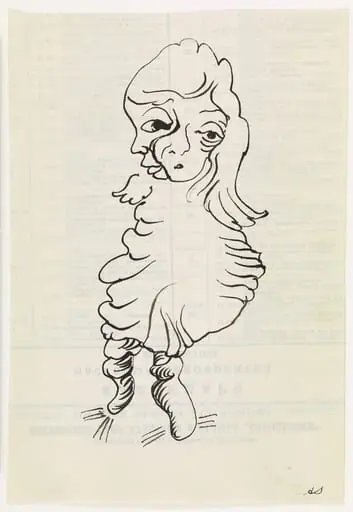
The work presents a singular figure rendered in loose, energetic lines, combining everyday materials with an informal, spontaneous aesthetic.
Created in 2000, this ink and pencil drawing on notebook paper is by Scottish artist Donald Urquhart. It resides in the collection of The Museum of Modern Art. The work presents a singular figure rendered in loose, energetic lines, combining everyday materials with an informal, spontaneous aesthetic. Its scale and medium suggest a private, immediate act of drawing rather than a polished composition.
Subject & Meaning
The figure is a woman with curly hair, dressed in a patterned dress featuring flowers and a soccer ball. She holds a bottle labeled 'FRISO GOLD' between her lips, while the phrase 'MAMA'S ON POPPAS' floats above her. The juxtaposition of domestic symbols, commercial branding, and nonsensical text evokes a dreamlike, absurdist tone. The imagery resists fixed interpretation, instead inviting playful, open-ended associations.
Technique & Style
Executed in bold black ink and pencil on lined notebook paper, the drawing relies on stark contrast and unrefined contours. Forms are simplified, with no shading or fine detail, emphasizing gesture over realism. The childlike quality arises from uneven lines and asymmetrical composition, reflecting an intuitive, untrained approach that prioritizes expression over technical precision.
History & Provenance
The work was acquired by The Museum of Modern Art following its creation in 2000. It originates from Urquhart’s personal sketchbook practice, part of a broader body of informal drawings he produced over decades. Its inclusion in the museum’s collection reflects a broader institutional interest in vernacular and outsider modes of artistic expression from the late 20th century.
Context
Urquhart’s work emerged from a Scottish cultural milieu that valued eccentricity and humor in everyday life. His drawings often incorporated found text, pop culture references, and domestic motifs, aligning with broader postwar trends that blurred boundaries between art and life. This piece resonates with contemporaneous practices that embraced spontaneity and rejected conventional artistic hierarchies.
Legacy
Though not widely exhibited, this drawing contributes to the recognition of Urquhart’s unique voice within contemporary drawing practices. It exemplifies how personal, unassuming works can gain cultural resonance through institutional framing. The piece continues to be referenced in discussions about the value of informal, non-professional art in modern collections.
Artist & collection