Artwork
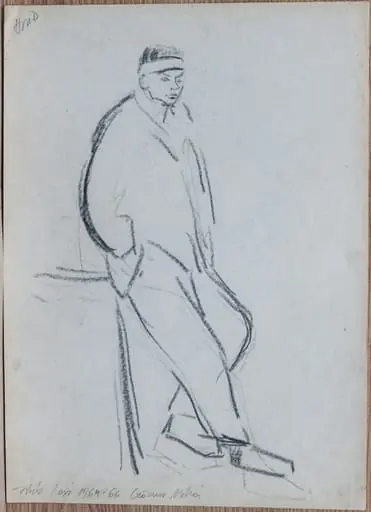
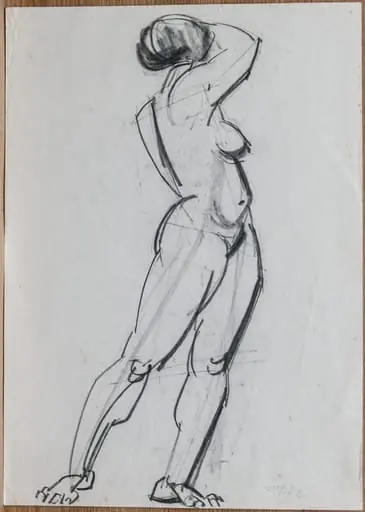
Femeie stând rezemată
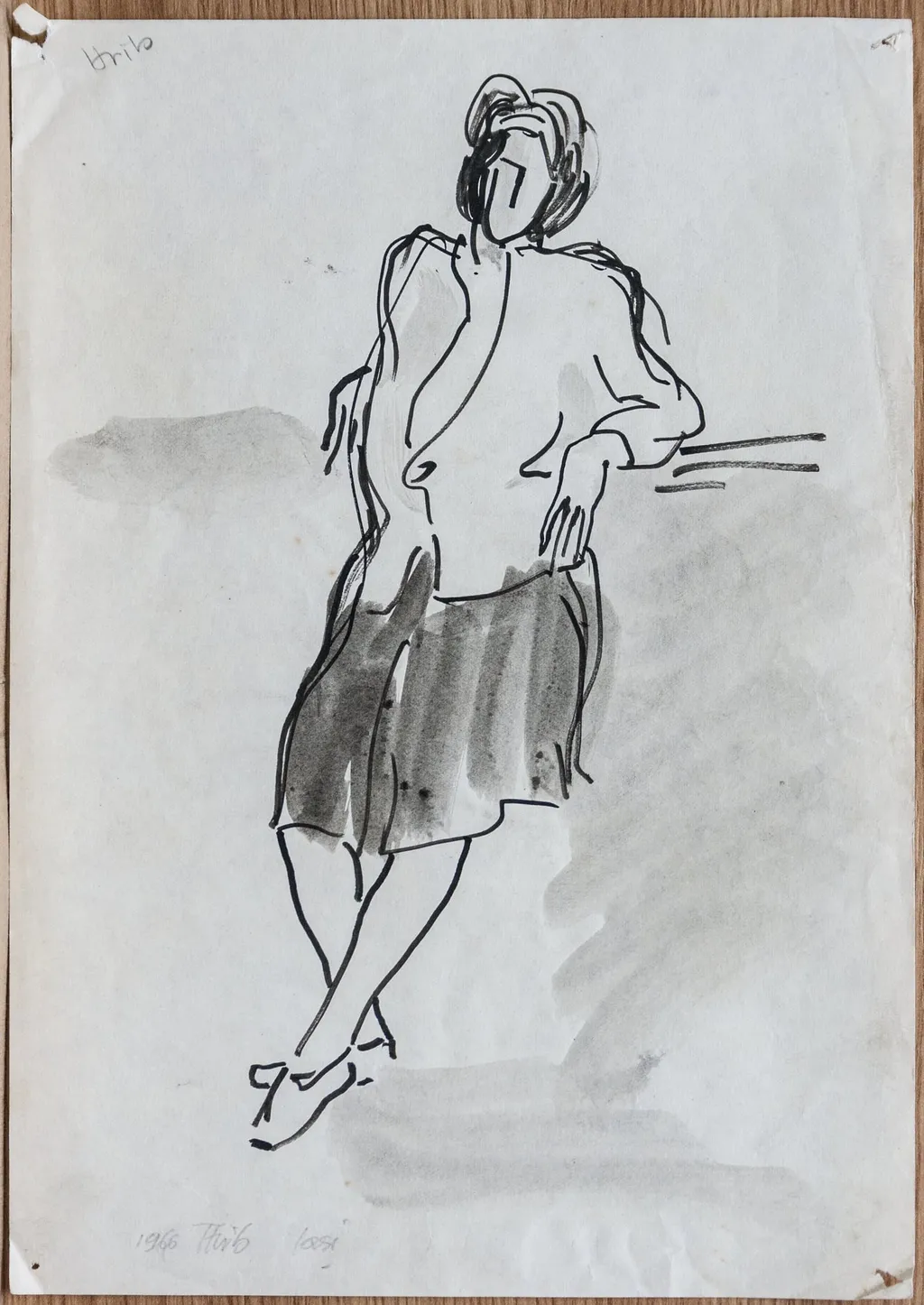
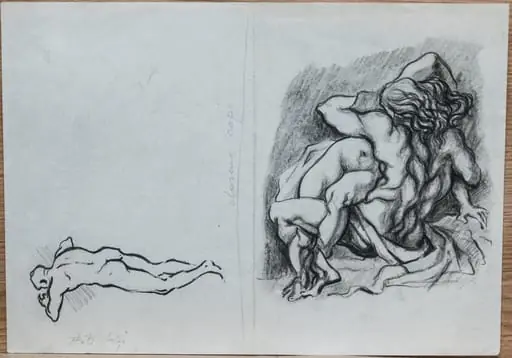
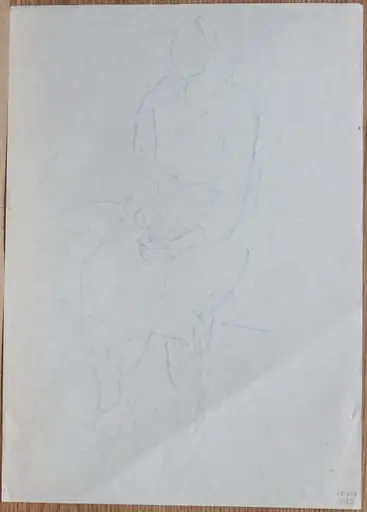
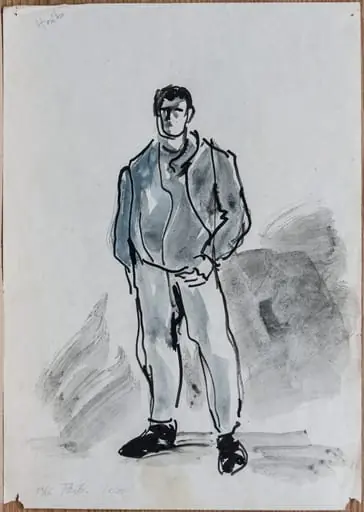
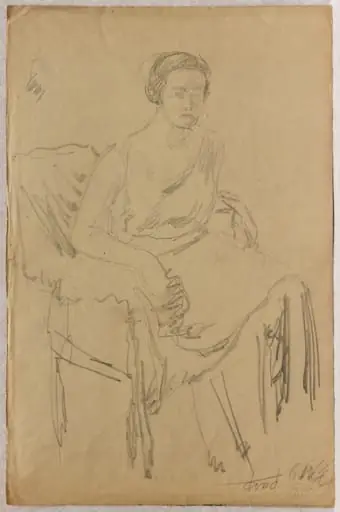
Femeie stând rezemată is a drawing by Teodor Hrib. It dates from 1950 and is held in the collection of the Gavrila Simion Eco-Museum Research Institute Tulcea.
About this work
Overview
Femeie stând rezemată is a pencil and watercolor sketch attributed to Romanian artist Teodor Hrib, dated around 1950. Executed with rapid, fluid lines, it captures a single figure in a moment of quiet repose. The work resides in the collection of the Museum of Ethnography, where it is valued as a candid observational study rather than a finished composition.
Subject & Meaning
The figure is a woman standing sideways, leaning forward slightly with one arm curved behind her. Barefoot and dressed in simple, loose garments, she appears unposed and grounded in everyday life. The absence of facial detail and the focus on posture suggest an interest in physical presence and bodily rhythm rather than individual identity or narrative.
Technique & Style
Hrib employed swift, economical pencil strokes to define form, supplemented by light watercolor washes to suggest shadow and volume. The sketch’s looseness and lack of refinement reflect a spontaneous approach, prioritizing gesture and silhouette over precision. This method aligns with the tradition of the esquiss—quick studies meant to capture transient movement and structure.
History & Provenance
The work was created circa 1950 and entered the Museum of Ethnography’s collection shortly thereafter. Its origins as a personal study are evident in its informal execution. No documentation exists of its public exhibition prior to its inclusion in the museum’s holdings, suggesting it remained within the artist’s private sphere until acquisition.
Context
In postwar Romania, many artists turned to intimate, everyday subjects as a counterpoint to state-mandated grand narratives. Hrib’s sketch reflects this trend, valuing quiet observation over ideological messaging. The figure’s attire and posture hint at rural or working-class life, common themes among artists seeking authenticity in a period of political uniformity.
Legacy
Femeie stând rezemată endures as an example of Hrib’s commitment to direct observation and informal draftsmanship. While not widely reproduced, it contributes to broader understandings of Romanian mid-century graphic practice. Its preservation in an ethnographic context underscores its value as a record of lived experience, not merely artistic technique.
Artist & collection
Artist
Teodor Hrib shaped small plaster figures and ink drawings in the 1800s academic tradition.
Museum
Gavrila Simion Eco-Museum Research Institute Tulcea
Continue through works from the same source collection.