Artwork
Untitled
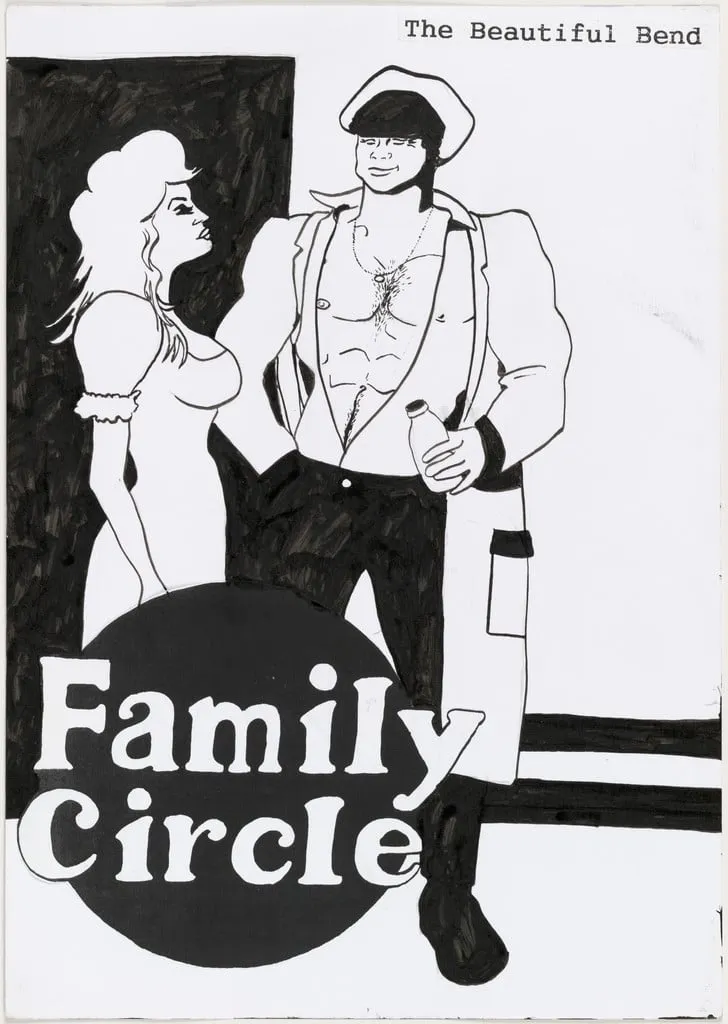
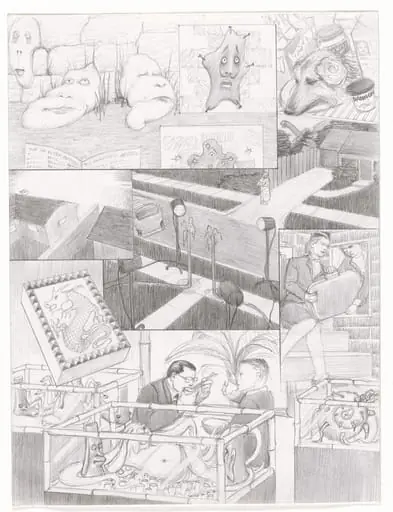
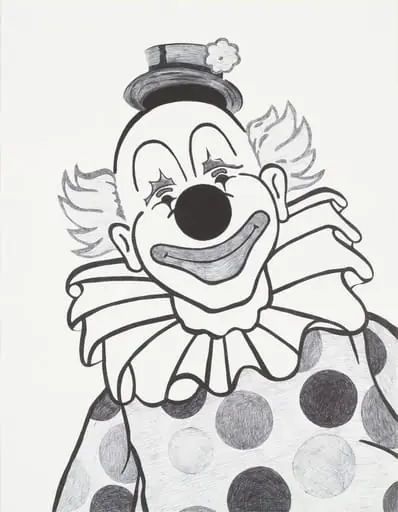
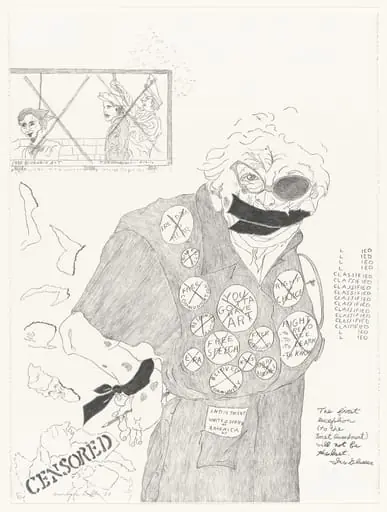
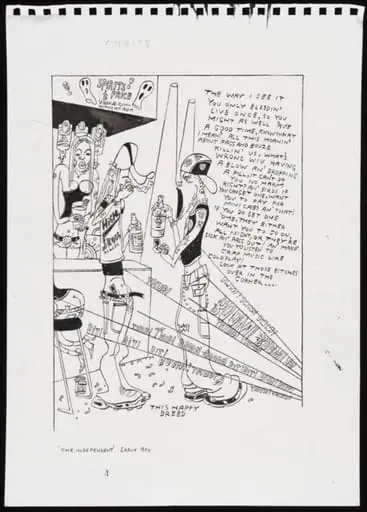
Untitled is a graphite drawing by Donald Urquhart. It dates from 2001 and is held in the collection of the Museum of Modern Art.
About this work
Overview
Its title, 'The Beautiful Bend,' suggests a geographic or emotional turning point, though the imagery resists literal interpretation.
Created in 2001 by Donald Urquhart, this drawing combines cut-and-pasted printed materials, ink, and pencil on paper. It is part of the collection at The Museum of Modern Art. The work’s layered, tactile surface reflects a deliberate handcrafted aesthetic, distinguishing it from mass-produced graphics. Its title, 'The Beautiful Bend,' suggests a geographic or emotional turning point, though the imagery resists literal interpretation.
Subject & Meaning
Two figures stand in close proximity: a woman with long blonde hair and minimal clothing, and a shirtless man in an open jacket, hat, and boots, holding a drink. Their posture and the surrounding black field evoke isolation amid intimacy. The white text 'Family Circle' contrasts with the figures’ ambiguity, hinting at fractured or idealized domesticity. The work resists clear narrative, inviting contemplation of social roles and personal distance.
Technique & Style
The piece employs collage techniques using printed paper, overlaid with ink and pencil marks. Edges are deliberately rough, and textures vary between smooth photographic fragments and hand-drawn lines. The black background amplifies the starkness of the figures and text, while the irregular composition rejects symmetry. This method emphasizes materiality and process, aligning with post-punk and zine-influenced aesthetics of the early 2000s.
History & Provenance
The work entered The Museum of Modern Art’s collection shortly after its creation. It is one of several drawings by Urquhart that explore identity and urban alienation through fragmented imagery. No prior exhibition history is widely documented, but its acquisition by MoMA signals recognition within contemporary drawing practices. Its provenance remains tied to the artist’s studio and institutional acquisition.
Context
Emerging in the early 2000s, Urquhart’s work responds to a broader interest in DIY visual culture and the deconstruction of media imagery. The use of collage and handwritten elements reflects influences from punk zines, conceptual art, and the rejection of polished commercial design. The work engages with themes of belonging and dislocation common in post-millennial American art, particularly among artists exploring personal narratives through non-traditional media.
Legacy
Though not widely exhibited, the piece contributes to ongoing dialogues about drawing as a medium for personal and social commentary. Urquhart’s approach—blending found imagery with manual intervention—has influenced emerging artists interested in analog processes and anti-perfect aesthetics. Its presence in MoMA’s collection ensures its role as a reference point in discussions of contemporary drawing beyond conventional techniques.
Artist & collection