Artwork
Passante
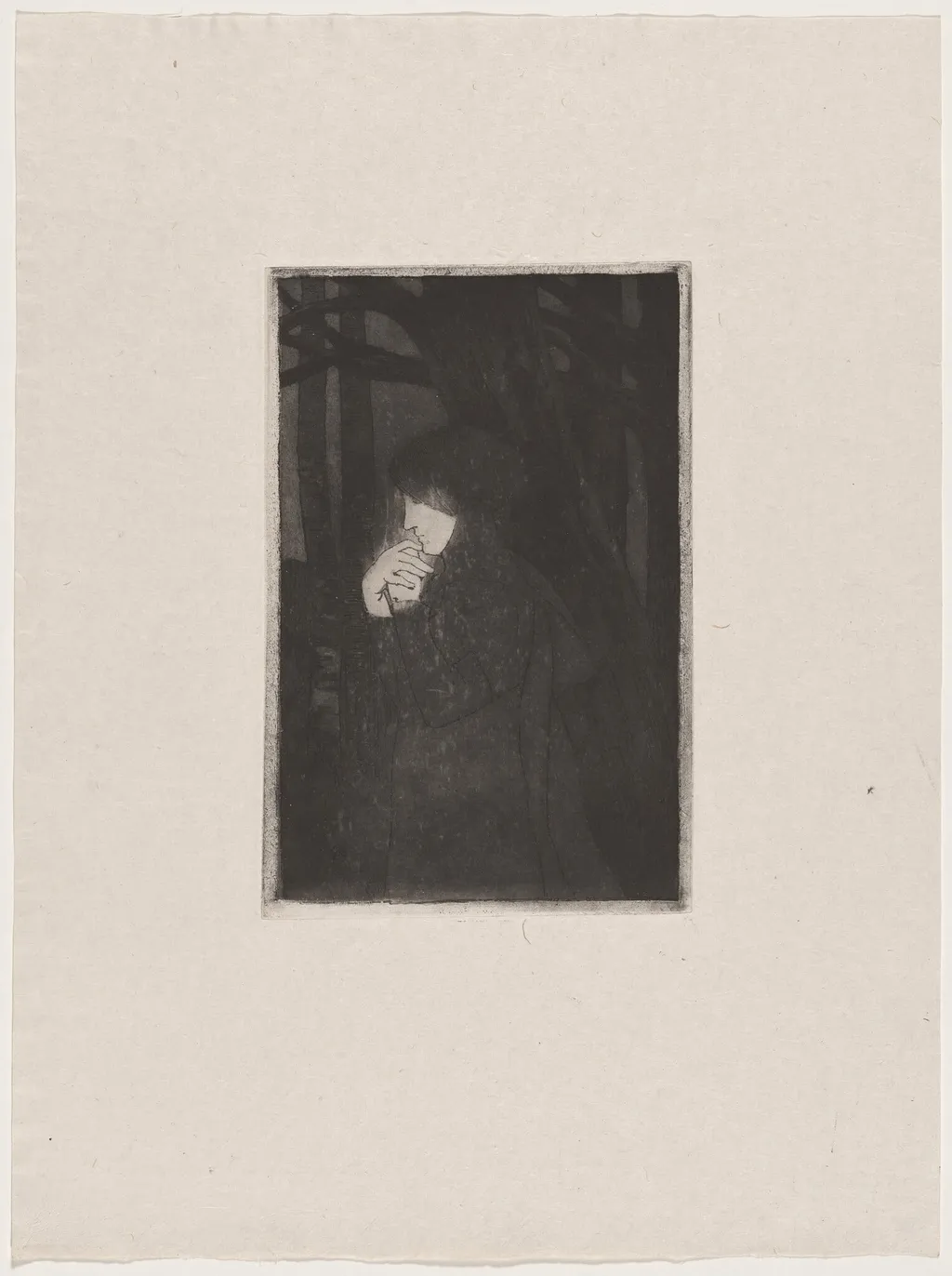
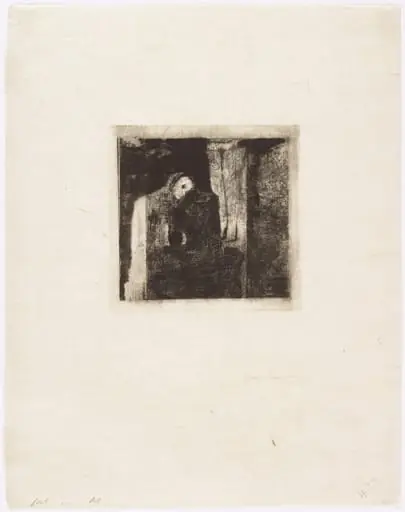
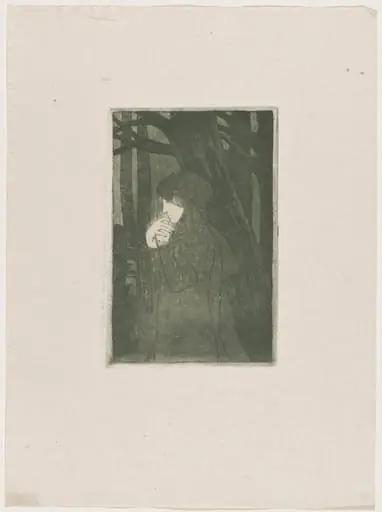
Passante is an ink print by the Impressionist artist Auguste Donnay. It dates from 1895 and is held in the collection of the National Gallery of Art.
About this work
Overview
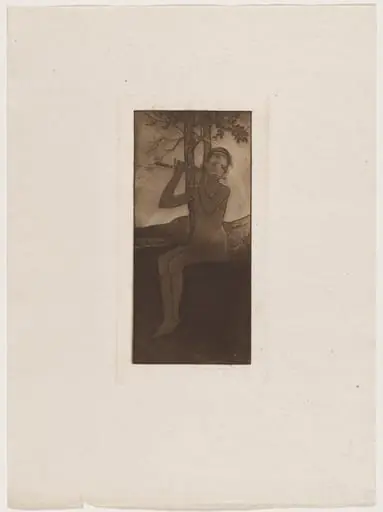
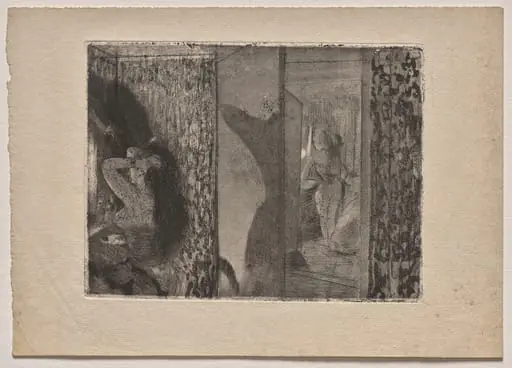
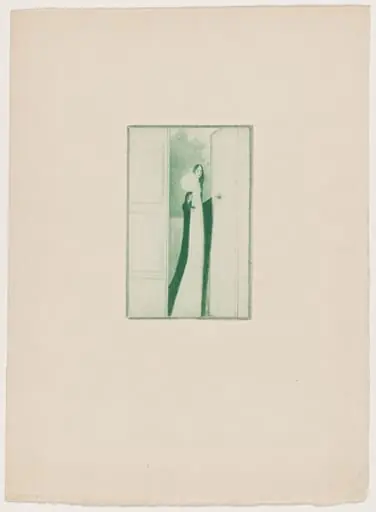
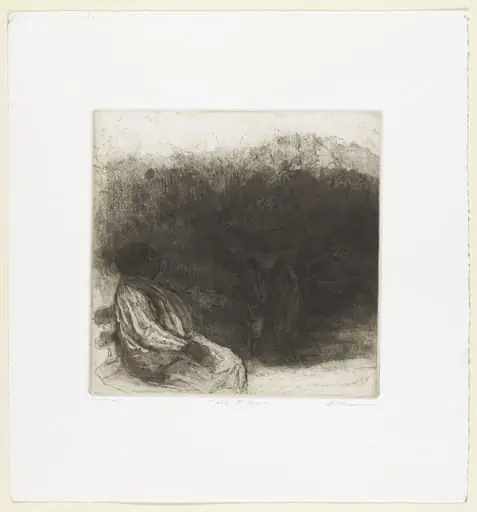
Passante, executed in 1895 by French printmaker Auguste Donnay, is a monochrome work combining etching and aquatint on a sheet of china paper. The composition presents a solitary figure within a dimly lit interior, rendered entirely in black tones that emphasize contrast between light and shadow. The print measures a modest size typical of the period’s intimate graphic works.
Subject & Meaning
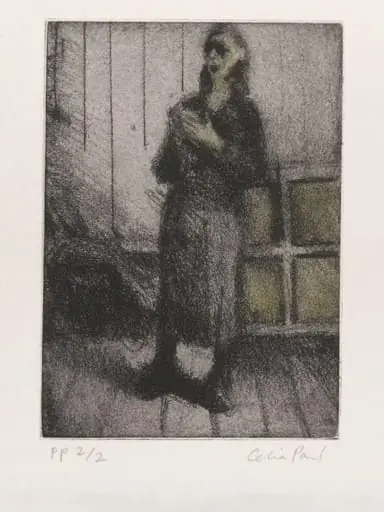
The image depicts an individual standing in a cramped, poorly illuminated room, holding a small object close to the face as if examining it. The figure’s plain attire and the sparse, indistinct surroundings suggest a moment of private contemplation or mundane activity, inviting viewers to consider the quiet, everyday experiences that often go unnoticed.
Technique & Style
Donnay employed a combination of line etching and aquatint to achieve a range of textures, from the crisp outlines of the figure’s clothing to the soft, velvety shadows that fill the background. The use of china paper, known for its smooth surface, allows fine detail in the rendering of fabric folds and the grain of implied wooden elements, creating a subtle sense of depth without color.
History & Provenance
Created in the late nineteenth century, Passante reflects the period’s interest in realistic depictions of ordinary life through printmaking. While specific ownership records are limited, the work is documented in catalogues of Donnay’s oeuvre and has appeared in several exhibitions focusing on French graphic art of the 1890s, underscoring its relevance to the era’s visual culture.
Artist & collection