Artwork
Untitled
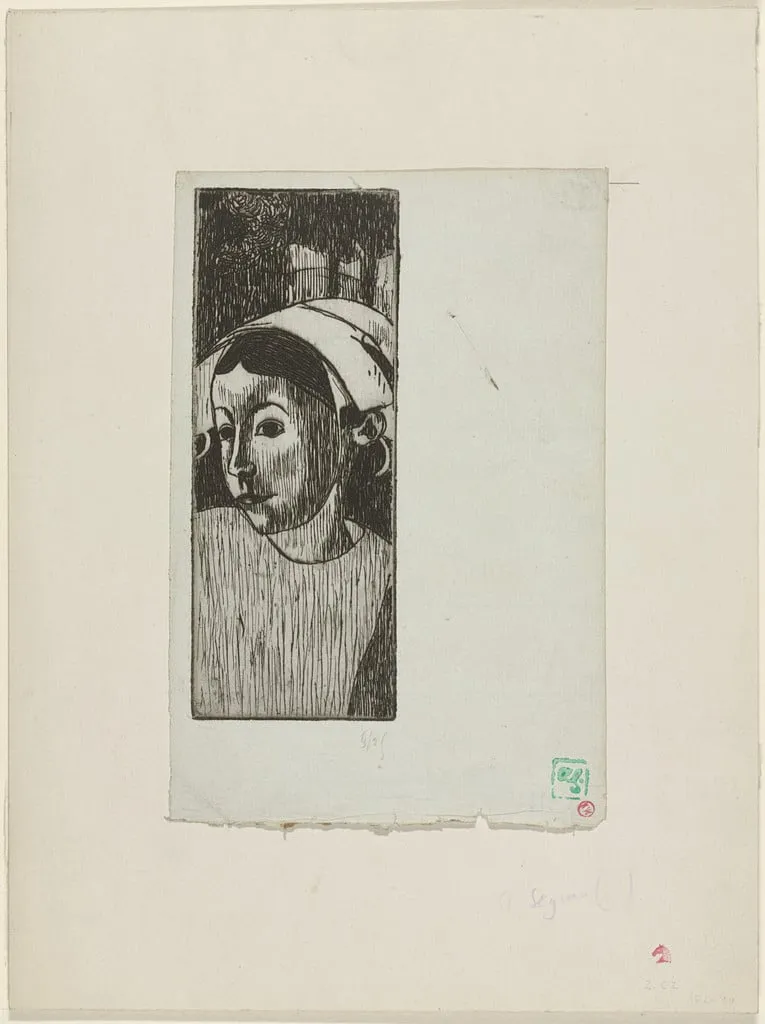
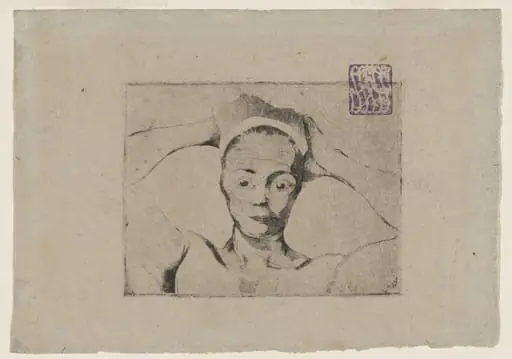
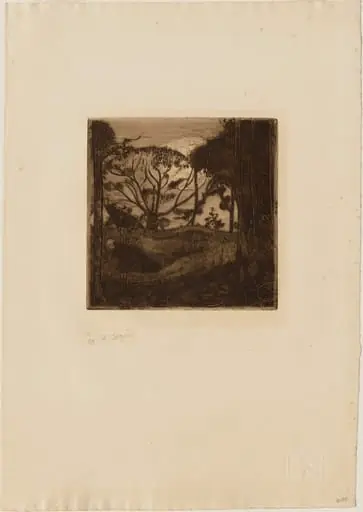
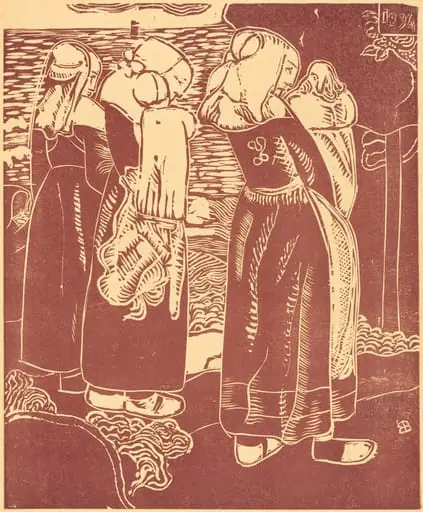
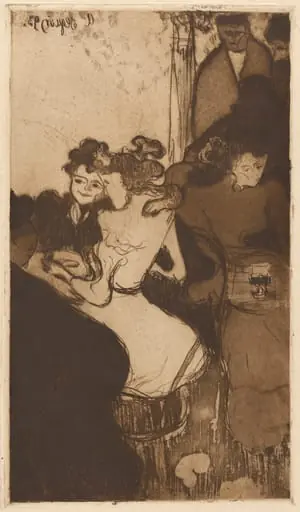
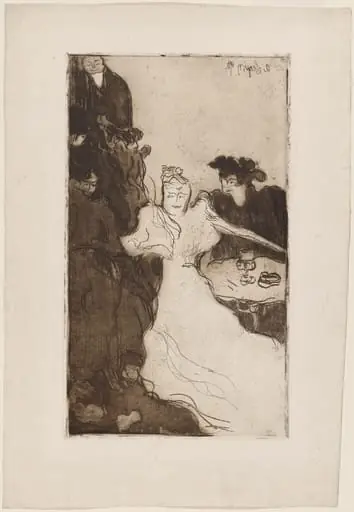
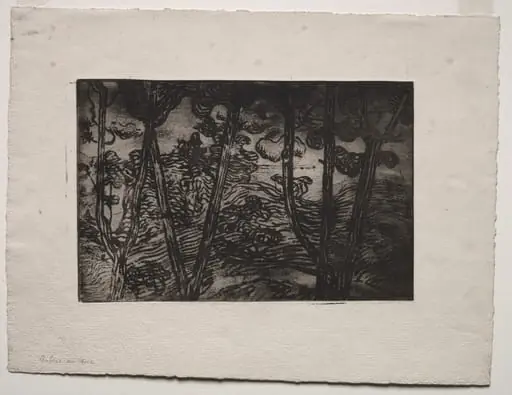
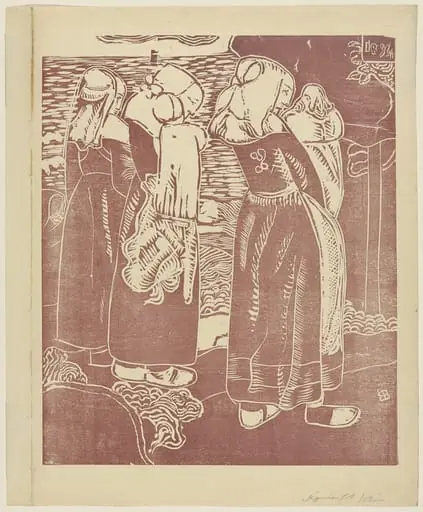
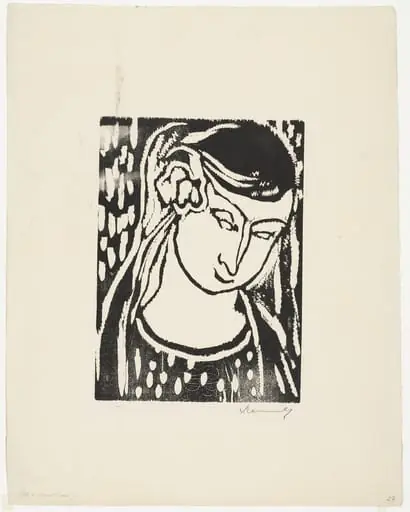
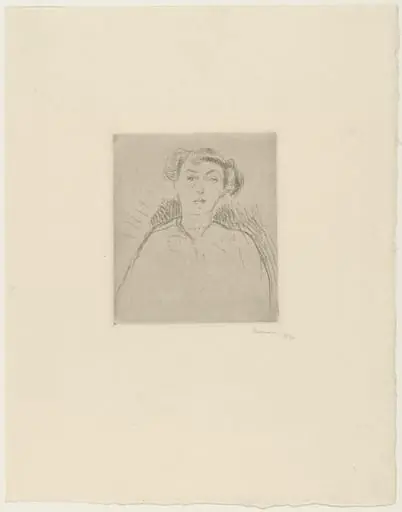
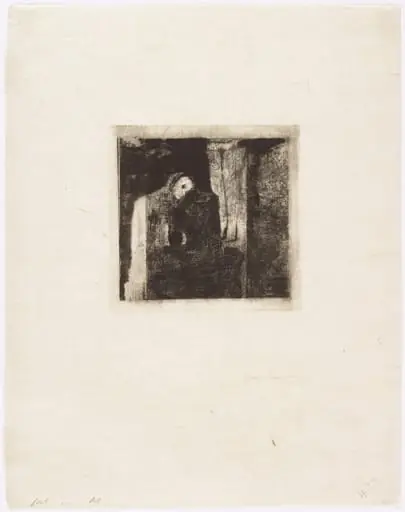
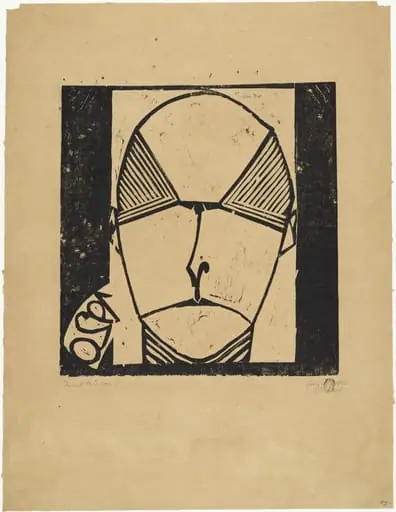
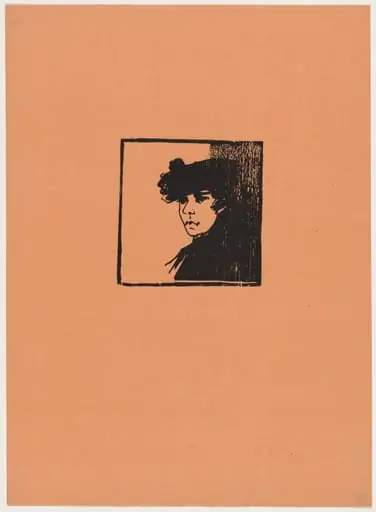
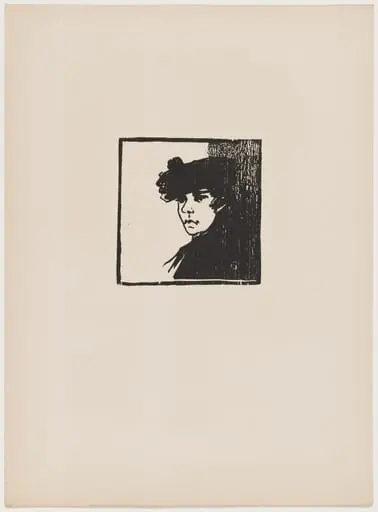
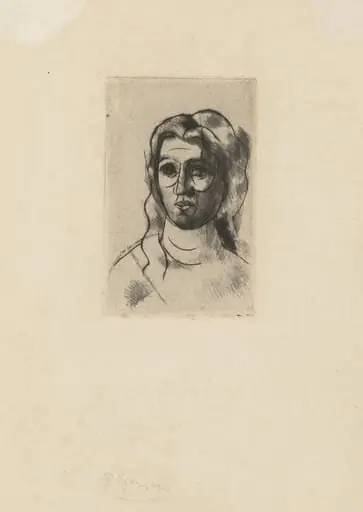
Untitled is an ink print by the Impressionist artist Armand Séguin. It dates from 1895 and is held in the collection of the Museum of Modern Art.
About this work
Overview
A member of the Pont-Aven circle, Séguin engaged with the group’s interest in symbolic form and simplified composition.
Created around 1895, this etching by Armand Séguin is one of the few printed works surviving from his brief career. A member of the Pont-Aven circle, Séguin engaged with the group’s interest in symbolic form and simplified composition. The piece is held in The Museum of Modern Art’s print collection, reflecting its significance within late 19th-century French graphic art despite the artist’s limited output due to his early death.
Subject & Meaning
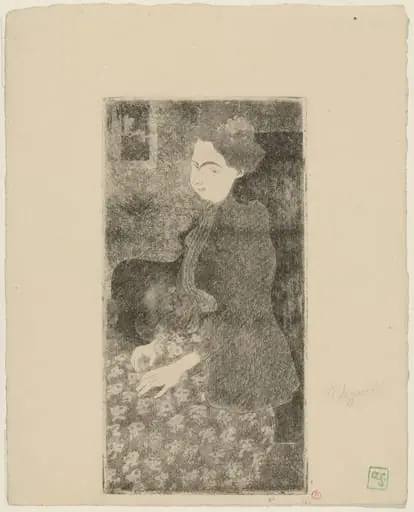
The image portrays a woman’s head and shoulders, her face turned slightly left, framed by a dark interior and a sliver of light from above. Her headscarf and plain garment suggest modesty or labor, while her gaze, directed beyond the frame, evokes quiet contemplation. No narrative is given, but the stillness and focus on her expression invite interpretation as a meditation on solitude or inner life, consistent with Symbolist leanings in Pont-Aven art.
Technique & Style
Séguin employed etching to achieve subtle tonal gradations, using fine lines to model the woman’s features and the texture of her clothing. The background is rendered in deep, unmodulated shadows, heightening the contrast with the softly lit face. The style blends realism in detail with a reductive, almost schematic approach to form—echoing Gauguin’s influence—while avoiding the loose brushwork of Impressionism in favor of deliberate, controlled mark-making.
History & Provenance
Séguin produced this etching during his time in Pont-Aven, where he studied under Paul Gauguin and worked alongside artists like Roderic O’Conor. His printmaking was experimental and limited, partly due to his declining health. After his death in 1903 at age 34 from tuberculosis and alcoholism, his works remained largely obscure until later 20th-century reassessments. The Museum of Modern Art acquired the etching as part of its effort to document the evolution of modern graphic art.
Context
Séguin’s work emerged within the Pont-Aven School’s broader rejection of naturalism in favor of symbolic, flattened forms and emotional resonance. While his peers often turned to Breton folklore or religious themes, Séguin focused on intimate, solitary figures. His etching reflects a quiet shift from Impressionist light studies toward the introspective, psychologically charged imagery favored by Symbolists, aligning him with a transitional moment in French art.
Legacy
Though Séguin’s career was cut short, his etchings are recognized for their emotional restraint and technical precision. This work contributes to understanding how Post-Impressionist ideas were adapted in printmaking, a medium often overshadowed by painting. His limited oeuvre remains a touchstone for scholars examining the intersection of personal expression and stylistic innovation in late 19th-century French art.
Artist & collection
Artist
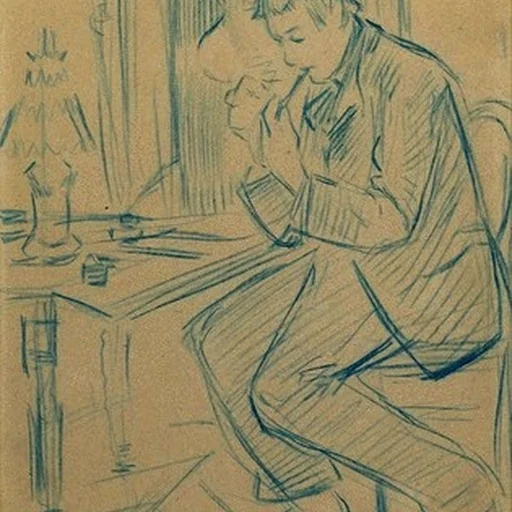
Armand Séguin (1869–1903) was a post-Impressionist French painter who is remembered for his involvement in the Pont-Aven School beginning in 1891.