Artwork
The Prodigal Son Receiving His Patrimony
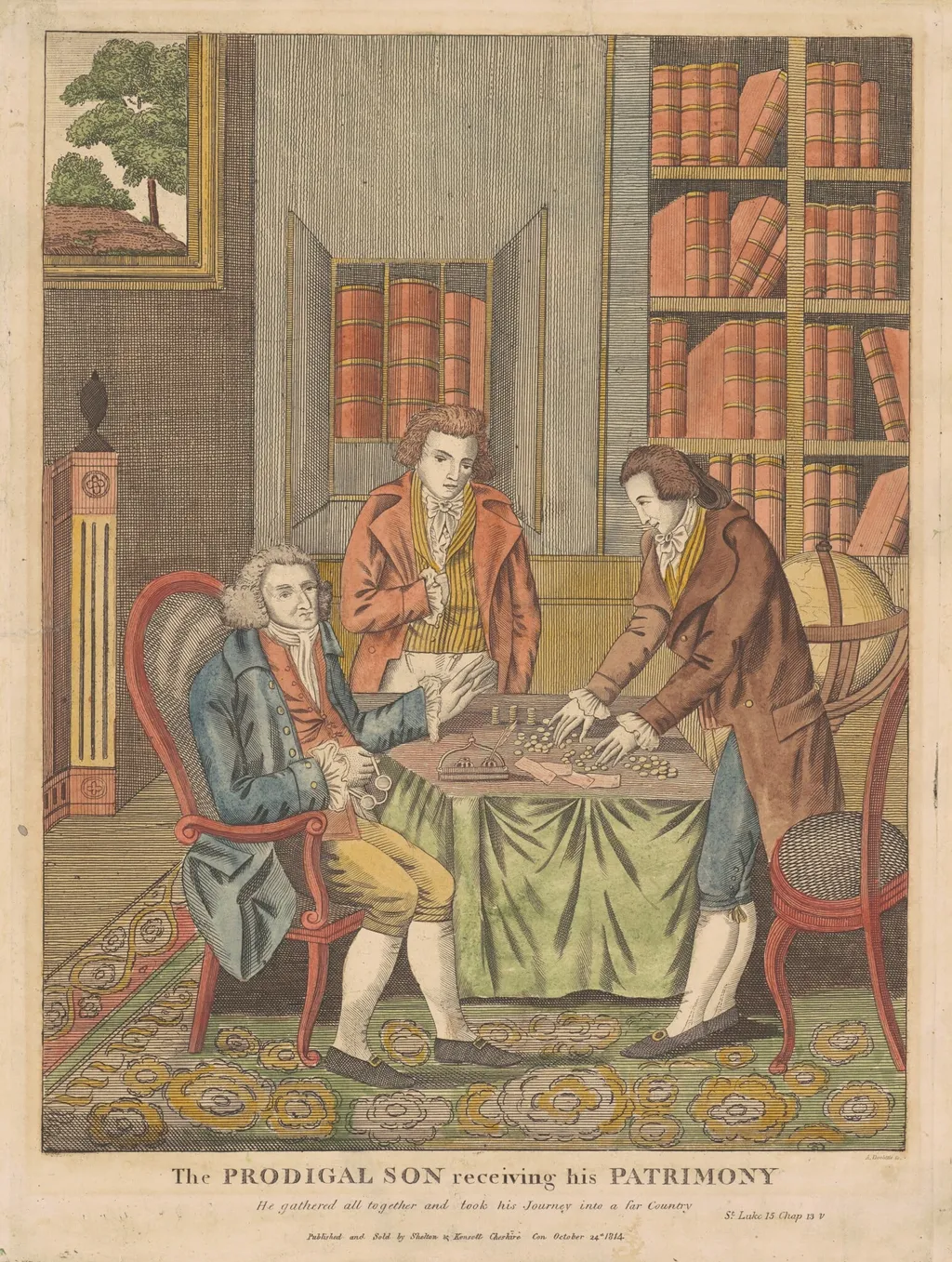
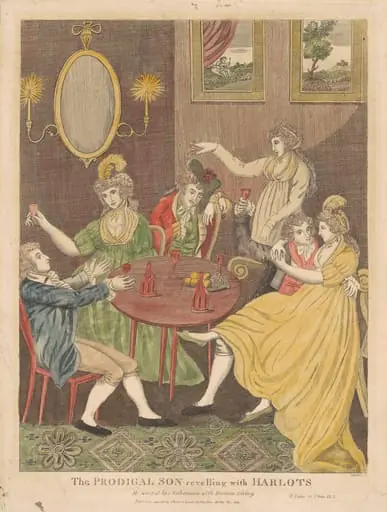
The Prodigal Son Receiving His Patrimony is an ink print by the Romanticist artist Amos Doolittle. It dates from 1814 and is held in the collection of the National Gallery of Art.
About this work
Overview
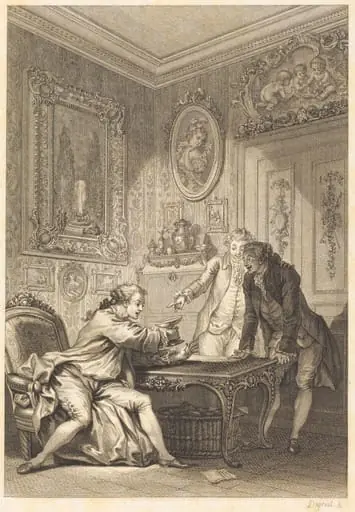
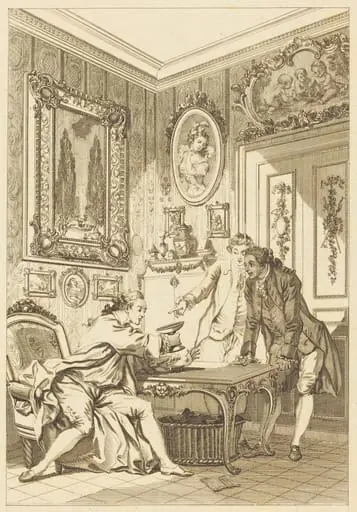
Amos Doolittle’s hand‑colored engraving, dated 1814, depicts a domestic interior in which a man in a blue coat receives a document while another figure distributes coins onto a table. The work is rendered on wove paper and titled to reference the biblical parable of the Prodigal Son receiving his inheritance.
Subject & Meaning
The scene suggests a moment of financial settlement, echoing the biblical narrative where a wayward son is restored to his family’s wealth. The presence of books, a framed tree, and a patterned rug situates the exchange within a cultivated, middle‑class setting, emphasizing themes of restitution and familial duty.
Technique & Style
Doolittle employed traditional engraving methods, using fine cross‑hatching to model light and shadow across clothing, furnishings, and the textured rug. After printing, the image was hand‑colored, adding muted tones that differentiate the blue coat, yellow vest, and brown attire, while preserving the line work’s clarity.
History & Provenance
Created in the early nineteenth century, the print reflects Doolittle’s American printmaking practice during a period when illustrated moral subjects were popular. The work has survived in several collections, documented in catalogues of early American engravings, though specific ownership records remain limited.
Context
The engraving belongs to a broader tradition of biblical and moral illustrations that circulated in the United States after the Revolutionary War. Such images served both devotional and instructional purposes, reinforcing social values through accessible visual narratives.
Artist & collection