Artwork
La coupe enchantee
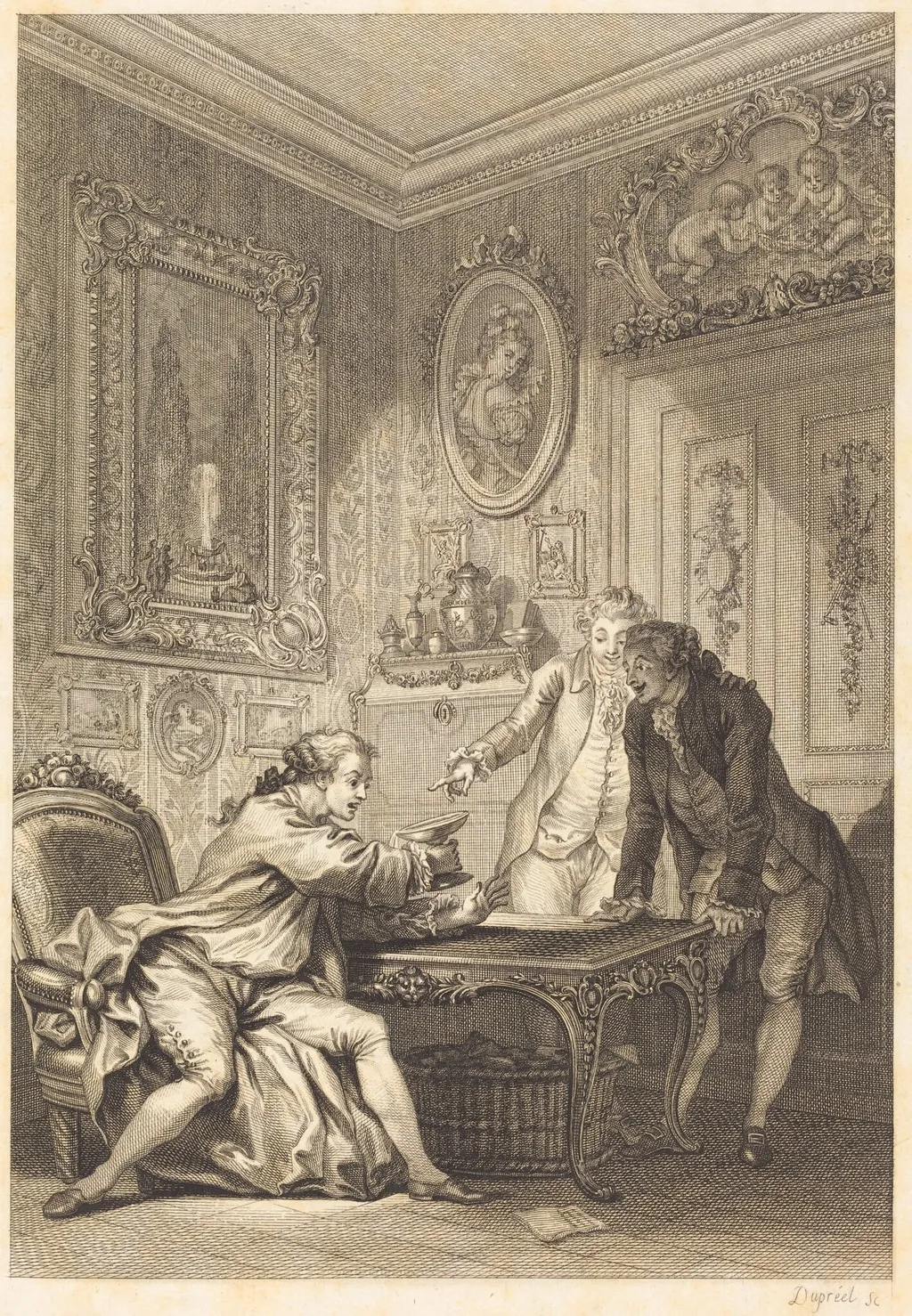
La coupe enchantee is an ink print by the Romanticist artist Jean-Baptiste-Michel Dupreel. It dates from 1807 and is held in the collection of the National Gallery of Art. La coupe enchantée is a print produced in 1807 by the French artist Jean‑Baptiste‑Michel Dupreel.
About this work
Overview
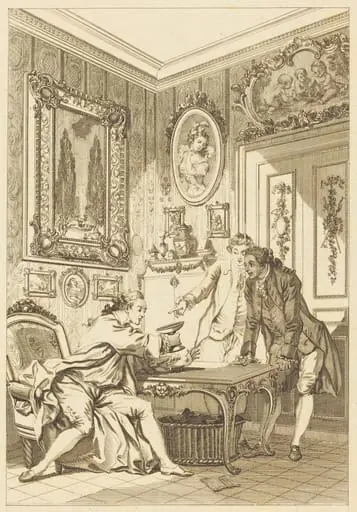
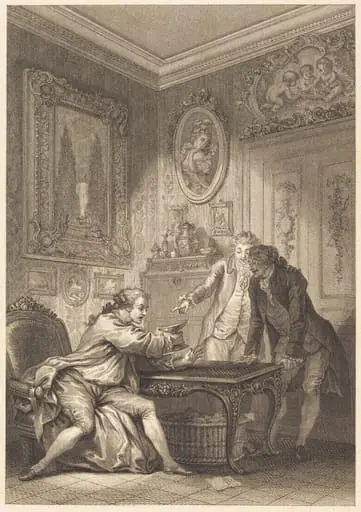
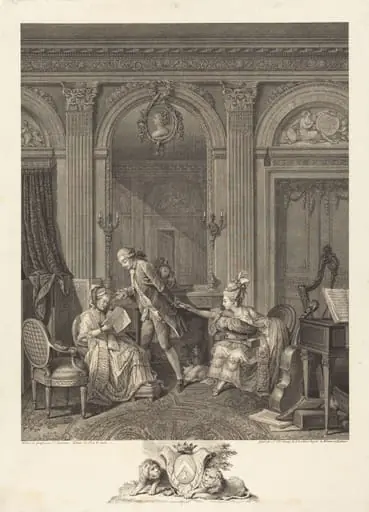
La coupe enchantée is a print produced in 1807 by the French artist Jean‑Baptiste‑Michel Dupreel. Executed as an engraving, the work presents a meticulously rendered interior scene populated by three gentlemen who examine an object placed on a table. The composition is framed by richly ornamented walls, mirrors, and shelves that hold vases and books, creating a sense of refined domestic space.
Subject & Meaning
The central focus of the image is a small, unidentified object that draws the attention of all three figures.
The central focus of the image is a small, unidentified object that draws the attention of all three figures. One man seated on a chair lifts the item, while a standing companion gestures toward it, and the third leans over the surface, suggesting a shared curiosity or perhaps a moment of revelation. The setting implies a gathering of learned or aristocratic individuals engaged in a collective inquiry.
Technique & Style
Dupreel employed fine, closely spaced lines characteristic of early‑19th‑century engraving to delineate textures in fabric, woodwork, and reflective surfaces. The precision of the hatching conveys depth in the carved wall panels and the sheen of mirrors, while the delicate cross‑hatching on the figures’ clothing highlights the play of light across silk and velvet. The overall effect balances detailed realism with a controlled, linear aesthetic.
History & Provenance
Created in the Napoleonic era, La coupe enchantée reflects the period’s interest in domestic genre scenes and the technical virtuosity of printmaking. Though specific ownership records are scarce, the print has appeared in several 19th‑century catalogues of French engravings and is now held in public collections that specialize in early modern graphic arts.
Context
The work belongs to a broader tradition of French interior genre prints that depict genteel gatherings and the pleasures of contemplation. In the early 1800s, such images often served both decorative and didactic purposes, illustrating refined taste while showcasing the artist’s skill in rendering complex spatial arrangements on paper.
Artist & collection