Artwork
La coupe enchantee
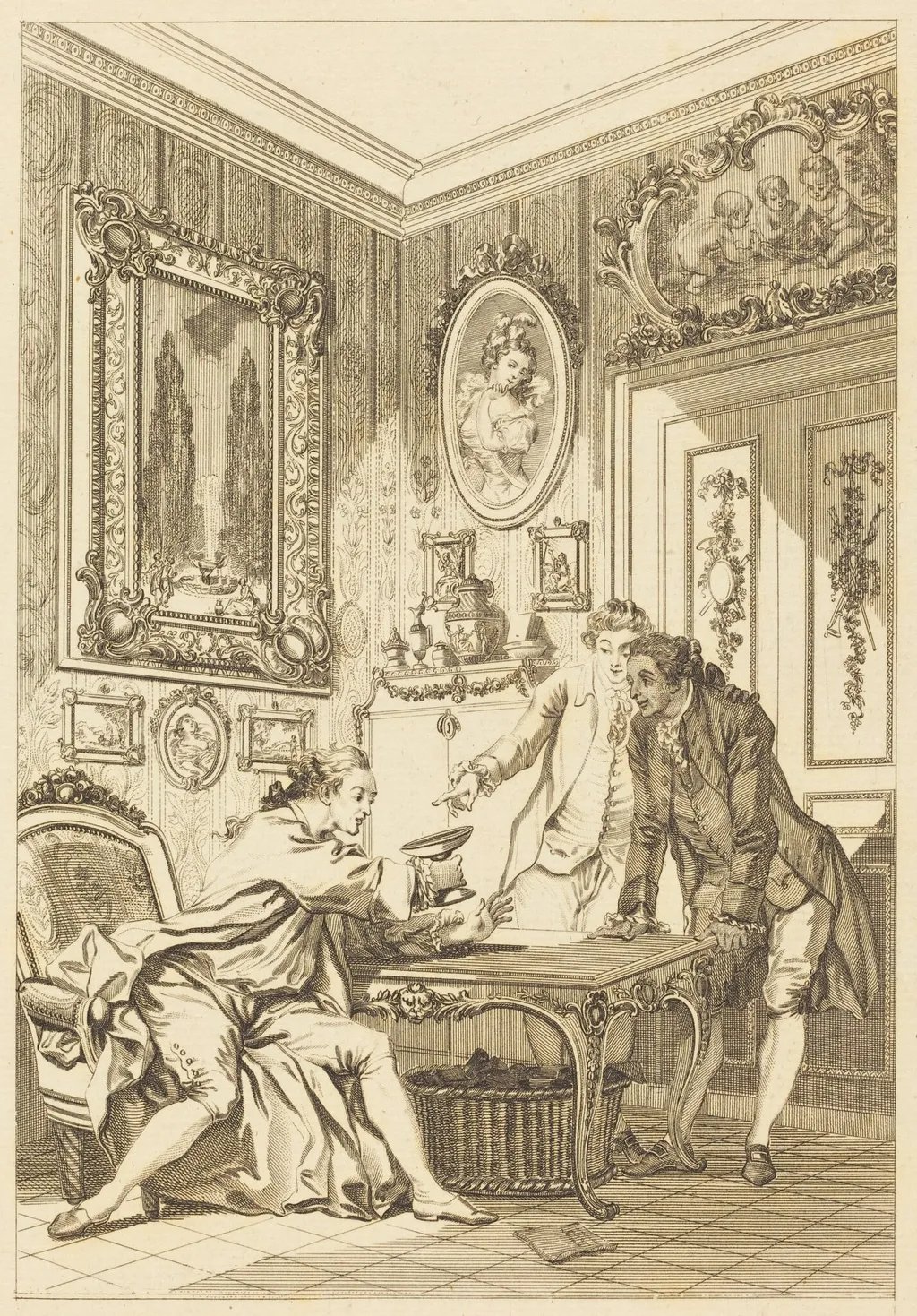
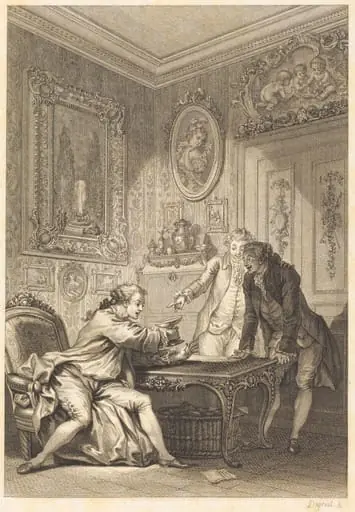
La coupe enchantee is an ink print by the Romanticist artist Jean-Baptiste-Michel Dupreel. It dates from 1807 and is held in the collection of the National Gallery of Art.
About this work
Overview
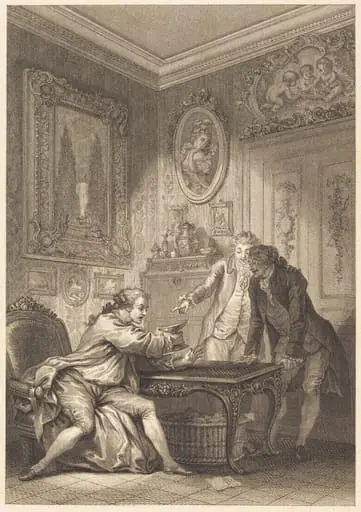
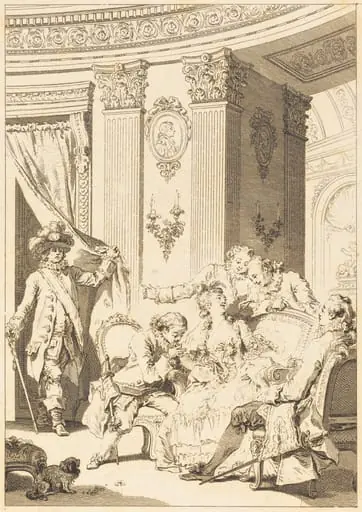
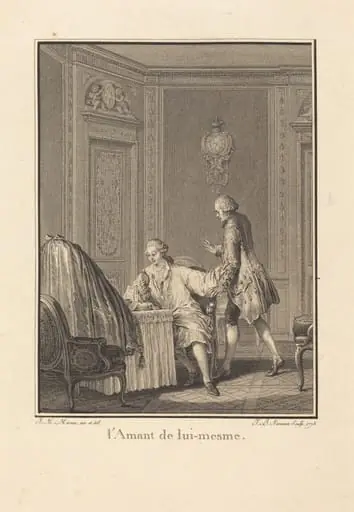
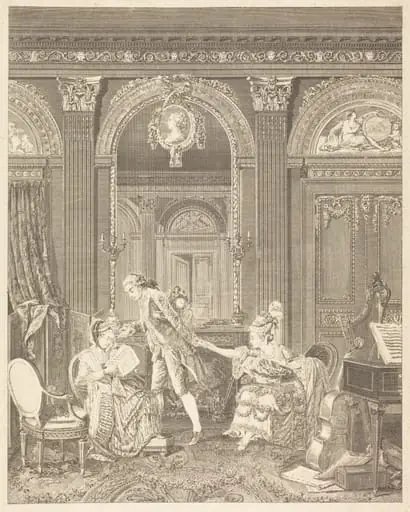
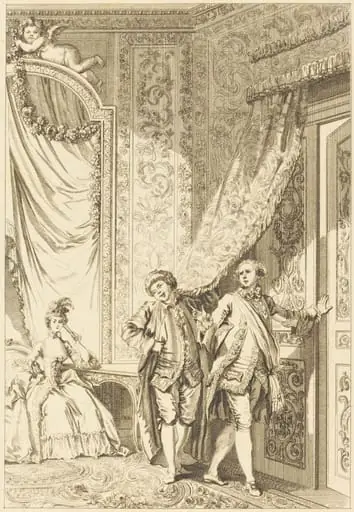
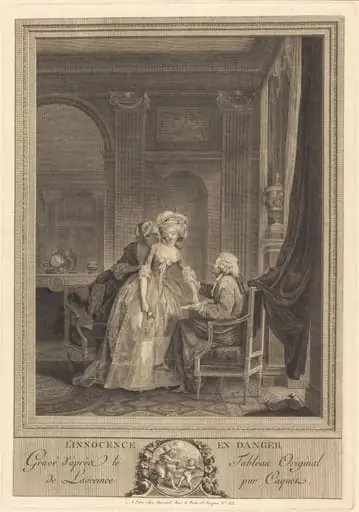
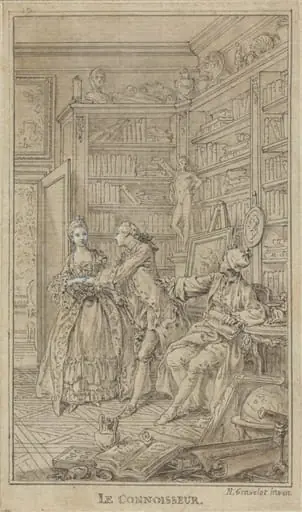
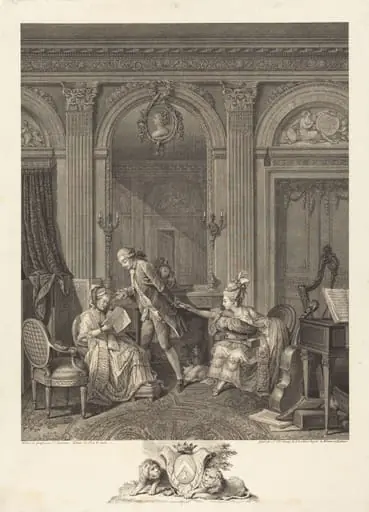
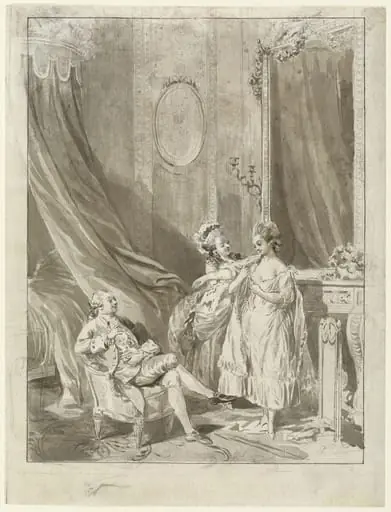
La coupe enchantée is an 1807 etching by Jean-Baptiste-Michel Dupreel, depicting an intimate interior scene. The composition centers on a moment of quiet exchange between two men, one offering a small cup to the other, while a woman observes from a nearby couch. The setting is a lavishly furnished parlor, rendered with fine linear detail characteristic of etching techniques of the period.
Subject & Meaning
The scene suggests a ritual or private ceremony, with the tiny cup as the focal point of attention. The men’s interaction, framed by the woman’s enigmatic smile, implies a shared secret or symbolic act. The absence of overt narrative clues invites interpretation, possibly hinting at themes of trust, mysticism, or social ritual within domestic space.
Technique & Style
Dupreel employed fine-line etching to capture intricate textures: carved wood paneling, mirrored surfaces, and ornamental objects. The precision of the lines conveys depth and materiality without heavy shading, relying on contrast and detail to define form. The composition is tightly controlled, directing the viewer’s eye toward the cup and the figures’ gestures.
History & Provenance
Created in 1807, the print emerged during a period when etching experienced a revival among French artists seeking to blend academic precision with intimate subject matter. While specific early ownership records are sparse, the work aligns with the tastes of bourgeois collectors who favored finely detailed domestic scenes over grand historical themes.
Context
In early 19th-century France, interior scenes like this reflected growing interest in private life and material culture. The opulent furnishings—fireplace, portraits, decorative shelves—mirror the rising influence of Neoclassical design among the urban elite. Such prints served both as art and as cultural artifacts, documenting domestic aesthetics of the era.
Legacy
Dupreel’s etching exemplifies the quiet sophistication of post-Revolutionary French printmaking. Though not widely known today, it contributes to a broader tradition of domestic narrative prints that influenced later artists exploring psychological nuance within domestic settings. Its legacy lies in its restrained storytelling and technical refinement.
Artist & collection