Artwork
War Series: The Charge, Left Detail
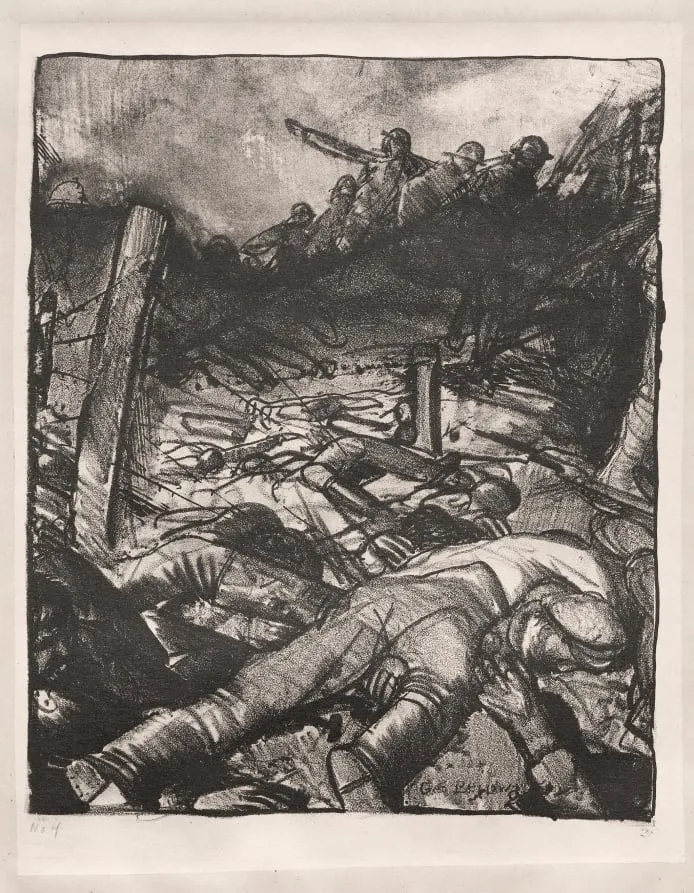
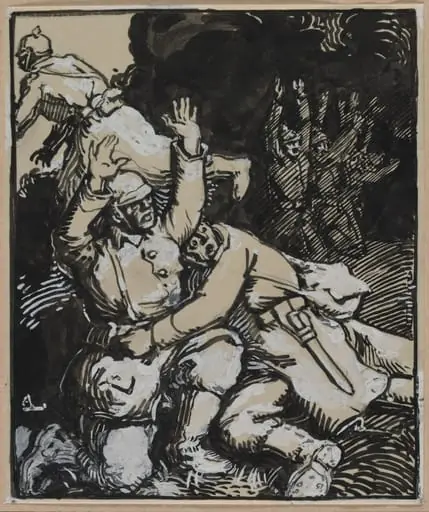
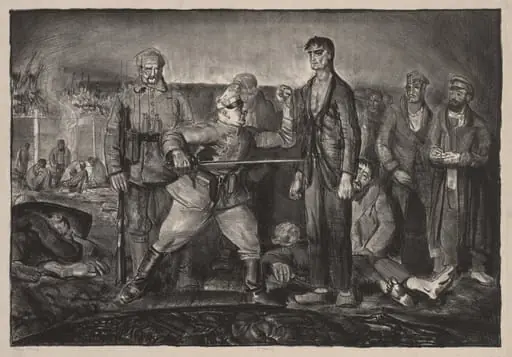
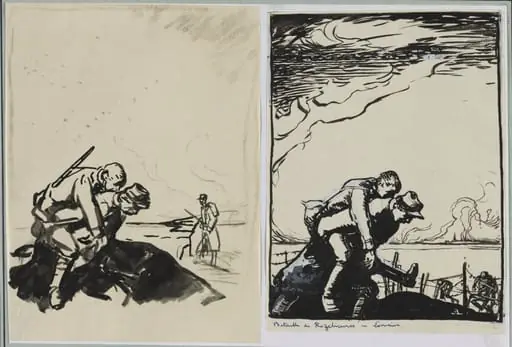
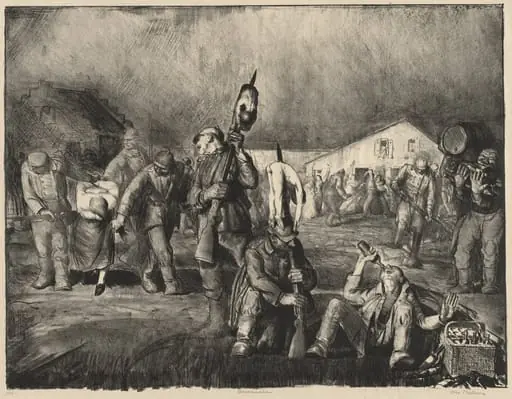
War Series: The Charge, Left Detail is a print by George Bellows. It dates from 1918 and is held in the collection of the Cleveland Museum of Art.
About this work
It's interesting that George Bellows created this painting in 1918, during a time of war, which likely influenced his depiction of intense action.
This painting shows a dramatic scene of horses and soldiers in action.
The scene is chaotic, with horses rearing up and soldiers charging forward. It's interesting that George Bellows created this painting in 1918, during a time of war, which likely influenced his depiction of intense action.
Look up the technique of chiaroscuro to learn more about how artists like George Bellows used strong contrasts of light and dark.
Overview
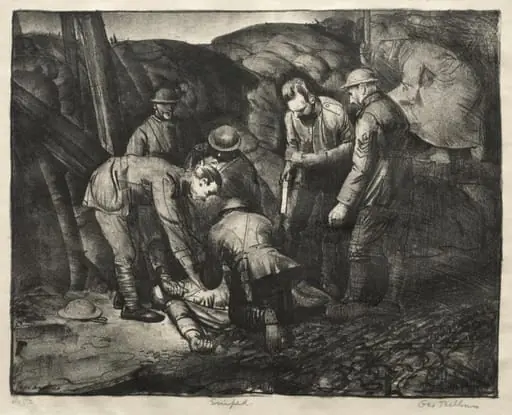
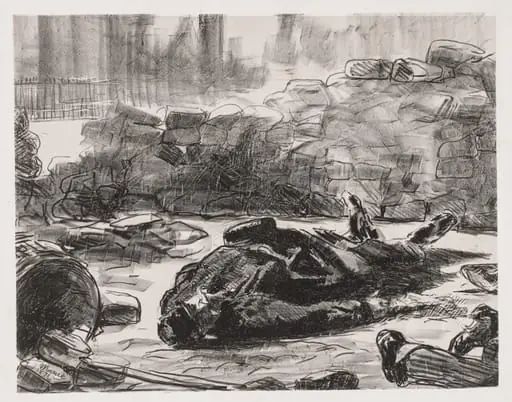
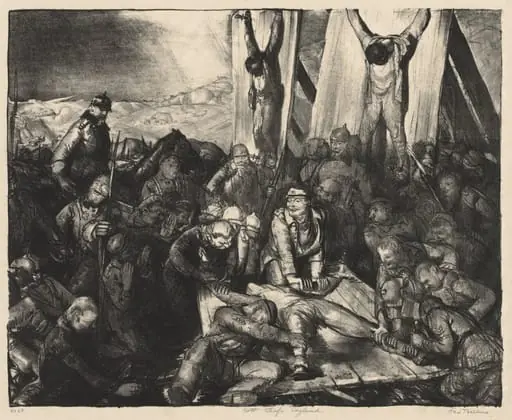
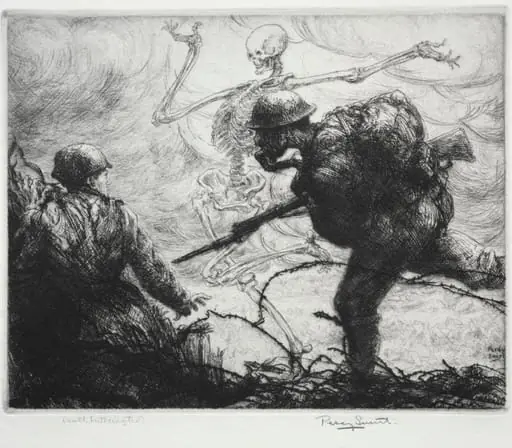
Created in 1918, *War Series: The Charge, Left Detail* is one of several prints George Bellows produced in response to the violence of World War I. Though best known for his urban scenes, Bellows turned to wartime themes during this period, using the medium of print to convey the brutality and motion of battle. The work is part of a larger series documenting the chaos of combat, and it resides in the collection of The Cleveland Museum of Art.
Subject & Meaning
The print captures a moment of cavalry charge, with horses rearing and soldiers thrusting forward in a tangle of limbs and motion. There is no clear heroism or triumph; instead, the scene emphasizes disarray and physical strain. Bellows avoids political messaging, focusing instead on the raw, animalistic energy of war, reflecting the disillusionment common among artists witnessing the conflict’s scale and suffering.
Technique & Style
Bellows employed bold, expressive linework and strong chiaroscuro to heighten the drama of the scene. Deep shadows and stark highlights define the musculature of horses and the angular forms of soldiers, creating a sense of movement and tension. His approach blends realism with expressive distortion, prioritizing emotional impact over precise detail, a hallmark of his mature style during this period.
History & Provenance
The print was produced in 1918, shortly after Bellows visited Europe and witnessed the aftermath of war. He returned to the U.S. determined to respond artistically to the conflict, producing a series of lithographs that were widely circulated. *The Charge, Left Detail* was among the works acquired by The Cleveland Museum of Art in the decades following its creation, becoming part of its significant holdings of early 20th-century American prints.
Context
Bellows created this work amid intense public debate over U.S. involvement in World War I. While many artists produced patriotic imagery, Bellows chose to focus on the physical and psychological toll of combat. His series stood apart from official war art, offering a visceral, unvarnished view that aligned with broader modernist tendencies to confront uncomfortable truths rather than idealize conflict.
Legacy
Though less known than his New York street scenes, Bellows’s War Series influenced later American artists who sought to depict war without glorification. The prints demonstrated that realism could convey moral gravity through form and composition alone. Today, they are studied as critical examples of how American artists engaged with global conflict during the early 20th century.
Artist & collection
Artist
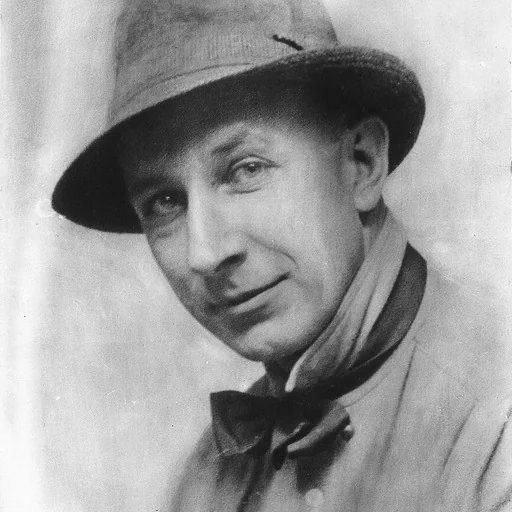
George Wesley Bellows (August 12 or August 19, 1882 – January 8, 1925) was an American realist painter, known for his bold depictions of urban life in New York City.