Artwork
Sailing Ships at Sea
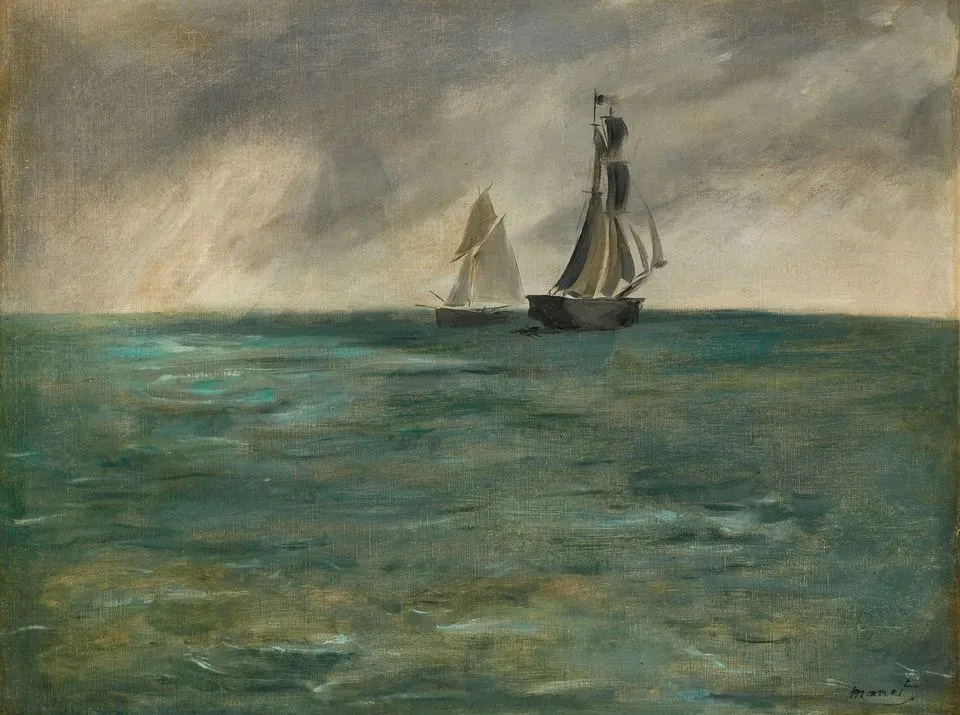
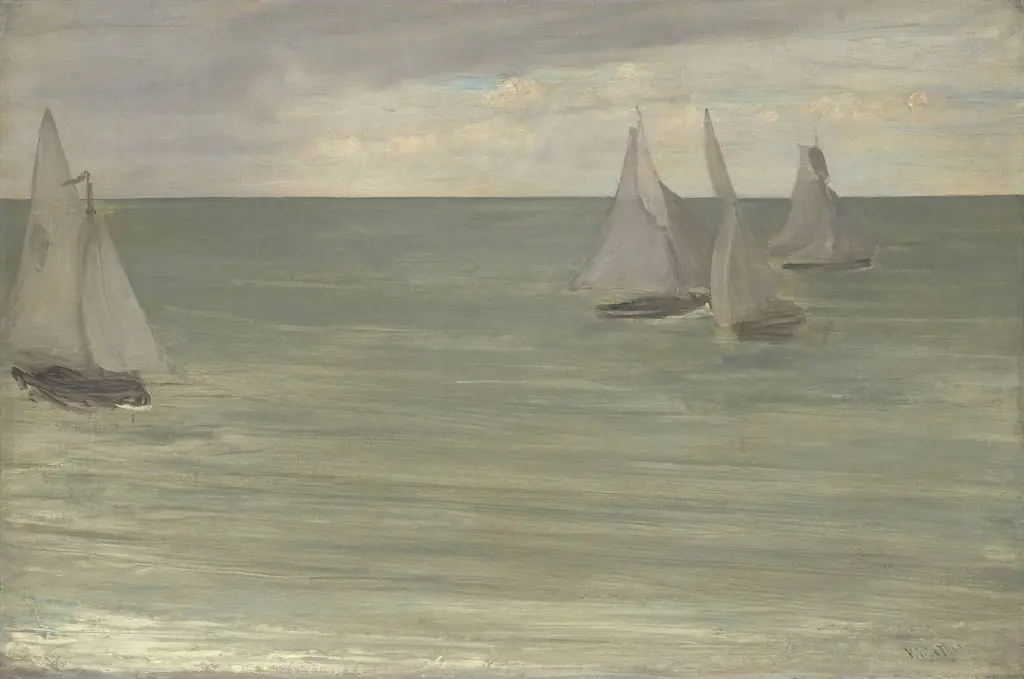
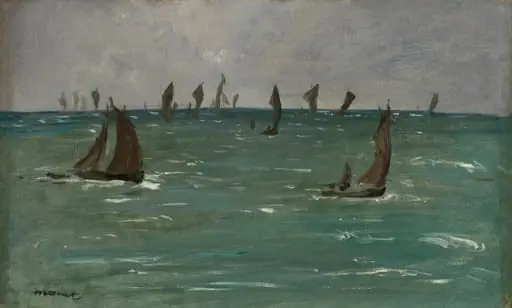
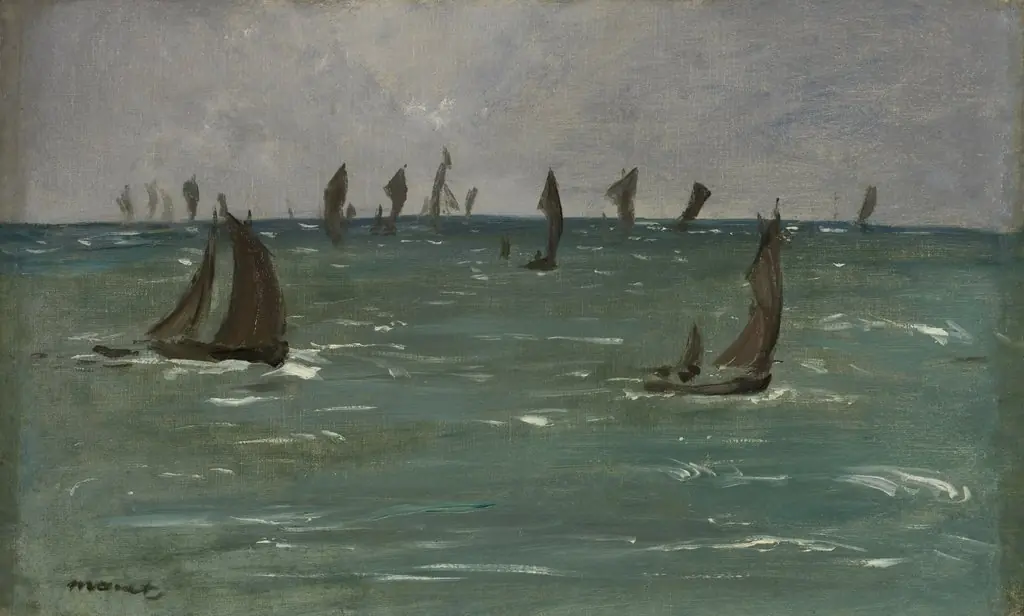
Sailing Ships at Sea is an oil painting by the Realist artist Edouard Manet. It dates from 1864 and is held in the collection of the National Museum of Western Art.
About this work
Overview
The larger ship, with three masts, dominates the foreground, while a smaller two-masted vessel recedes into the distance.
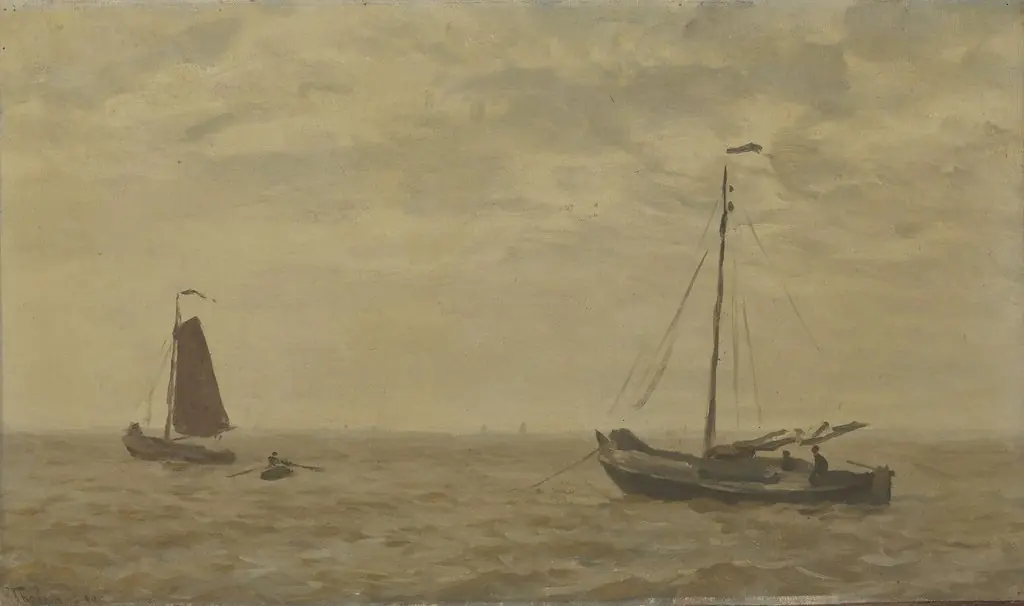
Painted in 1864, Sailing Ships at Sea is an oil work by Édouard Manet depicting two vessels on an open sea. The larger ship, with three masts, dominates the foreground, while a smaller two-masted vessel recedes into the distance. The composition captures motion through the tilt of sails and the turbulence of water, set against a muted, overcast sky. The painting is currently held in the collection of the National Museum of Western Art.
Subject & Meaning
The painting presents maritime activity without narrative or human figures, focusing instead on the relationship between vessels and environment. The ships, neither named nor identified, suggest commercial or naval travel, their presence framed by the indifferent sea and sky. The absence of human detail shifts emphasis to the forces of nature and the resilience of seafaring craft, evoking quiet endurance rather than heroism.
Technique & Style
Manet employs loose, rapid brushwork to convey the movement of wind and water. Dark blues and grays dominate the sea and sky, punctuated by lighter tones on the sails and hulls, creating contrast without sharp definition. Light filters unevenly through clouds, casting subtle highlights that suggest shifting conditions. The brushwork avoids idealized detail, favoring immediacy and atmospheric effect over polished finish.
History & Provenance
Completed in 1864, the painting remained in private hands until it entered the collection of the National Museum of Western Art in Tokyo. Its journey to Japan reflects broader postwar efforts to build international art holdings in the region. While not widely exhibited during Manet’s lifetime, it has since become a key example of his marine studies, distinct from his more famous urban scenes.
Context
In the mid-1860s, Manet was exploring subjects beyond contemporary Parisian life, turning to maritime themes that resonated with French naval and commercial interests. This work aligns with a broader 19th-century interest in seascapes, yet diverges from romanticized traditions by rejecting dramatic lighting or heroic scale. Its quiet realism reflects Manet’s interest in modern perception over idealized spectacle.
Legacy
Sailing Ships at Sea contributes to Manet’s evolving engagement with light and movement, foreshadowing Impressionist concerns without fully embracing their palette or technique. It stands as a quiet but significant departure from academic marine painting, emphasizing transient conditions and unembellished observation. The work remains a reference point for studies of his lesser-known nautical subjects and his approach to natural atmosphere.
Artist & collection

Artist
Édouard Manet didn’t have much time to make his mark—he died at 51—but he used every year.