Artwork
Boats at Berck-sur-Mer
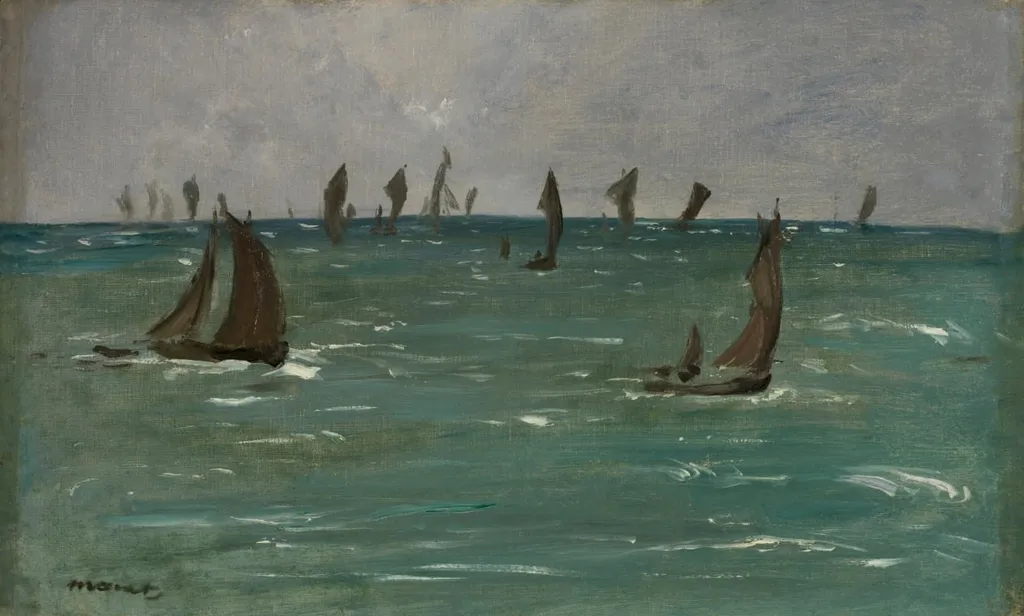
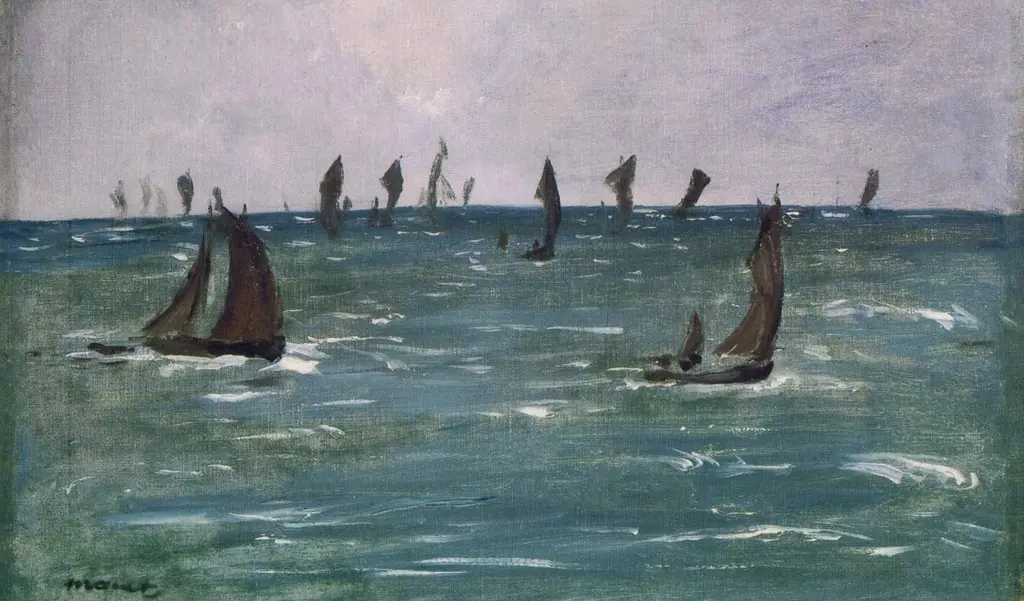
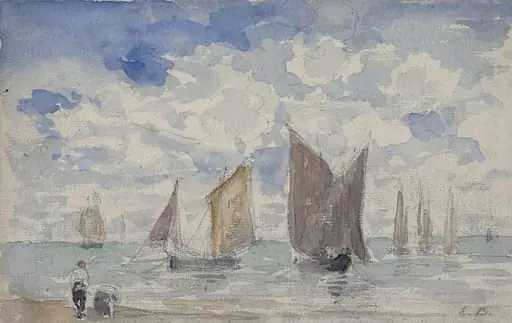
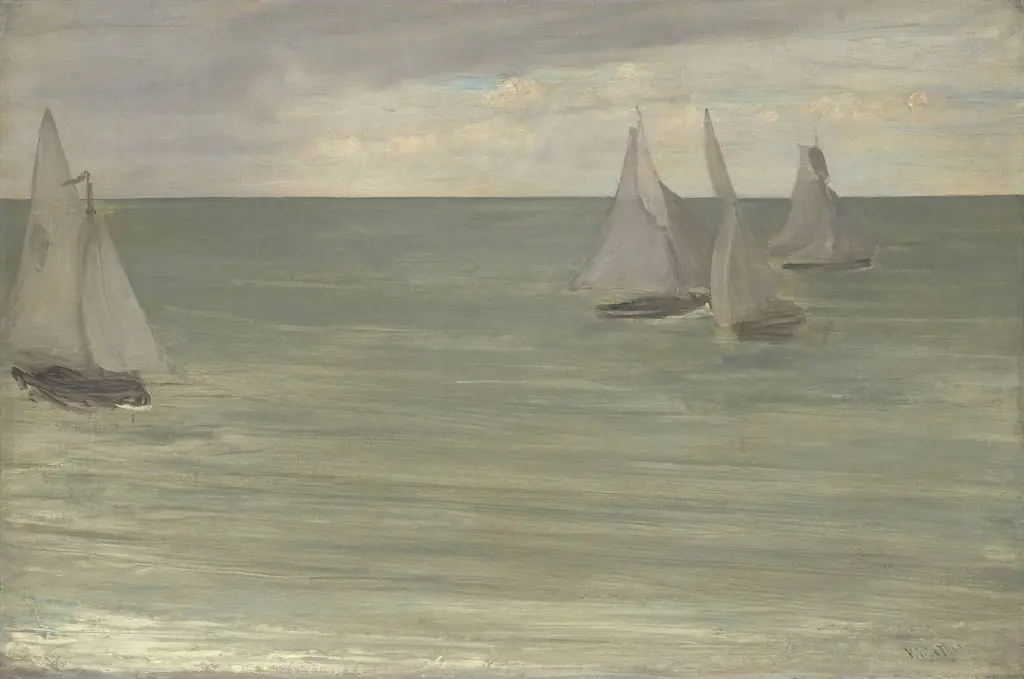
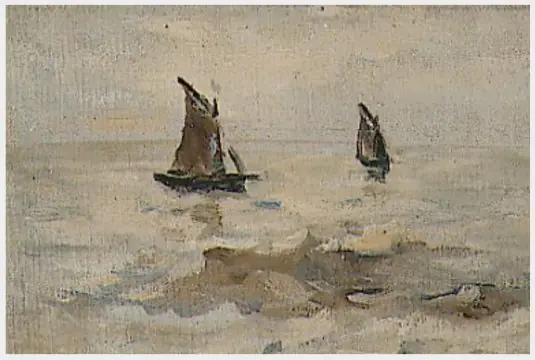
Boats at Berck-sur-Mer is an unspecified painting by the Impressionist artist Edouard Manet. It dates from 1873 and is held in the collection of the Cleveland Museum of Art.
About this work
Overview
Though he had long been drawn to the sea since his youth and early maritime training, this work reflects a mature engagement with marine subjects.
Painted in 1873, Boats at Berck-sur-Mer captures a coastal scene near Boulogne where Édouard Manet spent part of the summer. Though he had long been drawn to the sea since his youth and early maritime training, this work reflects a mature engagement with marine subjects. Executed in a swift, direct manner, the painting conveys the transient effects of wind and light rather than a polished harbor view.
Subject & Meaning
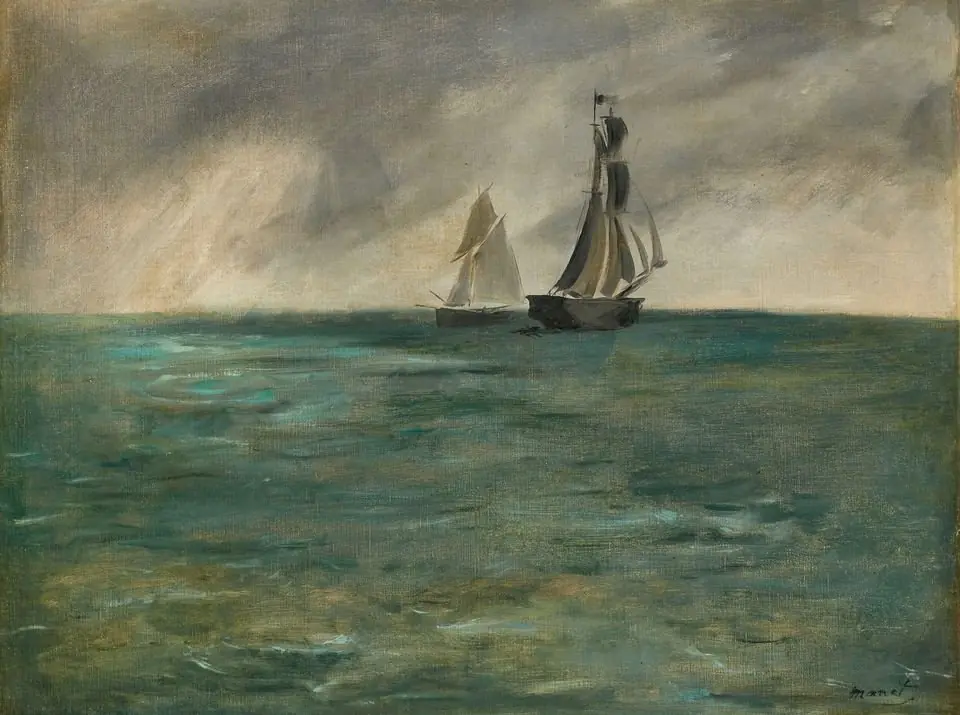
The painting depicts a cluster of small sailing vessels anchored near a quiet beach, their sails catching the breeze in varied angles. Rather than idealizing the scene, Manet presents it as a momentary observation—boats shifting with the wind, water shimmering under changing light. The absence of human figures emphasizes nature’s quiet rhythm, reinforcing his interest in perception over narrative.
Technique & Style
Manet applied paint with rapid, loose brushwork, allowing strokes to suggest movement rather than define form precisely. The sails are rendered with thin, bright touches that catch the eye, while the sea and sky merge in soft, blended hues. A subtle upward curve in the horizon enhances spatial depth, countering the painting’s modest scale and inviting the viewer into an expansive seascape.
History & Provenance
Created during Manet’s stay at Berck-sur-Mer in 1873, the painting belongs to a series of coastal works he produced after returning to marine themes following a decade-long pause. It was likely painted en plein air, consistent with his practice of working quickly outdoors. The work remained in private collections until entering a public museum in the 20th century.
Context
In the early 1870s, Manet was increasingly drawn to scenes of modern life beyond urban settings, including seaside resorts and rural landscapes. While contemporaries like Monet pursued atmospheric effects with greater detail, Manet favored a more direct, economical approach—emphasizing sensation over precision. This painting aligns with broader shifts in French painting toward immediacy and sensory experience.
Legacy
Boats at Berck-sur-Mer exemplifies Manet’s role in bridging realism and impressionism through his focus on transient visual phenomena. His unidealized treatment of the sea and his bold, abbreviated technique influenced younger artists exploring light and motion. Though not widely exhibited in his lifetime, the work now stands as a quiet testament to his evolving vision of nature as something observed, not perfected.
Artist & collection

Artist
Édouard Manet didn’t have much time to make his mark—he died at 51—but he used every year.