Artwork
The Lemon
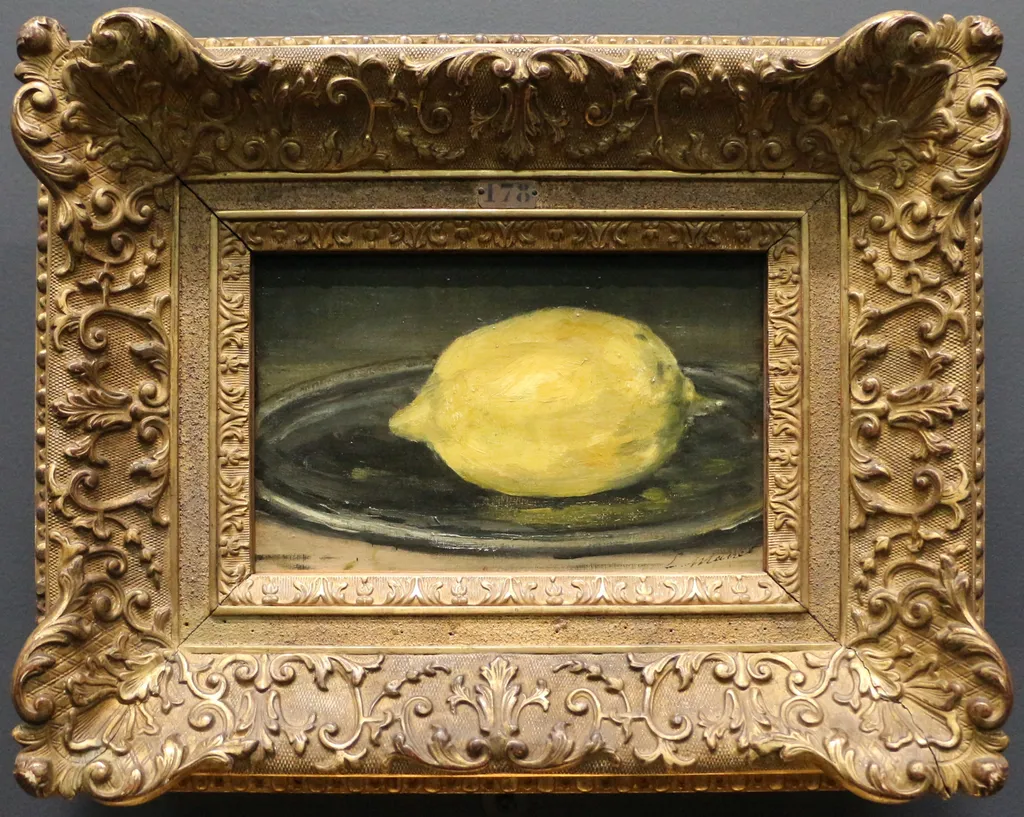
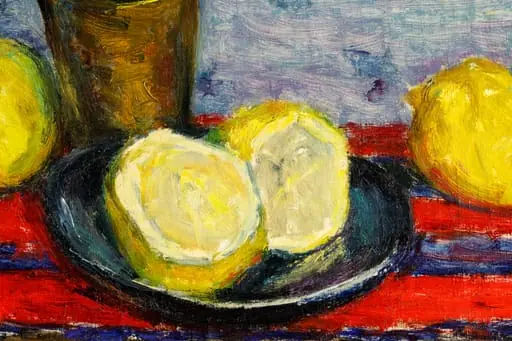
The Lemon is an oil painting by the Impressionist artist Edouard Manet. It is held in the collection of the Musée d'Orsay.
About this work
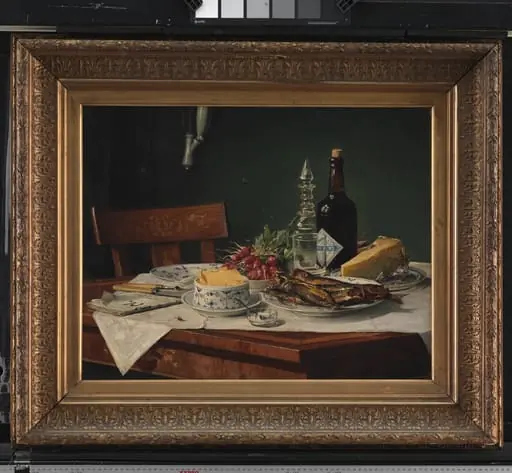
The top edge has the number "1786" written on it, which might be a clue about something—but it’s not the year of the painting.
This painting shows a single bright yellow lemon floating in dark, murky water. The lemon looks almost too real, with a smooth, glossy surface. The background is mostly shadowy green and gray, making the lemon stand out even more.
The frame is fancy, with carved gold details that look like swirls and leaves. The top edge has the number "1786" written on it, which might be a clue about something—but it’s not the year of the painting.
If you like simple but striking paintings, check out Édouard Manet.
Overview
Édouard Manet’s oil painting titled *The Lemon* was executed in 1890. The work presents a solitary lemon set against a dark, muted background, rendered with a high degree of realism. It is part of the collection of the Royal Museum of Fine Arts in Antwerp, where it is displayed in a decorative frame featuring carved gold motifs.
Subject & Meaning
The composition focuses on a single, vividly yellow lemon that appears to float in a shallow pool of murky water. The fruit’s glossy surface and the surrounding shadows emphasize its materiality, inviting contemplation of everyday objects as subjects of fine art. The lemon’s isolation may suggest themes of transience and the sensory qualities of sight and taste.
Technique & Style
Manet employs a tight, controlled brushwork to achieve a smooth, almost photographic surface on the lemon, contrasting with the looser, atmospheric handling of the surrounding greens and grays. The chiaroscuro effect heightens the fruit’s three‑dimensionality, while the limited palette underscores the painting’s still‑life tradition and modern sensibility.
History & Provenance
Created toward the end of Manet’s career, *The Lemon* entered the Royal Museum of Fine Arts Antwerp’s holdings in the early twentieth century, though the exact acquisition date is not recorded in the available sources. The frame bears the inscription “1786,” a decorative element unrelated to the painting’s date.
Context
The work belongs to a late‑period interest of Manet in simple, everyday subjects, echoing the still‑life traditions of Dutch and French masters while incorporating his own modern approach. Its focus on a single fruit aligns with contemporary explorations of realism and the visual study of light on ordinary objects.
Artist & collection

Artist
Édouard Manet didn’t have much time to make his mark—he died at 51—but he used every year.