Artwork
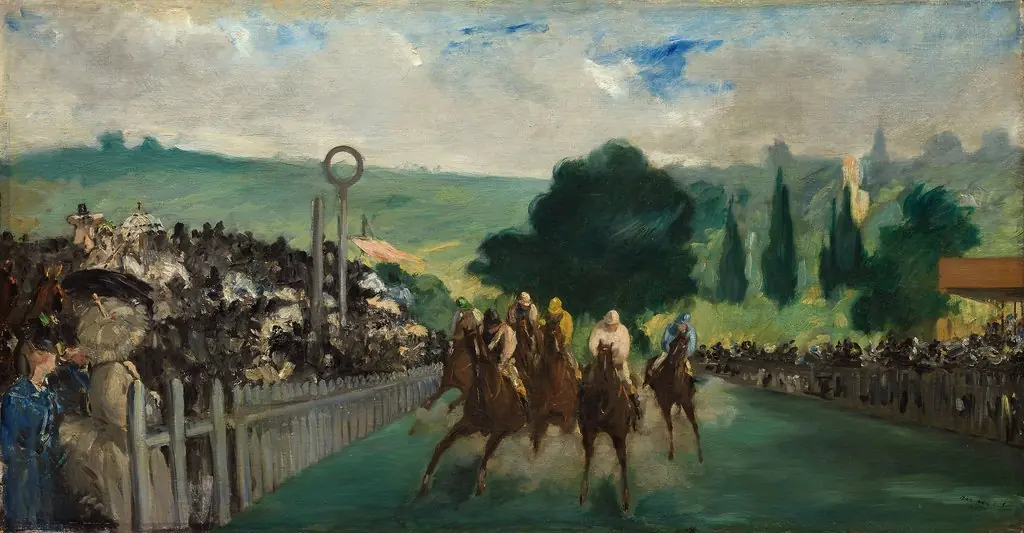
The Races at Longchamp
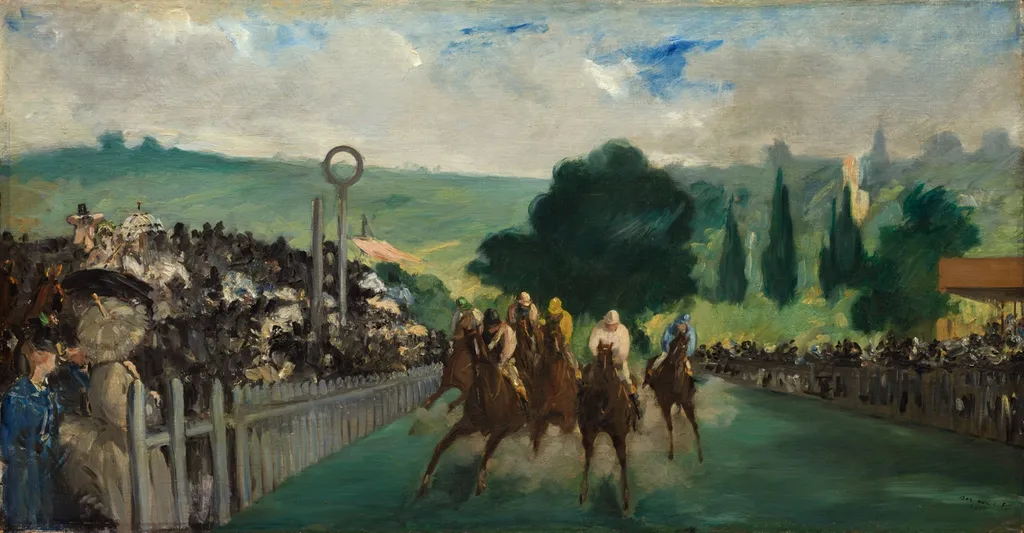
The Races at Longchamp is an oil painting by the Impressionist artist Edouard Manet. It dates from 1866 and is held in the collection of the Art Institute of Chicago.
About this work
Overview
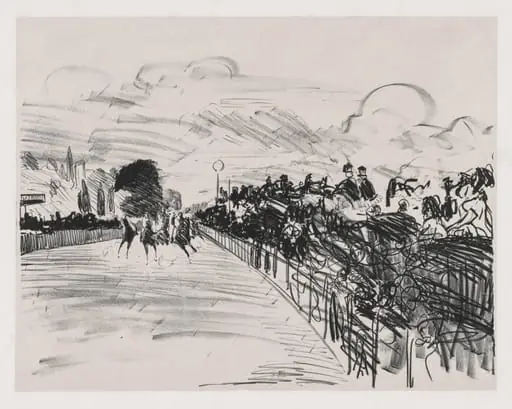
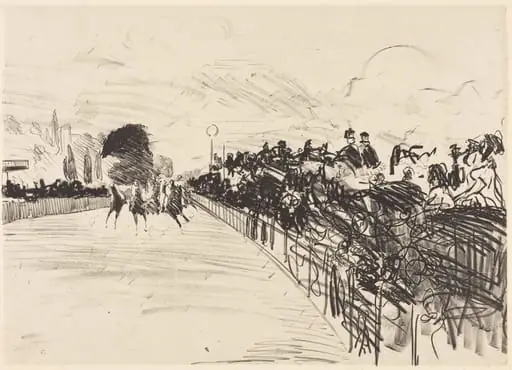
Édouard Manet’s oil on canvas, *The Races at Longchamp*, depicts the final stretch of a horse race on the Longchamp track in the Bois de Boulogne, just west of Paris. The composition is dominated by a line of horses thundering toward the viewer, their hooves throwing up clouds of turf, while a crowd of well‑dressed spectators leans against the rail to watch the finish.
Subject & Meaning
The painting captures the excitement of nineteenth‑century French horse racing, a pastime imported from England that combined speed, spectacle, and social display. Manet emphasizes the immediacy of the moment by showing the competitors head‑on, inviting the observer to share the tension of the finish line and to notice details such as a gentleman using binoculars to scrutinize the race.
Technique & Style
Manet abandons the traditional side‑profile view of racing scenes, opting for a dynamic, diagonal composition that conveys motion through sweeping fence lines and the spray of dirt. His brushwork is loose and vigorous, with impasto applied to the ground and hooves, creating a tactile sense of energy that contrasts with the more polished depictions of his contemporaries.
History & Provenance
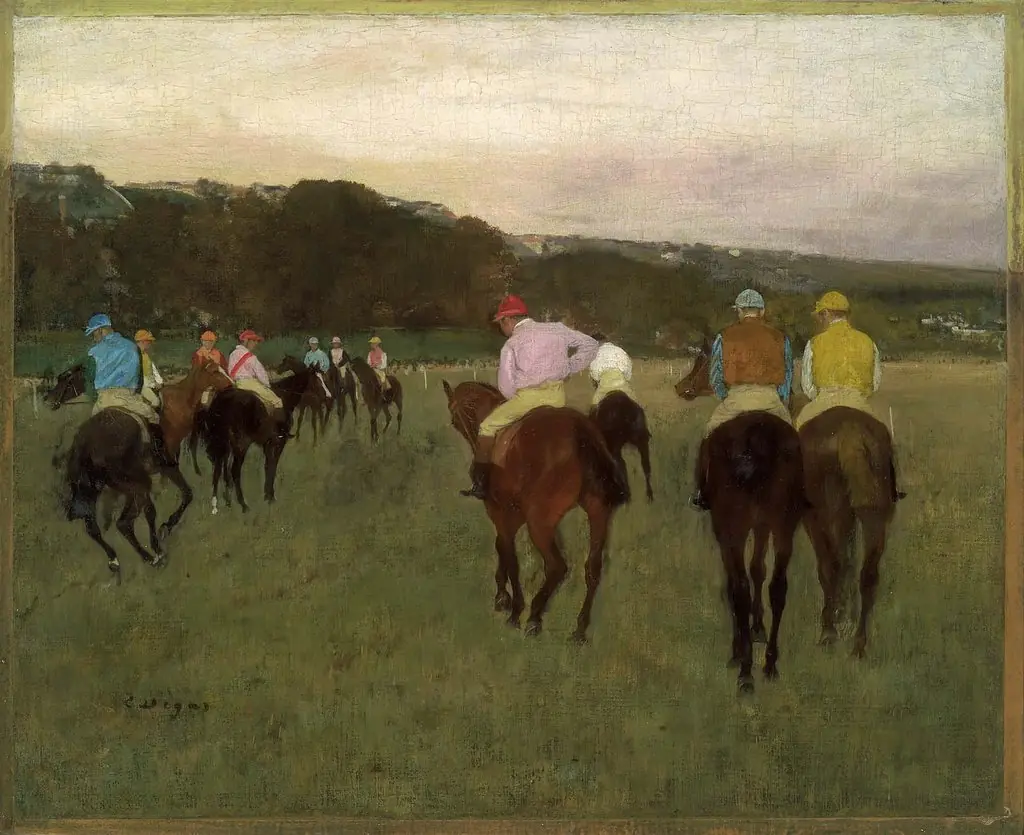
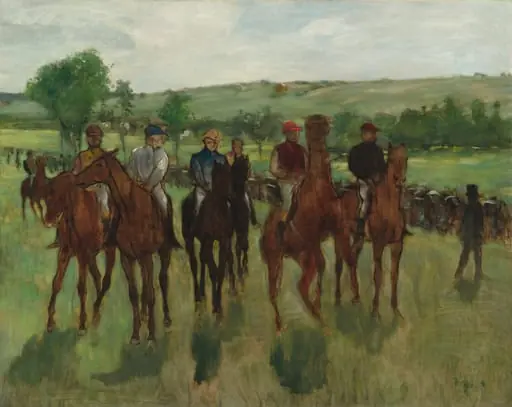
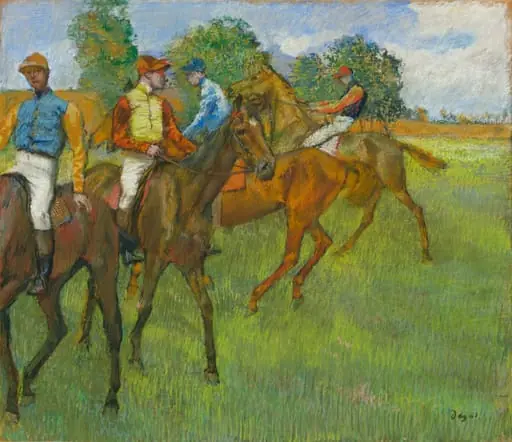
Originally painted on a considerably larger canvas, Manet later trimmed the work to its current dimensions, a decision that altered its original spatial balance. Unlike his contemporary Edgar Degas, who returned repeatedly to the racetrack, Manet produced only two paintings on this theme, making *The Races at Longchamp* a rare example of his engagement with modern leisure subjects.
Context
In the mid‑1800s, horse racing emerged as a popular urban entertainment in France, symbolizing modernity and the growing leisure culture of the bourgeoisie. Longchamp, with its expansive straightaway and grandstands, became a fashionable venue where sport and social observation intersected, a setting that Manet captures with both realism and a hint of theatricality.
Artist & collection

Artist
Édouard Manet didn’t have much time to make his mark—he died at 51—but he used every year.