Artwork
Before the Race
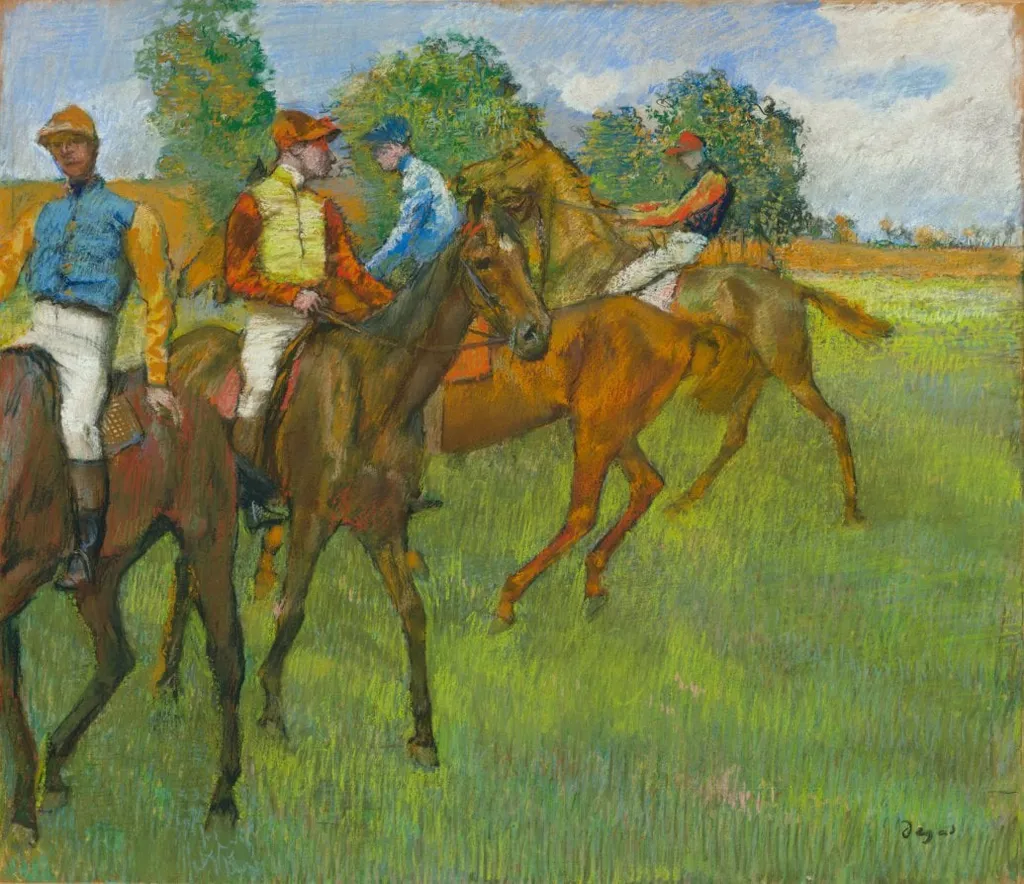
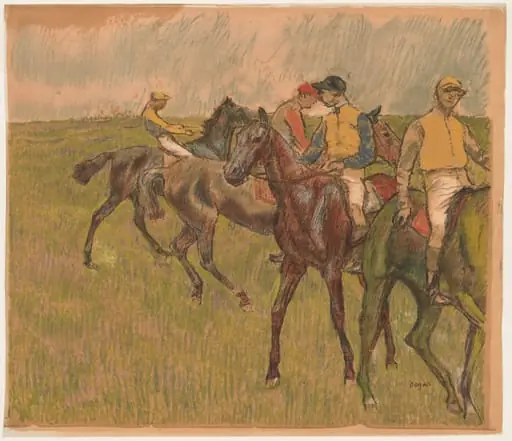
Before the Race is a drawing by the Impressionist artist Edgar Degas. It dates from 1888 and is held in the collection of the Cleveland Museum of Art.
About this work
Overview
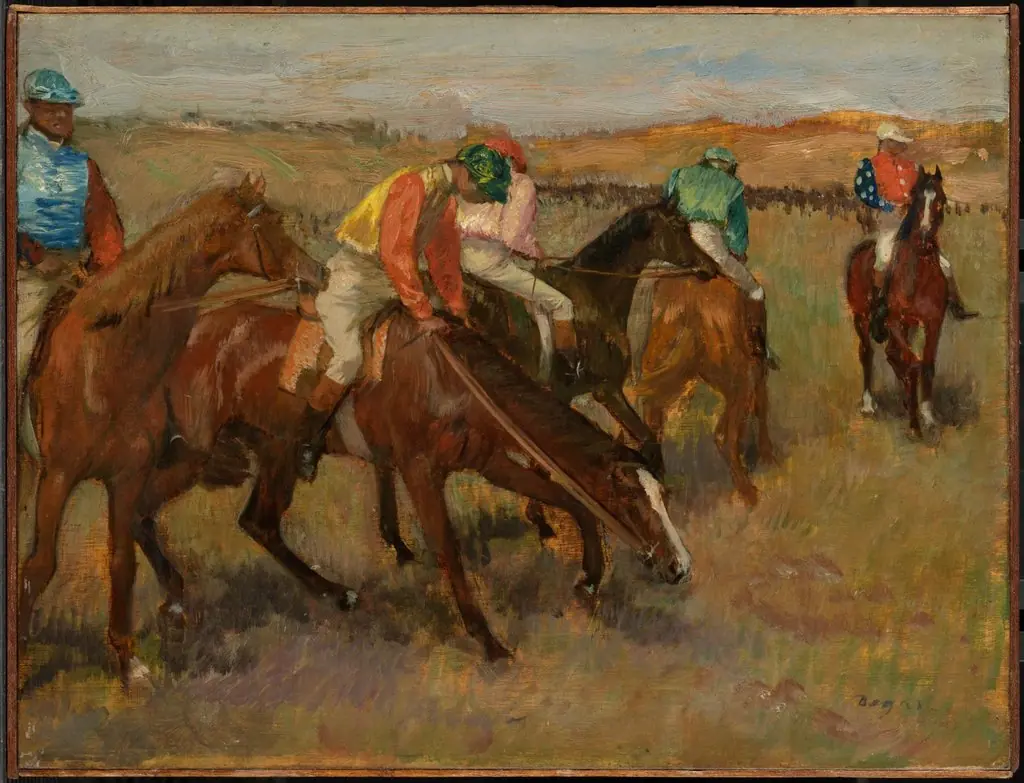
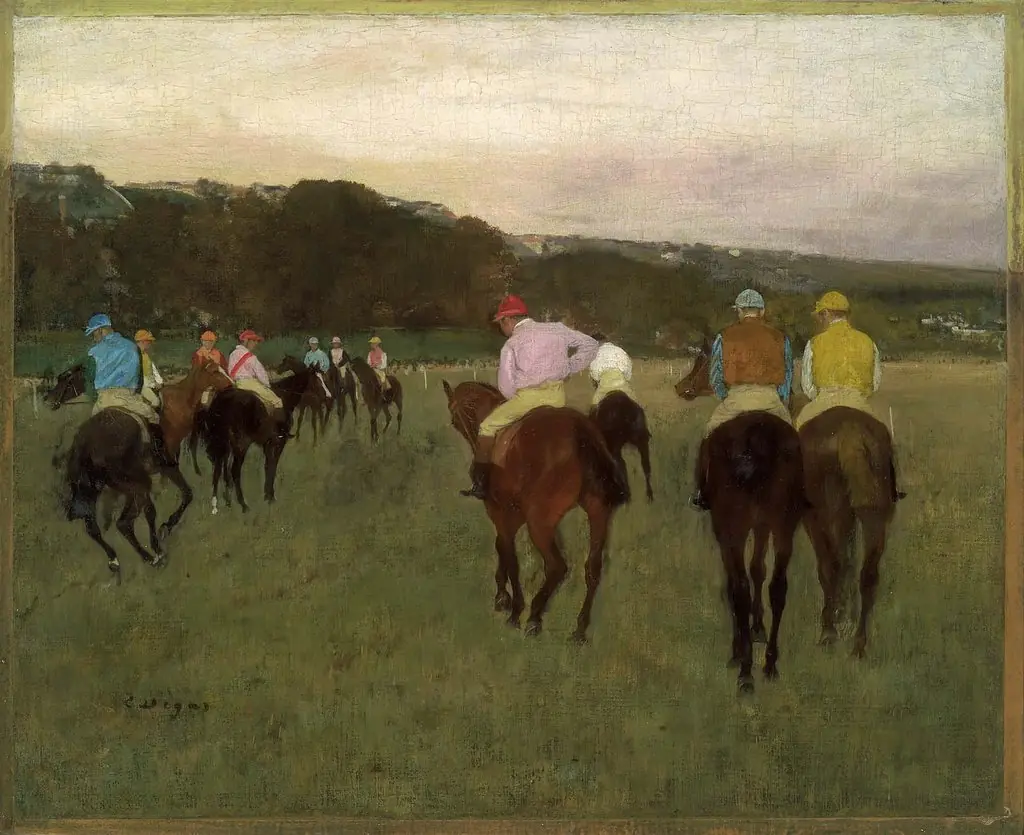
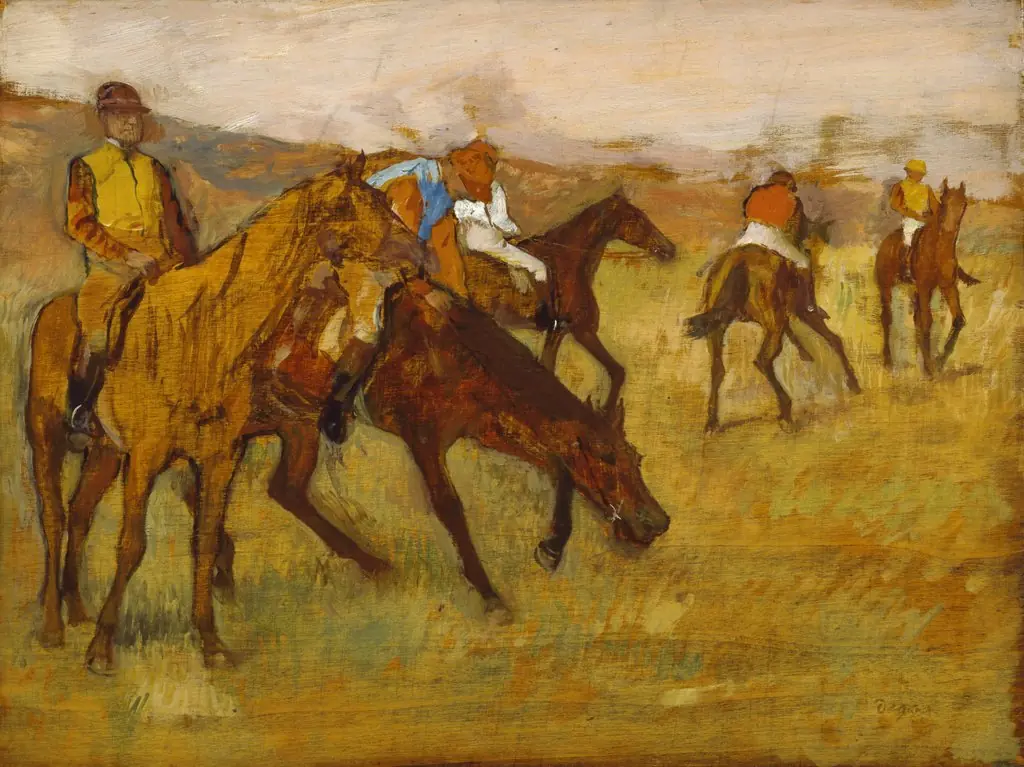
Degas created two versions of this equestrian scene, beginning with a charcoal and pastel sketch and later reworking it into a more polished pastel drawing.
Degas created two versions of this equestrian scene, beginning with a charcoal and pastel sketch and later reworking it into a more polished pastel drawing. The second version reverses the composition’s orientation and introduces refined details that deepen its atmospheric presence. Though the core arrangement of four jockeys remains, the later iteration transforms the mood through color and spatial adjustments, reflecting Degas’s iterative approach to capturing movement and anticipation.
Subject & Meaning
The drawing depicts jockeys and their horses in the quiet moments before a race, frozen in tension yet alive with subtle motion. Horses shift uneasily, muscles taut beneath glossy coats, while riders remain rigid, eyes fixed ahead, reins gripped tightly. This moment of suspended energy—neither action nor stillness—captures the psychological weight of preparation, a recurring theme in Degas’s studies of athletic ritual.
Technique & Style
Degas layered pastel with deliberate pressure, building up thick, tactile strokes that catch light and create a sense of volume. The foliage along the horizon and the enhanced spacing between riders were added to enrich spatial depth. His use of color intensifies the scene’s vitality, contrasting the muted tones of the original charcoal with warm, springlike hues that suggest ambient light and seasonal renewal.
History & Provenance
The earliest version, a charcoal and pastel sketch, predates the Cleveland pastel by several years. Degas revisited the composition not merely to replicate but to reinterpret, flipping the image and refining its elements. The later version, now in the Cleveland Museum of Art, represents a deliberate evolution of the initial study, revealing his method of working through variations to achieve greater visual coherence.
Context
In late 19th-century France, horse racing was both a popular spectacle and a subject of modern life that attracted artists seeking to depict motion and social ritual. Degas, though not a chronicler of grand events, focused on the overlooked instants—waiting, adjusting, preparing—offering a quiet counterpoint to the spectacle, grounded in observation rather than spectacle.
Legacy
This dual-version work exemplifies Degas’s commitment to revision and his belief in drawing as a means of exploration. The transformation from sketch to finished pastel demonstrates how subtle changes in spacing, color, and detail can alter perception. His process influenced later artists who valued iterative study over immediate finish, prioritizing the act of seeing over the illusion of perfection.
Artist & collection
Artist
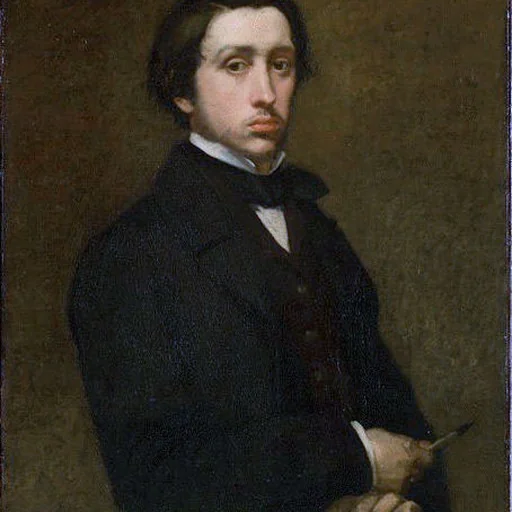
Born Hilaire-Germain-Edgar De Gas on 19 July 1834 in Paris, Edgar Degas came from an affluent banking family with aristocratic roots and spent his childhood among the cultivated circles of the French capital.