Artwork
H Beard Print Collection
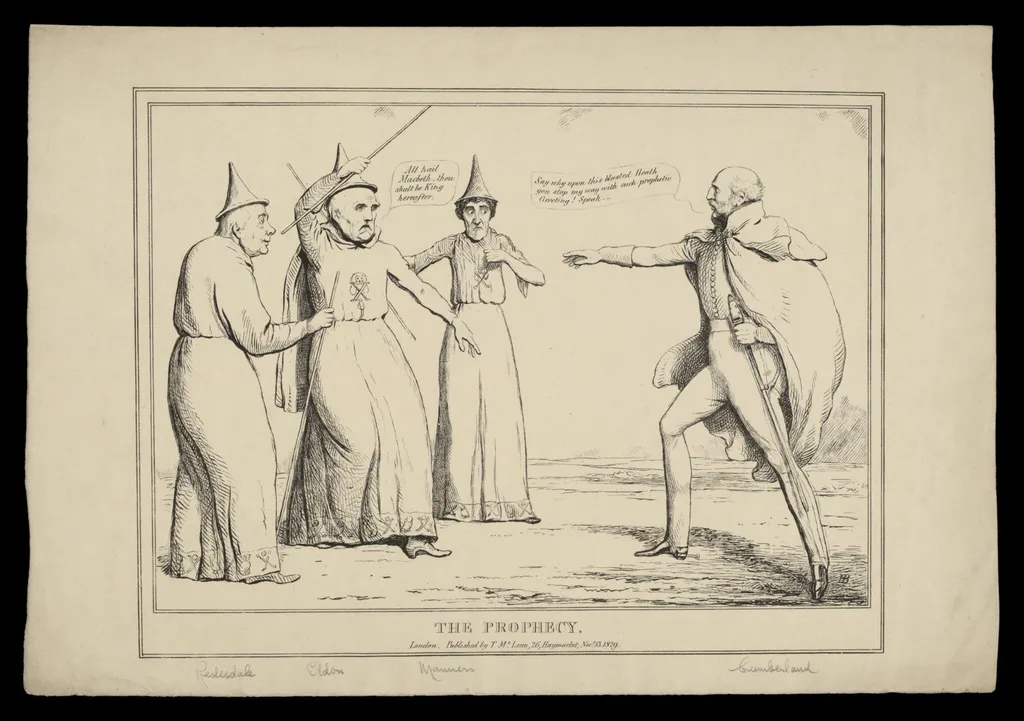
H Beard Print Collection is a print by the Romanticist artist John Doyle. It dates from 13 and is held in the collection of the Victoria and Albert Museum. This print, part of the H.
About this work
Overview
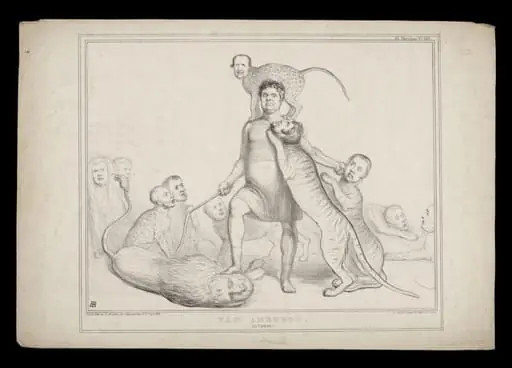
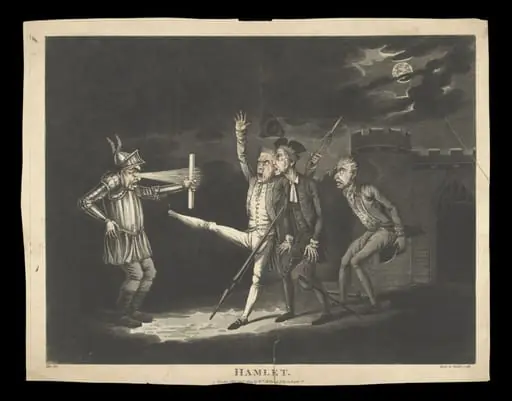
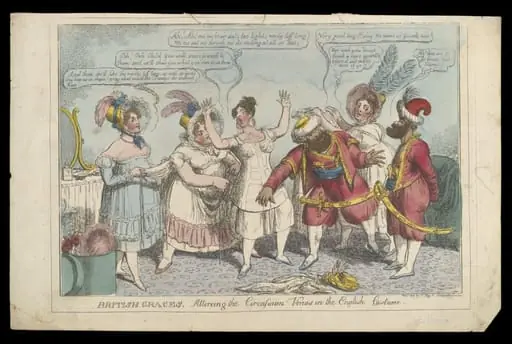
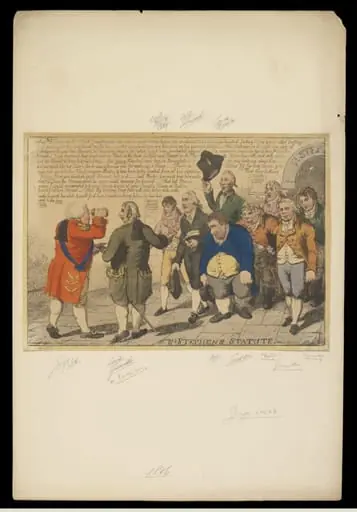
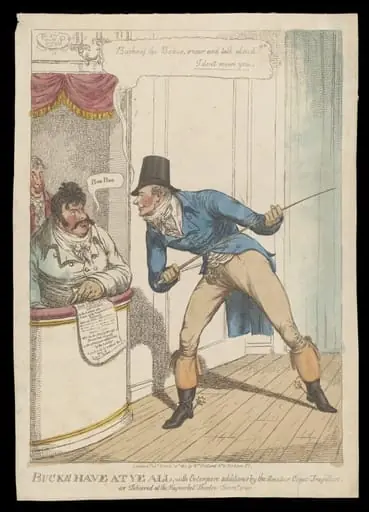
This print, part of the H. Beard Print Collection, was created by John Doyle and published in London by T. McLean. It depicts political figures of the early 19th century reimagined as characters from Shakespeare’s Macbeth. The work blends satire with theatricality, using familiar public personas to comment on contemporary power structures through the lens of a well-known dramatic narrative.
Subject & Meaning
Lord Redesdale, Lord Eldon, and Lord Manners are portrayed as the Weird Sisters, while Ernest Augustus II, Duke of Cumberland, assumes the role of Macbeth.
Lord Redesdale, Lord Eldon, and Lord Manners are portrayed as the Weird Sisters, while Ernest Augustus II, Duke of Cumberland, assumes the role of Macbeth. The allegory critiques the ambition and moral ambiguity of these figures, drawing parallels between their political maneuvers and the tragic descent of Shakespeare’s protagonist. The choice of characters suggests a cynical view of authority and the corrupting nature of power.
Technique & Style
Doyle employed fine line engraving to render detailed facial features and elaborate period costumes, characteristic of his satirical lithographic style. The composition is tightly framed, emphasizing the figures’ expressions and gestures to heighten dramatic tension. The tonal contrasts and precise linework reflect the influence of Romantic-era illustration, prioritizing emotional intensity over naturalism.
History & Provenance
Created in the 1830s, the print was produced during a period of political unrest in Britain, when public scrutiny of aristocratic figures was increasing. It was distributed through commercial print sellers like T. McLean, who specialized in political caricatures. The work entered the H. Beard Collection, a significant archive of 19th-century British satirical prints, now held in institutional custody.
Context
The print emerges from a tradition of political satire that used literary allusion to evade direct censorship. By casting real individuals as Shakespearean villains, Doyle tapped into widespread cultural familiarity with Macbeth to critique governance without naming names explicitly. This method was common among caricaturists navigating restrictive press laws in post-Napoleonic Britain.
Legacy
Doyle’s work contributed to the development of political cartooning as a form of public discourse. Though not widely exhibited in its time, the print remains a documented example of how art intersected with journalism and satire in the early Victorian era. Its survival in the H. Beard Collection ensures its continued study as a cultural artifact of political commentary.
Artist & collection
Artist
John Doyle’s prints from the 1820s–40s capture political and social life with sharp, witty detail.