Artwork
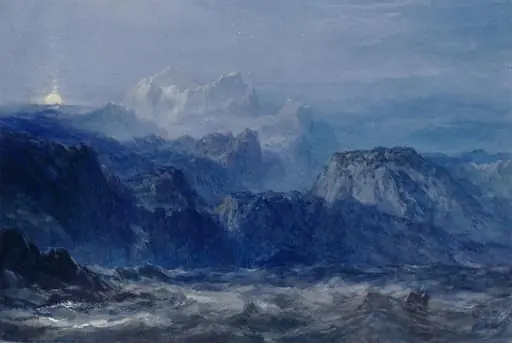
The Witch's Home, No.2. "She's Off"
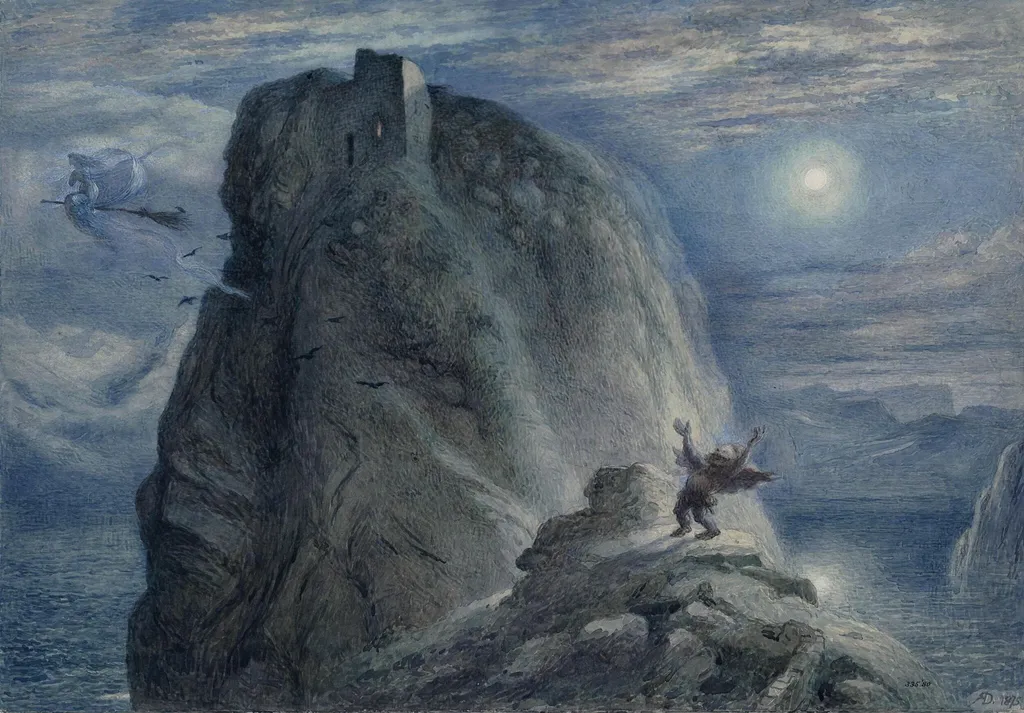
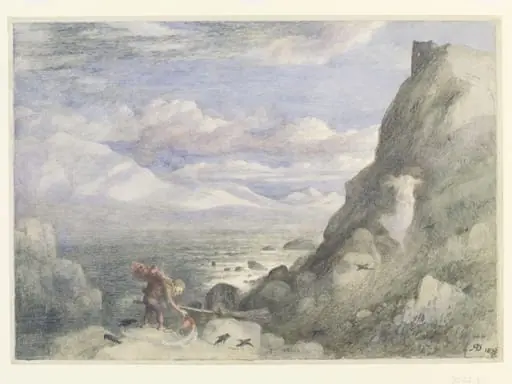
The Witch's Home, No.2. "She's Off" is a watercolor work on paper by the Impressionist artist Richard Doyle. It dates from 1875 and is held in the collection of the Victoria and Albert Museum. Created in 1875, 'The Witch's Home, No.
About this work
This painting is held at the Victoria and Albert Museum, and to learn more about the style and technique used, you can look up the movement: Realism.
The Witch's Home, No.2. "She's Off" is a watercolour painting. It's part of a series of paintings of witches at night.
The painting was created in 1875 by Richard Doyle, an artist who specialised in images of fairies and ghosts. He was inspired by a trip to a small island on the west coast of Scotland.
This painting is held at the Victoria and Albert Museum, and to learn more about the style and technique used, you can look up the movement: Realism.
Overview
Created in 1875, 'The Witch's Home, No.2. "She's Off"' is a watercolour by Richard Doyle, one of a small series depicting nocturnal witches. Doyle, known for his fantastical subjects, produced this work following a journey to the remote Scottish island of Canna. The piece reflects his engagement with atmospheric landscapes and folkloric themes, rendered in delicate transparent washes typical of his watercolour technique.
Subject & Meaning
The painting portrays a witch departing her dwelling at night, suggesting movement and mystery rather than overt menace. The figure is implied rather than detailed, allowing the environment to carry narrative weight. Doyle avoids sensationalism; instead, the scene evokes quiet solitude and the liminal space between the natural and the supernatural, rooted in local folklore rather than literary fantasy.
Technique & Style
Doyle employed transparent watercolour to suggest moonlit textures and atmospheric depth. Thin washes define the rugged coastline and the witch’s fleeting form, while negative space implies shadow and wind. His approach blends observational detail with imaginative suggestion, aligning with the quiet realism of late Victorian illustration rather than overt romanticism or symbolism.
History & Provenance
The work was painted after Doyle’s 1875 visit to Canna, an isolated island off Scotland’s west coast, whose stark terrain left a strong impression on him. It entered the Victoria and Albert Museum’s collection as part of his broader body of work, preserved alongside other illustrations and watercolours documenting his fascination with the supernatural and the natural world.
Context
In the 1870s, British artists increasingly turned to regional landscapes and folk traditions as sources of inspiration, moving away from grand historical themes. Doyle’s witch series reflects this trend, merging topographical accuracy with mythic suggestion. His focus on remote Scottish locales aligns with broader Victorian interests in Celtic culture and the sublime in nature.
Legacy
Though not widely exhibited today, Doyle’s witch series remains a quiet example of how illustration and fine art intersected in the late 19th century. His ability to convey narrative through subtle tone and composition influenced later illustrators drawn to folklore, preserving a nuanced vision of the supernatural grounded in real places and quiet observation.
Artist & collection
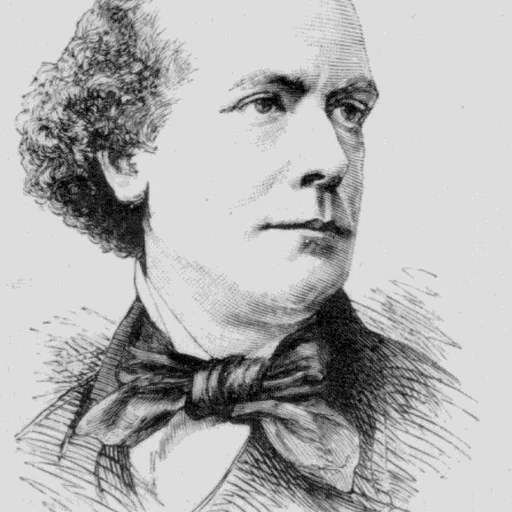
Artist
Richard "Dickie" Doyle (18 September 1824 – 10 December 1883) was a British illustrator of the Victorian era.