Artwork
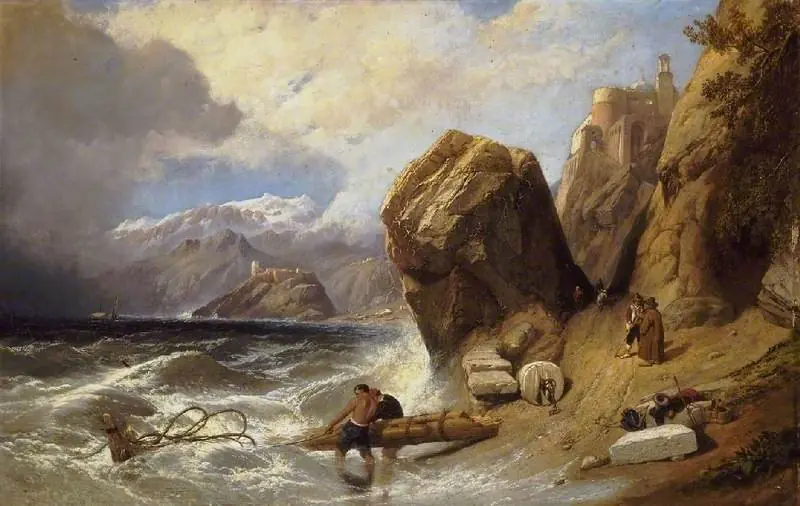
Fort of Socoa, St. Jean de Luz, France
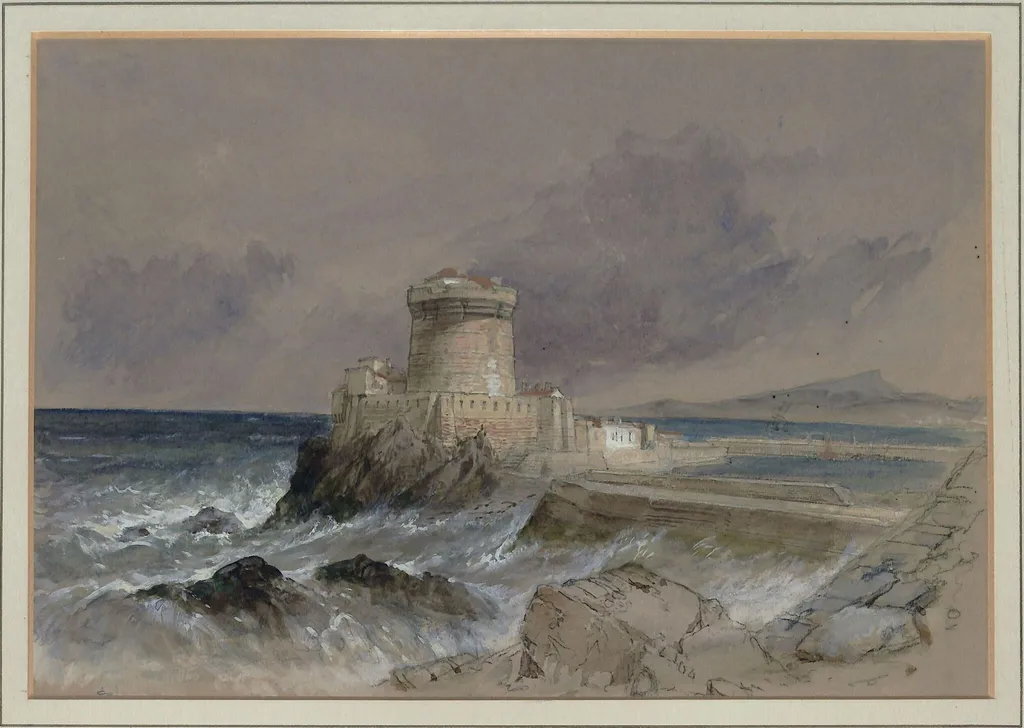
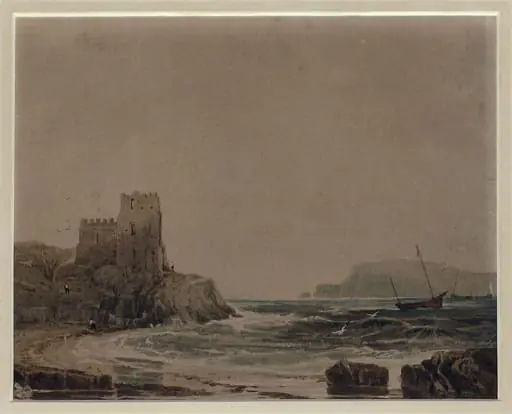
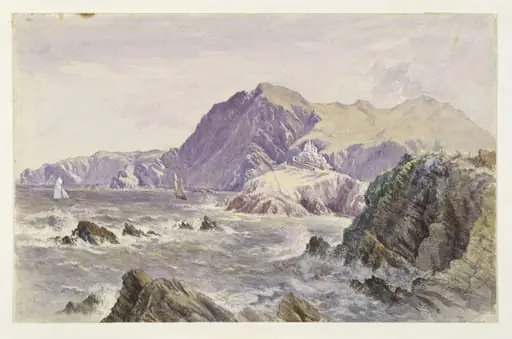
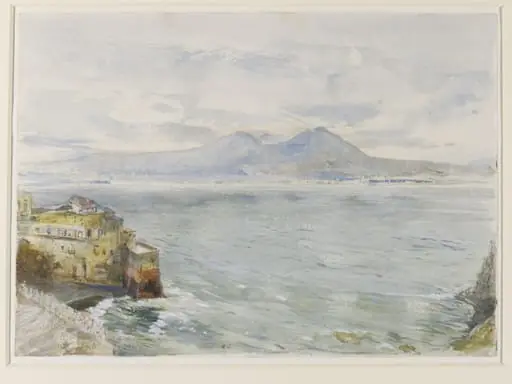
Fort of Socoa, St. Jean de Luz, France is a watercolor work on paper by the British Romanticist artist Clarkson Frederick Stanfield. It dates from 1820 and is held in the collection of the Victoria and Albert Museum. Clarkson Stanfield's watercolour captures the Fort of Socoa perched on a rugged stretch of the Basque coast near Saint-Jean-de-Luz.
About this work
Overview
Clarkson Stanfield's watercolour captures the Fort of Socoa perched on a rugged stretch of the Basque coast near Saint-Jean-de-Luz. The scene conveys a sense of elemental force, with the structure emerging from a chaotic seascape. Stanfield’s medium lends immediacy, emphasizing the transient effects of light and weather rather than architectural precision.
Subject & Meaning
The fort, a historic defensive structure, stands isolated against the sea’s turbulence, suggesting resilience amid natural hostility. Its solitary tower and connecting wall imply function over ornament, while the stormy sky and crashing waves reinforce a mood of enduring solitude. The composition avoids narrative, focusing instead on the tension between human construction and wild environment.
Technique & Style
Stanfield employed rapid, fluid brushwork to render the churning sea and overcast sky, using diluted pigments to suggest movement and atmospheric depth. The tower’s solidity is contrasted with the loose handling of waves and clouds, creating a dynamic interplay between structure and chaos. Subtle washes hint at distant mountains, grounding the scene without detailing it.
History & Provenance
The piece remained within private collections before entering public ownership, though its exact provenance before the 20th century is not fully documented.
Painted during Stanfield’s travels along the French coast in the 1830s, the work reflects his interest in coastal fortifications and maritime landscapes. It likely originated as a study for larger oil paintings or as a personal record of his journey. The piece remained within private collections before entering public ownership, though its exact provenance before the 20th century is not fully documented.
Context
In the early 19th century, British artists increasingly turned to continental shores for subject matter, drawn by dramatic coastlines and historical ruins. Stanfield, influenced by maritime traditions and topographical accuracy, contributed to a growing genre of landscape watercolours that balanced observation with emotional tone, distinct from idealized classical scenes.
Legacy
Stanfield’s coastal works, including this one, helped shape British watercolour’s reputation for capturing atmospheric effects with spontaneity. Though not widely exhibited in his lifetime, his approach influenced later artists interested in the interplay of nature and architecture. The Fort of Socoa remains a quiet example of his commitment to truthful, unembellished observation of the sea’s power.
Artist & collection
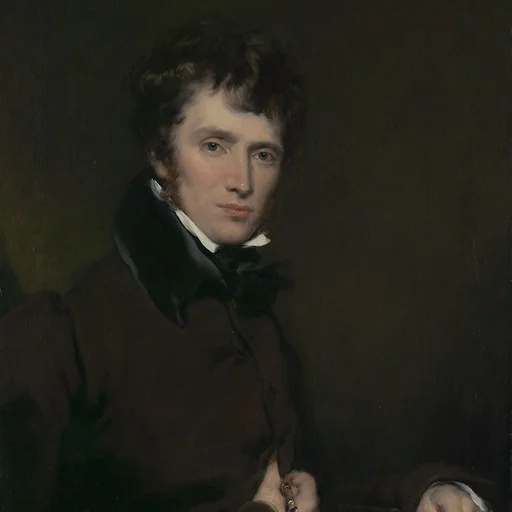
Artist
Clarkson Frederick Stanfield (3 December 1793 – 18 May 1867) was an English artist best known for his large-scale paintings of marine art and landscapes.