Artwork
Isaac-Jacques de Verthamon
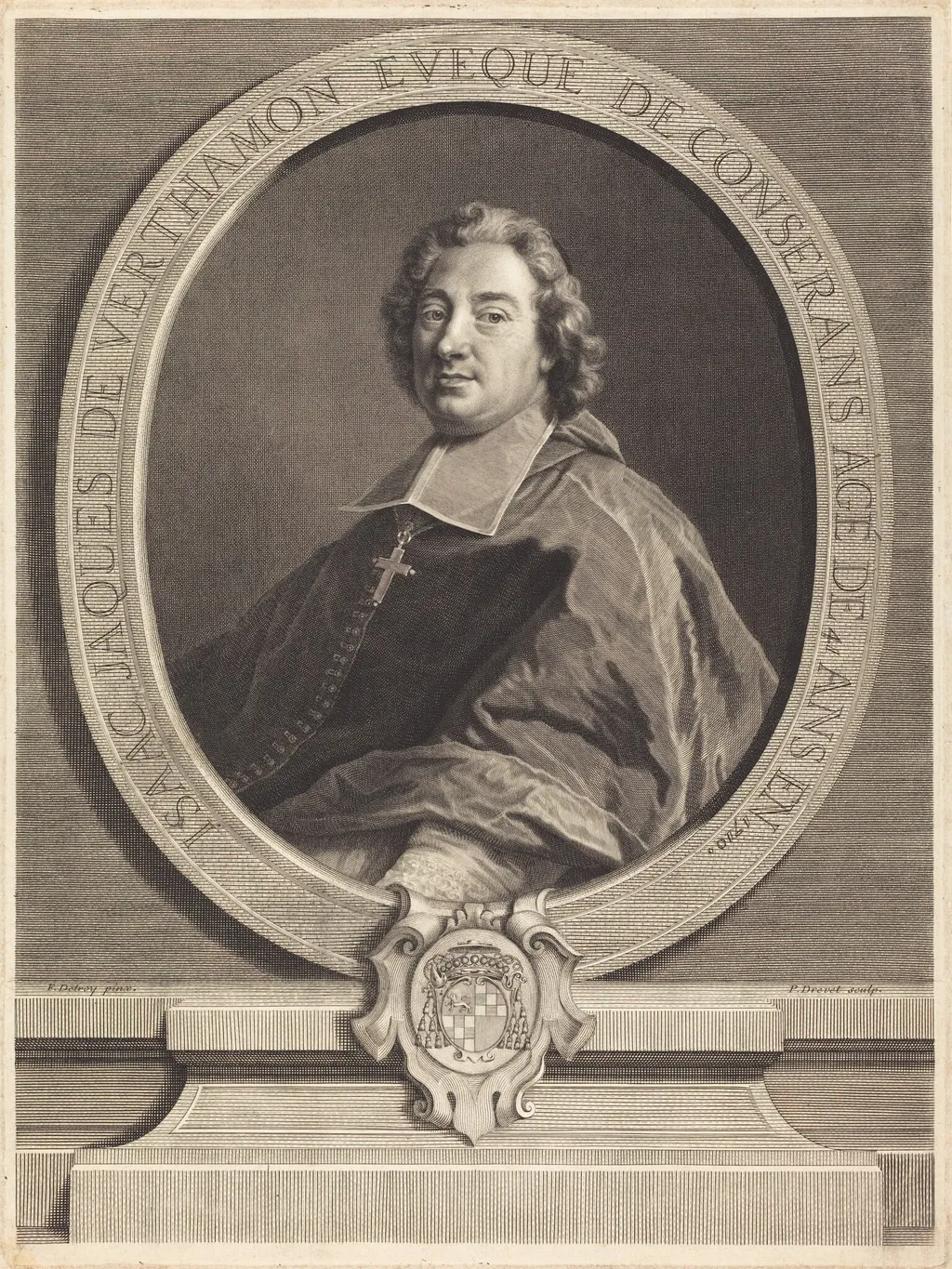
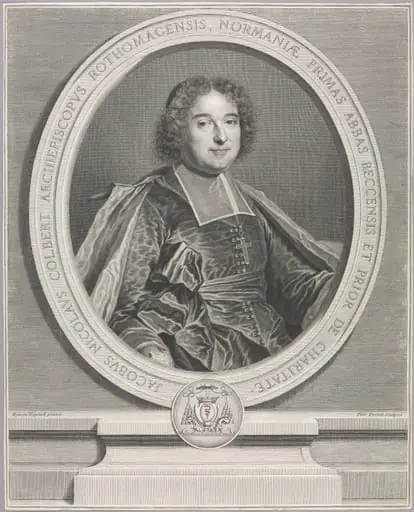
Isaac-Jacques de Verthamon is an ink print by the Baroque artist Pierre-Imbert Drevet. It dates from 1718 and is held in the collection of the National Gallery of Art. This 1718 copper engraving, executed by Pierre‑Imbert Drevet, presents a formal portrait of Isaac‑Jacques de Verthamon.
About this work
Overview
This 1718 copper engraving, executed by Pierre‑Imbert Drevet, presents a formal portrait of Isaac‑Jacques de Verthamon.
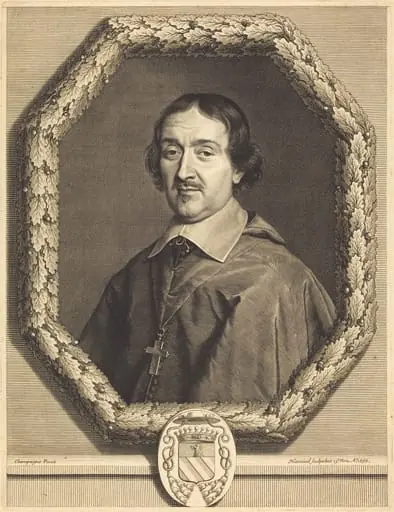
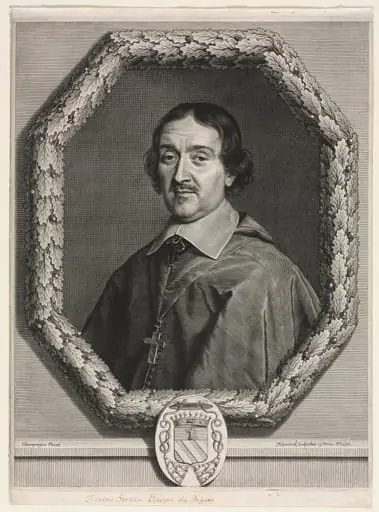
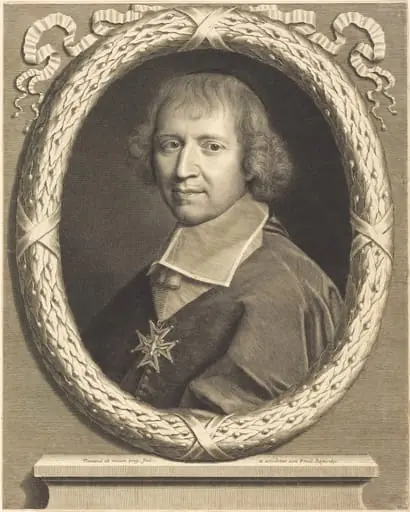
This 1718 copper engraving, executed by Pierre‑Imbert Drevet, presents a formal portrait of Isaac‑Jacques de Verthamon. Rendered in monochrome within a circular frame, the image shows the sitter in a high‑collared robe, a cross‑shaped pendant, and a decorative coat of arms positioned beneath his head. The work exemplifies the French tradition of printed portraiture that flourished in the early eighteenth century.
Subject & Meaning
Isaac‑Jacques de Verthamon is depicted with the trappings of status: a sumptuous robe, a prominent cross necklace, and an heraldic shield bearing intricate scrollwork. These elements signal his social rank and possibly his affiliation with a noble or ecclesiastical order, while the dignified pose conveys the conventions of portraiture intended to affirm the sitter’s identity and prestige.
Technique & Style
Pierre‑Imbert Drevet employs a network of fine, intersecting lines to model light and shadow, giving the face and garments a convincing three‑dimensionality. The engraving’s delicate hatching and cross‑hatching reflect the meticulous craftsmanship characteristic of the Drevet workshop, where precision and subtle tonal variation were paramount in reproducing the textures of fabric and metal.
History & Provenance
The print belongs to the Drevet family’s long‑standing line of portrait engravers, a lineage begun by Pierre Drevet and continued by his son and nephew. Produced in Paris in 1718, the engraving would have been distributed among collectors and patrons seeking a durable likeness of de Verthamon, and it likely circulated within the networks of French aristocratic portraiture.
Context
During the early eighteenth century, engraved portraits served both as personal commemorations and as means of disseminating the images of notable individuals across Europe. The Drevet atelier specialized in translating painted likenesses into prints, thereby extending the reach of portraiture beyond the confines of a single painted canvas.
Legacy
While not as widely reproduced as later prints, this engraving illustrates the technical standards and aesthetic preferences of its era. It remains a representative example of the Drevet family's contribution to French printmaking, offering scholars insight into the visual culture and social hierarchies of the Ancien Régime.
Artist & collection

Artist
The Drevet Family were leading portrait engravers of France for over a hundred years. Their fame began with Pierre, and was sustained by his son, Pierre-Imbert, and by his nephew, Claude.