Artwork
Πλοίο
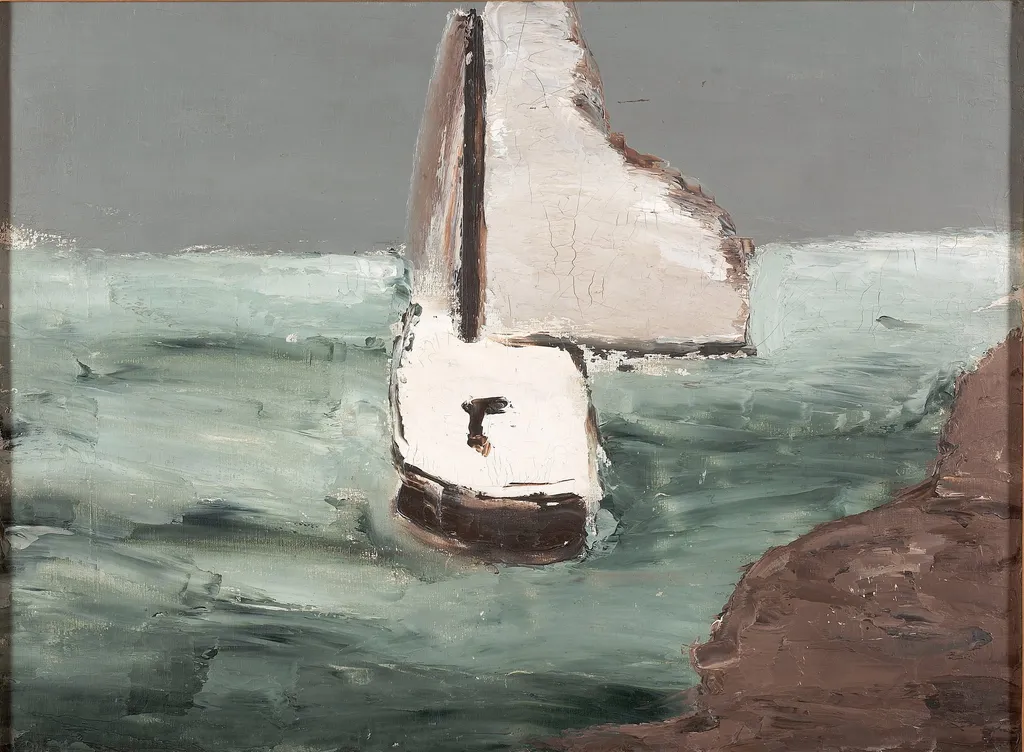
Πλοίο is an unspecified painting by the Constructivist artist Αleksandr Drevin. It dates from 1931 and is held in the collection of the Metropolitan Organisation of Museums of Visual Arts of Thessaloniki – MOMus.
About this work
Drevin was part of a wave of Russian artists in the early 1900s who liked to experiment with shape and color.
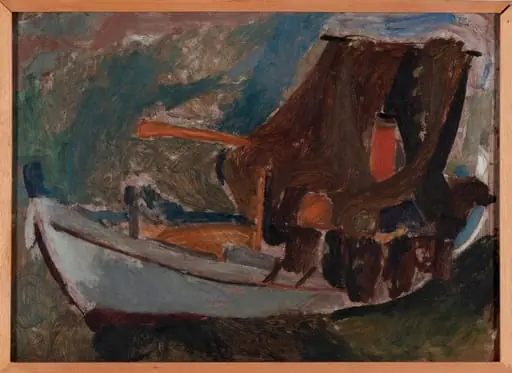
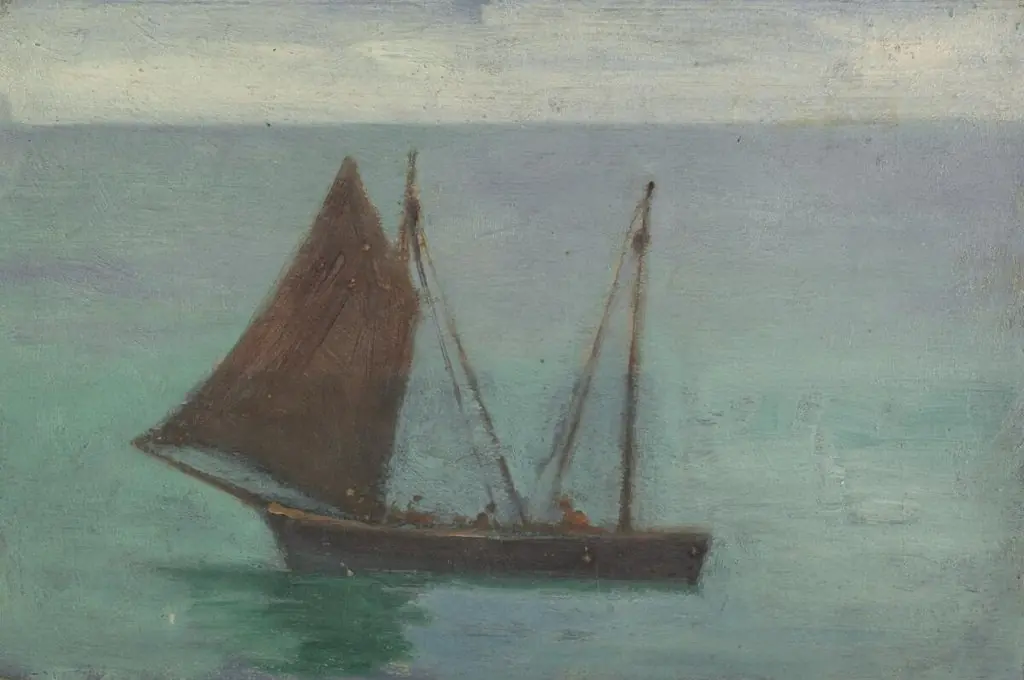
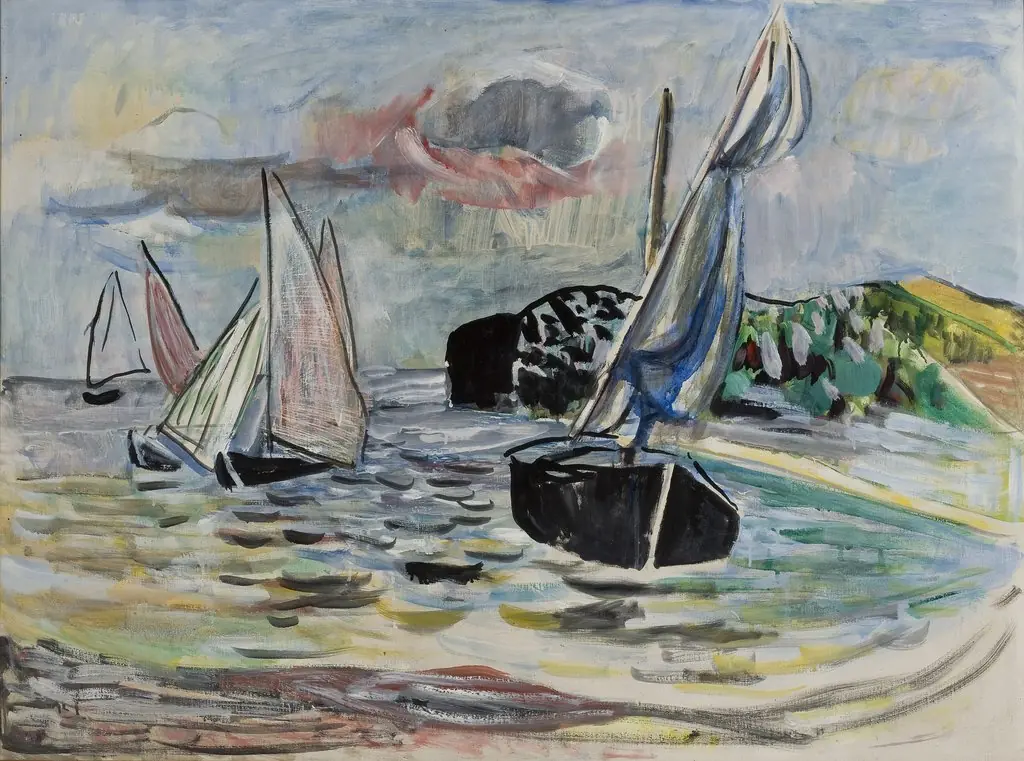
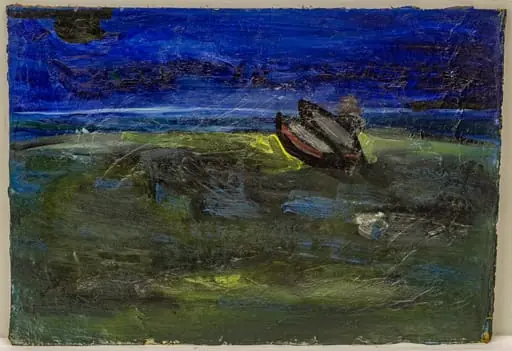
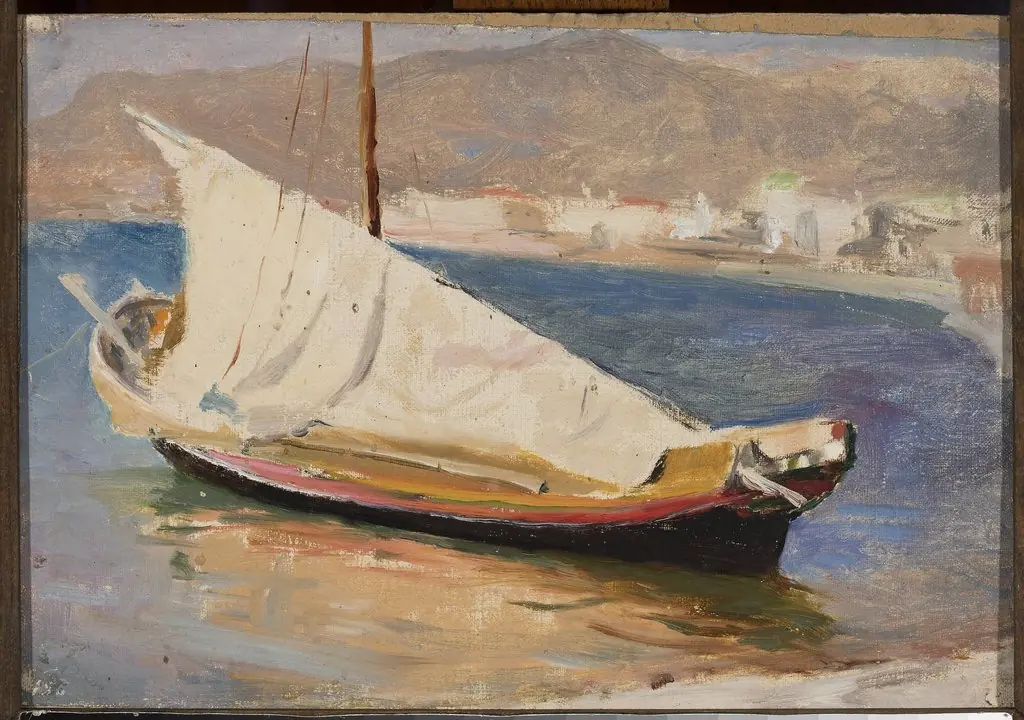
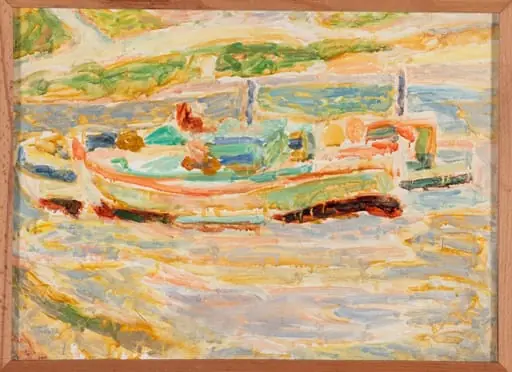
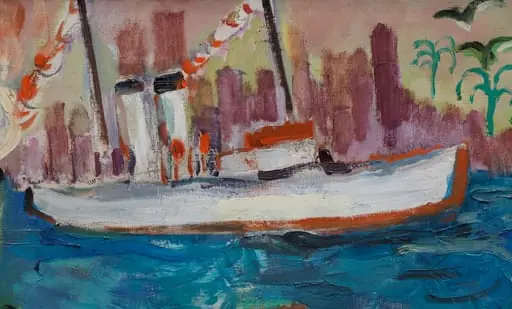
A red and black ship cuts through wavy blue water under a cloudy sky. The boat has a simple shape, almost like a toy, with bold colors and strong lines.
Drevin was part of a wave of Russian artists in the early 1900s who liked to experiment with shape and color. He often painted industrial scenes, but with a personal, expressive touch. This painting was made in 1931, just after the Soviet government began to control art more strictly. Some artists stopped taking risks. Drevin still used bold forms, even as freedom shrank.
Look up the technique: impasto.
Overview
The work titled Πλοίο depicts a stylised vessel rendered in stark red and black against a field of undulating blue water and a muted sky. The ship’s simplified, toy‑like silhouette is outlined with strong, decisive lines, emphasizing form over narrative content.
Subject & Meaning
The painting presents a solitary ship navigating a turbulent sea, a motif that can be read as an allegory of movement and transition. Within the context of early Soviet visual culture, such imagery often alluded to progress, industrialisation, or the collective journey of society.
Technique & Style
Executed with thick, textured brushwork, the surface displays the characteristic impasto that gives the colours a palpable weight. The bold, flat planes of red, black and blue reflect the formalist concerns of the Russian avant‑garde, where shape and colour dominate over representational detail.
History & Provenance
Created in 1931, the piece belongs to the later phase of the Russian avant‑garde, a period when state control over artistic production was tightening after the October Revolution. The artist continued to employ experimental visual language despite increasing restrictions on artistic freedom.
Context
The early twentieth‑century Russian environment combined rapid technological advances, urban industrialisation, and widespread social unrest following the 1905 and 1917 upheavals. These material and societal shifts fostered a climate in which artists sought new visual vocabularies, often drawing on folk traditions and simplified graphic forms.
Legacy
Works such as this illustrate how avant‑garde principles persisted into the 1930s, bridging the experimental fervour of the 1910s with the more constrained aesthetic policies of the Soviet state. The painting remains a testament to the resilience of formal experimentation under political pressure.
Artist & collection
Artist
Museum
Metropolitan Organisation of Museums of Visual Arts of Thessaloniki – MOMus
Continue through works from the same source collection.