Artwork
September
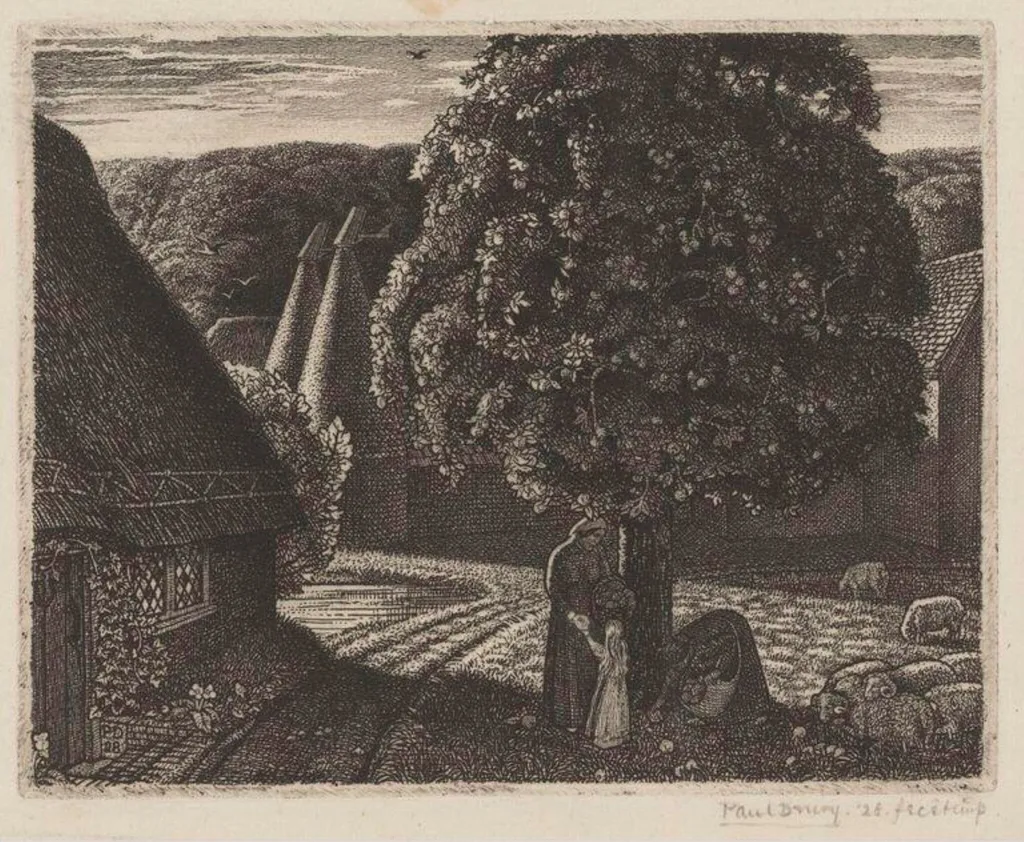
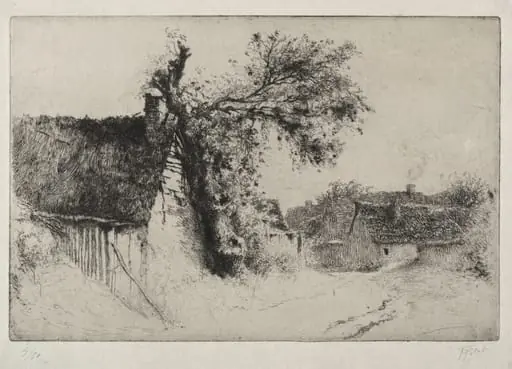
September is a print by Paul Drury. It dates from 1928 and is held in the collection of the Victoria and Albert Museum.
About this work
Paul Drury made this print called *September* in 1928.
It shows a quiet moment, typical of his early work.
He studied at Goldsmith’s College and admired the printmaker F.L.M. Griggs.
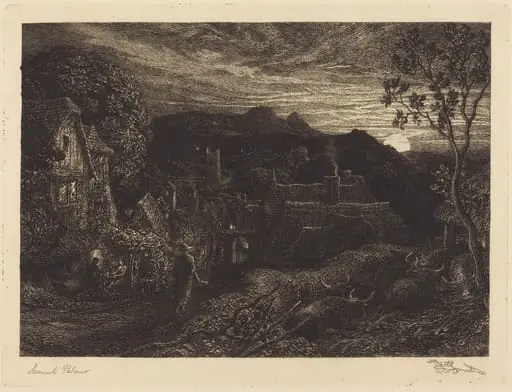
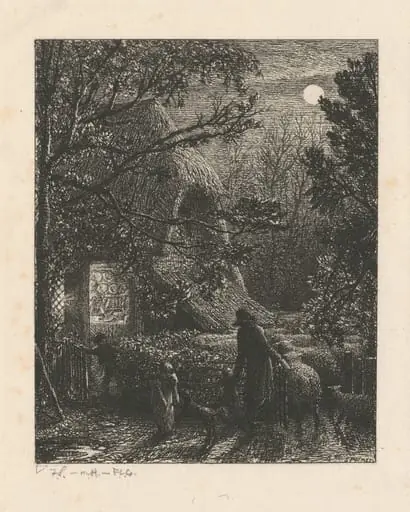
His prints from this time echo Samuel Palmer’s Shoreham landscapes.
Palmer’s vision mixed nature and dream in the 1820s and 1830s.
Drury’s etching feels gentle yet deep.
Look next at Paul Drury’s other prints.
Overview
September, a 1928 print by Paul Drury, captures a serene moment characteristic of his early output. Created during a pivotal period in the etching revival of the late 1920s, this work reflects Drury's training at Goldsmith's College and influences from notable printmakers.
Subject & Meaning
The print embodies a contemplative, mystical atmosphere, evoking a harmony between the natural world and the sublime. This balance echoes the dreamlike landscapes of Samuel Palmer's Shoreham period (1820s-1830s), suggesting a deep, gentle introspection.
Technique & Style
Executed in etching, September showcases Drury's skill in the medium, with intricate lines and textures conveying a sense of softness and depth. The technique, honed under the influence of F.L.M. Griggs, complements the work's mystical and serene qualities.
History & Provenance
Created in 1928, September is an early work by Paul Drury, reflecting his formative period at Goldsmith's College. The print's provenance is not detailed here, but its creation coincides with Drury's emergence as a key figure in the late 1920s etching revival.
Context
September sits within the broader context of the etching revival, a movement that saw a resurgence of interest in etching techniques among British artists in the late 1920s. Drury's work, alongside others, helped redefine the medium's expressive capabilities.
Legacy
As part of Drury's early oeuvre, September contributes to his legacy as a printmaker who bridged the mystical traditions of the past (notably Samuel Palmer) with the technical innovations of his time, influencing subsequent generations of etchers.
Artist & collection
Artist
Paul Drury made finely detailed etchings of quiet English landscapes in the mid-20th century.