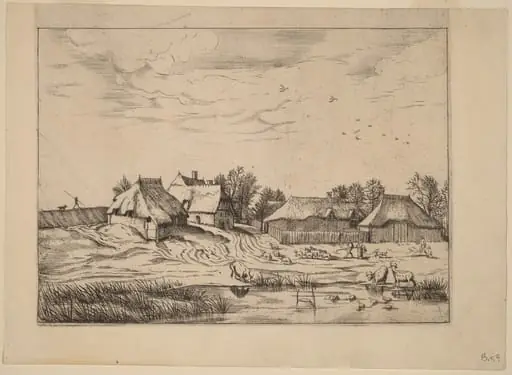
Artwork
Farms
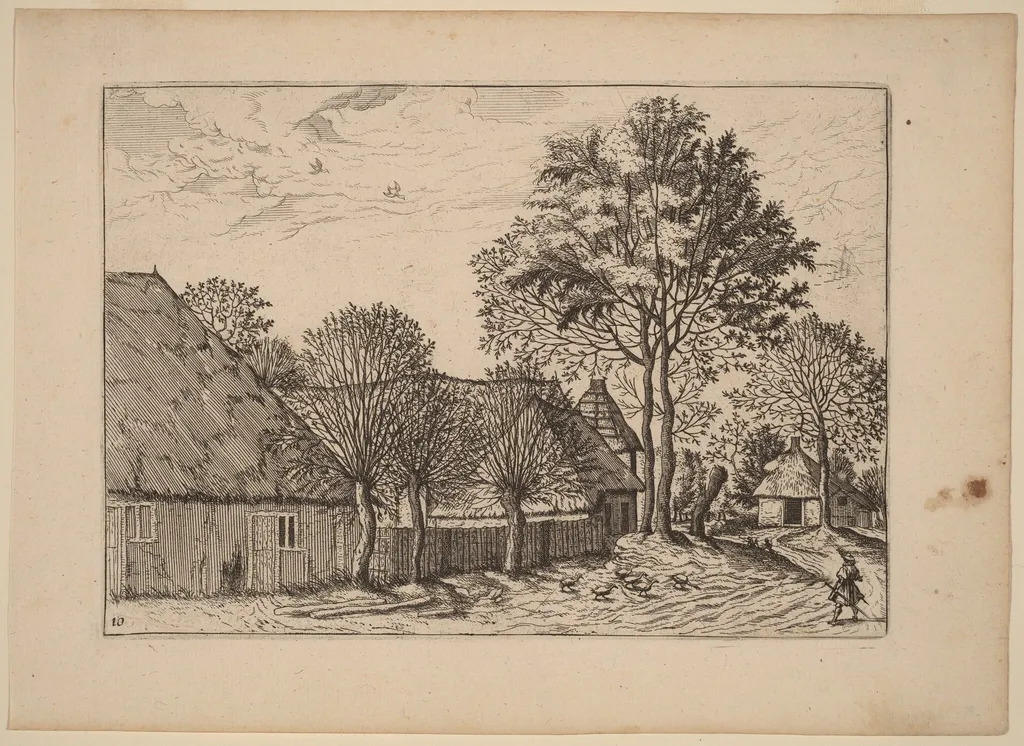
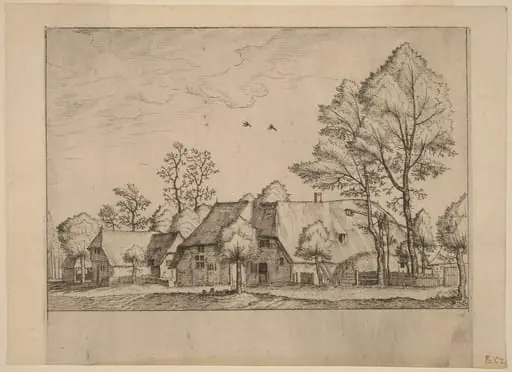
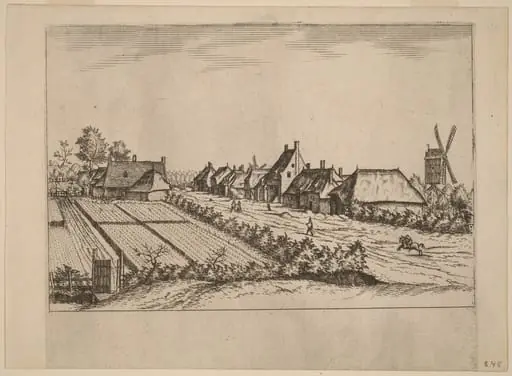
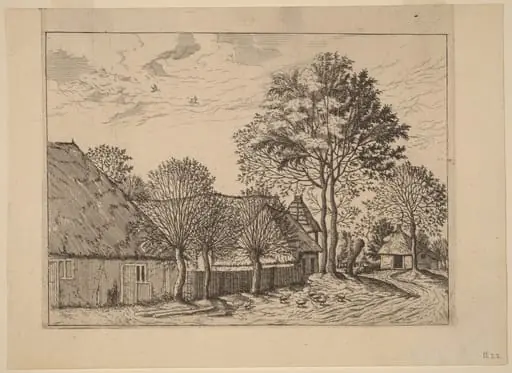
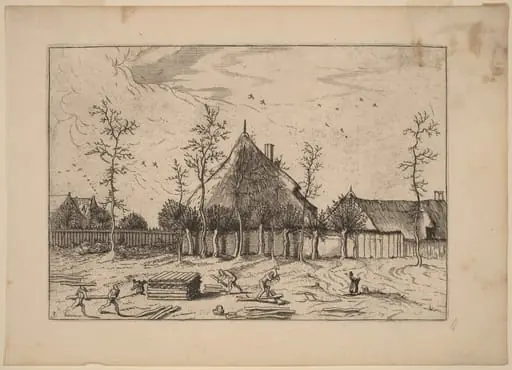
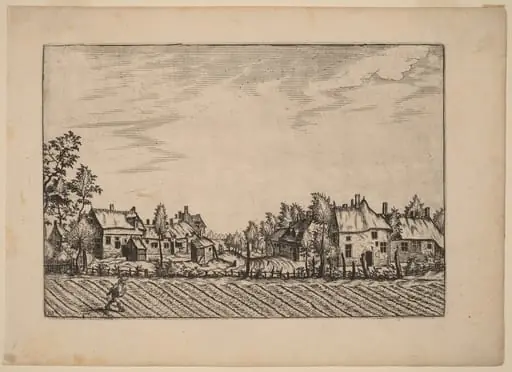
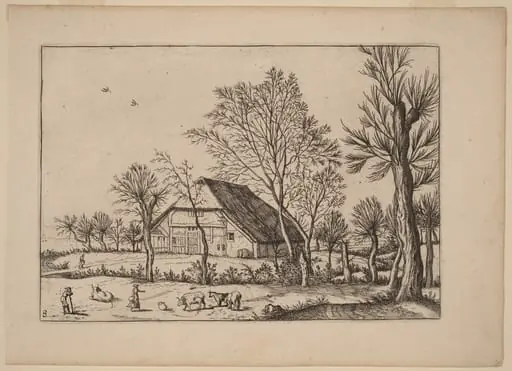
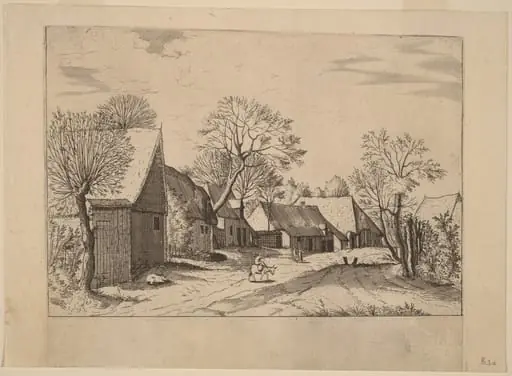
Farms is an ink print by the Baroque artist Johannes van Doetechum the Elder. It is held in the collection of the National Gallery of Art. Created in 1676 by Johannes van Doetecum the Elder, this print combines etching and engraving techniques to depict a tranquil rural scene.
About this work
Overview
This work reflects his skill in translating landscape imagery into fine linear detail, using ink pressed from a metal plate to achieve subtle tonal variation.
Created in 1676 by Johannes van Doetecum the Elder, this print combines etching and engraving techniques to depict a tranquil rural scene. A Dutch artist and cartographer, van Doetecum was known for his detailed reproductive prints, often based on earlier Netherlandish compositions. This work reflects his skill in translating landscape imagery into fine linear detail, using ink pressed from a metal plate to achieve subtle tonal variation.
Subject & Meaning
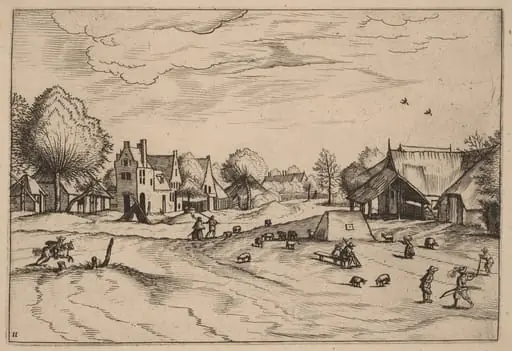
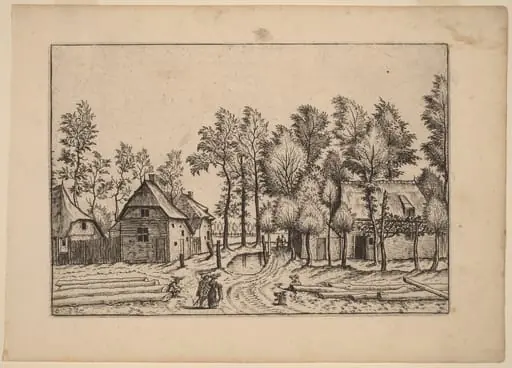
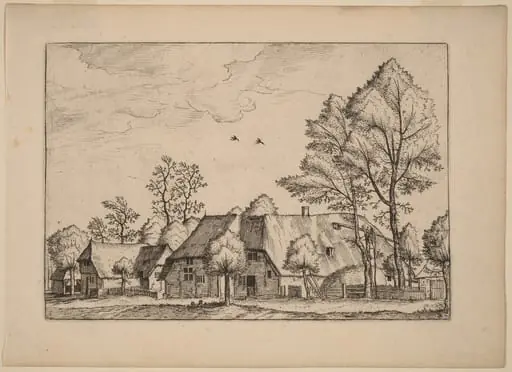
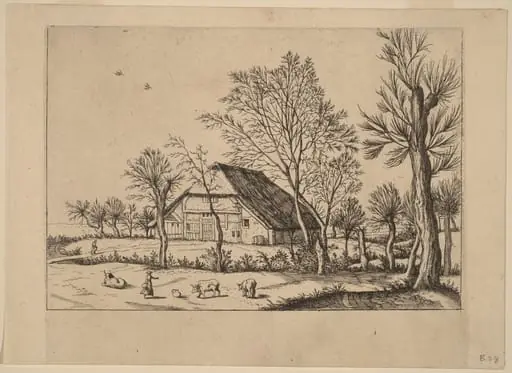
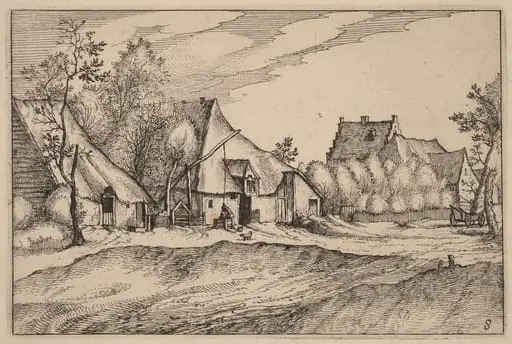
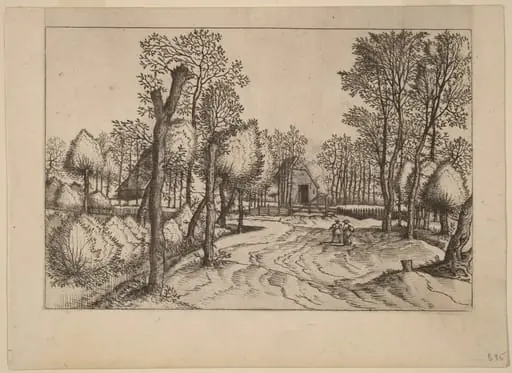
The scene portrays a quiet village with modest wooden homes, thatched roofs, and a lone figure walking along a dirt path, burdened by an object slung over the shoulder. Trees frame the path, while a few birds suggest movement in the open sky. The composition avoids drama or narrative, instead emphasizing stillness and routine, reflecting the dignity of everyday rural life in the Dutch countryside during the late 17th century.
Technique & Style
Van Doetecum employed etching to lay down the initial lines and then refined them with engraving, allowing for greater precision in shading and texture. The interplay of fine, controlled lines creates depth in the buildings, foliage, and terrain. The sky is rendered with minimal strokes, leaving space to suggest atmosphere. This method was typical of Dutch printmakers who valued clarity and restraint over bold contrast.
History & Provenance
Johannes van Doetecum the Elder, born in Deventer, relocated to Haarlem in the late 16th century and worked alongside his brother Lucas on series of prints after Bruegel and other artists. While specific ownership records for this print are not documented, its style aligns with the commercial print trade of Haarlem, where reproductive engravings were widely circulated among collectors and artisans.
Context
In the late 1600s, Dutch printmakers frequently turned to rural themes as urban audiences sought imagery of stability and simplicity. Van Doetecum’s work, though not original in composition, contributed to a broader cultural interest in documenting everyday life. His prints served both as artistic objects and as accessible records of landscape and labor, reflecting the values of a society increasingly defined by commerce and order.
Legacy
Van Doetecum’s prints, including this one, helped preserve and disseminate the visual language of earlier Netherlandish genre scenes. Though less celebrated than his contemporaries, his technical precision and quiet compositions influenced the tradition of landscape etching in the Netherlands. His work remains a quiet testament to the craftsmanship of reproductive printmaking in the early modern period.
Own this work as a print
Artist & collection

Artist
Johannes van Doetechum the Elder
Joannes van Doetecum the Elder (1530 – 1605) was a Dutch engraver-cartographer known for his etched works after genre scenes by Pieter Bruegel the Elder and maps of various cities in the Netherlands.