Artwork
Thaxted from the Fields
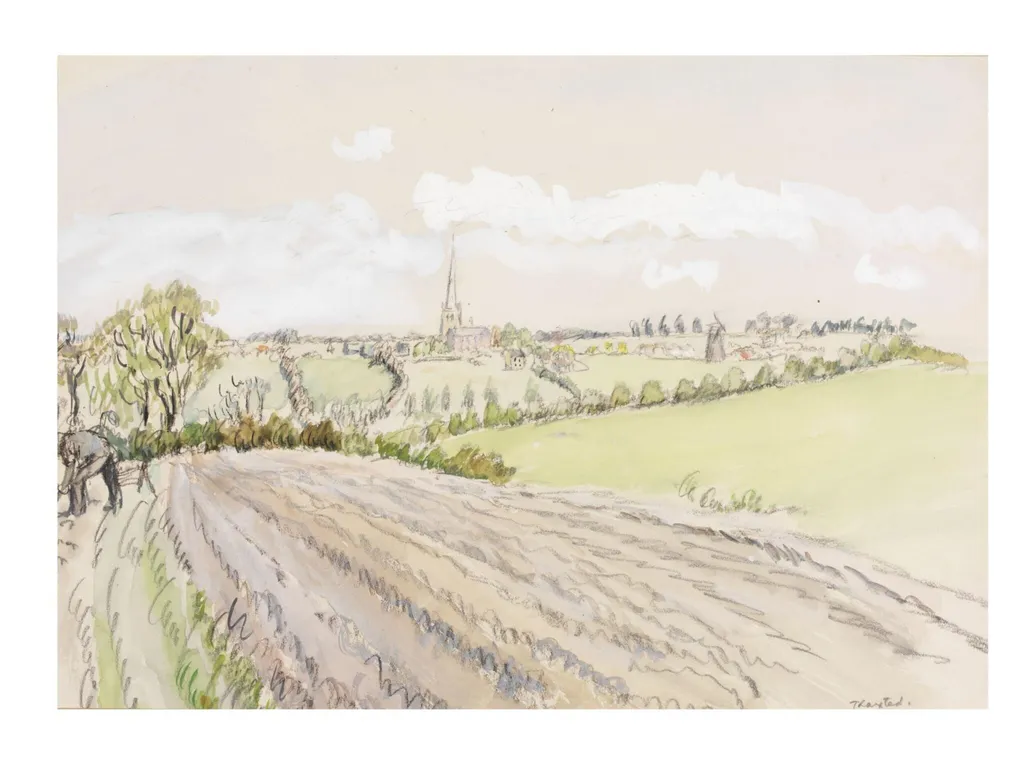
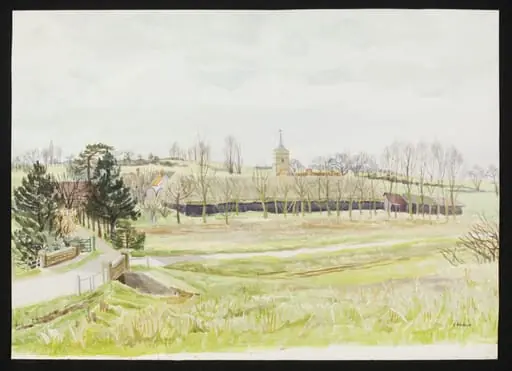
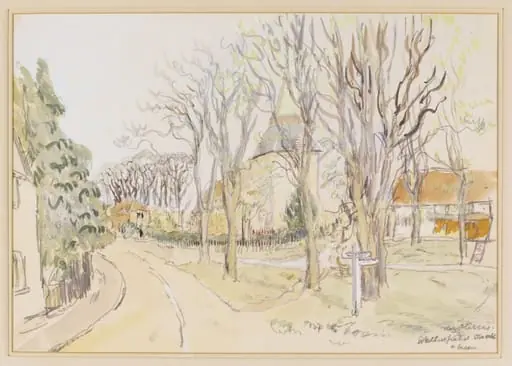
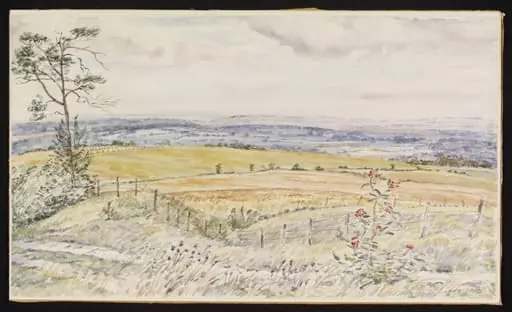
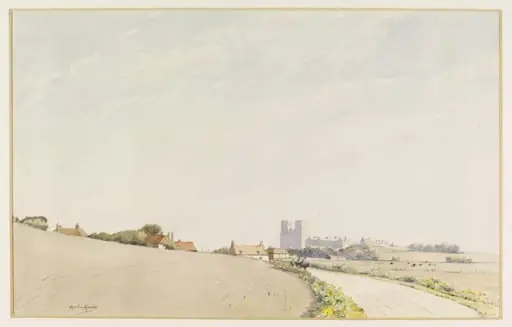
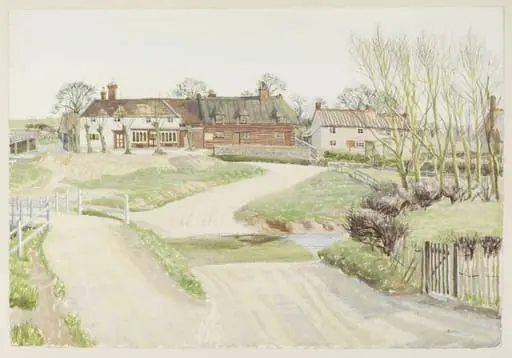
Thaxted from the Fields is a watercolor work on paper by the Impressionist artist H. E. Du Plessis. It dates from 1940 and is held in the collection of the Victoria and Albert Museum. H.
About this work
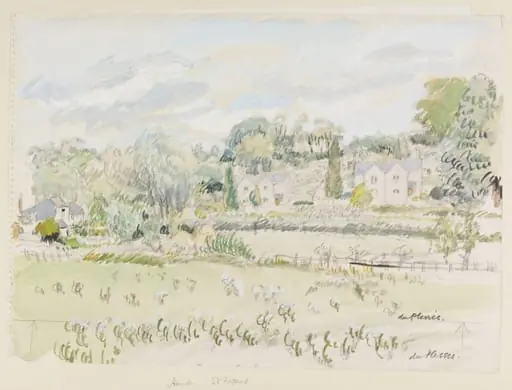
Thaxted from the Fields is a watercolour landscape. It was created by artist H. E. Du Plessis around 1940.
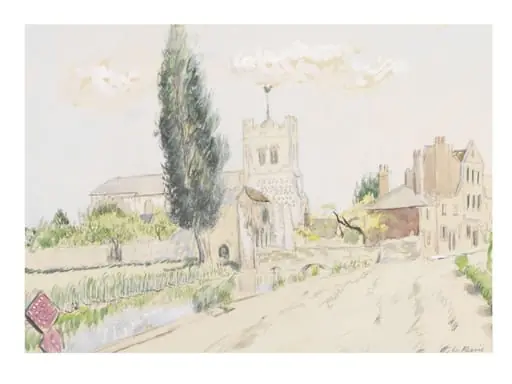
The painting shows Thaxted, a small town in Essex, from a distance. The town is known for its large church, but in this painting, it appears small and fragile from across the fields.
To learn more about the artist's style and other works, look up artist: Du Plessis, H. E.
Overview
Du Plessis created this watercolour around 1940, capturing the Essex town of Thaxted from a distant, elevated perspective.
H. E. Du Plessis created this watercolour around 1940, capturing the Essex town of Thaxted from a distant, elevated perspective. The work belongs to a tradition of British landscape watercolours that emphasize atmosphere over detail. Rather than focusing on architectural prominence, the artist presents the settlement as a quiet cluster within a broader natural setting, rendered with delicate washes and subtle tonal shifts.
Subject & Meaning
Thaxted’s church, locally known for its scale and architectural significance, is rendered minimally in the composition. Its spire, though present, is dwarfed by the expanse of fields and sky, suggesting a contemplative view of human presence within nature. The painting conveys a sense of quiet humility, shifting focus from monumentality to the fragile coexistence of settlement and landscape.
Technique & Style
Du Plessis employs transparent watercolour washes to suggest distance and soft atmospheric perspective. The town is indicated with faint, muted tones, while the surrounding fields are built up in layered greys and greens, creating a sense of depth without sharp definition. The technique favors suggestion over precision, aligning with early 20th-century British watercolour practices that valued mood and light over topographical accuracy.
History & Provenance
The painting dates from around 1940, a period when Du Plessis was actively engaged in regional landscape studies. Though little is documented about its early ownership, the work reflects the artist’s consistent interest in Essex’s rural towns. It likely originated from direct observation, as Du Plessis frequently worked en plein air, capturing the quiet character of places often overlooked by more prominent artists of the time.
Context
In the interwar and wartime years, British artists increasingly turned to modest, everyday landscapes as subjects of quiet reflection. Thaxted from the Fields aligns with this trend, contrasting with grander historical or urban depictions. The painting’s restrained tone mirrors a broader cultural shift toward introspection and an appreciation for the unassuming beauty of the English countryside.
Legacy
Du Plessis’s work remains part of a lesser-known but significant body of regional watercolours from mid-20th-century Britain. While not widely exhibited, this piece exemplifies a thoughtful, understated approach to landscape that values observation over spectacle. It contributes to a broader understanding of how artists of the period engaged with place, memory, and the subtle rhythms of rural life.
Artist & collection
Artist
A South Wales watercolor artist active around 1940, H. E. Du Plessis painted the everyday buildings and lanes of Glamorganshire. Brush in hand, he recorded places like the low stone Jesus Hospital in Bray and the…