Artwork
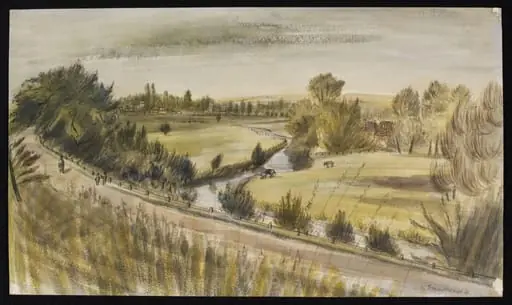
View from Calne Golf Course near Heddington
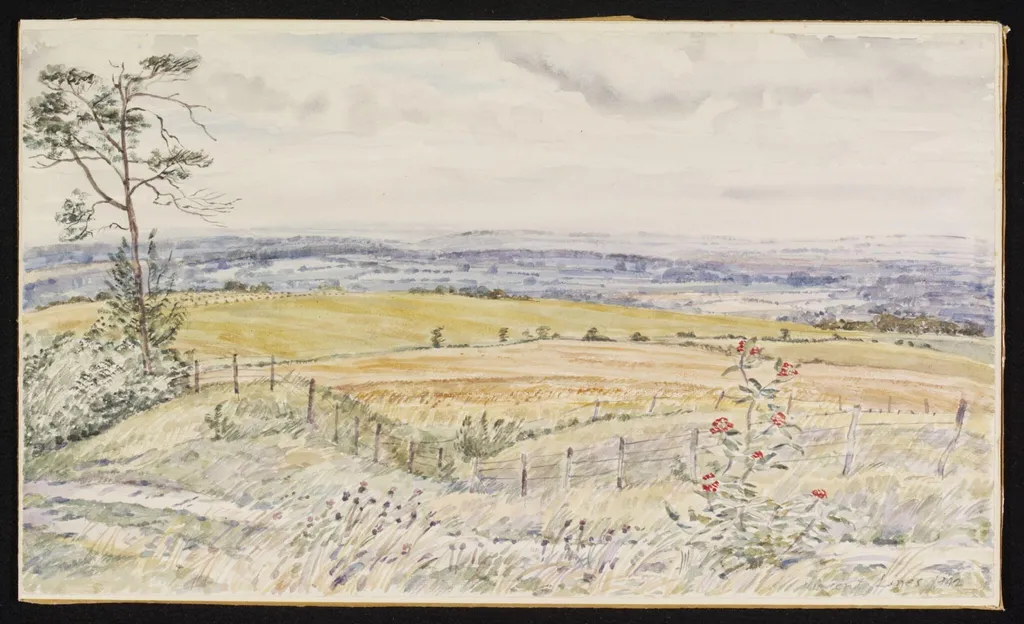
View from Calne Golf Course near Heddington is a watercolor work on paper by the Impressionist artist Lines. It dates from 1942 and is held in the collection of the Victoria and Albert Museum.
About this work
Overview
The work belongs to a larger collection of over 1,500 pieces commissioned to preserve scenes of rural England during a time of national uncertainty and change.
Created in 1942, this watercolour by artist Lines captures a quiet stretch of countryside near Heddington, viewed from Calne Golf Course. It was made as part of the Recording Britain project, a wartime initiative to visually archive the nation’s landscapes. The work belongs to a larger collection of over 1,500 pieces commissioned to preserve scenes of rural England during a time of national uncertainty and change.
Subject & Meaning
The scene presents an unpopulated, tranquil expanse of rolling fields and distant hills, framed by a low wooden fence and a solitary tree. Wildflowers in muted purples and reds suggest seasonal growth, while the absence of human activity underscores a sense of stillness. The image reflects an effort to document ordinary, enduring landscapes at risk from wartime disruption and modernization, valuing quiet beauty over dramatic narrative.
Technique & Style
Lines employed delicate watercolour washes to convey atmosphere rather than detail. Soft, translucent layers of pigment create a light-filled horizon, with hills fading gently into the pale sky. The composition avoids heavy outlines or dense shading, relying instead on subtle tonal shifts to suggest depth. The sparse elements—fence, tree, flowers—are rendered with restraint, enhancing the sense of openness and calm.
History & Provenance
Commissioned by the Pilgrim Trust and directed by Sir Kenneth Clark, the Recording Britain project ran during the Second World War to safeguard visual records of the British countryside. Artists were paid to produce works that might otherwise be lost to bombing, development, or social change. This watercolour entered the Victoria and Albert Museum’s collection as part of this effort, where it remains as a documented artifact of wartime cultural preservation.
Context
During the war, Britain faced threats to its physical and cultural landscape. Urban expansion, military activity, and the fear of destruction prompted efforts to record rural scenes before they disappeared. The Recording Britain project emerged as a quiet counterpoint to wartime propaganda, emphasizing continuity and heritage through unembellished depictions of everyday places, often overlooked but deeply rooted in national identity.
Legacy
The Recording Britain collection endures as a significant archive of mid-20th-century British topography. Lines’s watercolour, like others in the series, offers a restrained yet evocative record of a landscape in transition. These works continue to inform historical and artistic understanding of how visual culture responded to national crisis—not through grandeur, but through attentive observation of the ordinary.
Artist & collection

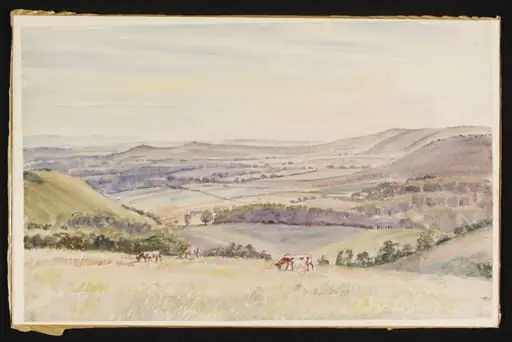 View over Pewsey Vale from Martinsell
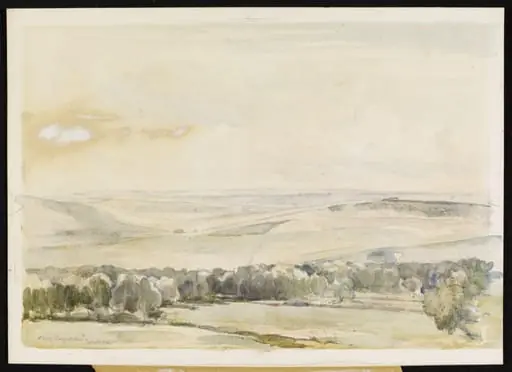 The Downs from Friston
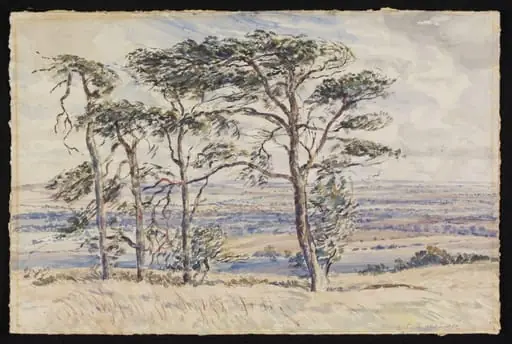 Pewsey Vale and Fir Trees from Martinsell
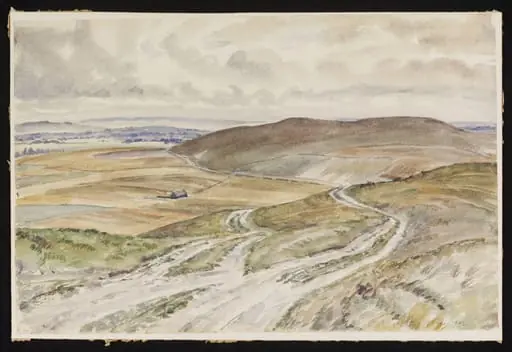 View from the Wansdyke in Stanton St. Bernard
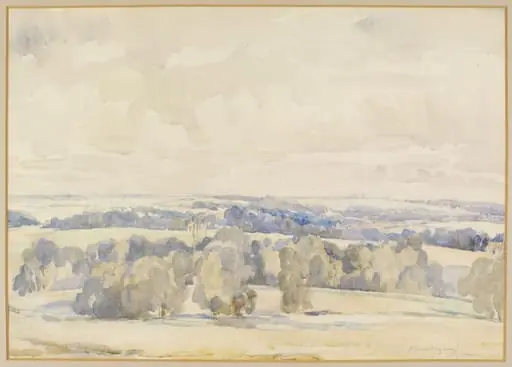 Ashburnham Park; looking into the Weald towards Brightling
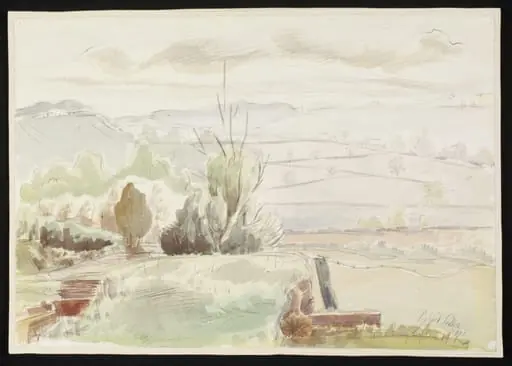 Porter Valley, No.2
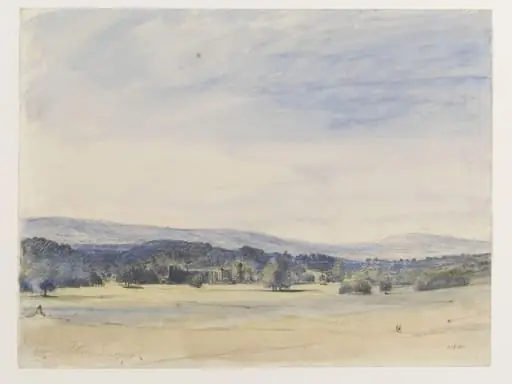 The ruins of a Cowdray House
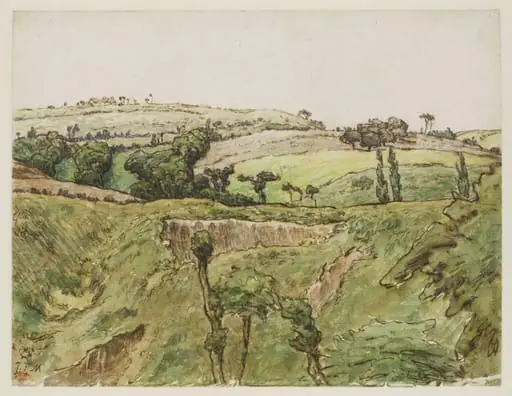 A hilly landscape with trees
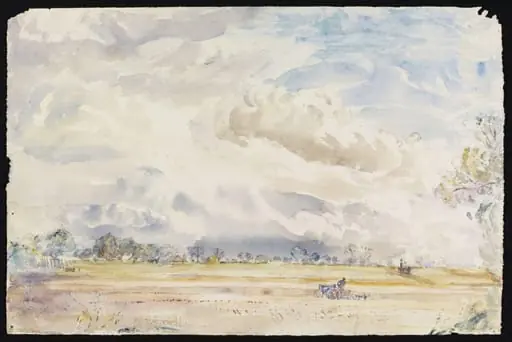 A view at Ridley
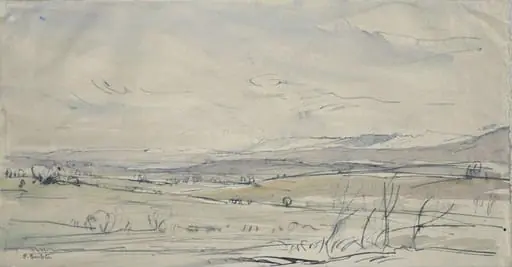 Sligo
Sligo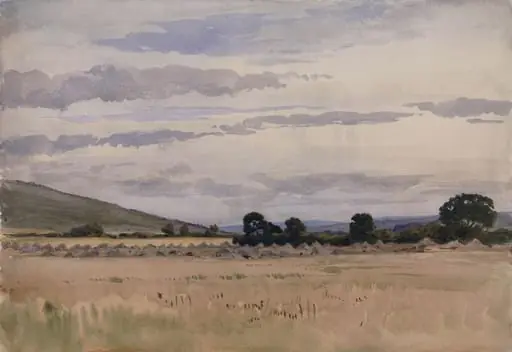 Landscape with a cornfield in the foreground and hills in the distance
 View near Enford