Artwork
The Green and St.Mary's Church, Marlborough
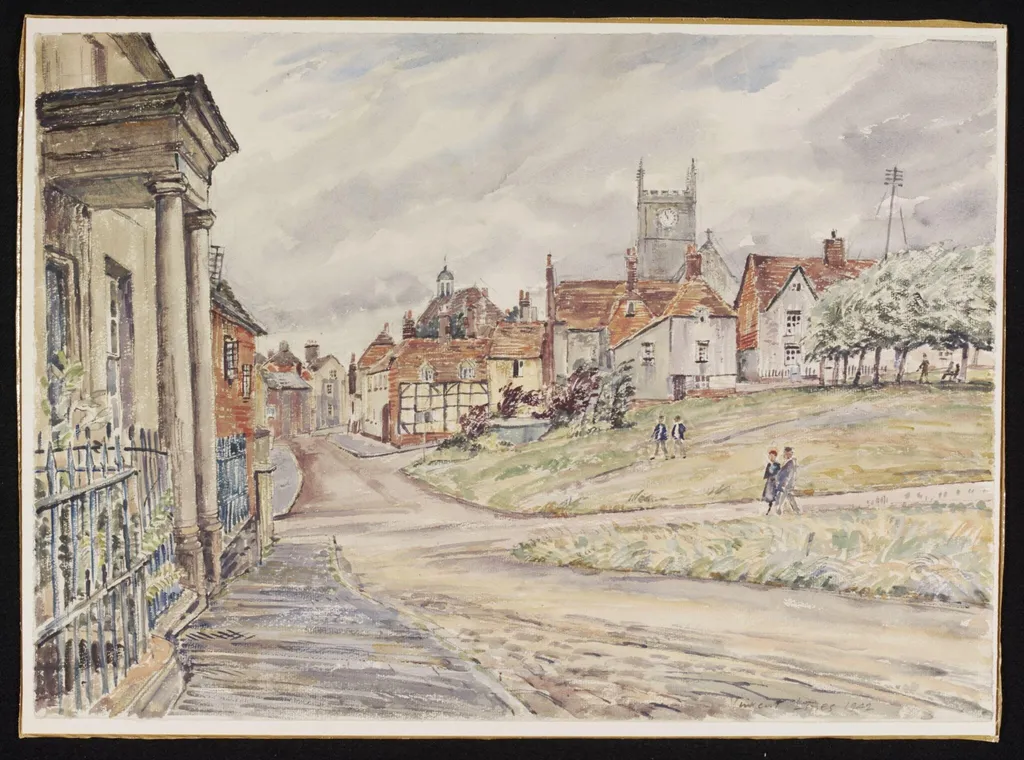
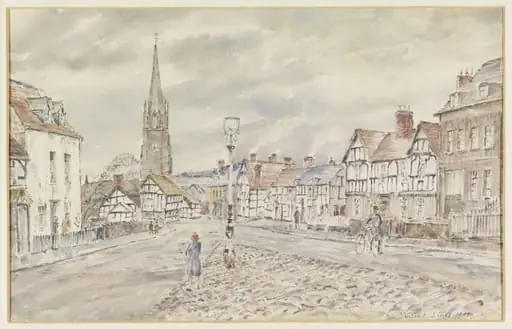
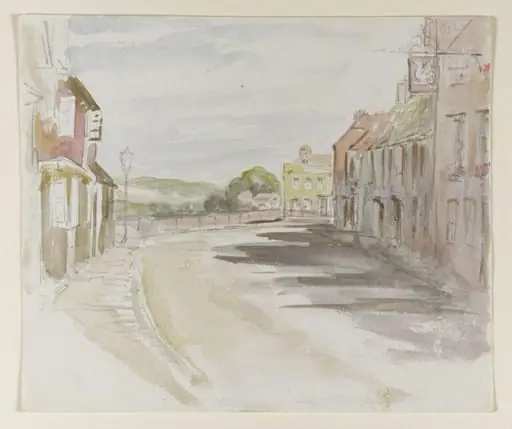
The Green and St.Mary's Church, Marlborough is a watercolor work on paper by the Impressionist artist Lines. It dates from 1942 and is held in the collection of the Victoria and Albert Museum.
About this work
Overview
The work was funded by the Pilgrim Trust and curated under the direction of Sir Kenneth Clark.
Painted in 1942, this watercolour is one of many works produced under the Recording Britain initiative, a wartime effort to visually archive the nation’s towns and landscapes. Created during a period of national uncertainty, the piece reflects a deliberate attempt to preserve ordinary scenes that might be altered or lost due to conflict and modernization. The work was funded by the Pilgrim Trust and curated under the direction of Sir Kenneth Clark.
Subject & Meaning
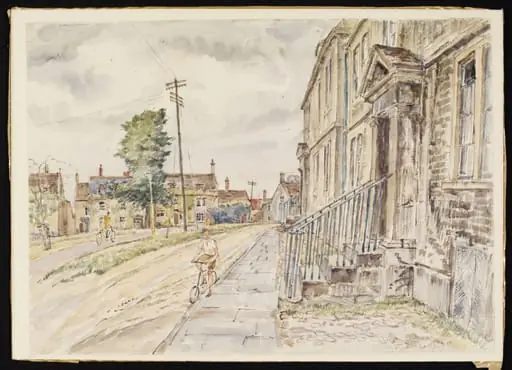
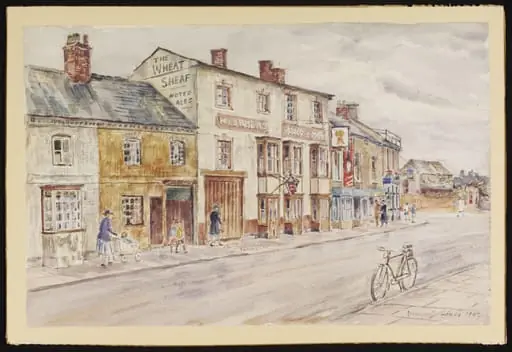
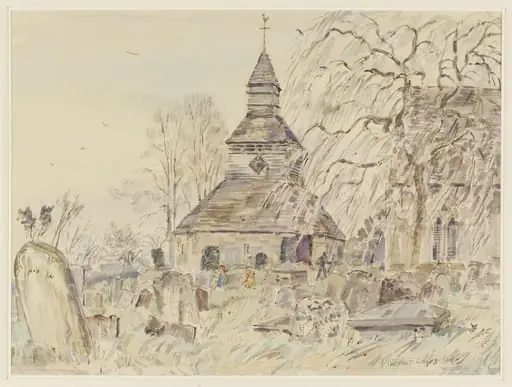
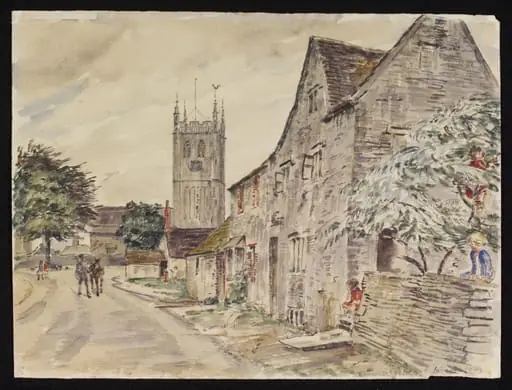
The scene captures a quiet street in Marlborough, with St. Mary’s Church rising modestly in the background. Pedestrians move subtly through the foreground, grounding the image in daily life. The church, neither grand nor ruined, stands as a quiet anchor—symbolizing continuity amid disruption. The composition avoids drama, instead emphasizing stillness and the endurance of familiar places.
Technique & Style
Executed in watercolour, the painting employs soft washes and restrained brushwork to evoke a hazy, contemplative mood. Colours are muted, with pale greens, greys, and ochres blending gently to suggest atmospheric depth. The lack of sharp detail invites a meditative gaze, aligning with the project’s goal of emotional resonance over documentary precision.
History & Provenance
The painting was produced as part of the Recording Britain project, which commissioned over 150 artists to document the British countryside and urban fabric between 1939 and 1945. It entered the Victoria and Albert Museum’s collection alongside hundreds of similar works, preserved as a visual record of a nation in transition. The artist’s name, Lines, is associated with the project but remains little documented in broader art historical records.
Context
Created during the Second World War, the work emerged from a cultural initiative that sought to affirm national identity through the preservation of everyday landscapes. With bombing and urban change threatening historic sites, the project offered both employment to artists and a form of quiet resistance—asserting the value of the ordinary against the chaos of war.
Legacy
The Recording Britain collection endures as a vital archive of mid-20th-century British life. This watercolour, though not widely exhibited, contributes to a larger body of work that shaped public understanding of heritage during crisis. Its quiet realism continues to inform how historians and curators interpret the relationship between place, memory, and wartime experience.
Artist & collection