Artwork
H Beard Print Collection
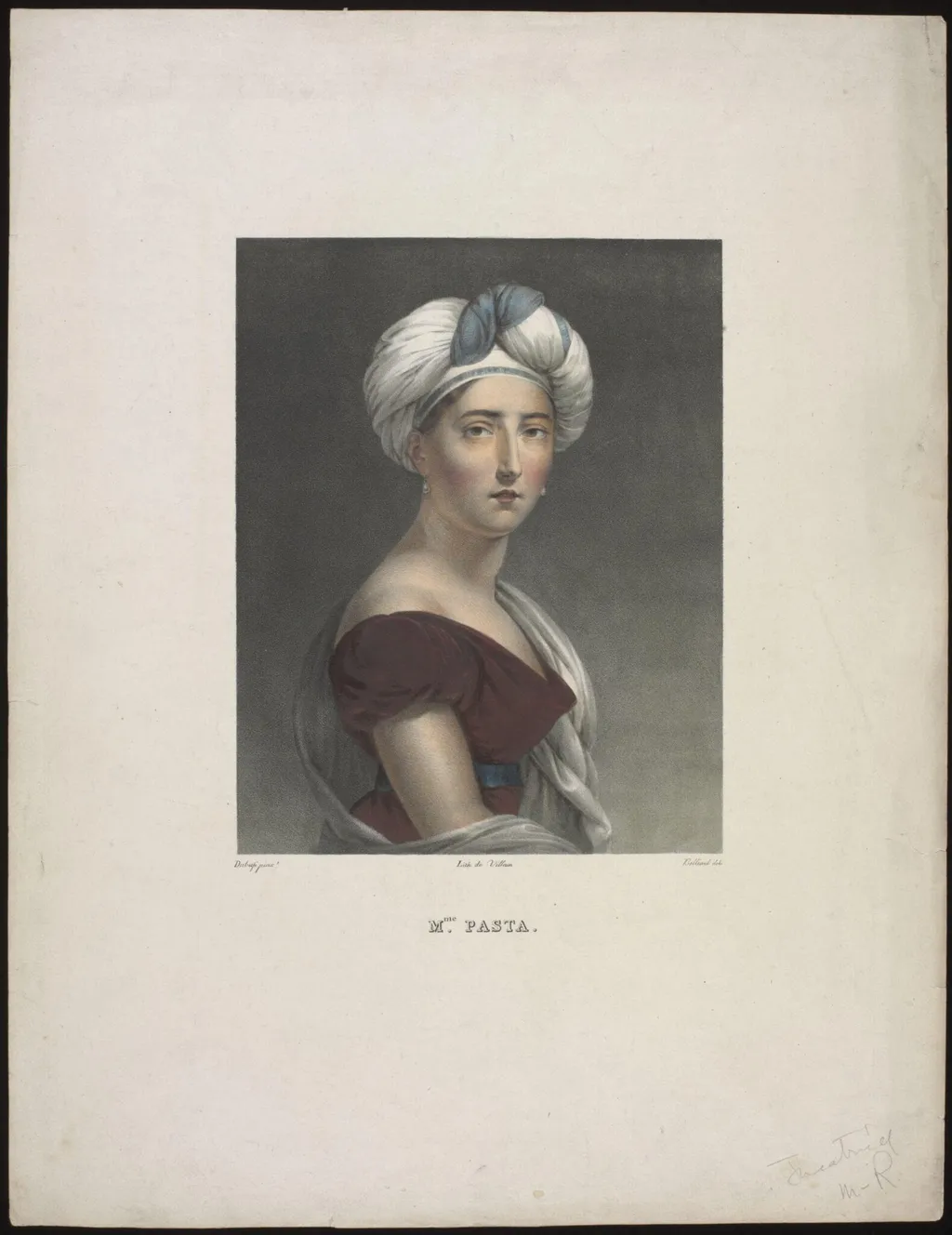
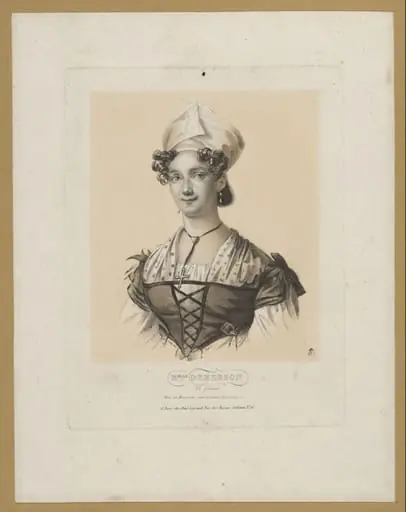
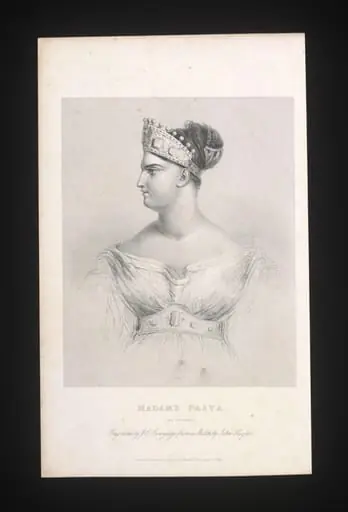
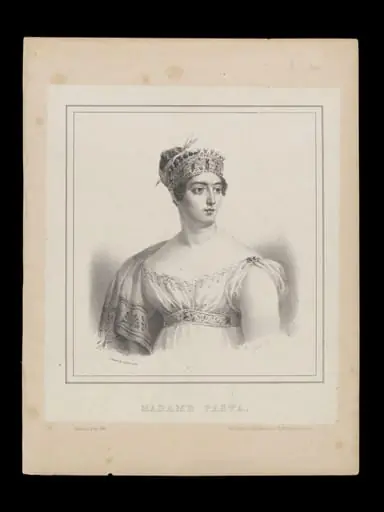
H Beard Print Collection is a print by Dubase. It dates from 1850 and is held in the collection of the Victoria and Albert Museum. A coloured lithographic portrait of the soprano Giuditta Pasta, created in the 19th century, is held in the H.
About this work
Overview
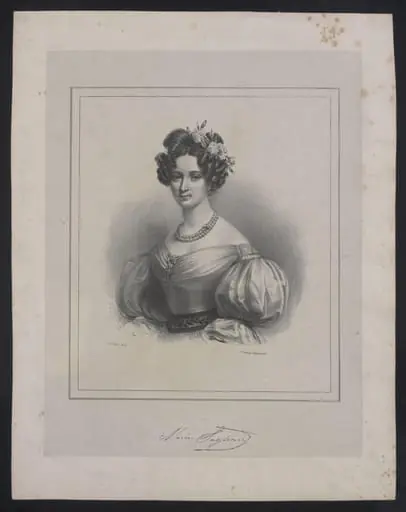
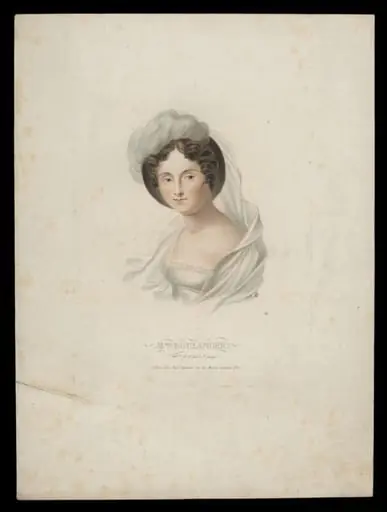
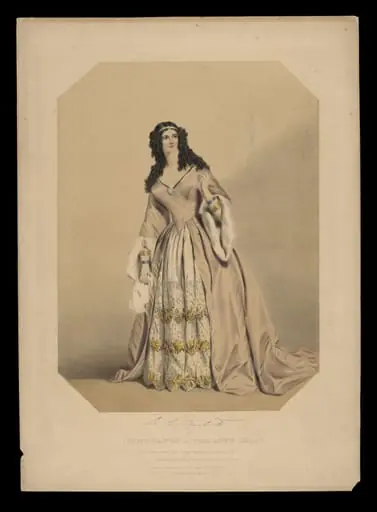
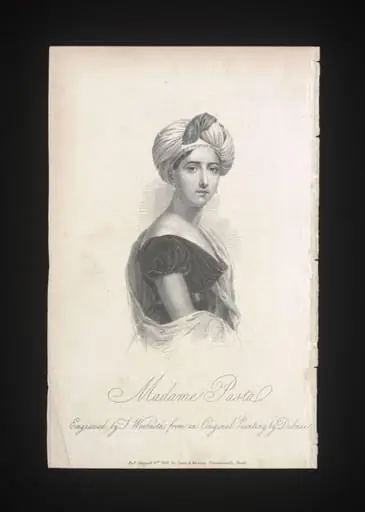
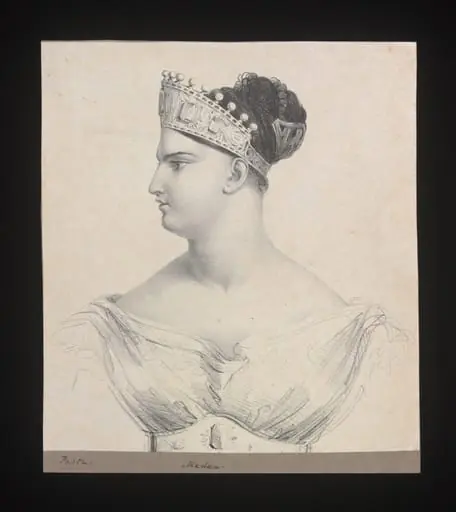
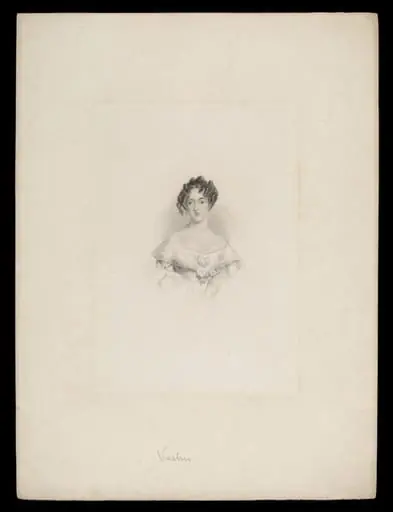
A coloured lithographic portrait of the soprano Giuditta Pasta, created in the 19th century, is held in the H. Beard Print Collection at the Victoria and Albert Museum. The image captures her head and upper torso, rendered in soft tones typical of lithographic printing. The print was produced by Lith de Villain, a known printer of the period, following a design by the artist Dubase.
Subject & Meaning
Giuditta Pasta was a celebrated Italian opera singer renowned for her expressive performances in roles by Bellini and Donizetti. This portrait reflects her public persona during the height of her career, emphasizing elegance and emotional presence. As a cultural figure, her image was widely circulated, serving both as commemoration and as a symbol of artistic achievement in the Romantic era.
Technique & Style
The portrait was executed in colour lithography, a method allowing for nuanced tonal gradations and delicate colour layering. Lith de Villain’s printing technique preserved the subtlety of Dubase’s original drawing, with fine lines defining the contours of Pasta’s face and costume. The style is restrained, avoiding theatrical exaggeration in favor of a dignified, intimate likeness.
History & Provenance
The print entered the H. Beard Print Collection, later acquired by the Victoria and Albert Museum, where it remains part of its holdings on 19th-century theatrical portraiture. Its origin traces to Dubase’s design, reproduced commercially during Pasta’s peak fame. The print’s survival reflects the era’s interest in documenting prominent performers through accessible graphic media.
Context
In the early 1800s, lithography became a dominant medium for disseminating images of celebrities, particularly in music and theatre. Portraits like this one were sold as souvenirs or collected in albums, bridging elite performance culture and the growing middle-class audience. Pasta’s likeness, reproduced in multiple formats, exemplifies this expanding market for visual celebrity.
Legacy
This print contributes to the historical record of how opera stars were visually represented before photography became widespread. It preserves the aesthetic conventions of theatrical portraiture and offers insight into the mechanics of image circulation in pre-industrial media. Today, it serves as a reference for scholars studying performance culture and print history in 19th-century Europe.
Artist & collection
Artist
Dubase made 19th-century prints in an era when engravers still rendered landscapes and public scenes with fine parallel hatching.