Artwork
Spiritus sanctus Deus
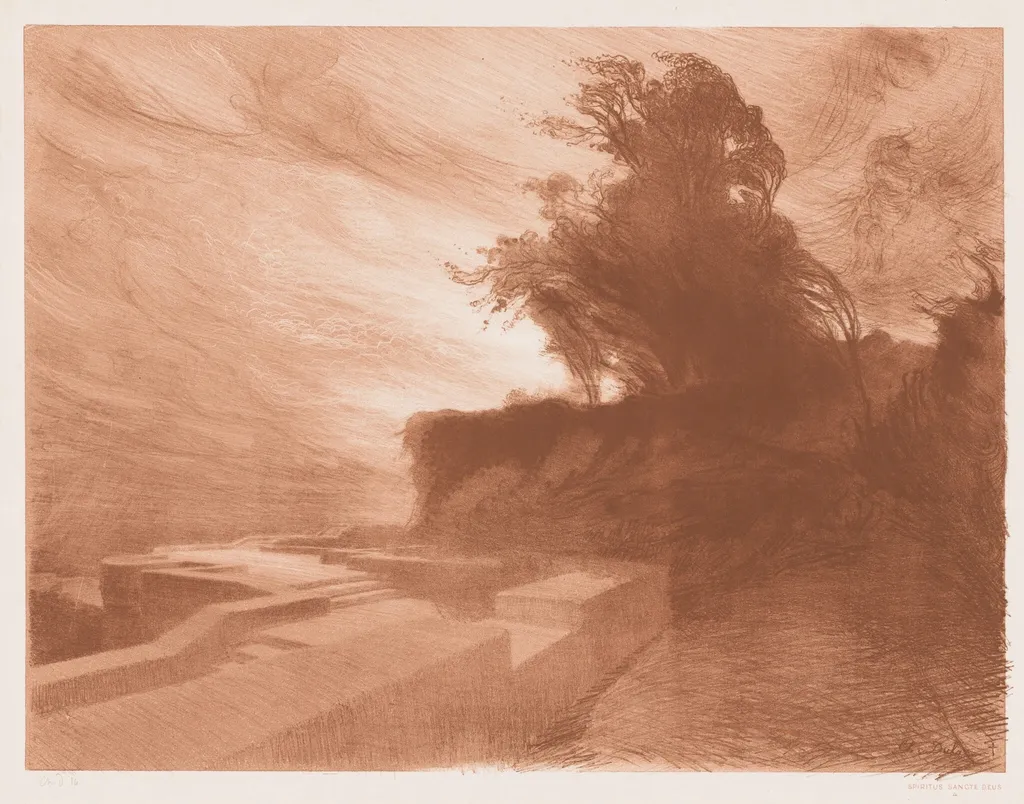
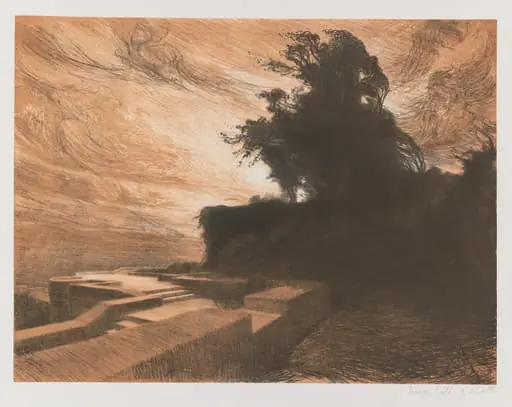
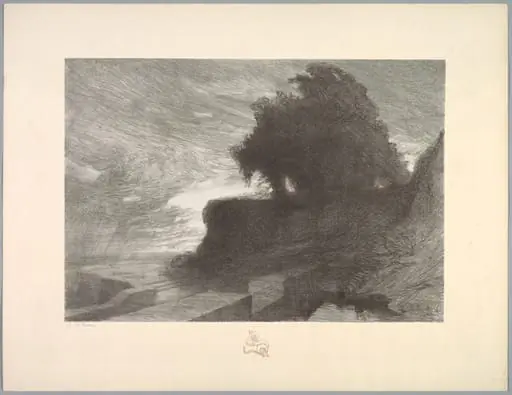
Spiritus sanctus Deus is an ink print by the Impressionist artist Charles-Marie Dulac. It dates from 1894 and is held in the collection of the National Gallery of Art.
About this work
Overview
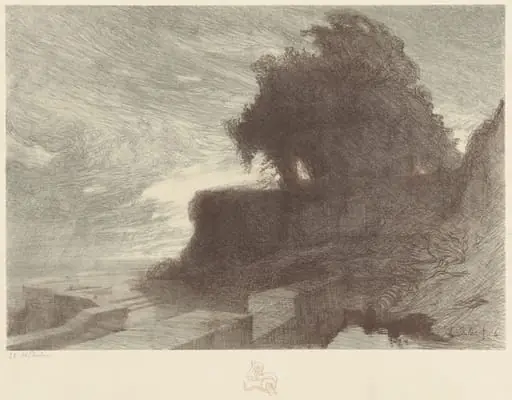
Charles‑Marie Dulac’s 1894 lithograph, titled Spiritus sanctus Deus, presents a solitary tree perched on a craggy cliff. Rendered in red‑brown tones on wove paper, the image captures a muted landscape where sky and earth merge in soft, pale hues. The composition conveys a moment of stillness, the tree’s branches hinted at by quick, sketch‑like strokes that suggest a gentle wind.
Subject & Meaning
The work depicts a lone tree clinging to a rugged outcrop, surrounded by an expansive, breezy sky. The sparse vegetation and uneven ground evoke a sense of isolation and resilience, while the delicate interplay of light and shadow hints at a quiet, contemplative atmosphere. The title’s reference to the Holy Spirit may imply a spiritual dimension to the natural scene.
Technique & Style
The red‑brown palette, achieved through careful inking on wove paper, emphasizes the earth tones of the terrain and lends the piece a warm, subdued character.
Executed as a lithograph, Dulac employed loose, gestural lines to render the tree’s foliage, creating an impression of movement within the static medium. The red‑brown palette, achieved through careful inking on wove paper, emphasizes the earth tones of the terrain and lends the piece a warm, subdued character. The overall style balances detailed observation with a more expressive, sketch‑like approach.
History & Provenance
Created in 1894, Spiritus sanctus Deus is among Dulac’s later prints, reflecting his mature handling of lithographic processes. The work has been held in private collections before entering the museum’s holdings, where it contributes to the broader representation of late‑19th‑century French printmaking.
Context
The lithograph emerges from a period when French artists increasingly explored atmospheric landscapes through print media. Dulac’s choice of a solitary natural motif aligns with contemporary interests in symbolism and the spiritual resonance of nature, themes prevalent in the fin de siècle artistic discourse.
Artist & collection

 Landscape with Trees on a Bluff and a Snake Remarque
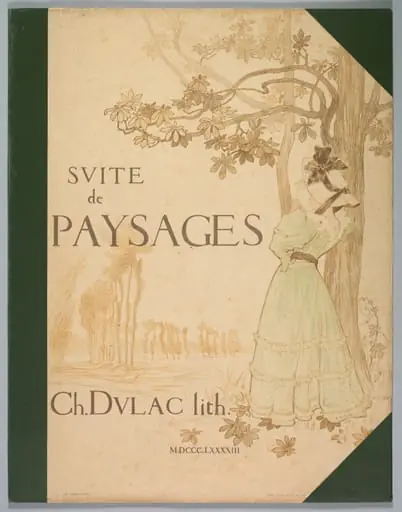 Suite de Paysages
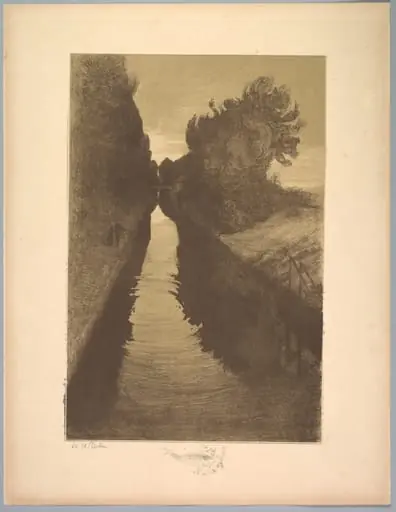 Suite de Paysages: Landscape, Plate 1, Remarque, A Fish
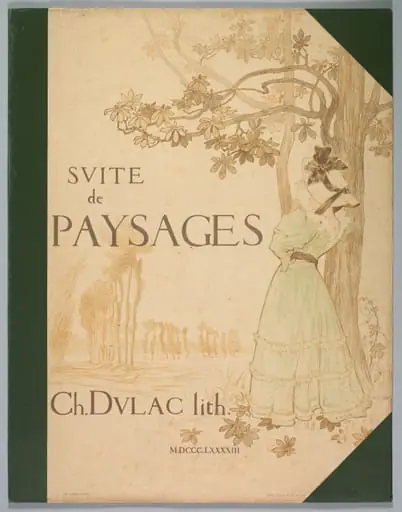 Suite de Paysages: Cover
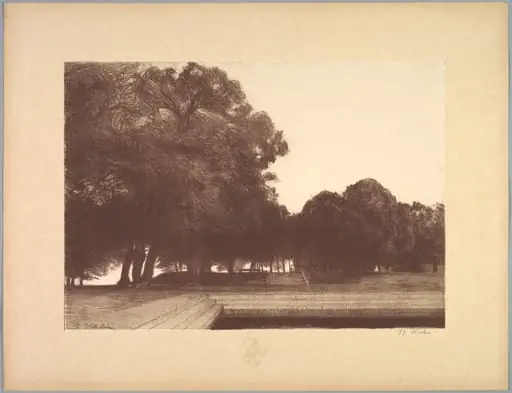 Suite de Paysages: Landscape, Plate 7, Remarque, Poppies
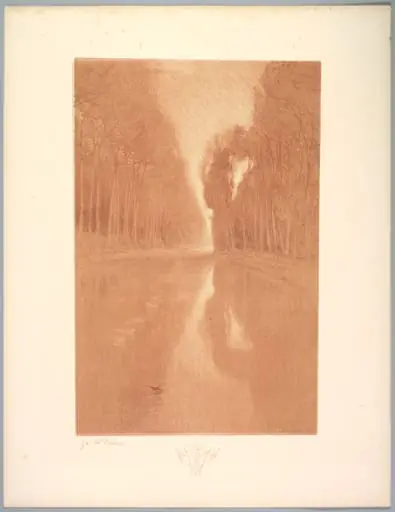 Suite de Paysages: Landscape, Plate 2, Remarque, Starflowers
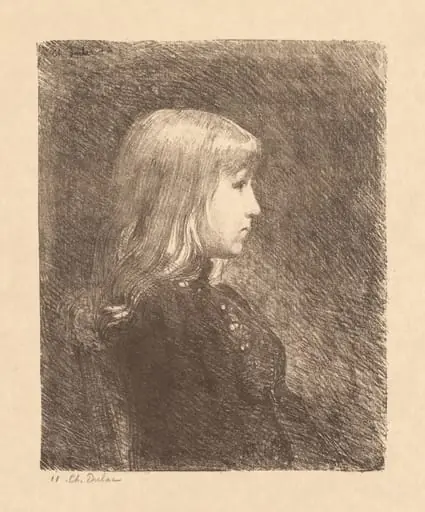 Young Lady (Jeune Fille)
 Suite de Paysages: Landscape, Plate 4, Remarque, Snake