Artwork
La margine de oraș
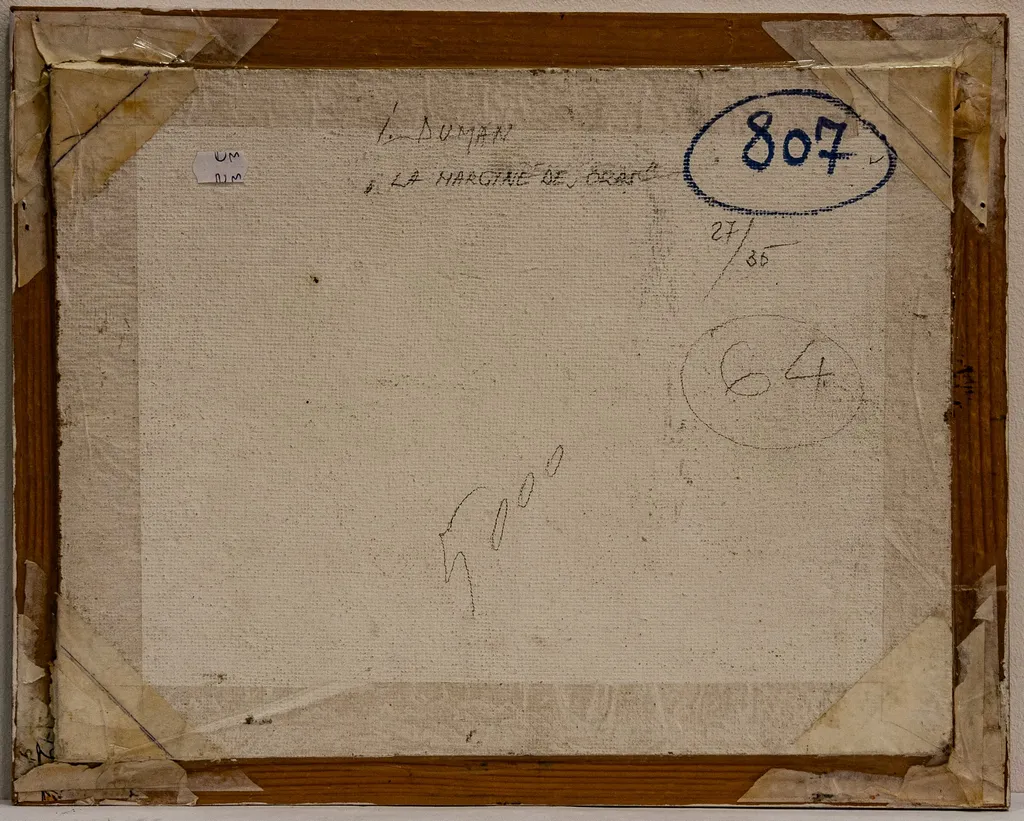
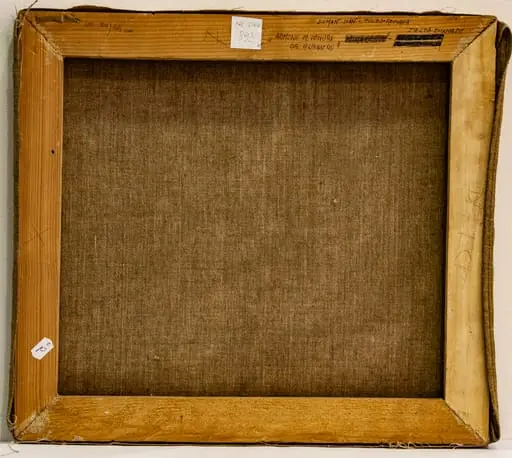
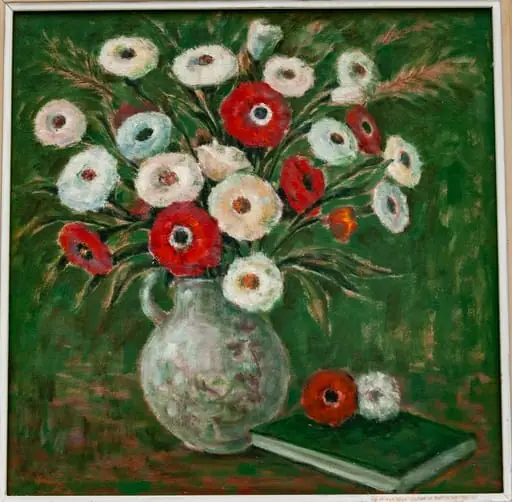
La margine de oraș is a print by Ion Duman. It is held in the collection of the Gavrila Simion Eco-Museum Research Institute Tulcea. This artwork consists of an unprimed, off-white canvas stretched within a worn wooden frame.
About this work
Overview
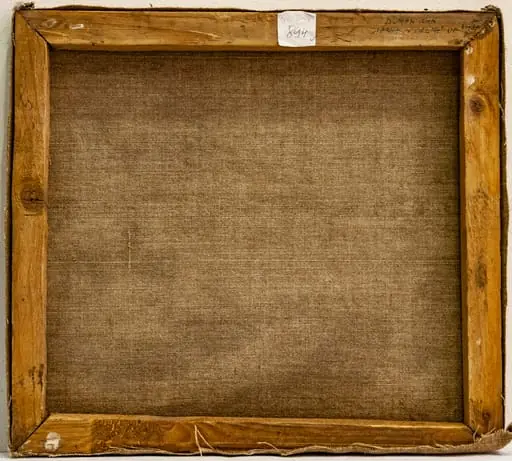
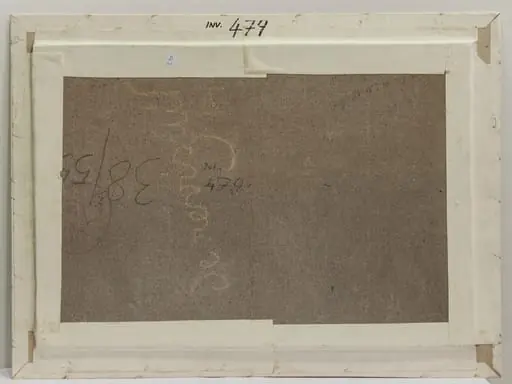
The frame shows signs of age—chipped corners, patched tape, and accumulated wear—suggesting prolonged handling or storage.
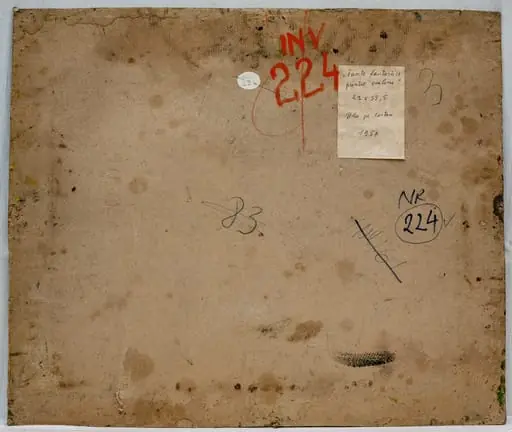
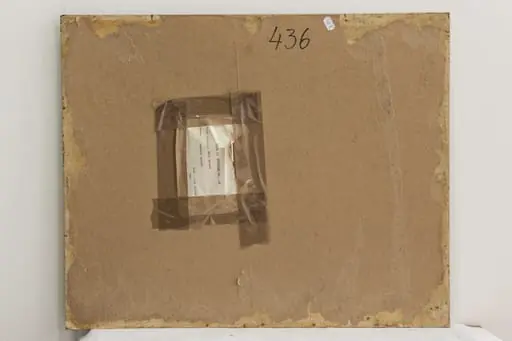
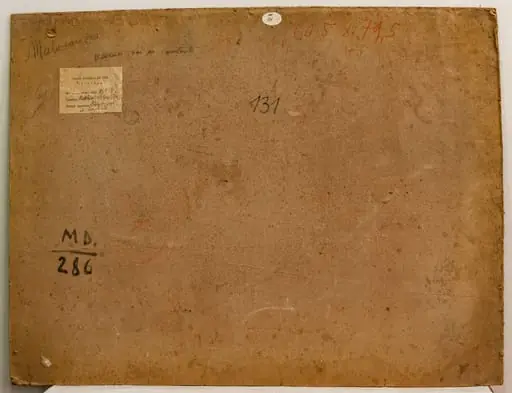
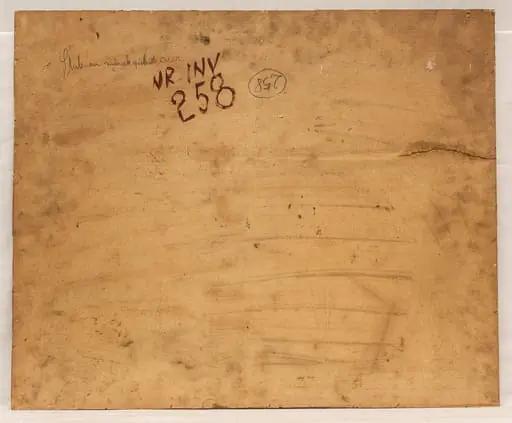
This artwork consists of an unprimed, off-white canvas stretched within a worn wooden frame. The frame shows signs of age—chipped corners, patched tape, and accumulated wear—suggesting prolonged handling or storage. No pigment or mark appears on the surface. Handwritten annotations on the reverse identify the artist as I. Duman and title the work 'La margine de oraș,' alongside a blue circle marked '807' and faint institutional stamps.
Subject & Meaning
The absence of visual content invites interpretation as a deliberate void. The title, translating to 'At the Edge of the City,' may imply liminality, erasure, or silence. Without imagery, the work resists narrative, instead foregrounding materiality and context. The handwritten notes and institutional markings suggest the piece was cataloged, yet its meaning remains open, anchored in its physical state rather than pictorial content.
Technique & Style
The work employs no traditional artistic technique—no brushwork, color, or composition. The canvas is left raw, unaltered, and the frame is assembled from salvaged wood, repaired with tape. The absence of formal execution shifts focus to the object’s condition and provenance. The style aligns with conceptual practices that prioritize context over craft, treating the frame and its markings as integral to the work’s identity.
History & Provenance
The pencil inscriptions on the reverse indicate the artist’s direct involvement, with 'I. Duman' and the title clearly noted. The blue circle labeled '807' and faded stamps suggest institutional handling, possibly from a gallery, archive, or exhibition. The frame’s deterioration and repairs imply years of storage or transport. No public record of exhibition or acquisition is known, leaving its history partially obscured.
Context
Created in a period when Eastern European artists often navigated state censorship, such an unadorned object may reflect resistance to prescribed artistic norms. The use of mundane materials and refusal of imagery aligns with underground conceptual movements that privileged idea over spectacle. The work’s survival, despite its lack of conventional appeal, hints at quiet acts of preservation amid restrictive cultural conditions.
Legacy
As a non-object that demands reflection on absence, the work contributes to a broader discourse on minimalism and conceptual art in Eastern Europe. Its survival, marked by wear and handwritten labels, underscores the value placed on ephemeral or non-commercial art forms. It stands as a quiet testament to artists who used silence and material decay as forms of expression under constrained circumstances.
Artist & collection
Artist
Ion Duman made quiet, finely etched prints that catch Romanian light and mood. His prints “Armonii pe tonuri de albastru” and “Iarna în deltă” use delicate linework to map color across fields and water. In “La margine…
Museum
Gavrila Simion Eco-Museum Research Institute Tulcea
Continue through works from the same source collection.