Artwork
Cană cu flori
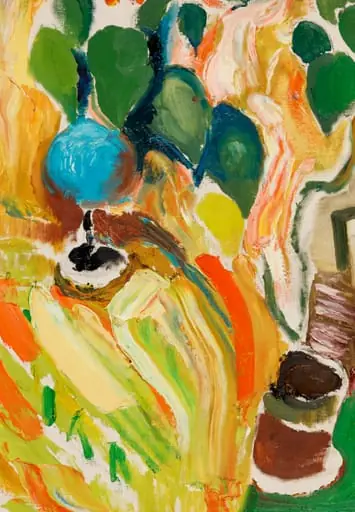
Cană cu flori is an unspecified painting by Lucia Dem-Bălăcescu. It is held in the collection of the Gavrila Simion Eco-Museum Research Institute Tulcea. This small still-life painting depicts a plain white vase with a broad opening, resting on a dark, flat surface.
About this work
Overview
Rendered with restrained realism, the composition avoids ornamentation, emphasizing simplicity and quiet presence.
This small still-life painting depicts a plain white vase with a broad opening, resting on a dark, flat surface. Inside, a handful of white flowers are arranged loosely, some in full bloom, others still closed. The background is uniformly dark, drawing focus to the vase and its contents. Rendered with restrained realism, the composition avoids ornamentation, emphasizing simplicity and quiet presence.
Subject & Meaning
The subject is a modest arrangement of flowers in a utilitarian vessel, devoid of symbolic or narrative cues. The flowers, shown in varying stages of life, suggest the passage of time without overt sentiment. The lack of decorative elements or contextual clues invites contemplation of ordinary beauty, valuing stillness and impermanence over grandeur.
Technique & Style
The artist employs a direct, unembellished technique, using soft transitions and muted tones to render form. The vase and petals are modeled with subtle light shifts, avoiding sharp outlines or dramatic contrast. The dark background enhances the luminosity of the white objects, reinforcing a sense of calm focus. Brushwork is restrained, prioritizing clarity over expressive flourish.
History & Provenance
The painting is held by the Museum of Ethnography, suggesting its acquisition may relate to cultural documentation rather than fine art tradition. Its modest scale and unassuming subject may have led to its inclusion in a collection focused on everyday visual culture. No documented provenance or artist attribution is provided in the available information.
Context
In the broader tradition of still-life painting, this work aligns with quiet, domestic scenes common in 19th- and early 20th-century regional art. Its simplicity contrasts with elaborate floral compositions of the Baroque or Victorian eras. Its presence in an ethnographic museum hints at its possible role as a record of ordinary domestic aesthetics rather than a work of high art.
Legacy
The painting contributes to a quieter strand of visual culture that values understated observation over spectacle. While not widely known or reproduced, its inclusion in an ethnographic collection underscores its significance as a representation of everyday visual habits. It remains a quiet testament to the aesthetic attention given to humble, transient objects.
Artist & collection
Museum
Gavrila Simion Eco-Museum Research Institute Tulcea
Continue through works from the same source collection.