Artwork
Morții de la Cașin
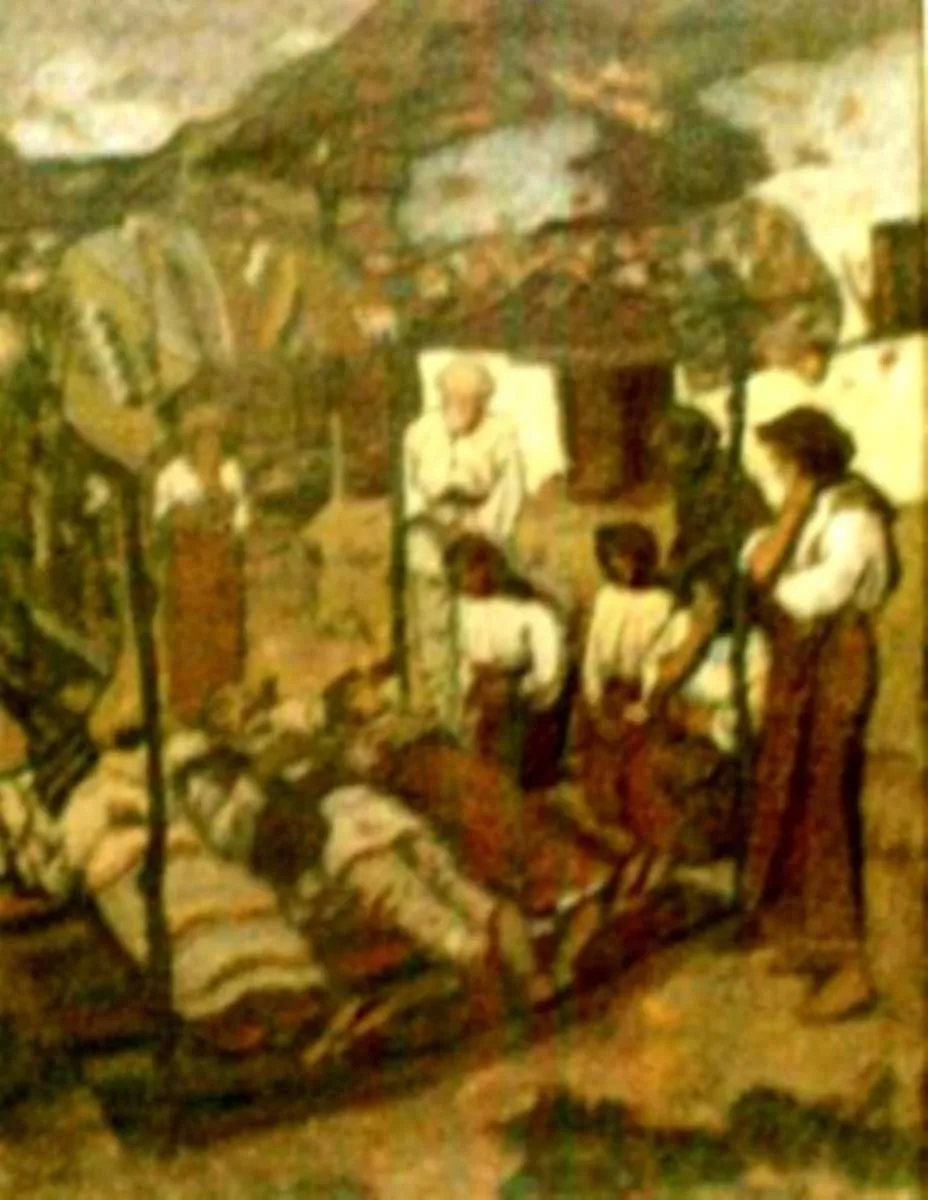
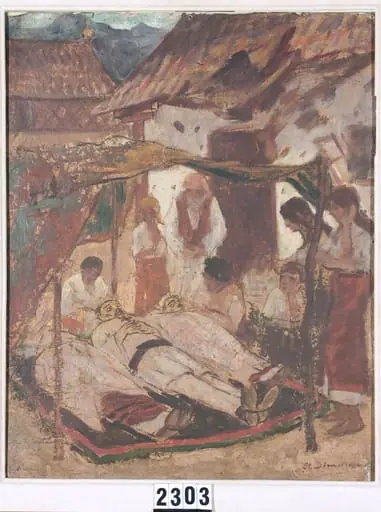
Morții de la Cașin is an unspecified painting by Ștefan Dumitrașcu. It dates from 1920 and is held in the collection of the National Museum of Art of Romania.
About this work
Overview
Ștefan Dumitrașcu’s painting *Morții de la Cașin*, executed around 1920, depicts a small group of four figures positioned in an open field of tall, arid grass.
Ștefan Dumitrașcu’s painting *Morții de la Cașin*, executed around 1920, depicts a small group of four figures positioned in an open field of tall, arid grass. The composition is anchored by two adults and two children, all dressed in light, unadorned garments, suggesting a modest, perhaps rural, setting. The distant horizon is rendered in muted earth tones, with sparse trees punctuating the background.
Subject & Meaning
The work presents a quiet, contemplative scene: one adult grips a long staff while the other leans forward, eyes directed downward, creating a sense of introspection. The presence of children alongside the adults may allude to generational continuity or shared experience within a landscape marked by hardship, though the title’s reference to “the dead” introduces an ambiguous, possibly memorial dimension.
Technique & Style
Dumitrașcu employs a pronounced impasto technique, applying paint in thick, textured layers that give the grass and clothing a tactile surface. This heavy brushwork enhances the visual weight of the field and accentuates the contrast between the rough terrain and the smoother, pale fabrics, while the earthy palette reinforces the work’s somber atmosphere.
History & Provenance
Created in the early post‑World‑I period, *Morții de la Cașin* reflects Dumitrașcu’s activity in the Romanian art scene of the 1920s. While specific exhibition records are scarce, the painting has been catalogued among his early oeuvre and remains attributed to the artist’s formative years, offering insight into his evolving approach to landscape and figure.
Context
The early twentieth‑century Romanian countryside, with its expansive fields and modest dwellings, served as a frequent subject for artists exploring national identity and social realities. Dumitrașcu’s choice of a simple, unembellished scene aligns with contemporary trends that favored realism infused with personal expression, situating the work within broader regional artistic currents.
Artist & collection
Artist
Ștefan Dumitrașcu liked to paint at the edge of the day, when the Carpathian light turns the fields into something between memory and dream.

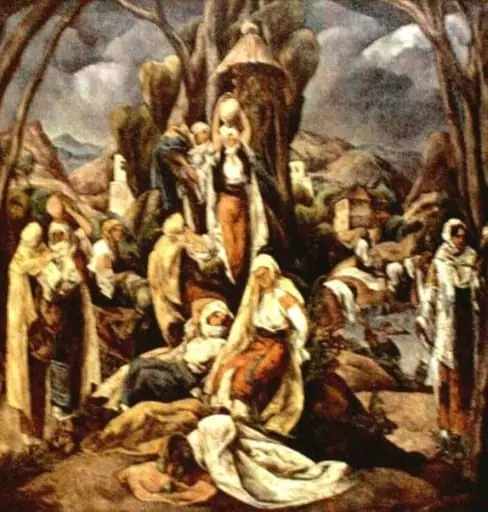 La izvorul Troiței
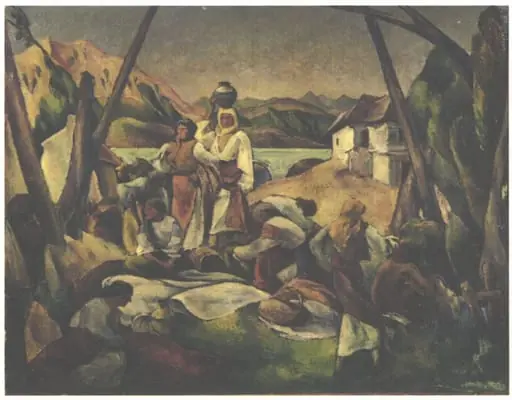 Compoziție
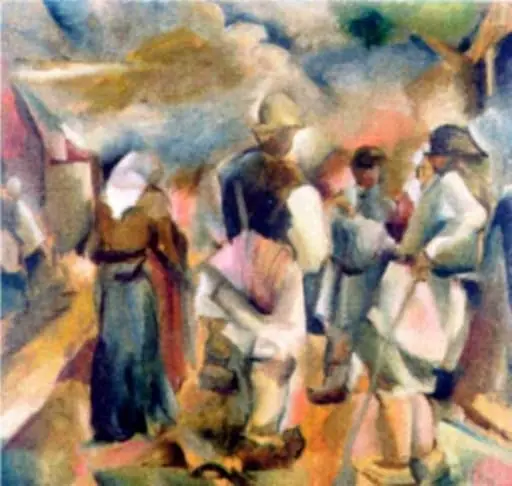 În sat - compoziție
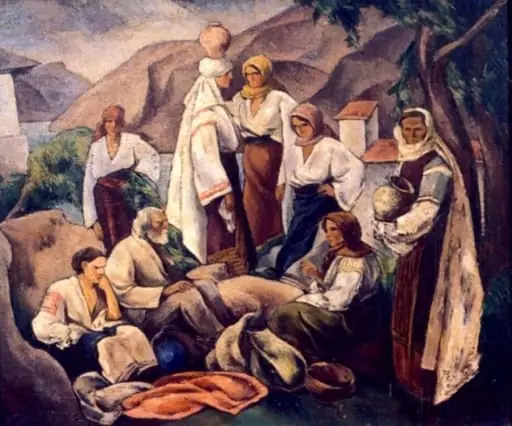 La sfat (Compoziție pe motive țărănești)
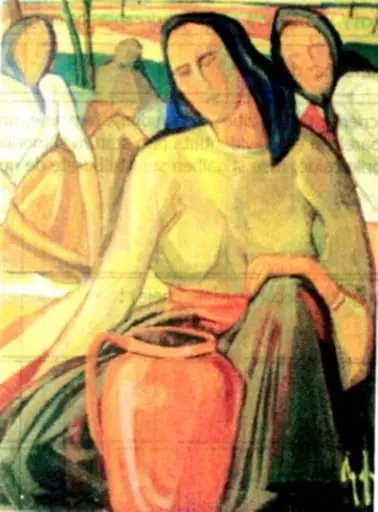 Grup de țărănci pe câmp (figuri în peisaj)
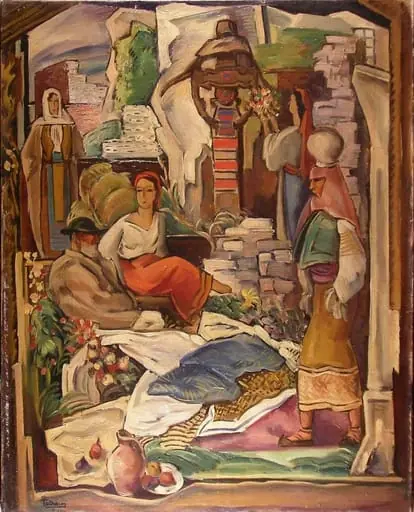 Icoană de la țară (Fragment de triptic)
 El zoco
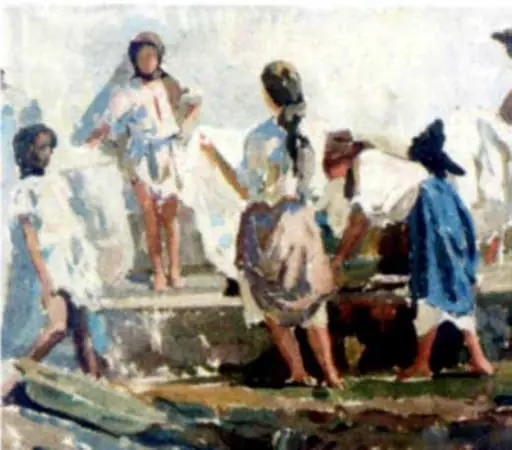 Spălătorese
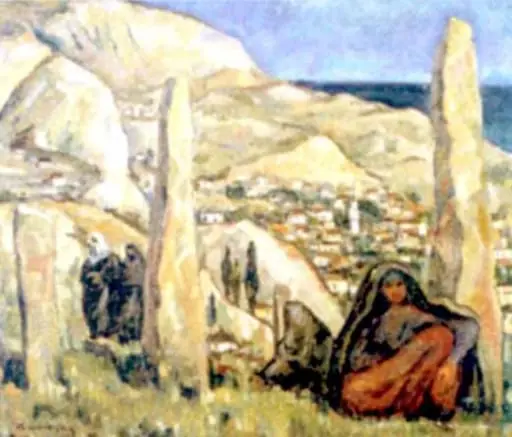 Cimitir tătărăsc la Balcic
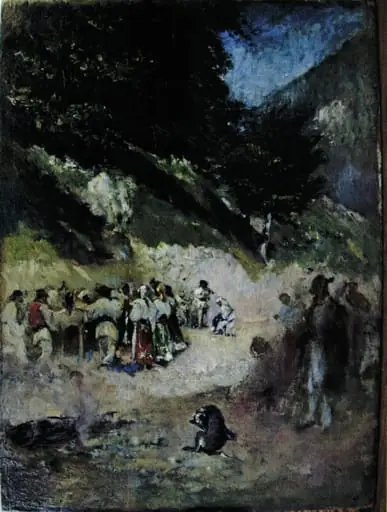 Horă la țară
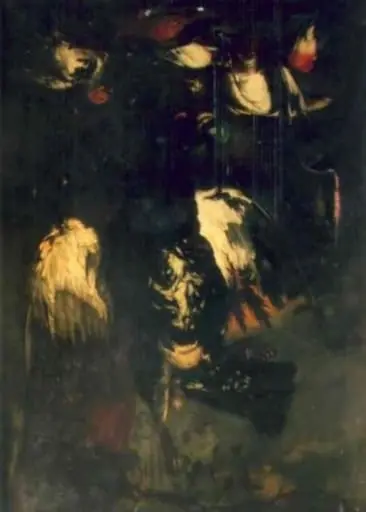 Păsări moarte cu cocoș de munte; pandant; Păsări și iepure mort
 Morții de la Cașin