Artwork
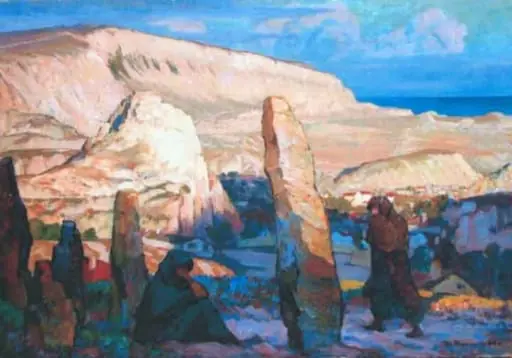
Cimitir tătărăsc la Balcic
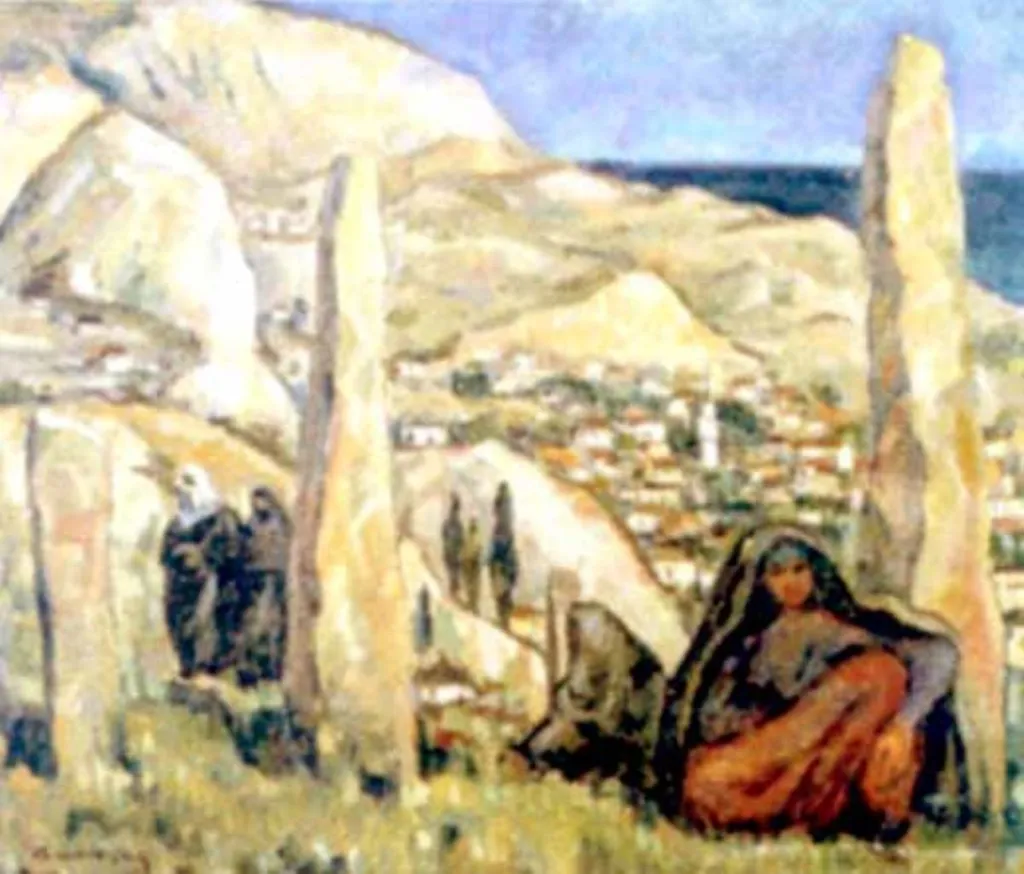
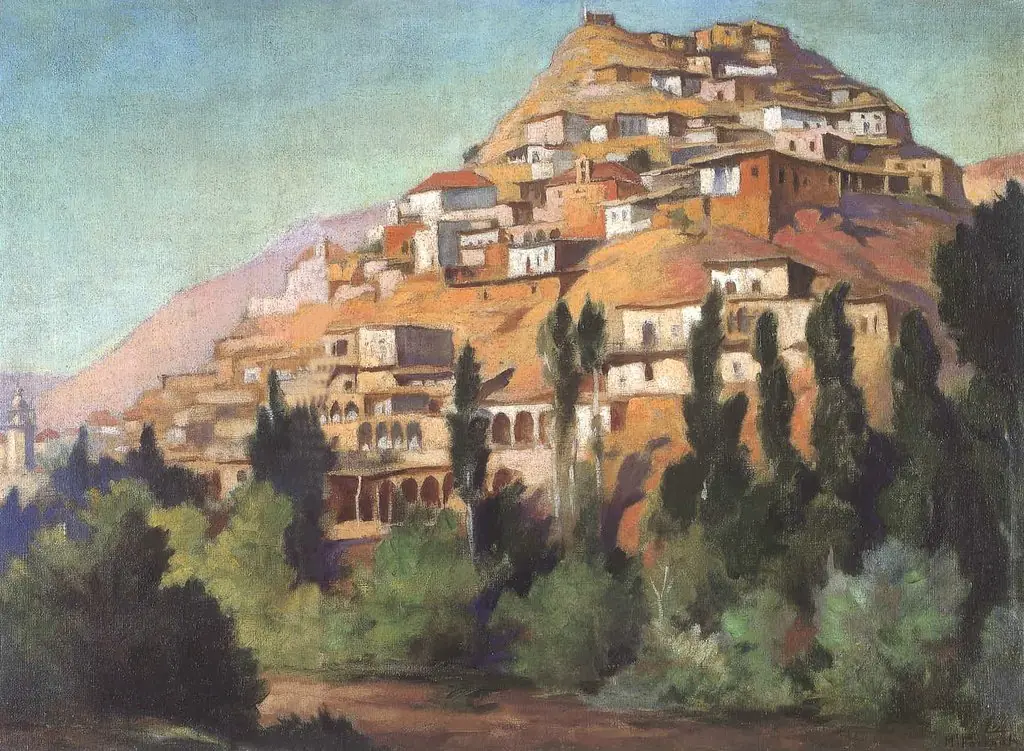
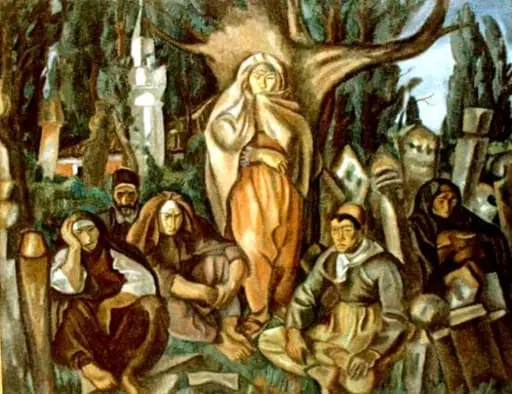
Cimitir tătărăsc la Balcic is an unspecified painting by Nicolae Dărăscu. It dates from 1924 and is held in the collection of the Art Museum of Constanta.
About this work
Overview
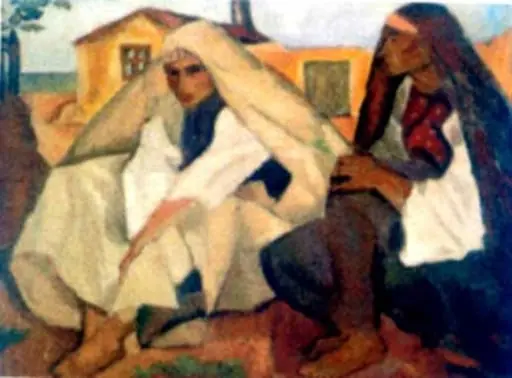
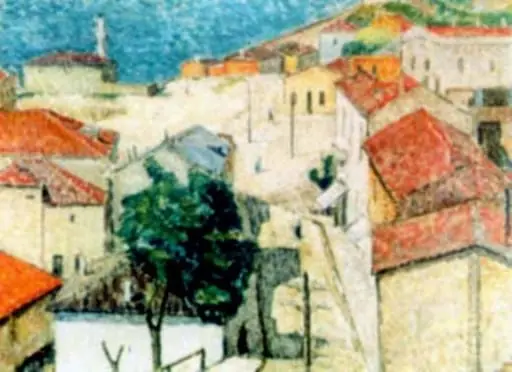
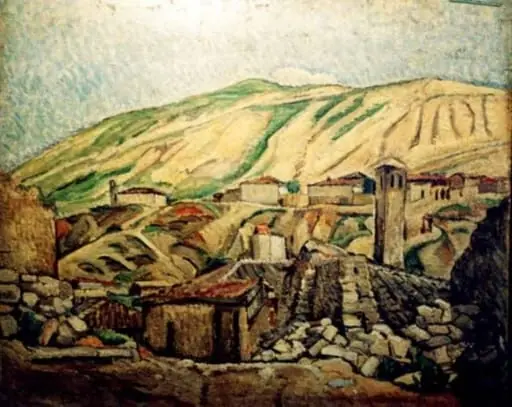
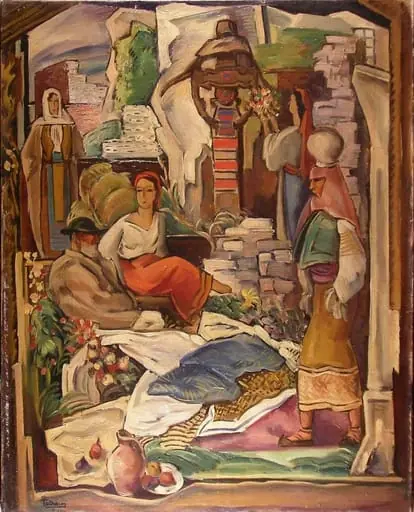
Nicolae Dărăscu’s 1924 canvas, titled Cimitir tătărăsc la Balcic, depicts a windswept hillside crowned by a modest settlement. A solitary figure in a vivid orange‑brown mantle occupies the foreground, while two distant silhouettes linger near the upper left. The composition balances muted earth tones with the lone burst of color, drawing the eye toward the cloaked woman’s contemplative gaze.
Subject & Meaning
The painting juxtaposes the permanence of the rocky terrain with the transience of human presence. The solitary, veiled woman suggests themes of mourning or pilgrimage, her bright garment contrasting with the subdued landscape, perhaps emphasizing personal grief against a broader, indifferent environment. The remote village below reinforces a sense of isolation and quiet endurance.
Technique & Style
Dărăscu employs a pronounced impasto, layering thick paint to render the craggy rocks with tactile roughness. Brushstrokes remain visible, especially in the foreground, where texture conveys the solidity of stone. The limited palette of pale greens and grays is punctuated by the saturated cloak, a strategic use of color that heightens visual focus.
History & Provenance
Created in 1924, the work entered the collection of the Museum of Ethnography, where it remains on display. Its acquisition reflects the institution’s interest in documenting regional visual culture and the artistic interpretations of Romanian landscapes during the early twentieth century.
Artist & collection

Artist
Nicolae Dărăscu was a Romanian painter. He was influenced by Impressionism and Neo-impressionism.