Artwork
John Carter, Puritan Rector of Belstead, Suffolk
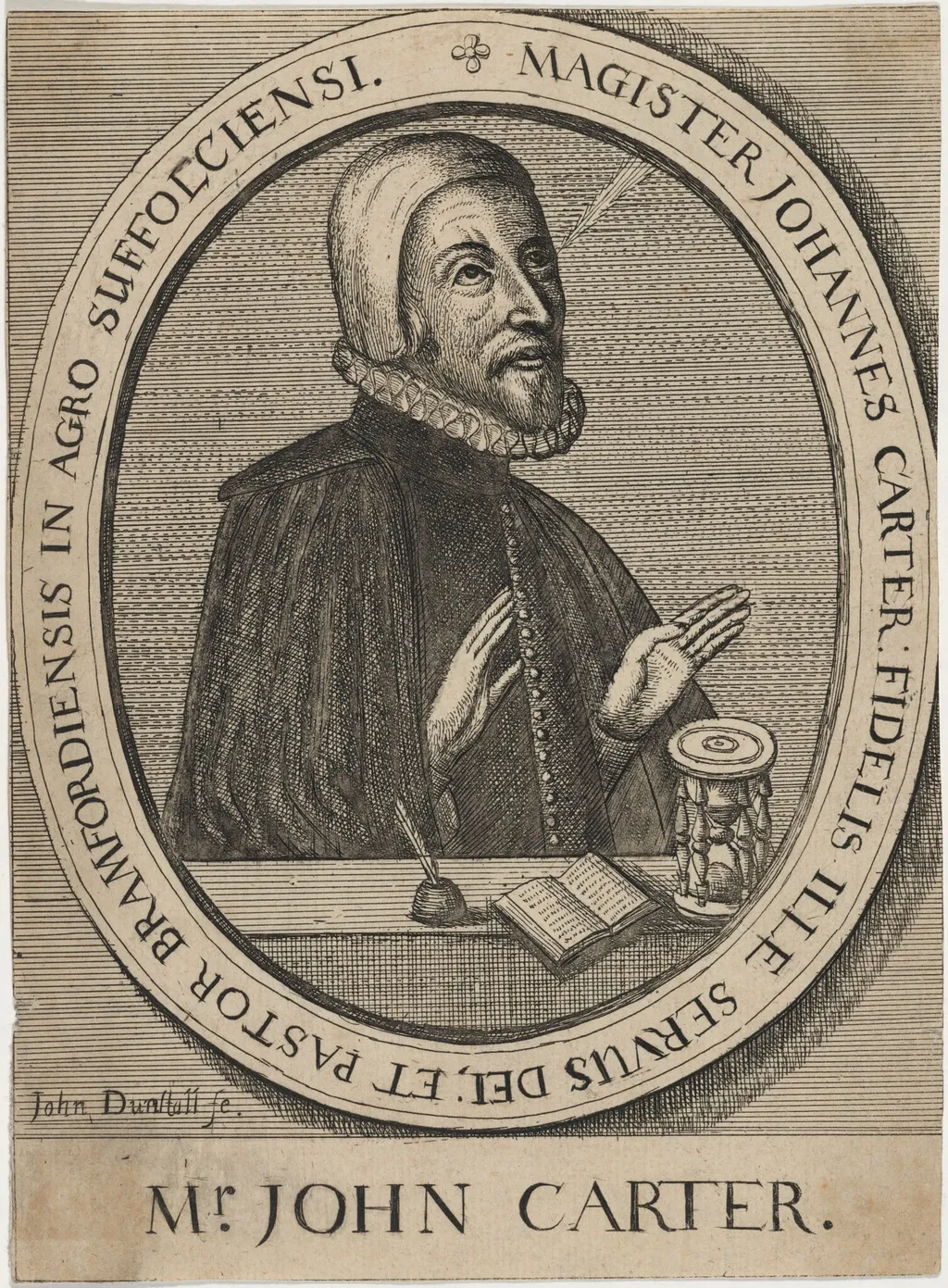
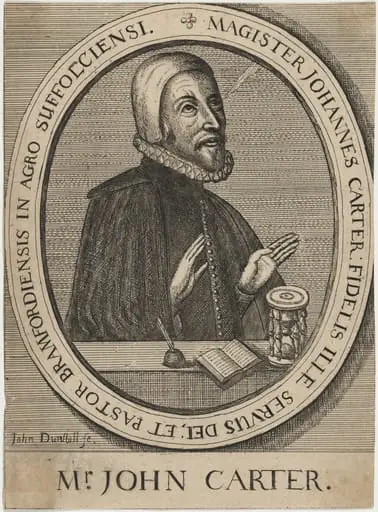
John Carter, Puritan Rector of Belstead, Suffolk is an ink print by the Baroque artist John Dunstall. It dates from 1683 and is held in the collection of the National Gallery of Art.
About this work
Overview
Rendered in monochrome, the image shows Carter seated with a scholarly demeanor, his beard and ruff collar emphasizing his clerical status.
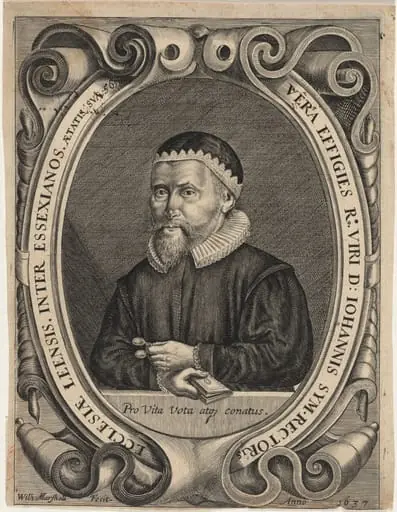
John Dunstall’s 1683 etching presents John Carter, a Puritan rector from Belstead in Suffolk. Rendered in monochrome, the image shows Carter seated with a scholarly demeanor, his beard and ruff collar emphasizing his clerical status. He holds a string of beads in one hand and a book in the other, while an hourglass rests on the table before him, all framed by an oval border bearing Latin inscription.
Subject & Meaning
The portrait identifies Carter as “Magister Johannes Carter,” indicating his role as a learned clergyman. The inclusion of a bead string suggests a devotional practice, whereas the book underscores his theological education. An hourglass placed nearby traditionally alludes to the fleeting nature of earthly existence, a motif resonant with Puritan reflections on mortality and spiritual vigilance.
Technique & Style
Executed as an etching, the work relies on acid‑bitten lines on a copper plate, allowing Dunstall to achieve fine detail and subtle tonal variation. The stark black‑and‑white palette accentuates texture—particularly the fabric of the ruff and the smoothness of the beads—while the oval frame provides a restrained compositional boundary typical of late‑seventeenth‑century portrait prints.
History & Provenance
Created in 1683, the print was likely commissioned to commemorate Carter’s tenure as rector. Though specific ownership records are sparse, the work has survived within collections of English religious portraiture and is referenced in catalogues of Dunstall’s prints, indicating its circulation among contemporaneous patrons interested in ecclesiastical figures.
Context
The etching emerges from a period when Puritan clergy were increasingly documented through portraiture, reflecting both personal piety and communal respect. Suffolk, a region with strong Puritan leanings, produced numerous such images, and Dunstall’s work aligns with the broader English tradition of using print media to disseminate images of religious leaders to a literate audience.
Artist & collection