Artwork
Peisaj
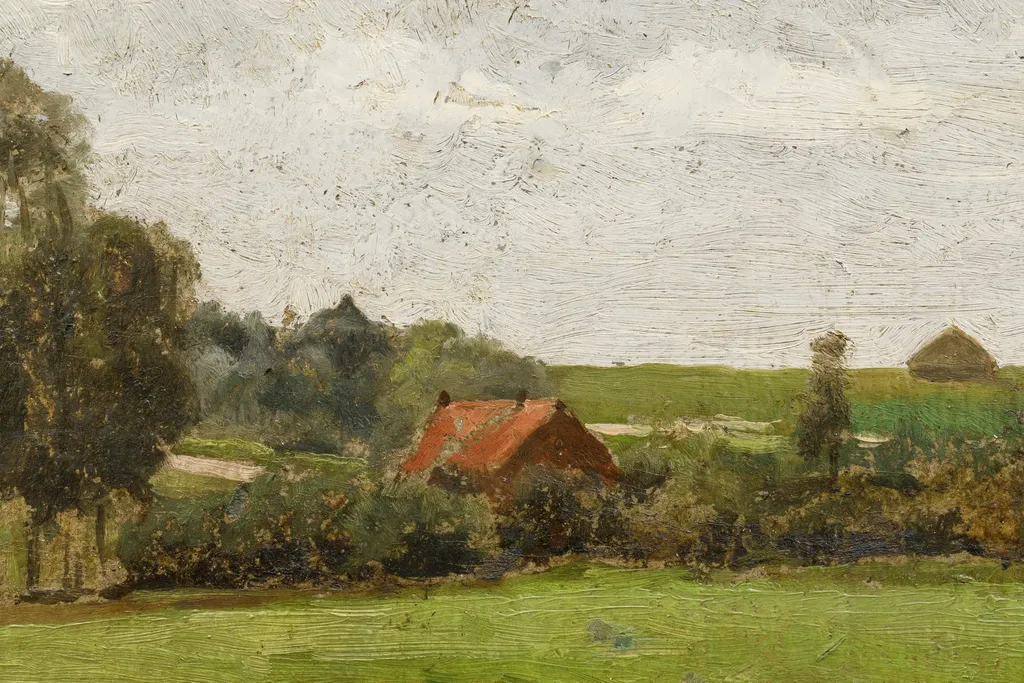
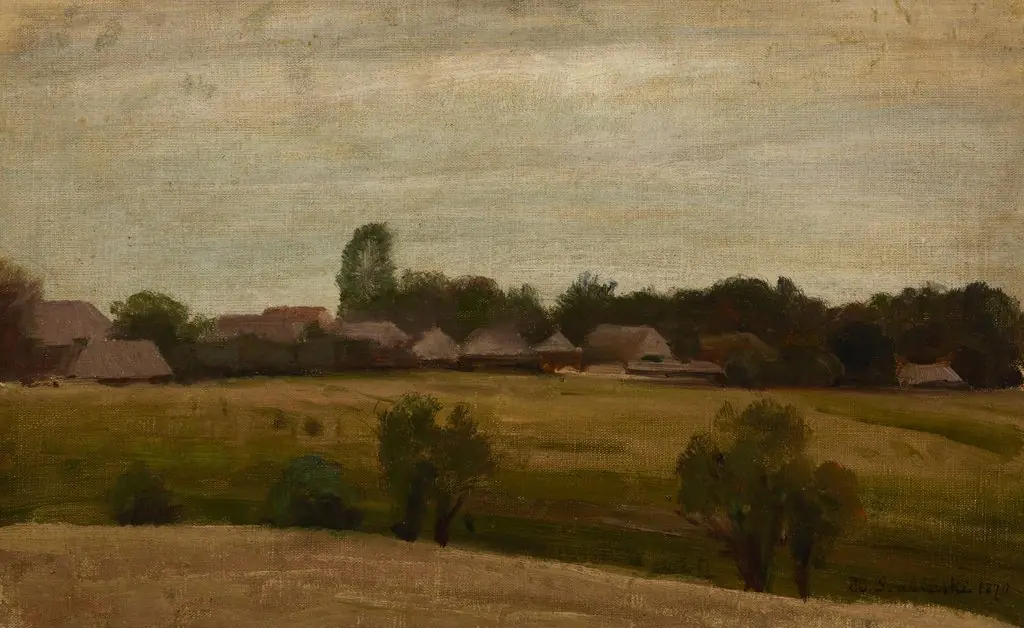
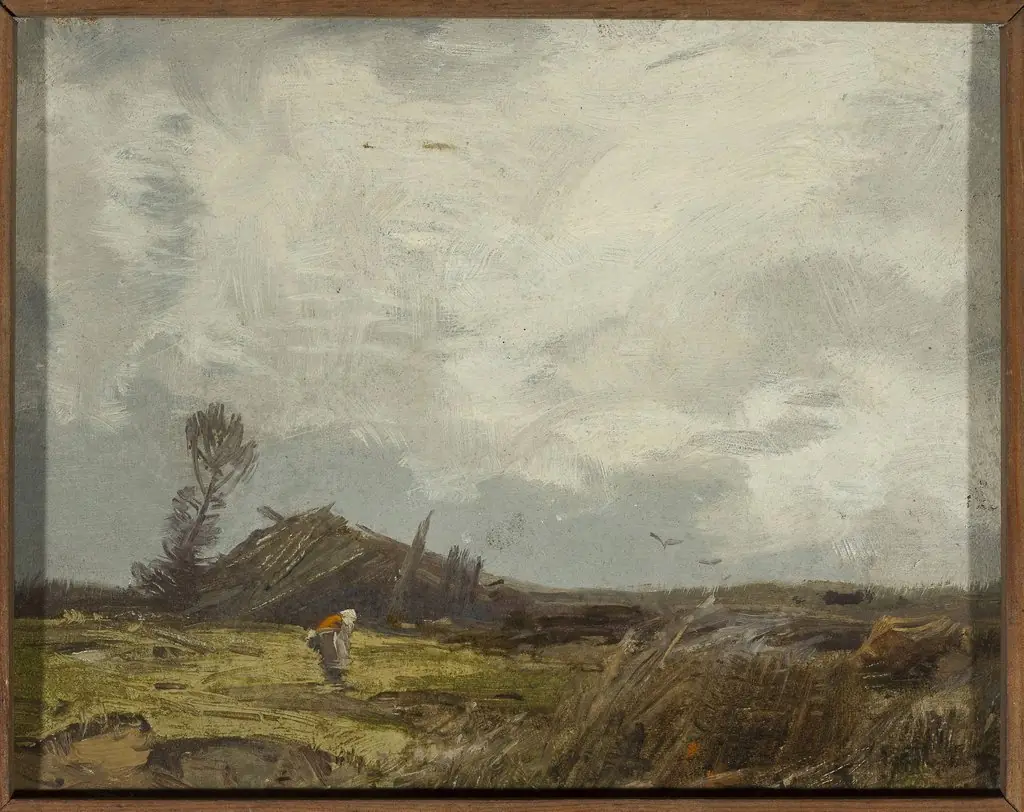
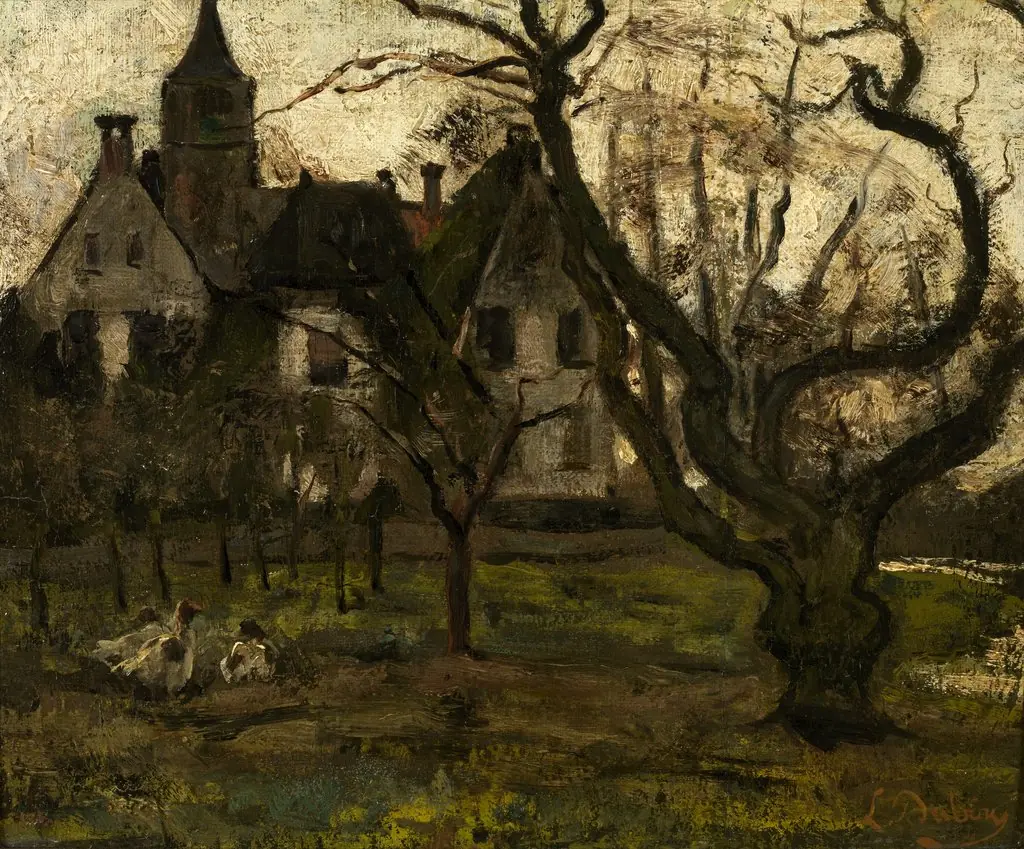
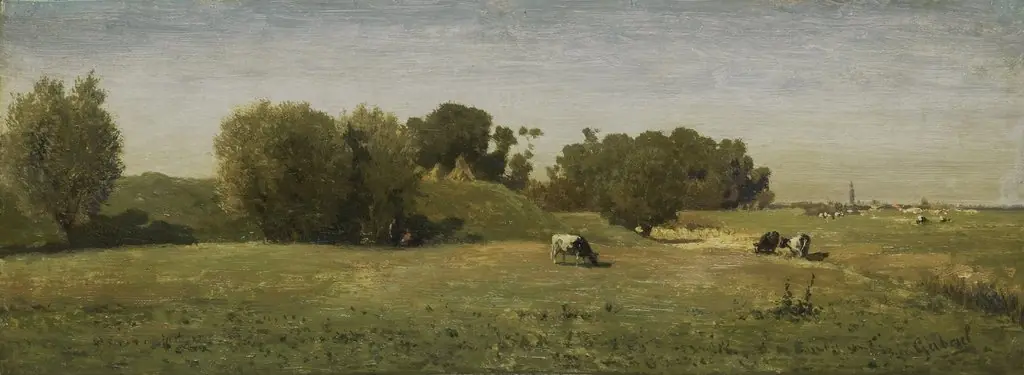
Peisaj is an unspecified painting by the Realist artist Julien Dupré. It dates from 1850 and is held in the collection of the National Museum of Art of Romania.
About this work
Overview
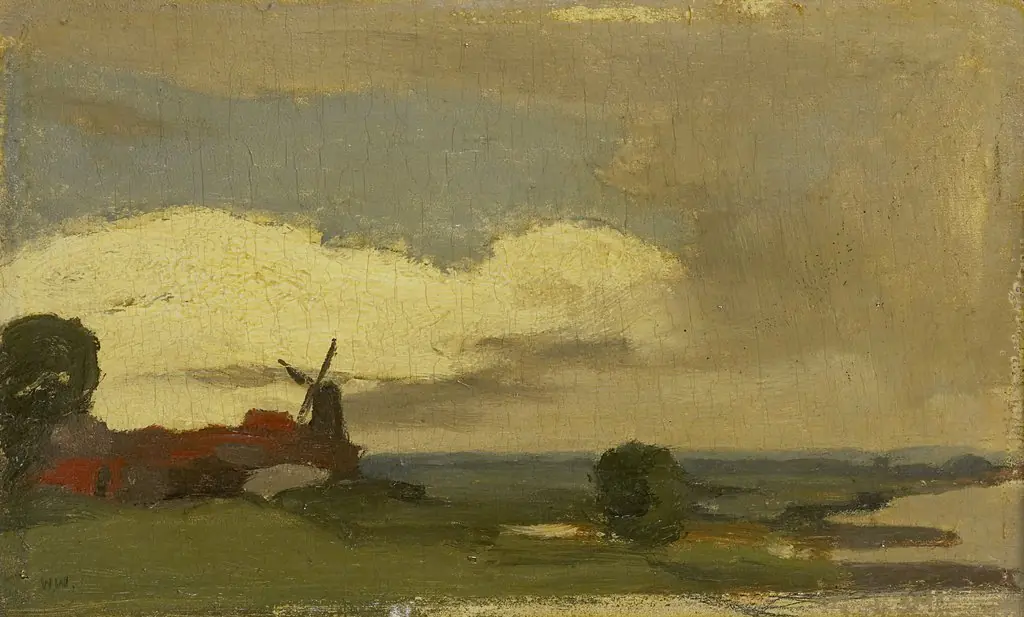
Julien Dupre’s mid‑nineteenth‑century work, titled *Peisaj*, presents a modest rural tableau. The composition centers on a red‑tiled house flanked by a low fence, with a modest building and trees receding into the distance. A sky and fields dominate the upper half, while the foreground is occupied by verdant grass, establishing a balanced, tranquil scene.
Subject & Meaning
The painting depicts an ordinary countryside setting, emphasizing the everyday life of a small settlement. The red‑roofed dwelling serves as a focal point, suggesting domestic stability amid the surrounding landscape. The inclusion of additional structures and foliage hints at a community embedded within a natural environment, reflecting a quiet, agrarian existence.
Technique & Style
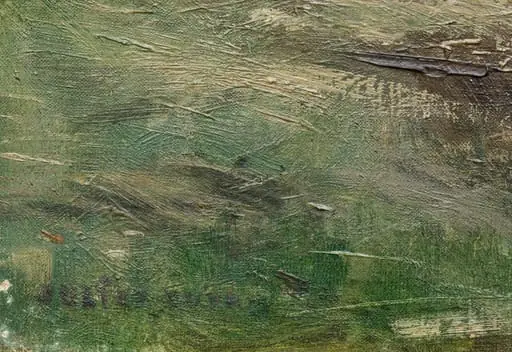
Dupre employs a loose, impasto‑like application of paint, allowing brushstrokes to remain visible and imparting a tactile surface to sky and fields. The palette is restrained, dominated by muted greens, browns, and earth tones, which reinforce the work’s rustic atmosphere. The brisk, sketch‑like handling suggests an outdoor, perhaps plein‑air, approach.
History & Provenance
Created around 1850, *Peisaj* belongs to the period when European artists increasingly explored rural subjects with a more spontaneous technique. Specific details of its ownership history are not recorded, but the work aligns with mid‑century trends toward naturalistic representation and the early development of impressionistic brushwork.
Own this work as a print
Artist & collection