Artwork
Children Feeding Geese
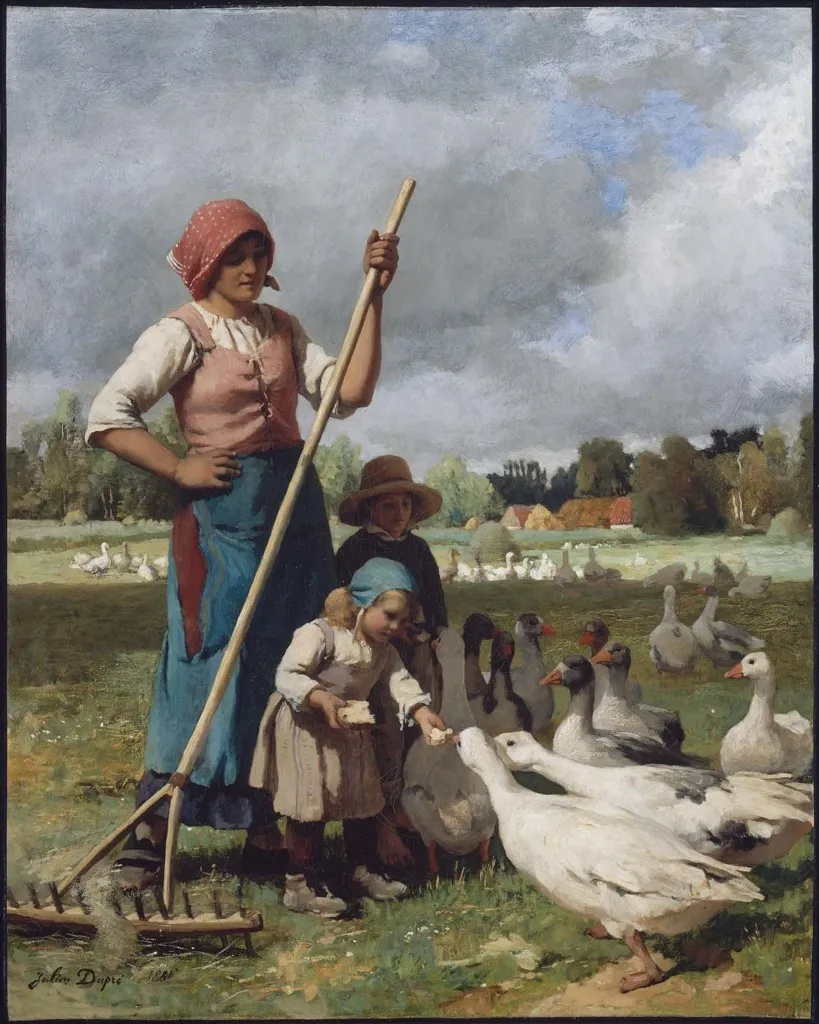
Children Feeding Geese is an oil painting by the Impressionist artist Julien Dupré. It dates from 1891 and is held in the collection of the Museum of Fine Arts Boston.
About this work
Overview
Julien Dupré’s oil on canvas, painted in 1891, depicts a quiet rural tableau now in the collection of the Museum of Fine Arts in Boston. The composition centers on a woman and two children amid a flock of geese, set within an open field that stretches toward a line of trees and a softly clouded sky.
Subject & Meaning
The work presents a domestic scene of everyday life: a mother figure, identifiable by a red headscarf, pink vest and blue skirt, holds a long stick while her children, clad in white shirts and blue headscarves, scatter feed to the surrounding geese. The gentle interaction suggests themes of nurture, pastoral simplicity and the harmonious coexistence of humans and nature.
Technique & Style
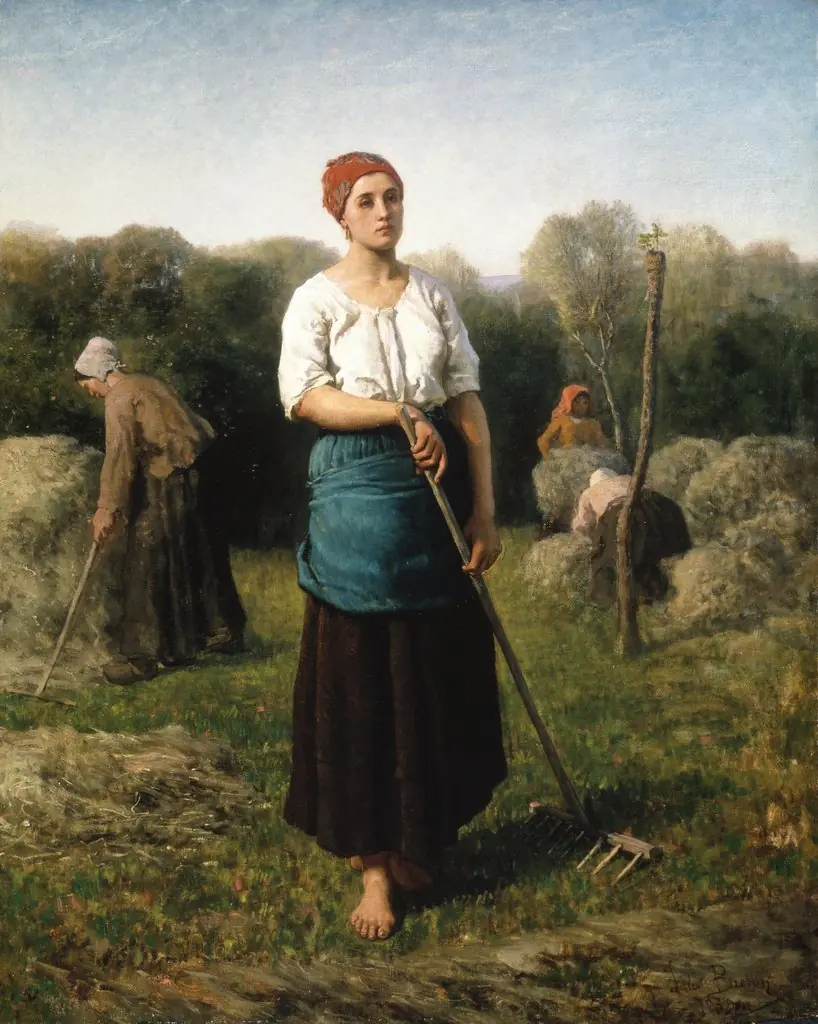
Dupré employs a restrained palette of muted earth tones punctuated by bright accents in the clothing, creating visual focus without overwhelming the scene. Subtle modeling of light and shadow across the figures and the feathered birds demonstrates a careful handling of chiaroscuro, lending a modest three‑dimensionality to the figures while preserving the overall calm atmosphere.
History & Provenance
Executed in the early 1890s, the painting entered the Museum of Fine Arts, Boston, where it remains on view. Its acquisition reflects the museum’s broader interest in late‑19th‑century French genre painting, a period when artists like Dupré documented rural life with a sympathetic eye.
Context
Dupré, a French painter associated with the Barbizon school’s later generation, often portrayed agricultural labor and family life. This piece aligns with his recurring interest in the rhythms of countryside existence, echoing contemporary concerns about industrialization and the idealization of pastoral traditions.
Legacy
While not among the most widely reproduced works of the era, the painting contributes to the visual record of late‑19th‑century French rural culture. Its presence in a major American museum underscores the transatlantic appreciation for genre scenes that celebrate everyday labor and familial bonds.
Artist & collection