Artwork
George Villiers, 1st Duke of Buckingham
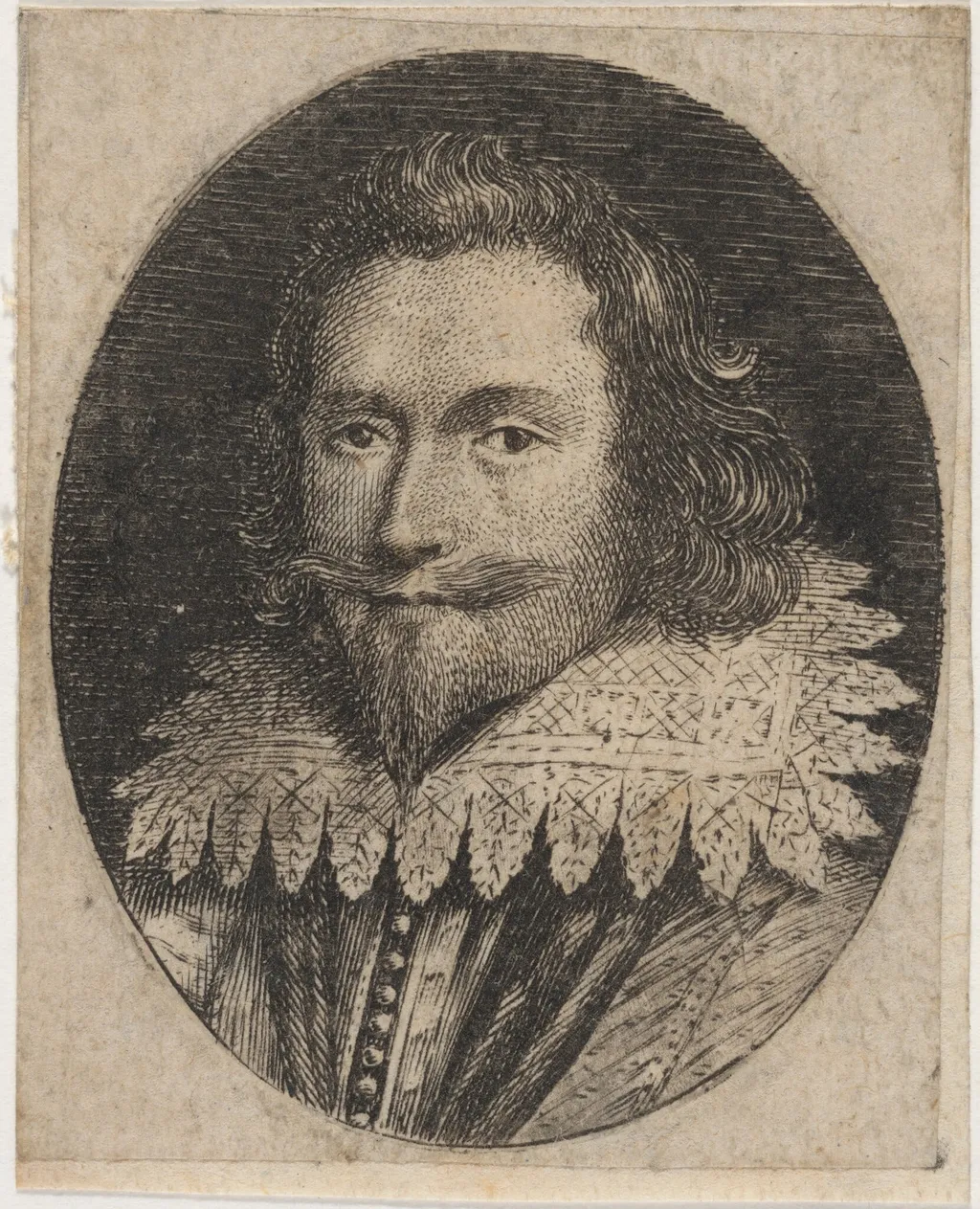
George Villiers, 1st Duke of Buckingham is an ink print by the Baroque artist Dutch 17th Century. It dates from 1650 and is held in the collection of the National Gallery of Art. The work is an engraved portrait taken from a silver medal, rendered in black and white.
About this work
Overview
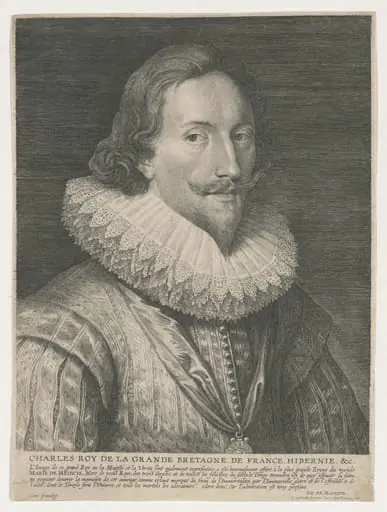
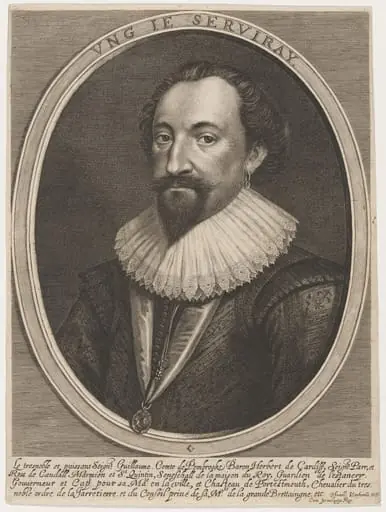
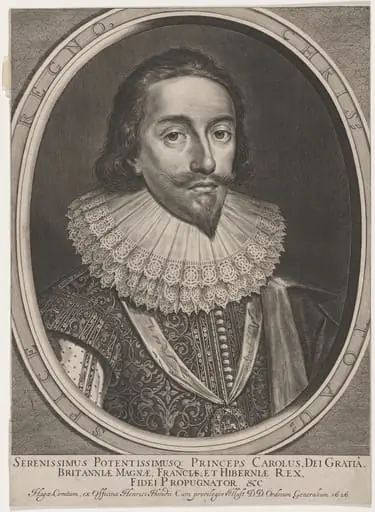
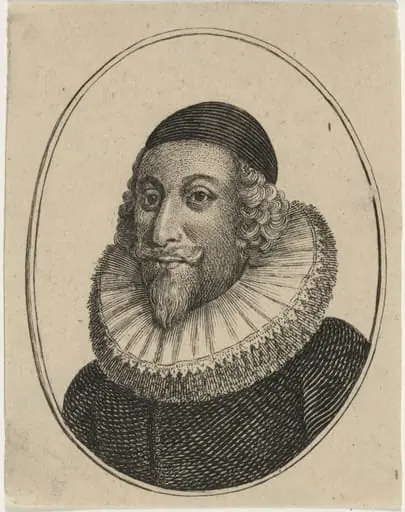
The work is an engraved portrait taken from a silver medal, rendered in black and white. It depicts George Villiers, 1st Duke of Buckingham, shown with curly hair, a trimmed beard, and a ruffled collar that spreads outward. The figure faces slightly toward the viewer against an unadorned background, concentrating attention on his facial expression and attire.
Technique & Style
The image is produced through fine line engraving, employing dense cross‑hatching to model volume and texture. Parallel lines intersect at varying angles, creating subtle gradations of tone that give the hair and collar a three‑dimensional quality. This meticulous line work is characteristic of medallic engraving, where limited space demands precise rendering of detail.
Subject & Meaning
George Villiers, a prominent courtier and favorite of King James I, is presented in a dignified pose that emphasizes his status. The ruffled collar and careful grooming signal aristocratic fashion of the early seventeenth century, while the direct gaze suggests confidence and authority, reflecting his political influence and personal ambition.
History & Provenance
Originally struck as a silver medal, the image was later transferred to paper as an engraving, a common practice for disseminating portraiture in the period. The print has circulated among collectors of early modern English portraiture, and its survival in museum collections attests to the continued interest in Buckingham’s visual representation.
Context
The portrait belongs to a broader tradition of medallic portraiture that flourished in the early 1600s, serving both commemorative and propagandistic functions. Engravers adapted the relief surface of medals into two‑dimensional prints, allowing wider distribution of a ruler’s or noble’s likeness beyond the limited reach of the original metal objects.
Artist & collection

Artist
This Dutch artist made small, sharp engravings and etchings—mostly portraits and sea battles—printed from metal plates.