Artwork
Snub-Nosed Man in a Cap
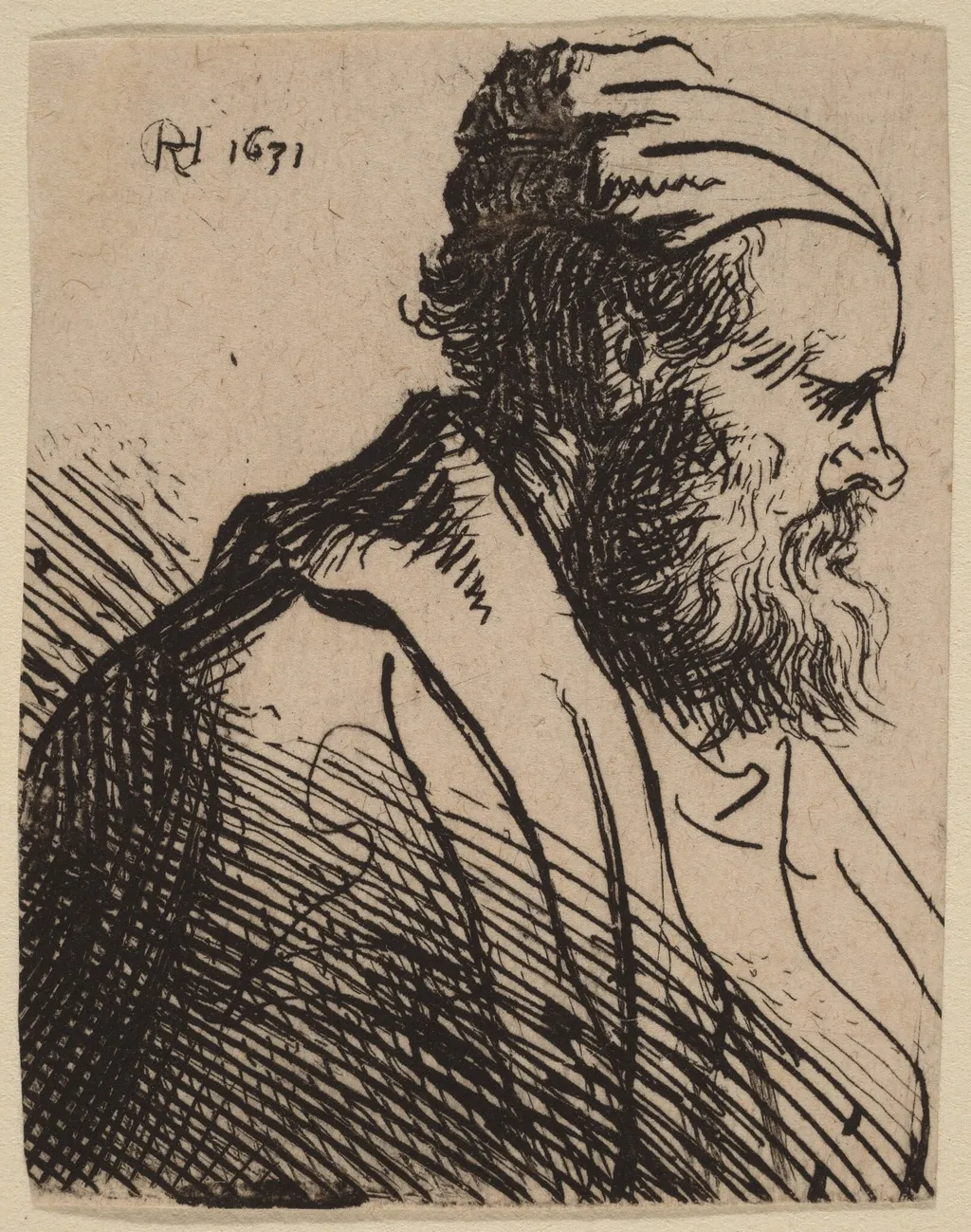
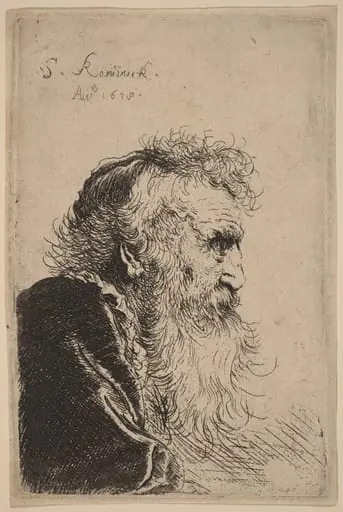
Snub-Nosed Man in a Cap is an ink print by the Baroque artist Dutch 17th Century. It dates from 1630 and is held in the collection of the National Gallery of Art. This etching depicts a man’s side profile, rendered with swift, irregular lines that convey immediacy rather than polish.
About this work
Overview
This etching depicts a man’s side profile, rendered with swift, irregular lines that convey immediacy rather than polish. Executed on metal using a scratch-based technique, the work belongs to a 17th-century tradition of rapid portraiture. The loose handling suggests it was made as a study or informal record, not a finished commission.
Subject & Meaning
The figure is a man of modest appearance, his cap drawn low and his thick beard and curled hair partially concealed. No identity is recorded, and the absence of context or adornment implies an ordinary individual, perhaps observed in passing. The focus on texture and gesture, not status, points to an interest in human presence over social distinction.
Technique & Style
The artist employed etching, scratching lines directly into a metal plate with a sharp tool, then inked and pressed it to produce the print. The irregular, almost scribbled strokes create a tactile surface, emphasizing movement and spontaneity. This method allowed for quick execution, aligning with the informal nature of the subject and the artist’s intent.
History & Provenance
No specific ownership history or date is documented for this work. It aligns with practices common in 17th-century Northern Europe, where artists used etching for personal studies and informal portraits. Its survival suggests it was retained within an artist’s circle or collection, valued for its expressive quality rather than its finish.
Context
During the 1600s, etching became a favored medium for artists seeking to capture fleeting expressions and unposed figures. Unlike formal oil portraits, these quick studies offered a direct record of observation. This piece reflects a broader trend of valuing authenticity and immediacy in portraiture, especially among printmakers.
Legacy
The work exemplifies how etching enabled artists to explore character through gesture and texture rather than detail. Its roughness, once considered unfinished, is now recognized as part of a deliberate aesthetic that prioritized emotional resonance over refinement. It contributes to the understanding of printmaking as a space for experimentation in early modern art.
Artist & collection

Artist
This Dutch artist made small, sharp engravings and etchings—mostly portraits and sea battles—printed from metal plates.

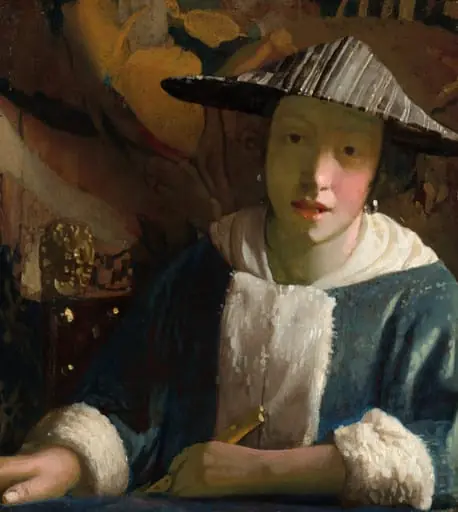
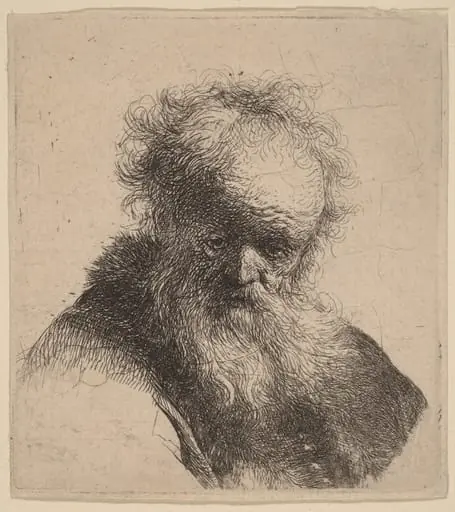 Bust of an Old Man with Flowing Beard and White Sleeve
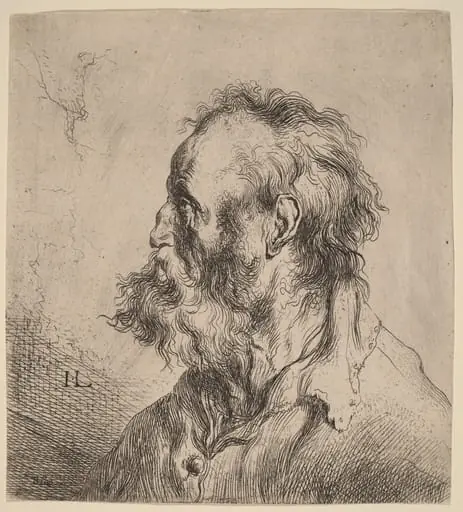 Bust of a Bearded Old Man
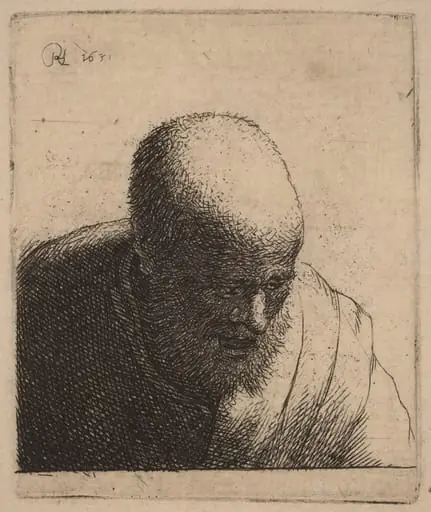 Bald Man with Open Mouth, Looking Down
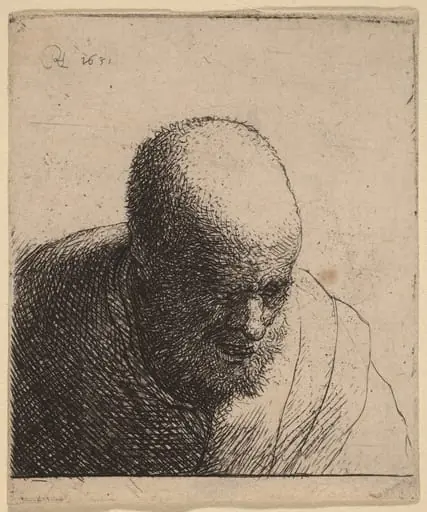 Bald Man with Open Mouth, Looking Down
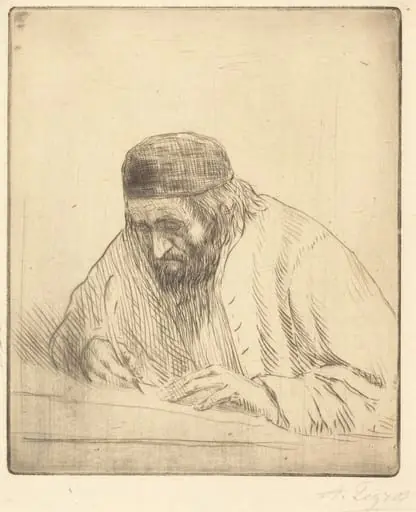 Writer (L'ecrivain)
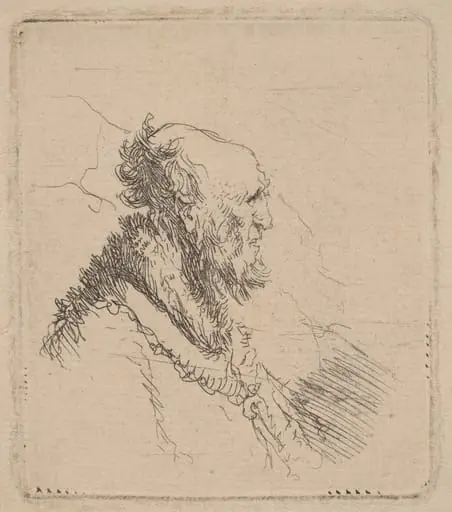 Bald Old Man with a Short Beard in Profile
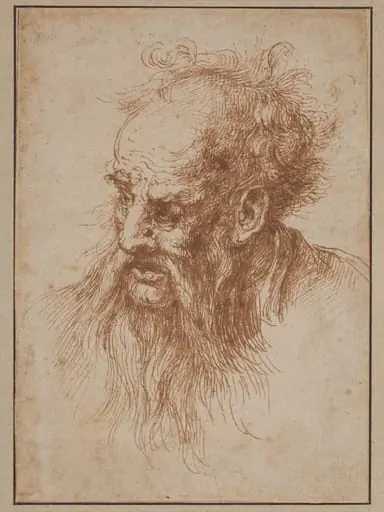 An Elderly Man with a Flowing Beard
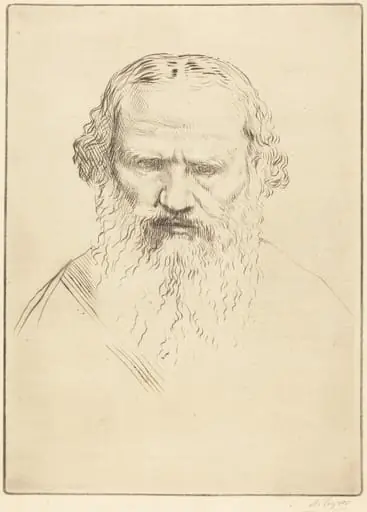 Tolstoy
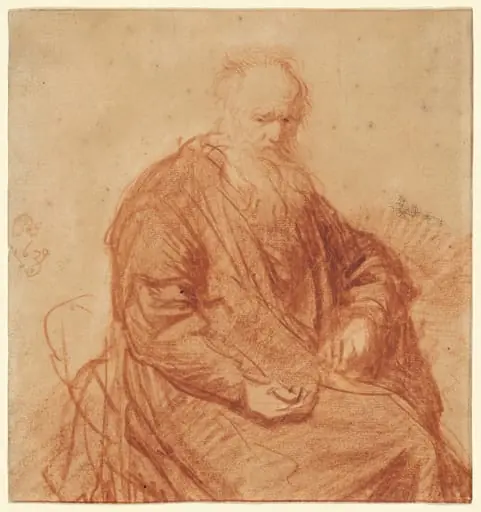 Seated Old Man
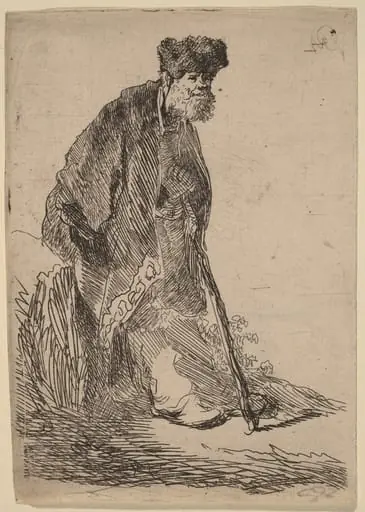 Man in a Coat and Fur Cap Leaning against a Bank
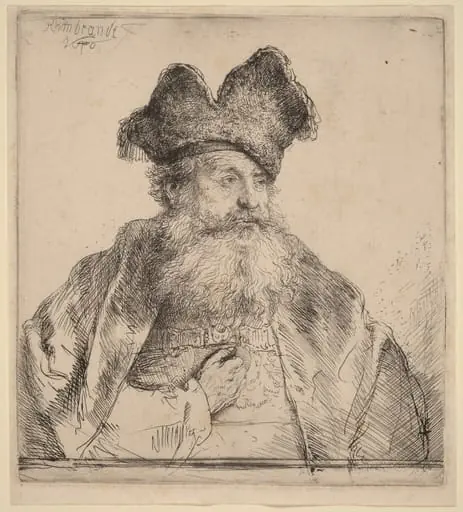 Old Man with a Divided Fur Cap
 Bust of an Old Man in Profile, Facing Right