Artwork
Tolstoy
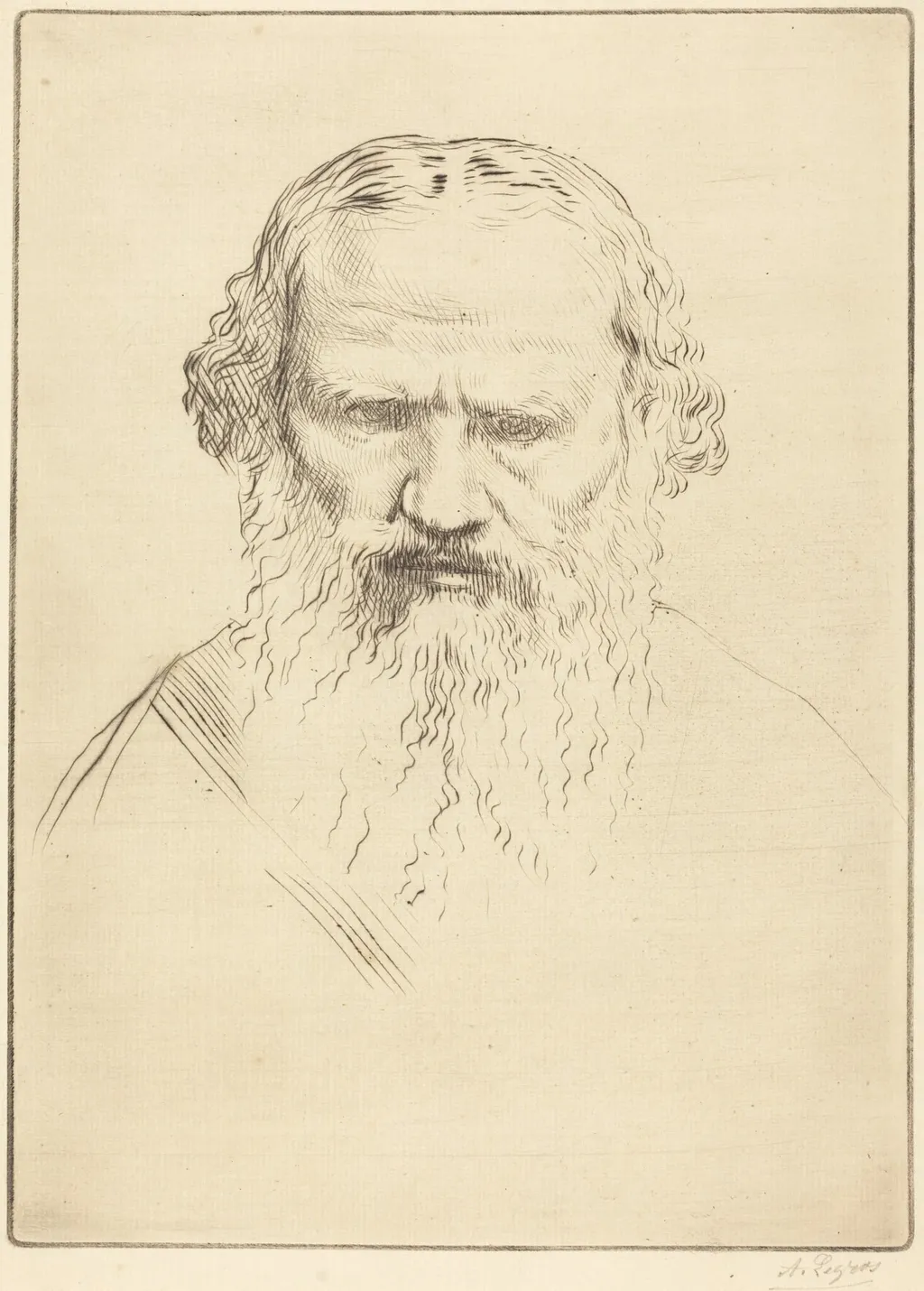
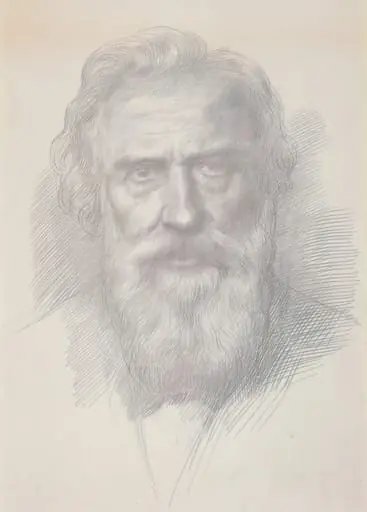
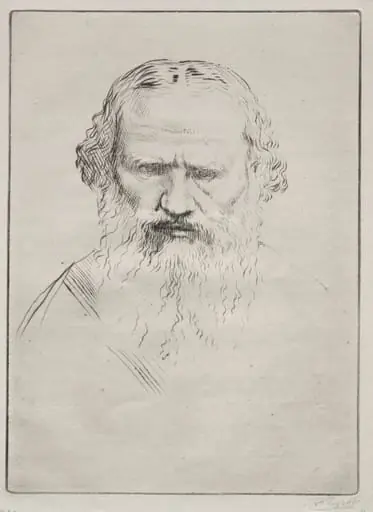
Tolstoy is an ink print by the Romanticist artist Alphonse Legros. It dates from 1874 and is held in the collection of the National Gallery of Art.
About this work
Overview
Unlike finished portraits, the work carries the immediacy of a sketch, capturing Tolstoy’s presence with minimal but deliberate marks.
Alphonse Legros, a French artist who settled in Britain and became a naturalized citizen, produced the portrait of Leo Tolstoy in 1874 using drypoint and etching. This print reflects Legros’s broader engagement with graphic arts and his influence in revitalizing printmaking in Victorian England. Unlike finished portraits, the work carries the immediacy of a sketch, capturing Tolstoy’s presence with minimal but deliberate marks.
Subject & Meaning
The portrait depicts Leo Tolstoy, the Russian novelist known for his moral intensity and literary realism. Legros renders him with a direct, unidealized gaze, slightly averted, suggesting introspection. The focus on the face and neck, devoid of contextual elements, emphasizes Tolstoy’s intellectual presence rather than his social status. The unpolished rendering aligns with Tolstoy’s own rejection of artifice, mirroring his philosophical stance.
Technique & Style
Legros employed drypoint and etching to create a dense network of fine, irregular lines that model form through texture rather than shading. The beard and hair are rendered with loose, wavy strokes, conveying movement and spontaneity. The contrast between the inked lines and the untouched paper heightens the sense of immediacy. The absence of aquatint or tonal washes reinforces the work’s raw, observational character.
History & Provenance
Created during Legros’s tenure at the Slade School of Fine Art, the portrait was made shortly after Tolstoy’s growing reputation in Europe. Legros, who had met the writer, likely worked from memory or a sketch. The print remained within the circle of British printmakers and collectors, reflecting Legros’s role in elevating etching as a serious artistic medium in Britain during the 1870s.
Context
In the 1870s, British art saw a revival of interest in etching as a medium for personal expression, moving away from reproductive prints. Legros was central to this movement, advocating for the artist’s hand in printmaking. His portrait of Tolstoy aligns with this ethos—valuing directness and authenticity over polish, and reflecting broader cultural fascination with literary figures as moral exemplars.
Legacy
Legros’s Tolstoy print exemplifies his pedagogical and artistic influence on British printmaking. Its sketch-like quality became a model for later artists seeking emotional resonance over technical finish. The work endures as a quiet testament to the dialogue between visual art and literature in the late 19th century, and to Legros’s commitment to the expressive potential of the printed line.
Artist & collection

Artist
Alphonse Legros (French pronunciation: ; 8 May 1837 – 8 December 1911) was a French, later British, painter, etcher, sculptor, and medallist.

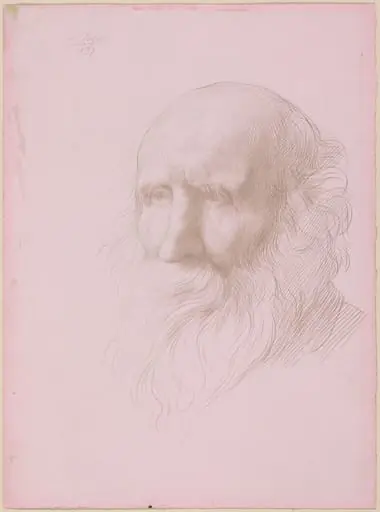 Head of an Old Man
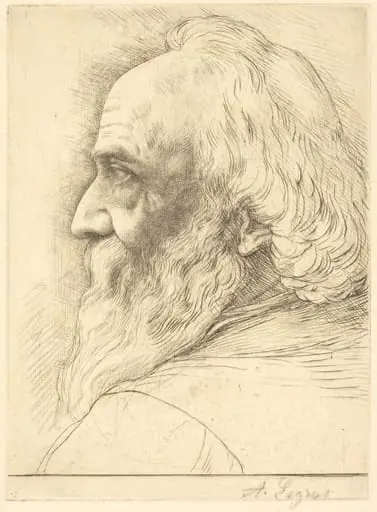 Self-Portrait, 12th plate
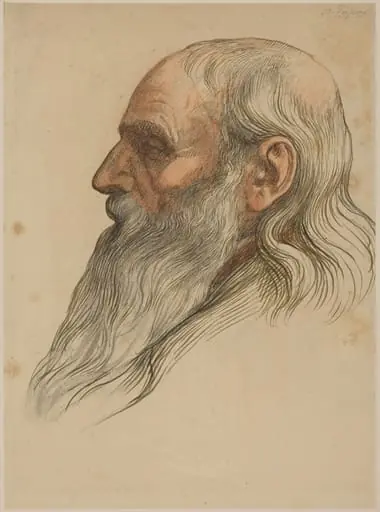 Study of a Man's Head with a Full Beard
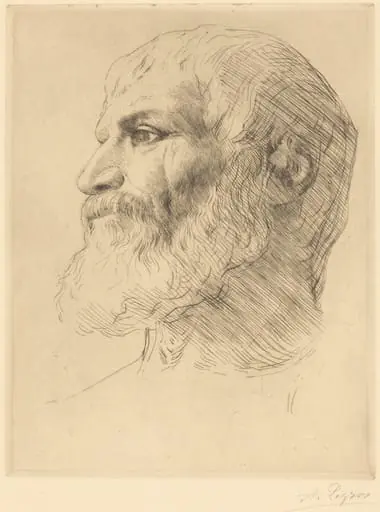 Head of Souliote (Tete de Souliote)
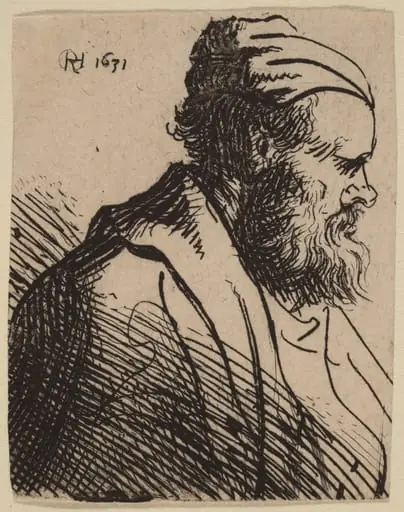 Snub-Nosed Man in a Cap
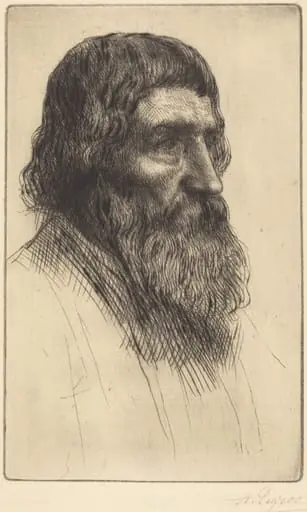 English Peasant (Paysan anglais)
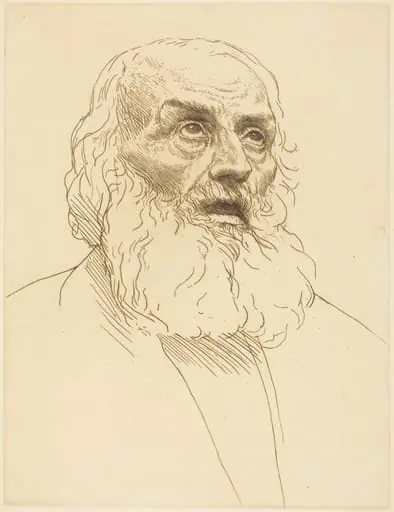 Study of an Old Man (Etude de vieillard)
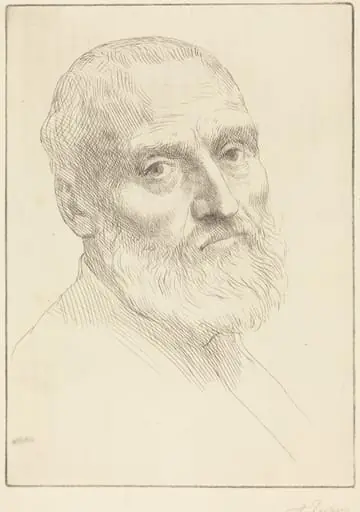 Study for Head of a Man (Etude de tete d'homme)
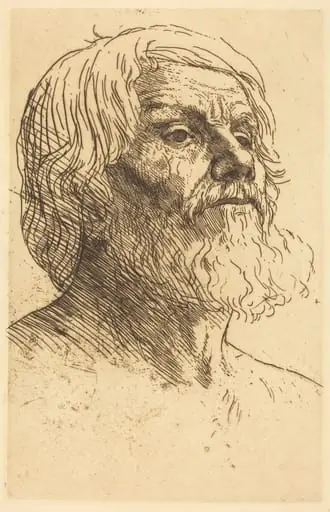 Head of a Man (Tete d'homme)
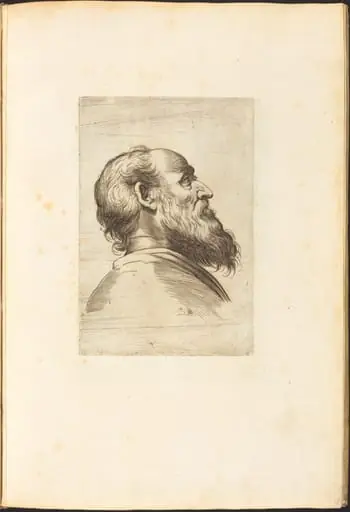 Print from Drawing Book
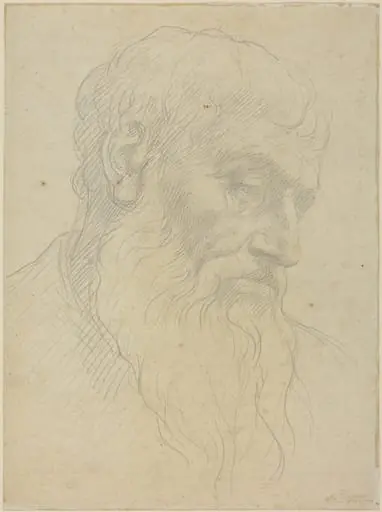 Study of a Head
 Tolstoi