Artwork
Diptych of the Virgin and Child Enthroned and the Crucifixion
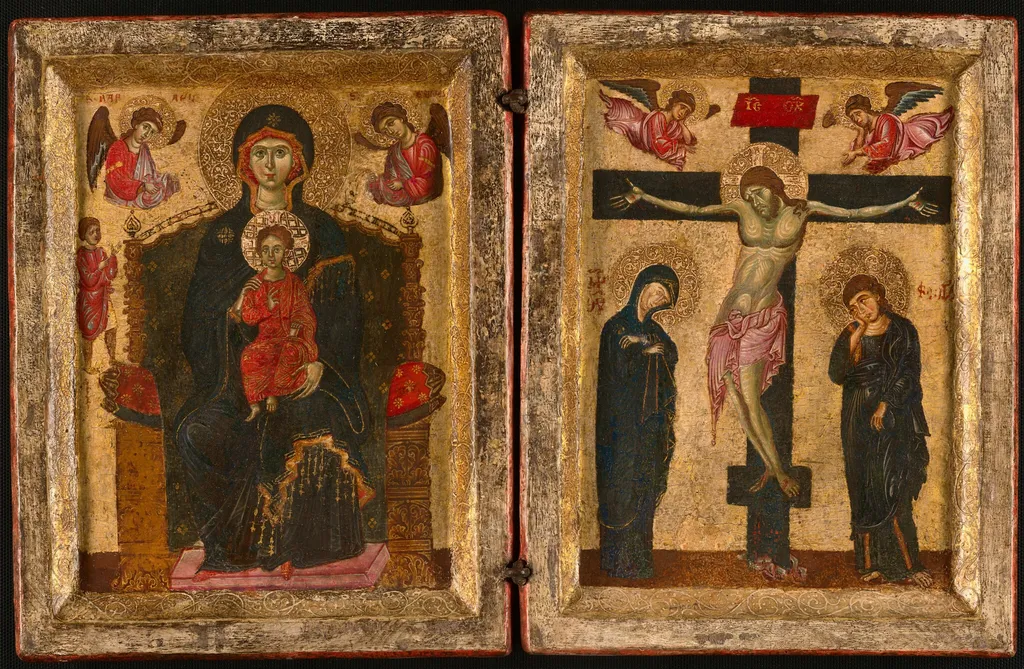
Diptych of the Virgin and Child Enthroned and the Crucifixion is a tempera painting by the Byzantine icon painting artist Eastern Mediterranean. It dates from 1280 and is held in the collection of the Art Institute of Chicago.
About this work
Overview
Its portability suggests use by Crusaders or local Christian elites, blending artistic traditions from both Byzantine and Western European sources.
This hinged wooden panel painting, created in tempera, consists of two connected scenes: the Virgin and Child enthroned, and the Crucifixion. Designed for personal prayer, it reflects the cultural intersections of the Latin Kingdom in the Holy Land during the late 13th century. Its portability suggests use by Crusaders or local Christian elites, blending artistic traditions from both Byzantine and Western European sources.
Subject & Meaning
The two panels present complementary devotional themes: the Virgin and Child symbolize divine grace and maternal tenderness, while the Crucifixion emphasizes sacrifice and redemption. Together, they form a narrative arc from incarnation to salvation, tailored for private meditation. The inclusion of both Latin and Greek inscriptions underscores a bilingual Christian community, where theological messages were accessible across cultural lines.
Technique & Style
Tempera paint on wood panel was a standard medium in both Byzantine and Italian traditions. The work combines the gold backgrounds and hierarchical scale of Eastern iconography with the more naturalistic drapery and spatial depth found in Western Gothic art. The fusion of these approaches reveals a hybrid aesthetic, likely shaped by an artist trained in one tradition but working in a multicultural environment.
History & Provenance
Created likely in Acre, the last major Crusader stronghold, the diptych dates to the late 1200s, a period when Latin Christian rule in the Levant was diminishing. Its production suggests the persistence of artistic workshops catering to European settlers. After the fall of Acre in 1291, such objects may have been transported back to Europe, carrying their hybrid style into new devotional contexts.
Context
In the Crusader states, Latin Christians lived alongside Greek Orthodox, Armenian, and Muslim populations. Artistic production in this setting often absorbed local visual languages. This diptych exemplifies how religious imagery adapted to a pluralistic environment, serving as both spiritual tool and cultural artifact that bridged Eastern and Western Christian practices.
Legacy
Works like this diptych contributed to the transmission of Byzantine iconographic forms into Western Europe. Italian painters, particularly in Tuscany and Venice, later incorporated similar compositional structures and gold-ground backgrounds, influenced by imported Eastern panels. The blending of traditions here foreshadowed broader stylistic exchanges that shaped late medieval painting across the Mediterranean.
Artist & collection

Artist
The Eastern Mediterranean is a loosely delimited region comprising the easternmost portion of the Mediterranean Sea, and well as the adjoining land—often defined as the countries around the Levantine Sea.

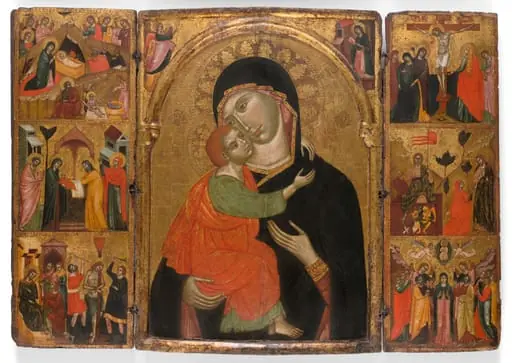 Triptych of the Virgin and Child with Scenes from the Life of Christ
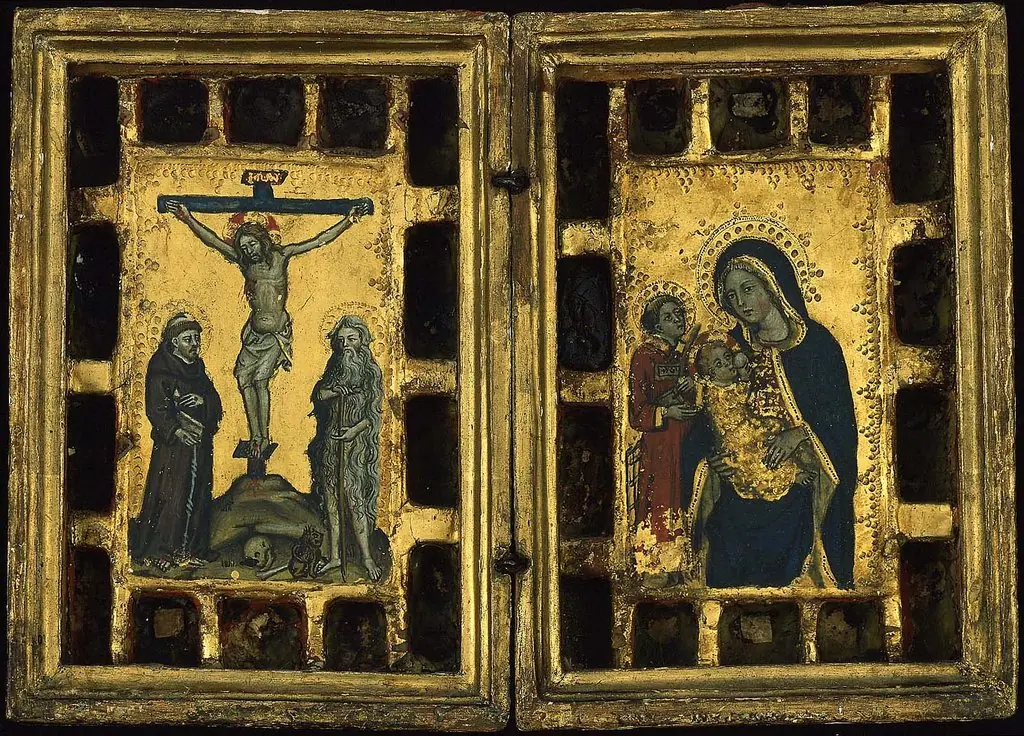 Christ on the Cross with Saints Francis and Onophrius; The Virgin and Child with Saint Lawrence
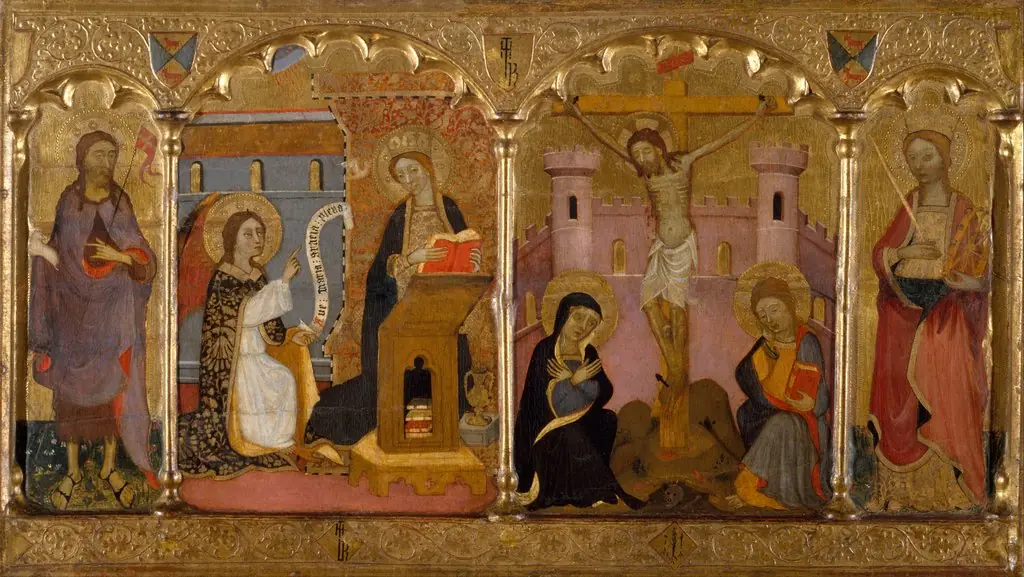 Saint John the Baptist, Annunciation, Crucifixion, Saint Catherine of Alexandria
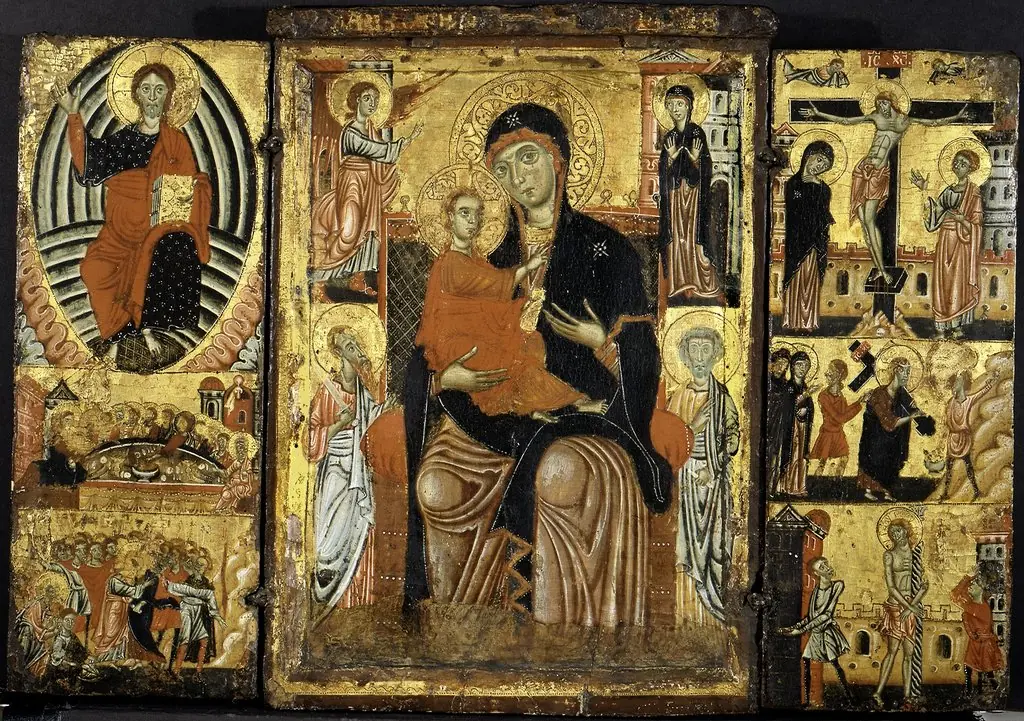 Madonna and Child Enthroned
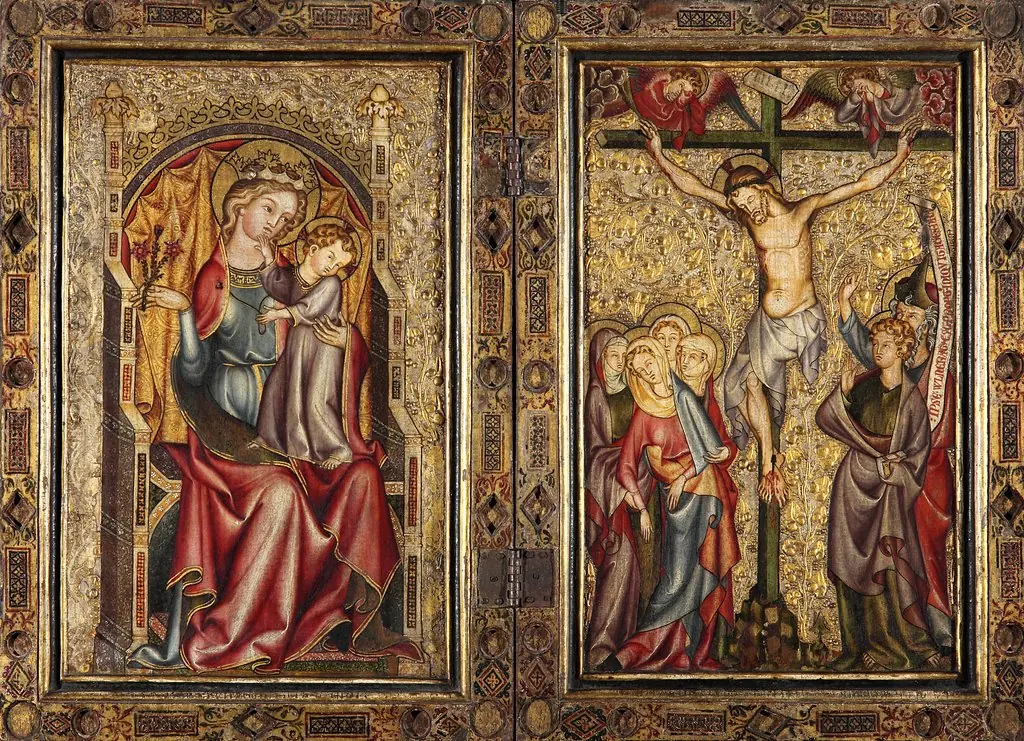 Cologne Diptych
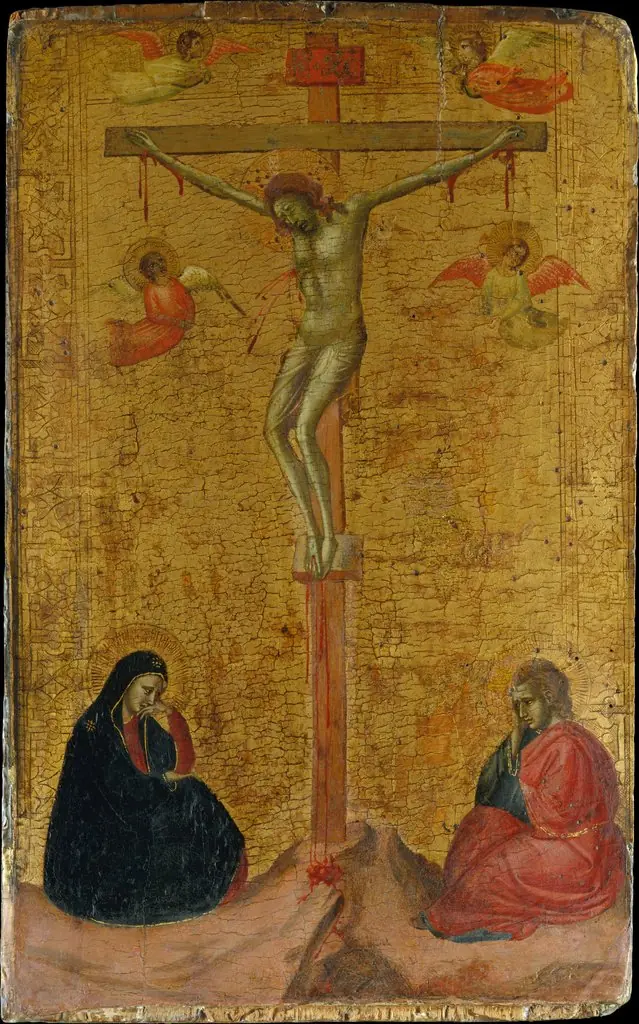 The Crucifixion
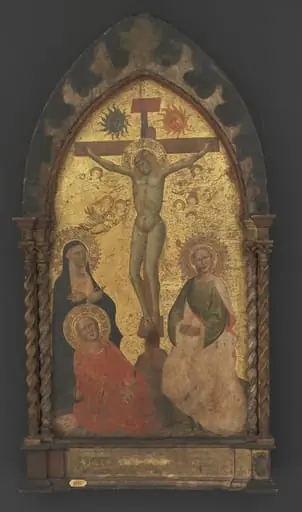 Christ on the Cross mourned by the Virgin Mary and Saints Mary Magdalene and John
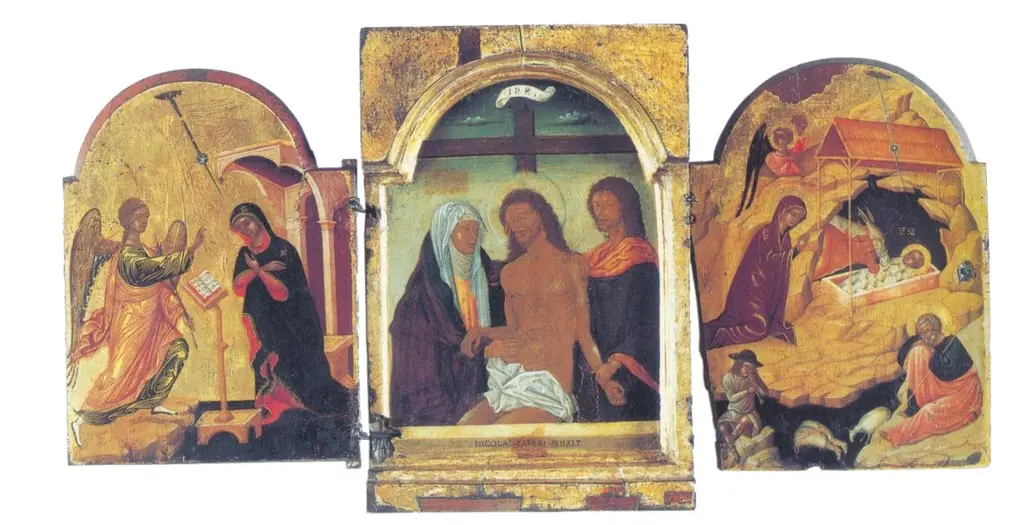 Triptych Pieta (Tzafouris)
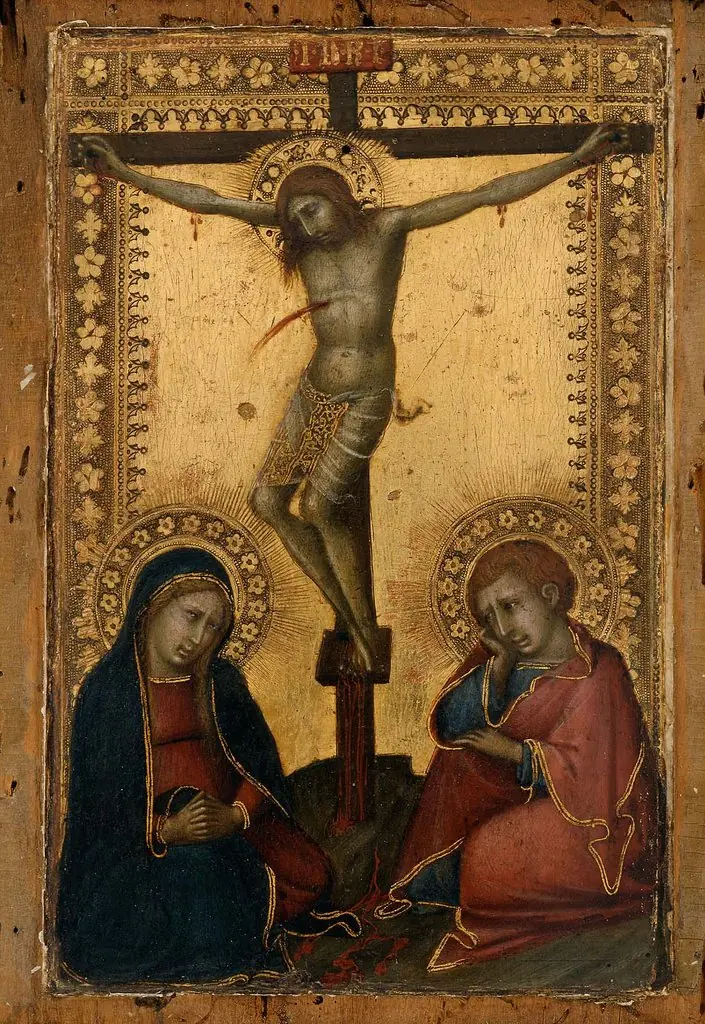 Crucified Christ with the Virgin and Saint John the Evangelist
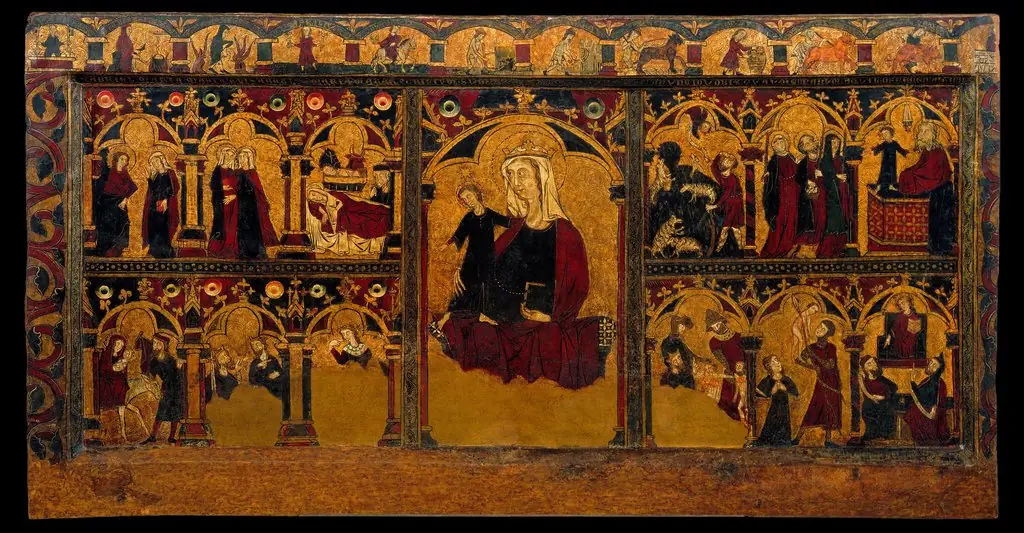 Altar frontal of Jesus' childhood