Artwork
Christ on the Cross with Saints Francis and Onophrius; The Virgin and Child with Saint Lawrence
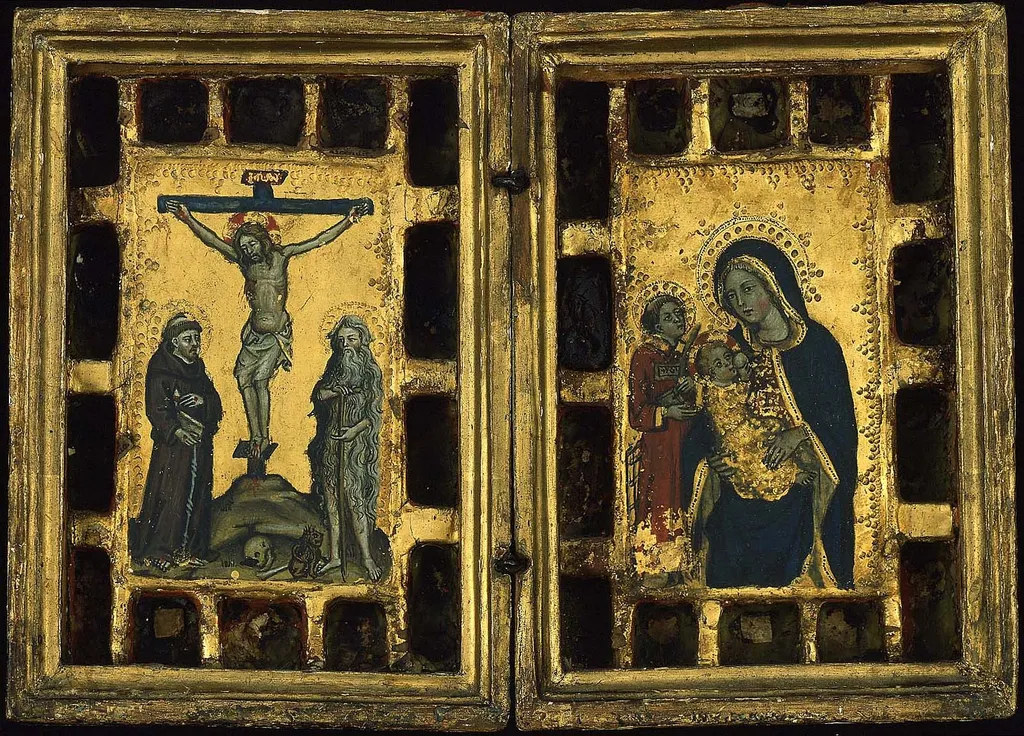
Christ on the Cross with Saints Francis and Onophrius; The Virgin and Child with Saint Lawrence is an unspecified painting by the Early Renaissance artist Lippo d'Andrea. It dates from 1435 and is held in the collection of the Museum of Fine Arts Boston.
About this work
Overview
One face presents the crucifixion of Christ accompanied by two saints, while the reverse shows the Virgin holding the infant Jesus, flanked by Saint Lawrence.
Created in 1435 by Florentine painter Lippo d'Andrea, this double‑sided panel combines two devotional scenes typical of early Renaissance art. One face presents the crucifixion of Christ accompanied by two saints, while the reverse shows the Virgin holding the infant Jesus, flanked by Saint Lawrence. The work is executed on a gold ground, employing the flat, linear figures characteristic of its period.
Subject & Meaning
The front side portrays the Passion, with Christ nailed to the cross and two robed figures—identified as Saints Francis and Onophrius—standing beneath, one grasping a staff and the other gazing upward, suggesting intercession and contemplation. The reverse offers a tender Madonna and Child composition, the infant embraced by Mary in blue, with Saint Lawrence kneeling nearby, emphasizing themes of protection and sanctified witness.
Technique & Style
Lippo d'Andrea applied tempera over a gold leaf ground, allowing the luminous background to frame the figures. The composition relies on simplified, almost schematic forms, with small, tightly rendered faces and rigid postures typical of early 15th‑century religious panels. Subtle chiaroscuro hints at volume, while the limited palette of gold, blue, brown, red and green accentuates the hierarchical importance of each saint.
History & Provenance
Active in the first half of the 1400s, d'Andrea was a member of the Compagnia di San Luca, the Florentine guild of painters. He participated in civic commissions such as the fresco cycle for the Palazzo del Ceppo in Prato, indicating his integration into both religious and municipal artistic networks. The panel’s later ownership records are sparse, but its survival suggests continued devotional use.
Context
The piece reflects the devotional needs of Florentine confraternities, which often commissioned portable, double‑sided panels for processional or altar use. By pairing the crucifixion with a Marian image, the work offers a comprehensive visual program for contemplation of Christ’s sacrifice and the intercessory role of the Virgin, aligning with contemporary theological emphasis on the communion of saints.
Artist & collection

Artist
Lippo d'Andrea di Lippo (1370/1371 - before 1451) was a Florentine painter, formerly known as Pseudo-Ambrogio di Baldese.

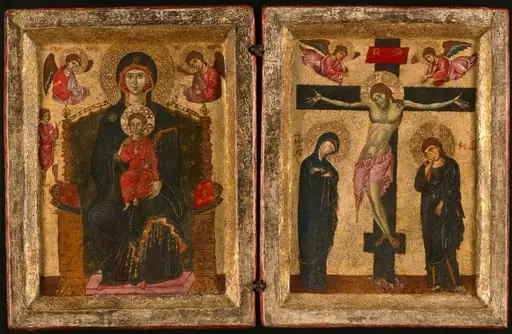 Diptych of the Virgin and Child Enthroned and the Crucifixion
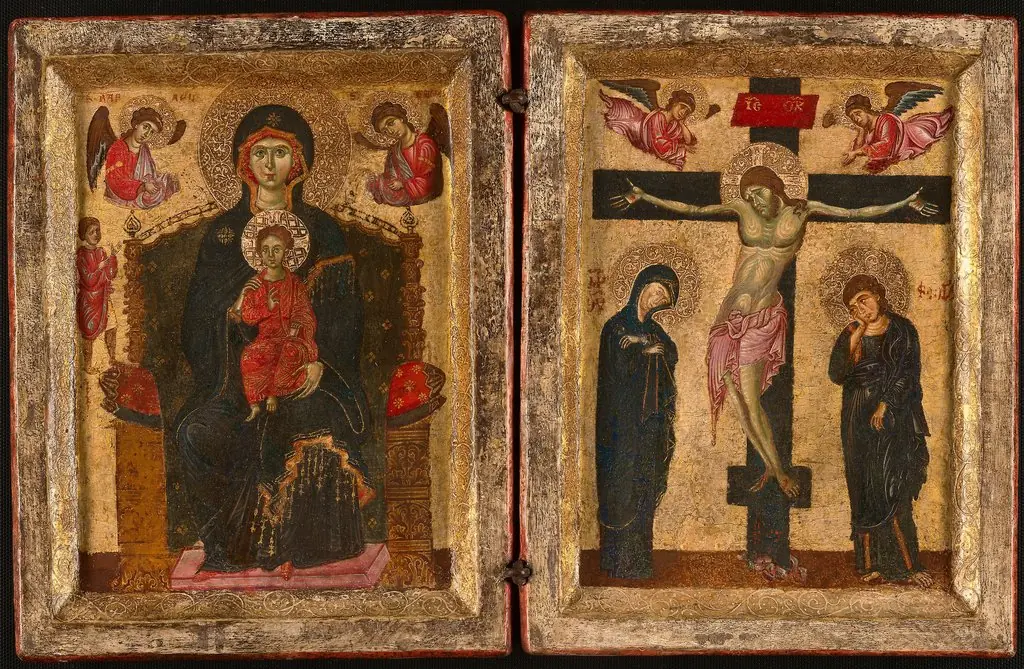 Diptych with the Virgin and Child Enthroned and the Crucifixion
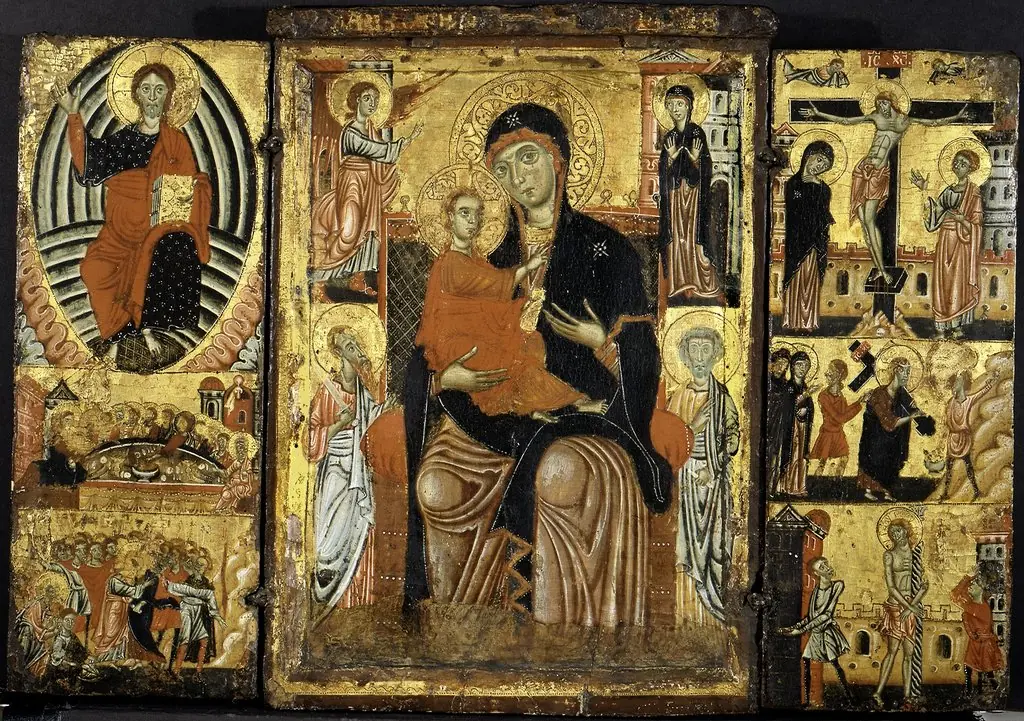 Madonna and Child Enthroned
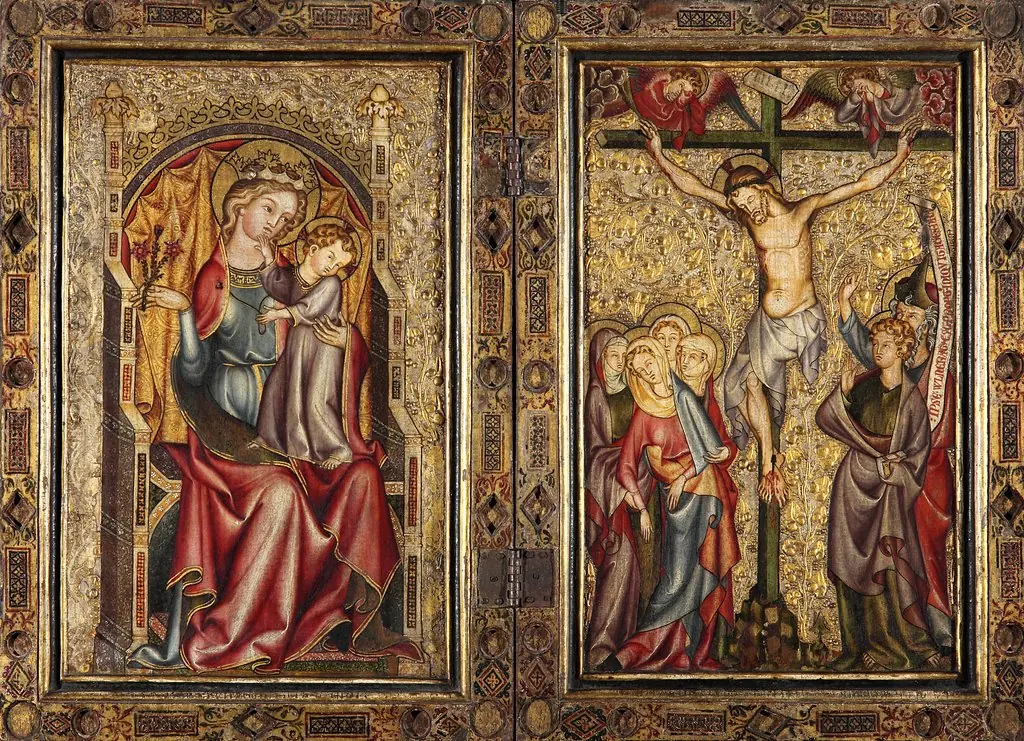 Cologne Diptych
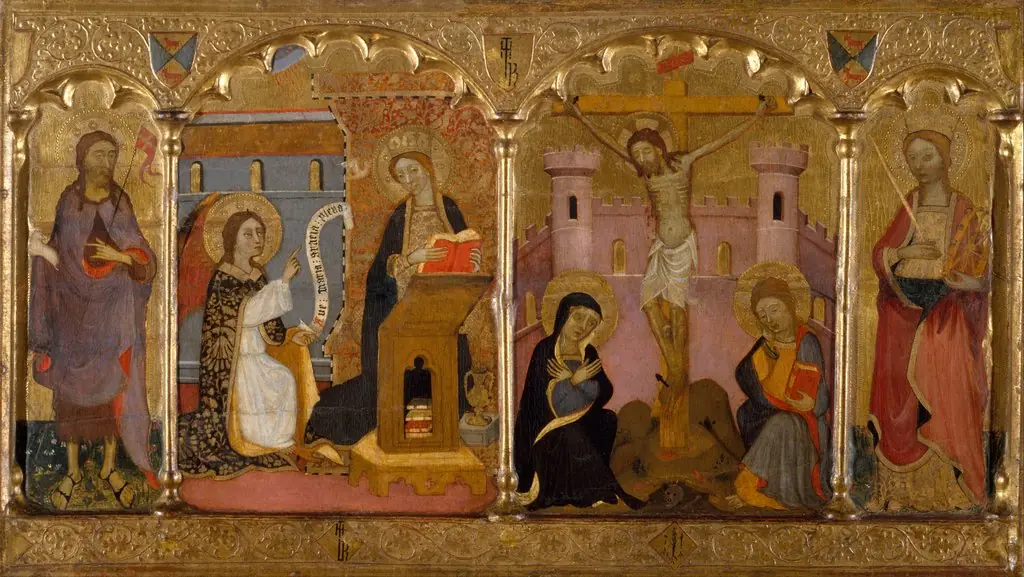 Saint John the Baptist, Annunciation, Crucifixion, Saint Catherine of Alexandria
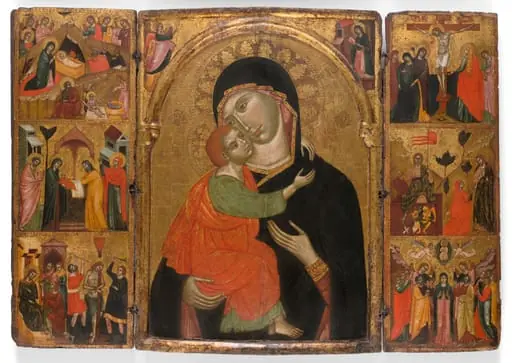 Triptych of the Virgin and Child with Scenes from the Life of Christ
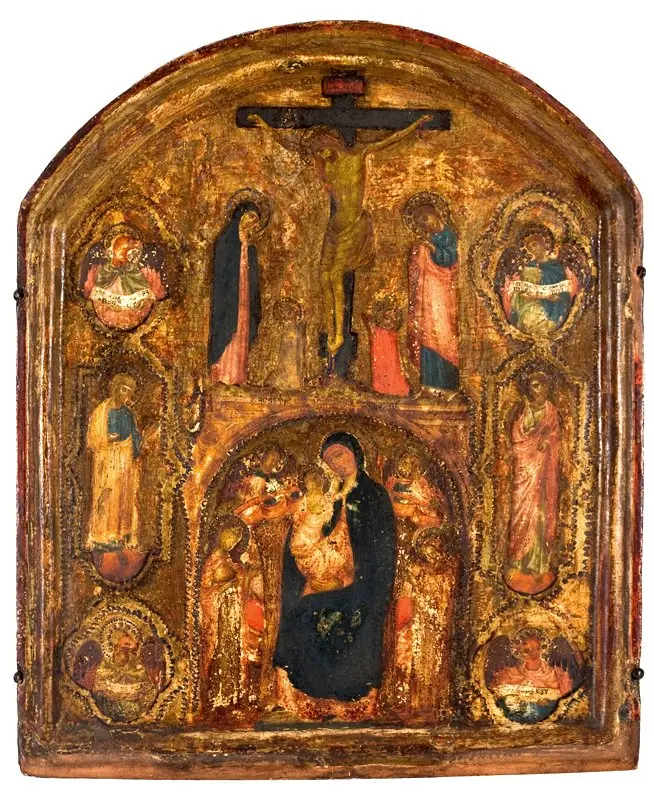 The Crucifixion with the Virgin and Child among Saints, Angels and the Symbols of the Evangelists
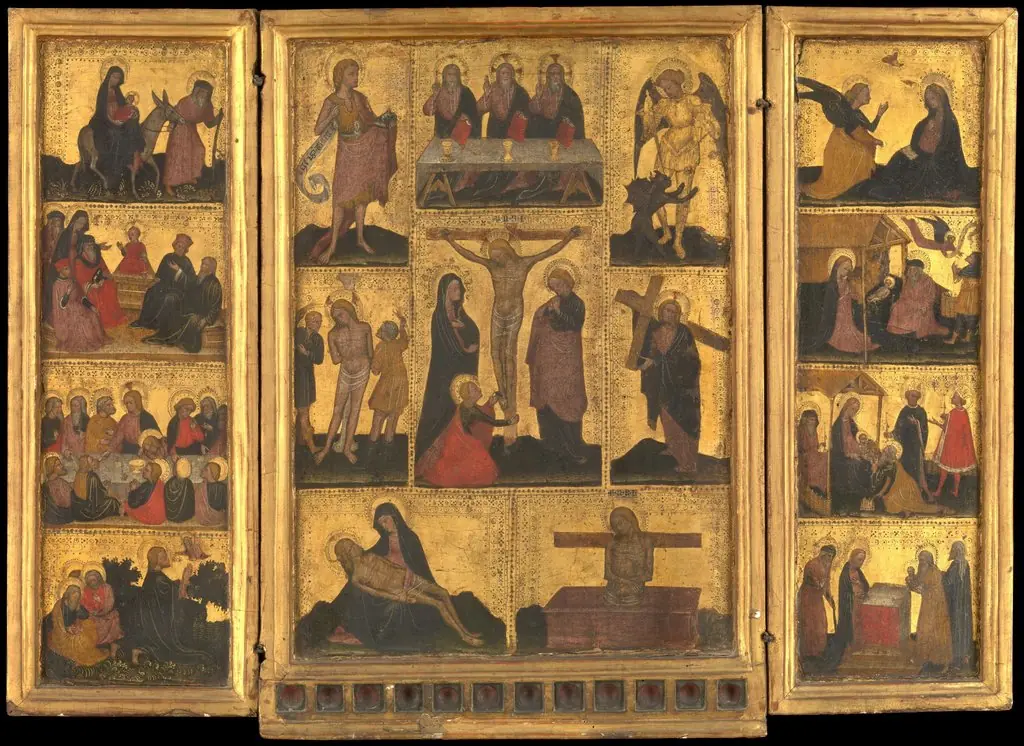 The Life of Christ
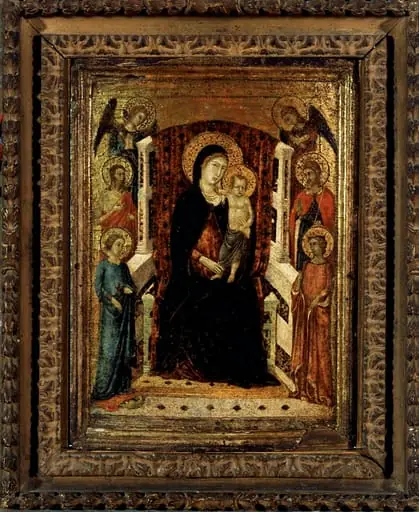 Madonna ja lapsi valtaistuimella
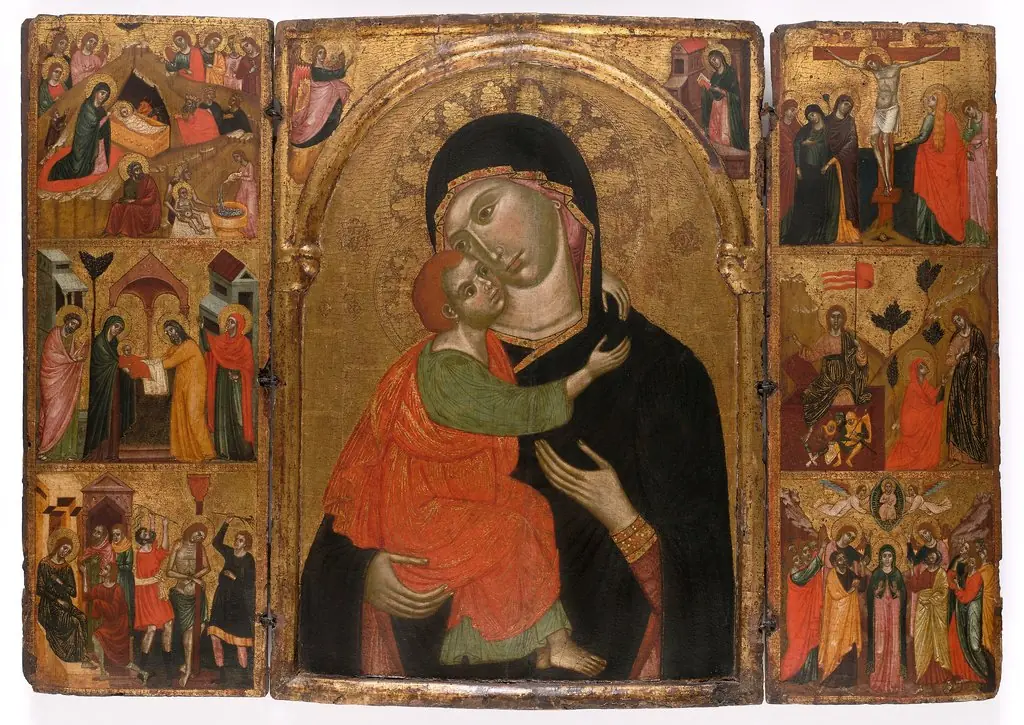 Virgin and Child with Scenes from the Life of Christ
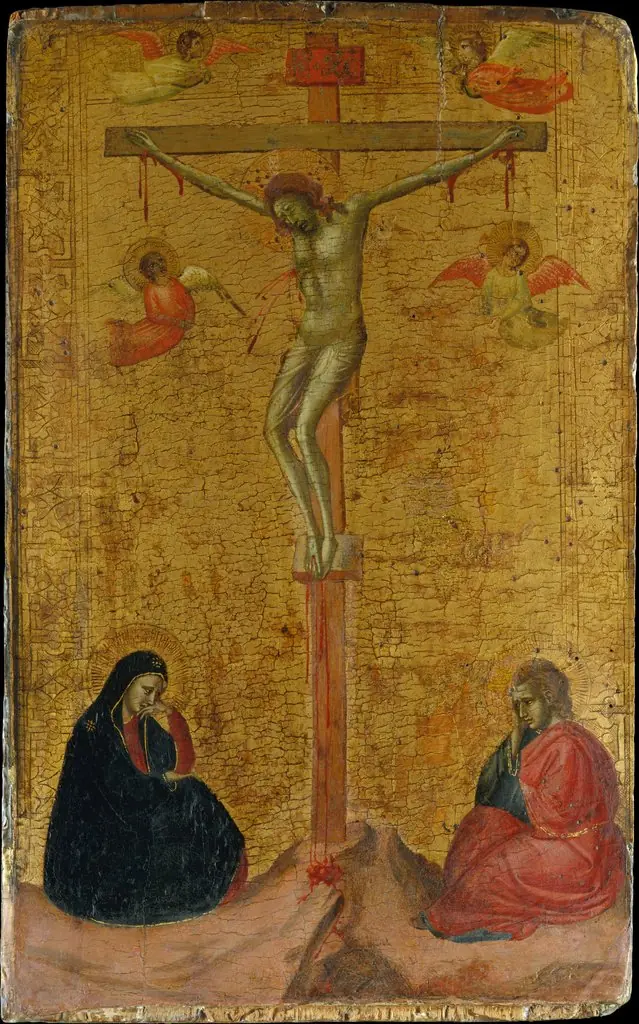 The Crucifixion
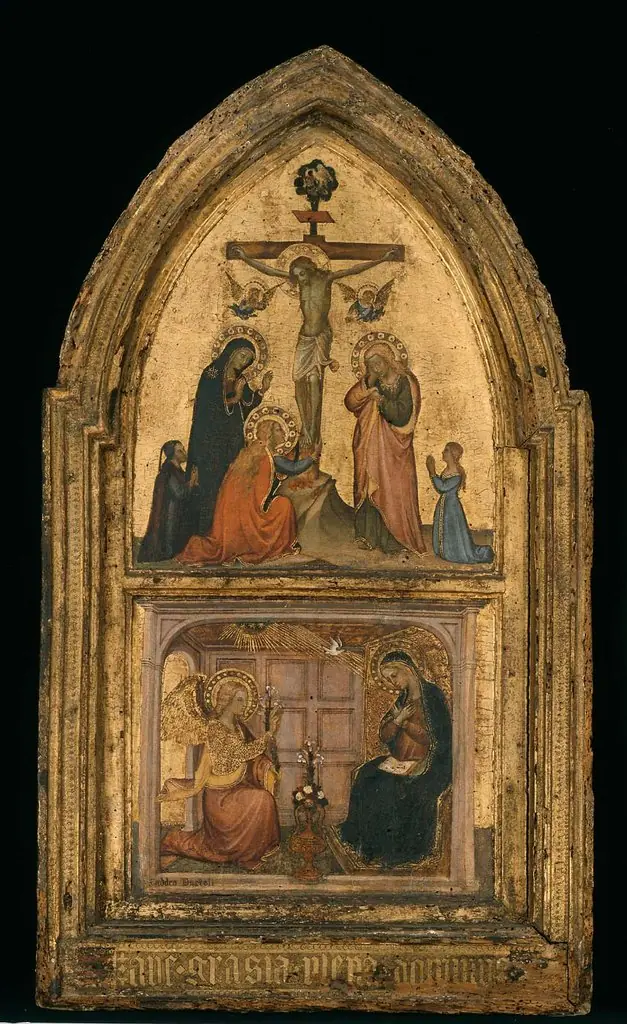 Annunication; Crucifixion