Artwork
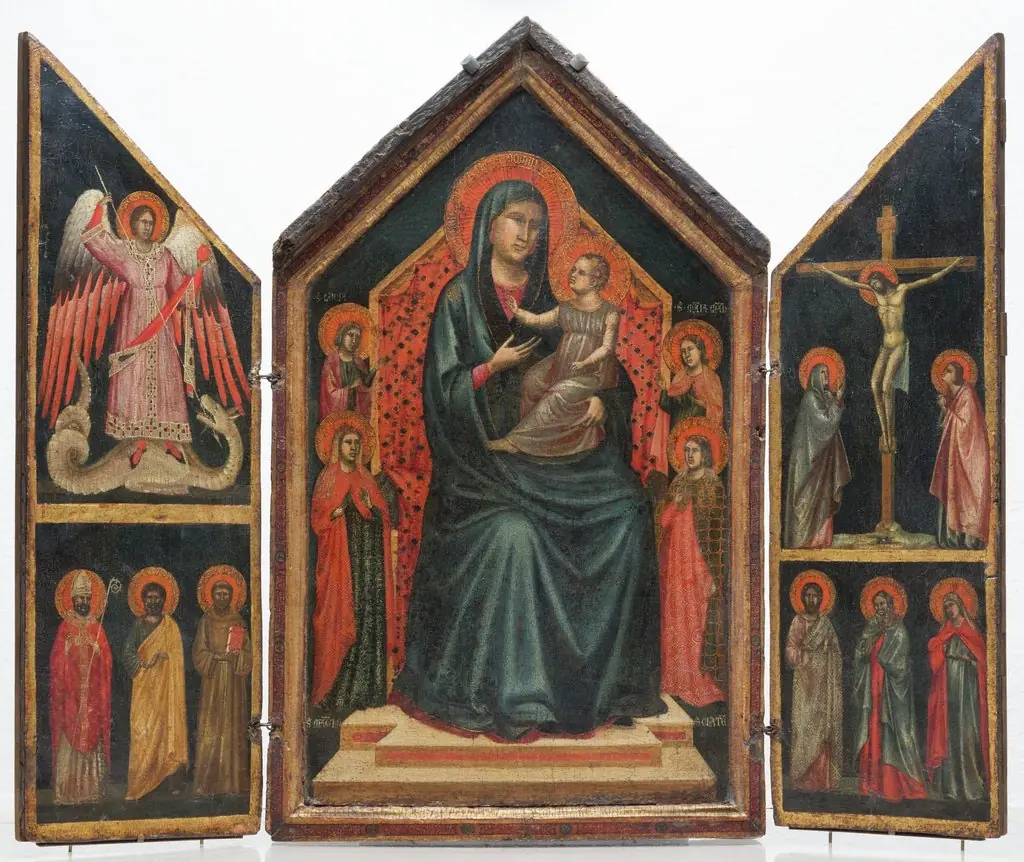
Triptych of the Virgin and Child with Scenes from the Life of Christ
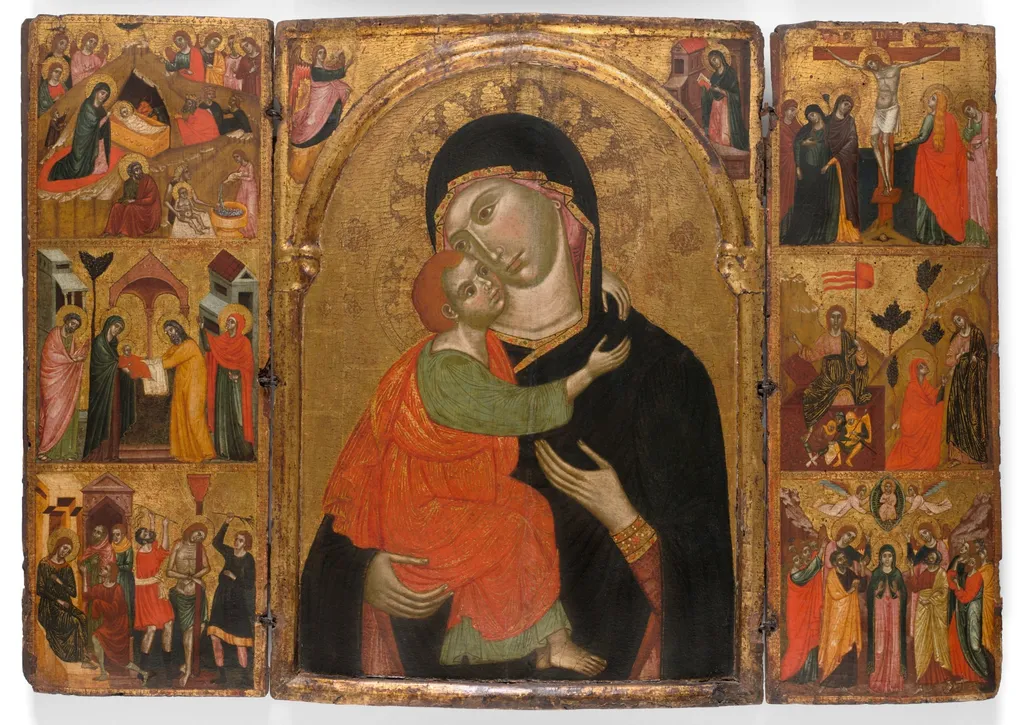
Triptych of the Virgin and Child with Scenes from the Life of Christ is a tempera painting by the Byzantine icon painting artist Unknown. It dates from 1320 and is held in the collection of the Art Institute of Chicago.
About this work
You can learn more about this style by looking into the technique: tempera.
This painting shows the Virgin and Child with scenes from Christ's life.
It's a triptych, meaning it has three panels.
The details in the panels tell us about the artist's skill and the time it was made, around 1320, which is interesting because it shows how artists worked back then, often using traditional techniques to tell stories.
You can learn more about this style by looking into the technique: tempera.
Overview
Created around 1320 in Venice, this tempera on panel triptych presents a central image of the Virgin holding the infant Christ, flanked by two wings that depict narrative episodes from the life of Jesus. The work is part of the collection of the Art Institute of Chicago, where it is displayed as an example of early thirteenth‑fourteenth‑century devotional painting.
Subject & Meaning
The central panel focuses on the intimate bond between Mary and the child, a common motif intended to inspire personal piety. The adjoining wings illustrate key moments from Christ’s ministry, offering a visual meditation on his earthly journey and reinforcing theological themes of incarnation and redemption for the viewer.
Technique & Style
Executed in egg tempera, the panels reveal the precise brushwork and layered pigments characteristic of Venetian workshops of the period. The medium allows for fine detail and luminous colour, while the composition adheres to the hierarchical spatial organization typical of early Gothic religious art, balancing narrative clarity with ornamental richness.
History & Provenance
The triptych remained in private or ecclesiastical hands for several centuries before entering the Art Institute of Chicago’s collection in the twentieth century. Its attribution to a Venetian hand reflects stylistic analysis rather than a signed name, situating the piece within the broader tradition of Italian panel painting that preceded the rise of oil techniques.
Artist & collection

 Domestic Scene
 Giacomo and Cardinal Marco, investing Andrea, Abbot of San Zeno, with his Benefice
 The Nymph of Fontainebleau
 Portrait of a Woman
 Madonna and Child with Saints in the Enclosed Garden
 Venus and Minerva
 Family Group of Four on Sofa
 Wall painting from Room H of the Villa of P. Fannius Synistor at Boscoreale
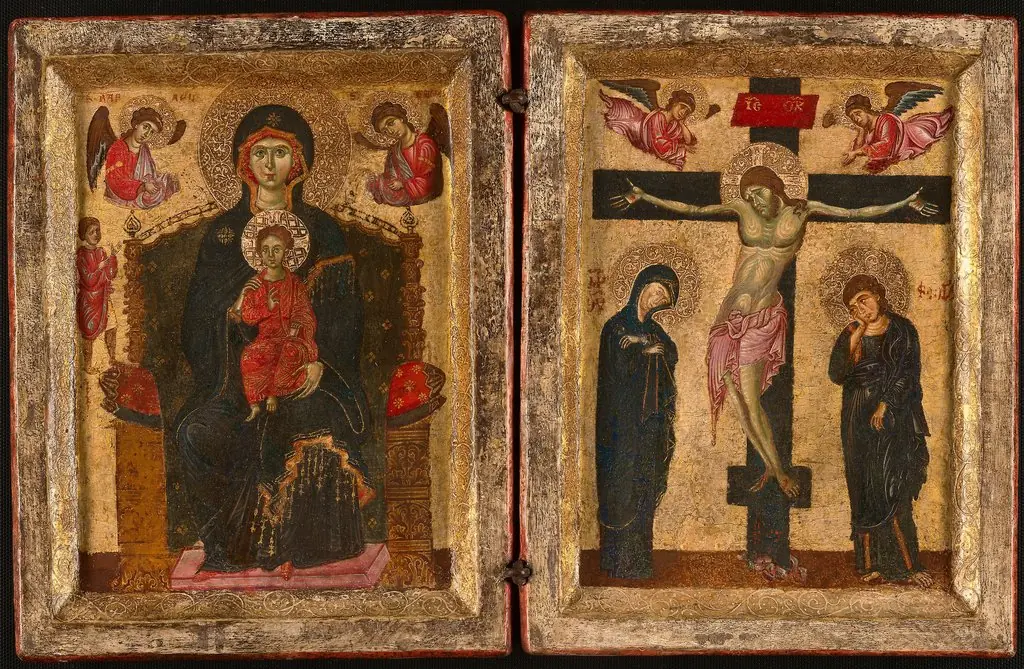 Diptych with the Virgin and Child Enthroned and the Crucifixion
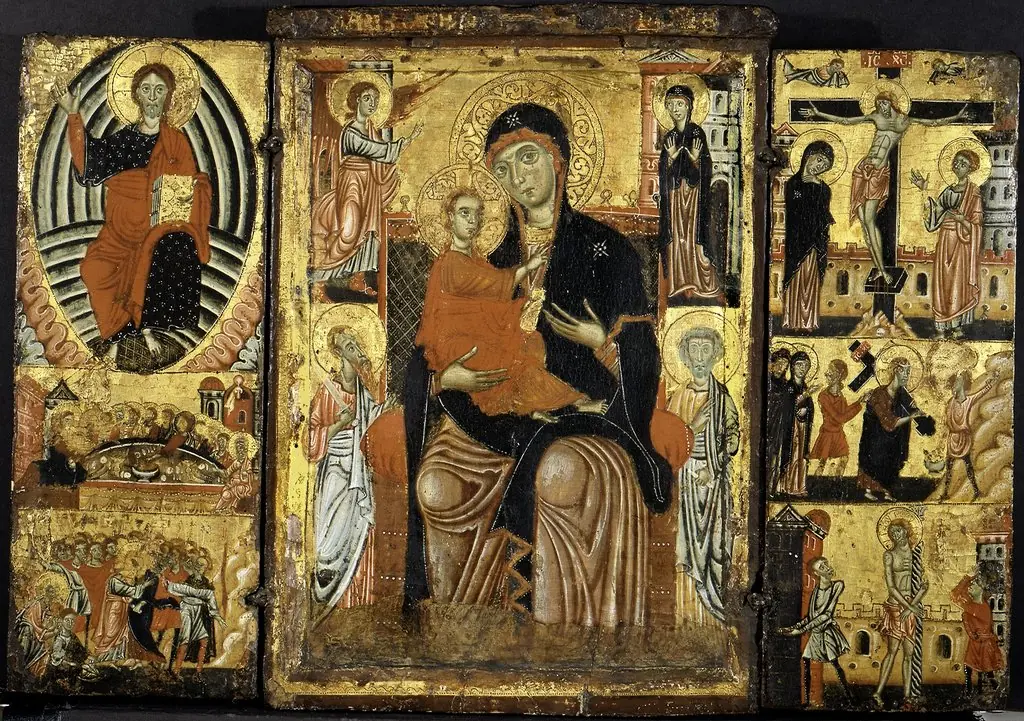 Madonna and Child Enthroned
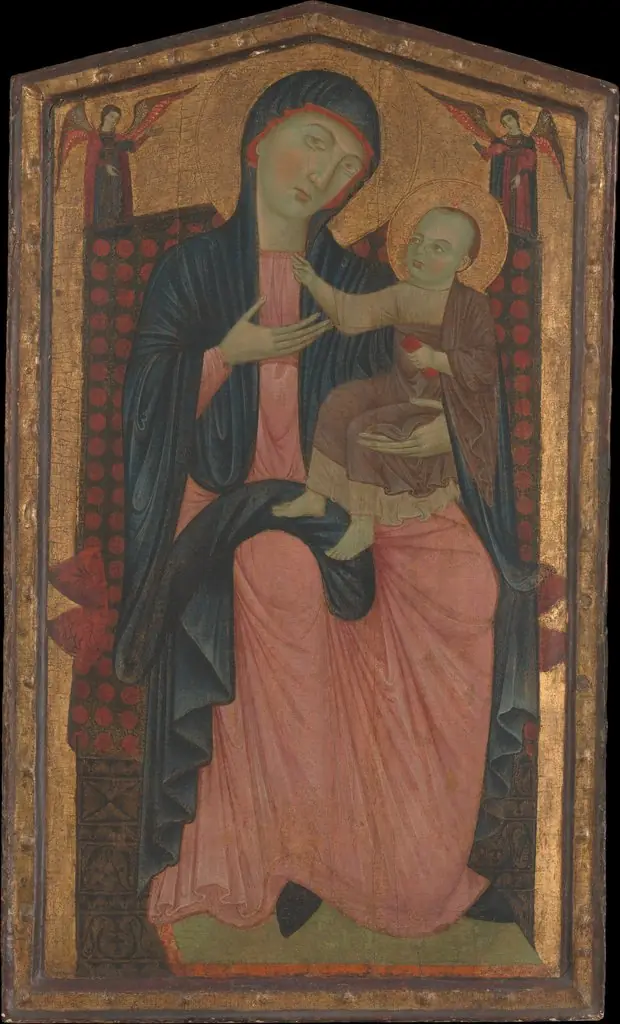 Madonna and Child Enthroned
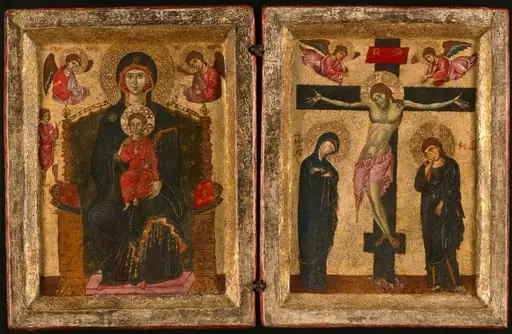 Diptych of the Virgin and Child Enthroned and the Crucifixion
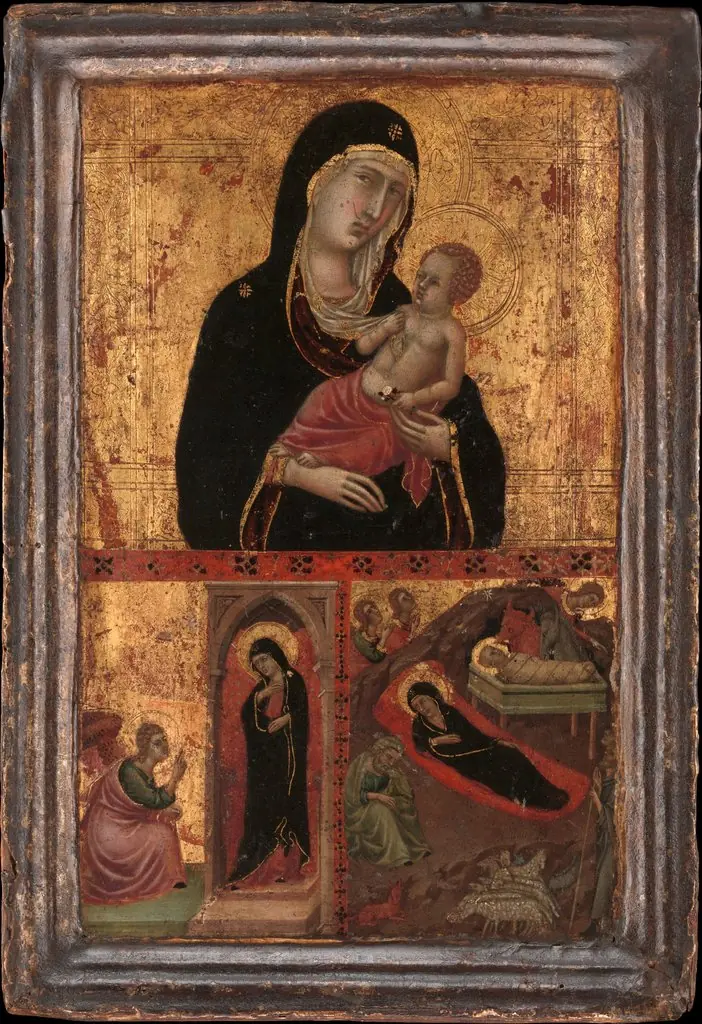 Madonna and Child with the Annunciation and the Nativity
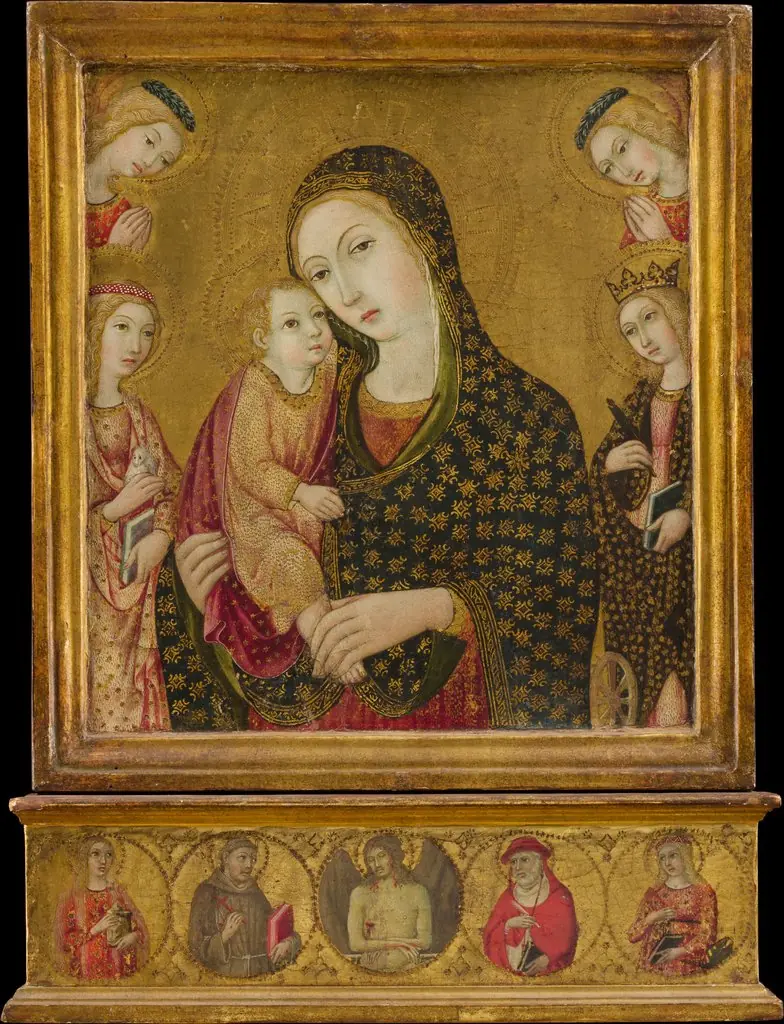 Madonna and Child with the Dead Christ, Saints Agnes and Catherine of Alexandria, and Two Angels
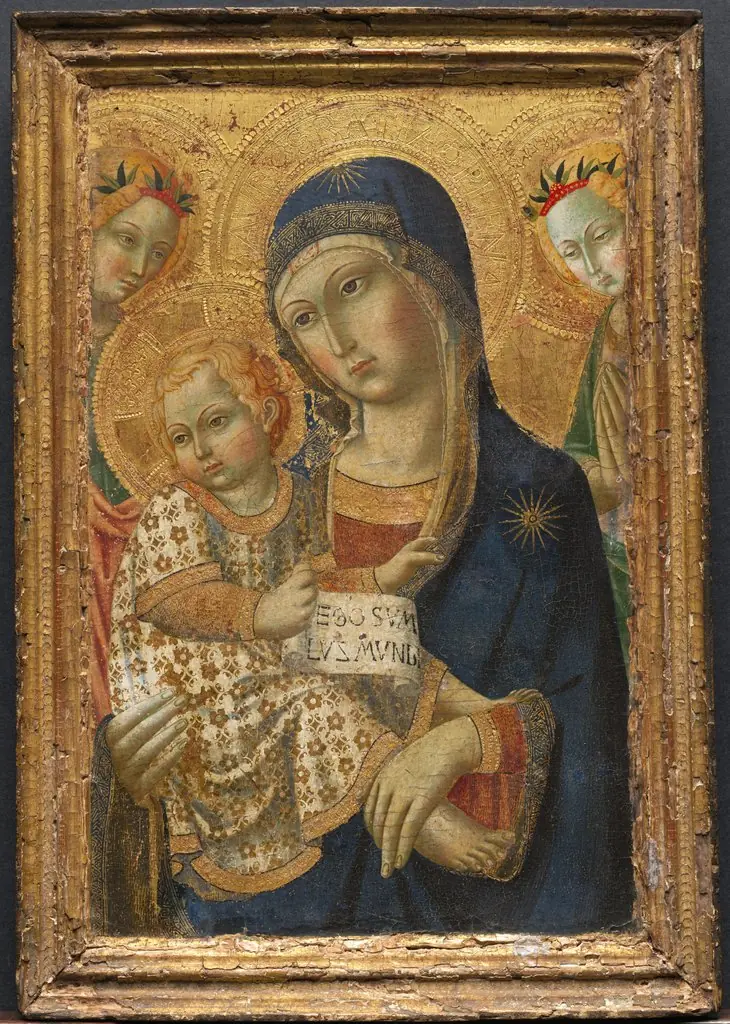 Virgin and Child Enthroned
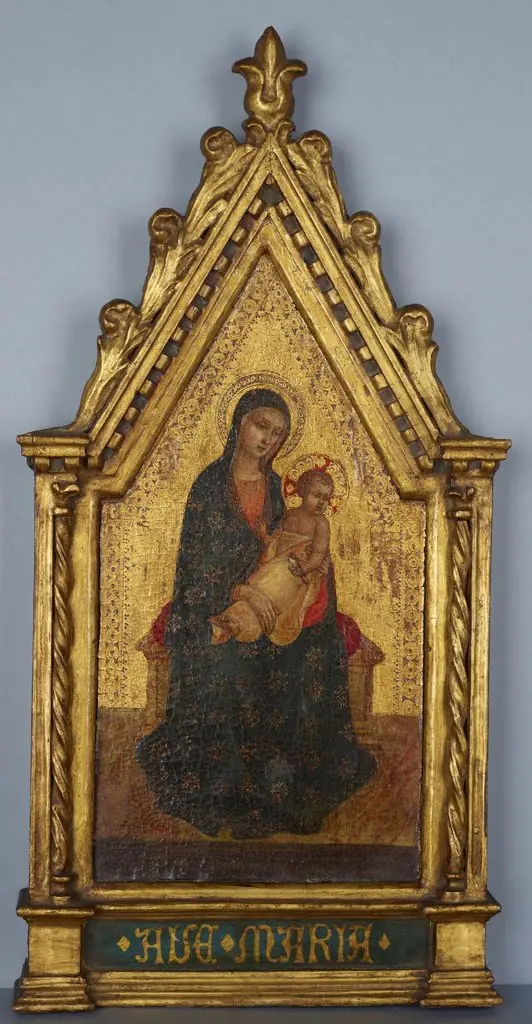 Madonna and Child Enthroned
 Madonna and Child Enthroned with Saints Lucy, Margaret, Mary Magdalene and Catherine of Alexandria
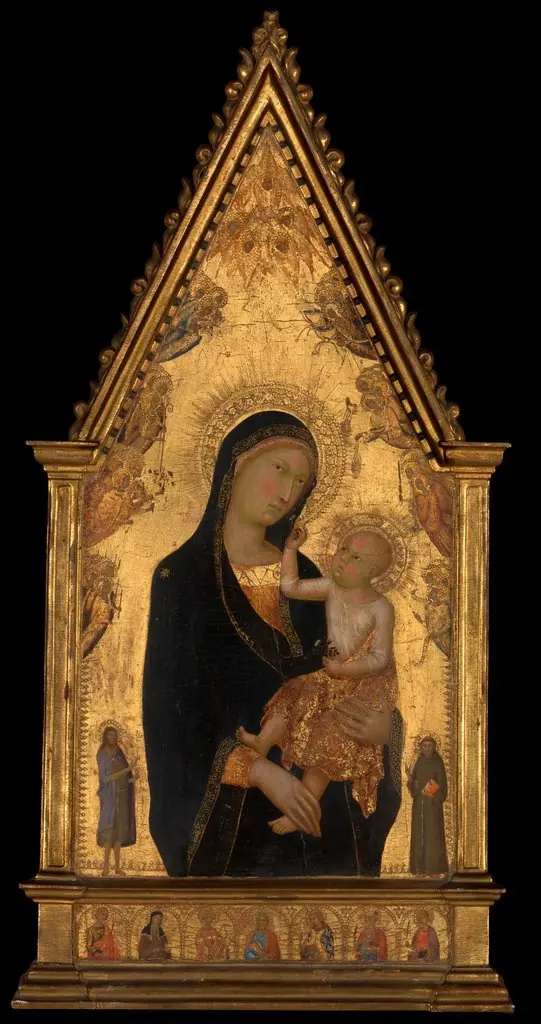 Madonna and Child with Saints and Angels