Artwork
Osman - Athens
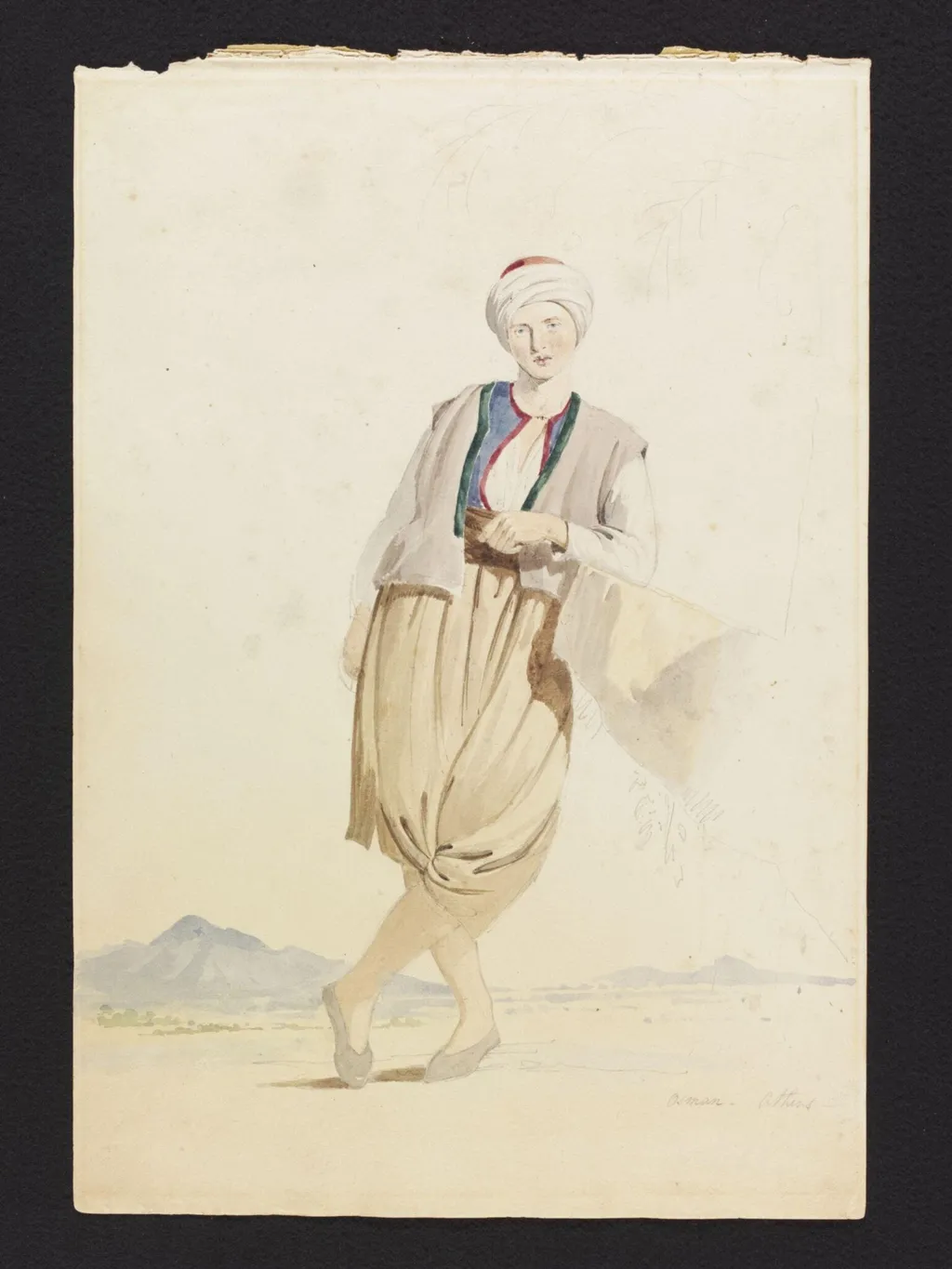
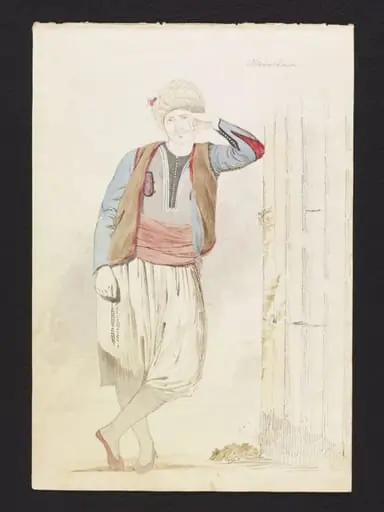
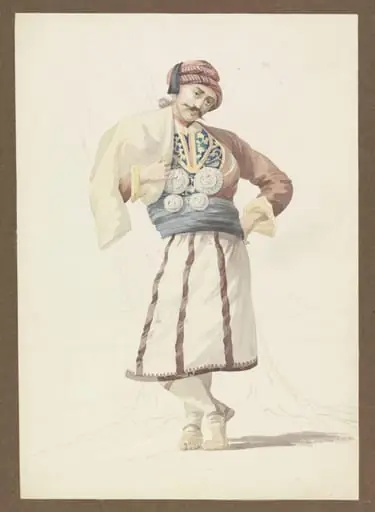
Osman - Athens is a watercolor work on paper by the British Romanticist artist Charles Lock Eastlake. It dates from 1818 and is held in the collection of the Victoria and Albert Museum.
About this work
Overview
Charles Lock Eastlake created this watercolour during a three-month stay in Athens in 1818, after his travel companions moved on.
Charles Lock Eastlake created this watercolour during a three-month stay in Athens in 1818, after his travel companions moved on. The work captures a solitary figure in traditional dress against a muted landscape, reflecting Eastlake’s practice of documenting local life through intimate, on-site sketches rather than grand monuments. Its quiet composition and restrained palette distinguish it as a personal record of observation rather than a public commission.
Subject & Meaning
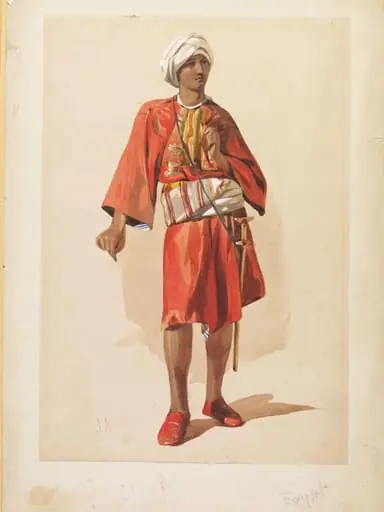
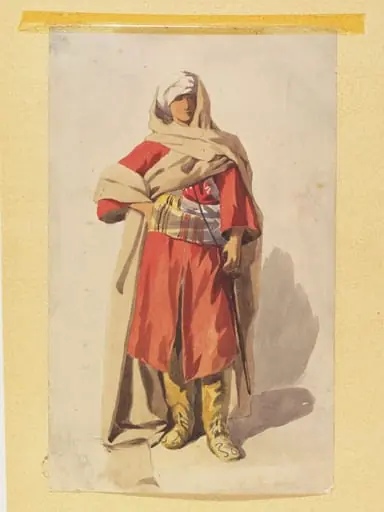
The figure, dressed in a white turban, beige vest, and loose garment cinched by a brown belt, stands with one leg bent and a white cloth held in his left hand. His calm posture and unadorned presence suggest a moment of stillness amid daily routine. Eastlake’s focus on an anonymous local man, rather than a landmark, implies an interest in the dignity of ordinary life under Ottoman rule, subtly shifting attention from classical ruins to contemporary human presence.
Technique & Style
Executed in watercolour, the piece employs soft washes and delicate brushwork to convey atmosphere rather than detail. The background fades into hazy mountains, while the figure is rendered with subtle tonal variations, avoiding sharp outlines. This technique enhances the sense of quietude, aligning with Eastlake’s preference for lyrical realism over dramatic effect, and reflects his training in the English watercolour tradition.
History & Provenance
The drawing remained in Eastlake’s possession until his death, later entering private collections. In 1970, it was sold at Sotheby’s as part of a group of six sketches from his Athenian tour. Its provenance traces a path from direct observation in 1818 to institutional recognition in the 20th century, preserving its status as a personal document of early 19th-century travel.
Context
Eastlake’s time in Athens coincided with a period of renewed European interest in the region’s ancient past, yet his focus on contemporary figures reveals a counter-narrative. While many travelers painted ruins, he recorded the people inhabiting the landscape — a practice aligned with emerging ethnographic curiosity and the Romantic emphasis on authentic, unidealized experience.
Legacy
Though not widely exhibited, this watercolour contributes to a broader understanding of Eastlake’s artistic development and his role in shaping British perceptions of the Eastern Mediterranean. Its quiet intimacy stands in contrast to the monumentalism of his later works, offering a nuanced view of cultural observation during the early stages of modern travel writing.
Artist & collection
Artist
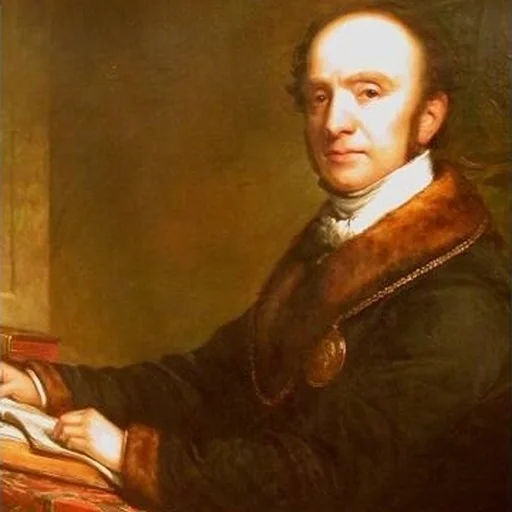
Sir Charles Lock Eastlake (17 November 1793 – 24 December 1865) was a British painter, gallery director, collector and writer of the 19th century.