Artwork
A Peasant Woman Fainting from the Bite of a Serpent
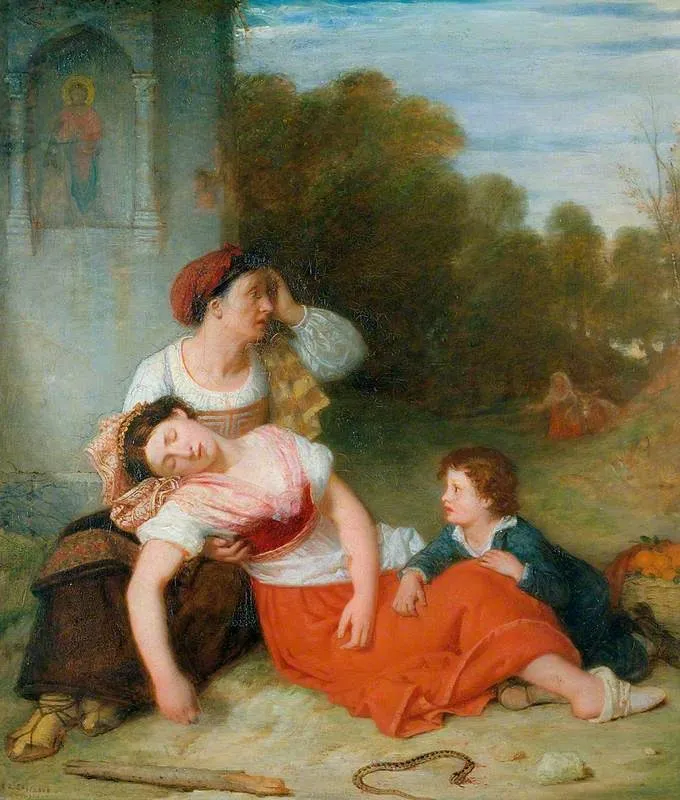
A Peasant Woman Fainting from the Bite of a Serpent is an oil painting by the British Romanticist artist Charles Lock Eastlake. It dates from 1831 and is held in the collection of the Victoria and Albert Museum.
About this work
Overview
Created in 1831 by the British artist Charles Lock Eastlake, this oil painting portrays a dramatic rural incident. A peasant woman, dressed in a white blouse and red skirt, collapses after a snake bite, while another woman supports her head. A young boy watches anxiously, and a modest village scene unfolds behind them, complete with trees and a building bearing a religious image.
Subject & Meaning
The fainting figure’s white attire contrasts with the red of her skirt and the caretaker’s red headscarf, underscoring the urgency of the situation.
The composition captures a moment of sudden distress in a countryside setting, emphasizing themes of vulnerability and communal care. The fainting figure’s white attire contrasts with the red of her skirt and the caretaker’s red headscarf, underscoring the urgency of the situation. The onlooker boy’s concerned gaze adds a narrative layer of familial responsibility and the ever‑present threat of nature.
Technique & Style
Executed in oil on canvas, the work reflects the Romantic interest in emotive storytelling and naturalistic detail. Eastlake employs a softened palette for the figures, while the background foliage and architecture are rendered with looser brushwork, creating depth. Light falls gently on the central figures, highlighting their expressions and the tension of the scene.
History & Provenance
After its completion, the painting entered the collection of the Victoria and Albert Museum, where it remains on display. Eastlake, later director of the National Gallery and President of the Royal Academy, produced the work during his early career, contributing to his reputation within the British Romantic movement.
Context
The piece belongs to the early 19th‑century British Romantic tradition, which often dramatized ordinary life and heightened emotional states. Rural genre scenes like this one were popular for their moral undertones, suggesting the virtues of compassion and the perils that could befall even humble folk in a landscape dominated by natural forces.
Artist & collection
Artist
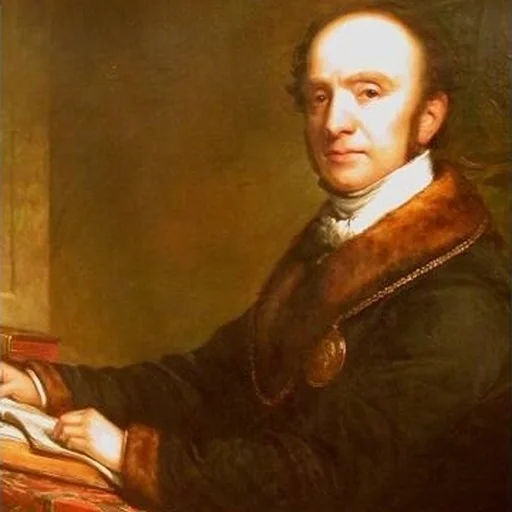
Sir Charles Lock Eastlake (17 November 1793 – 24 December 1865) was a British painter, gallery director, collector and writer of the 19th century.


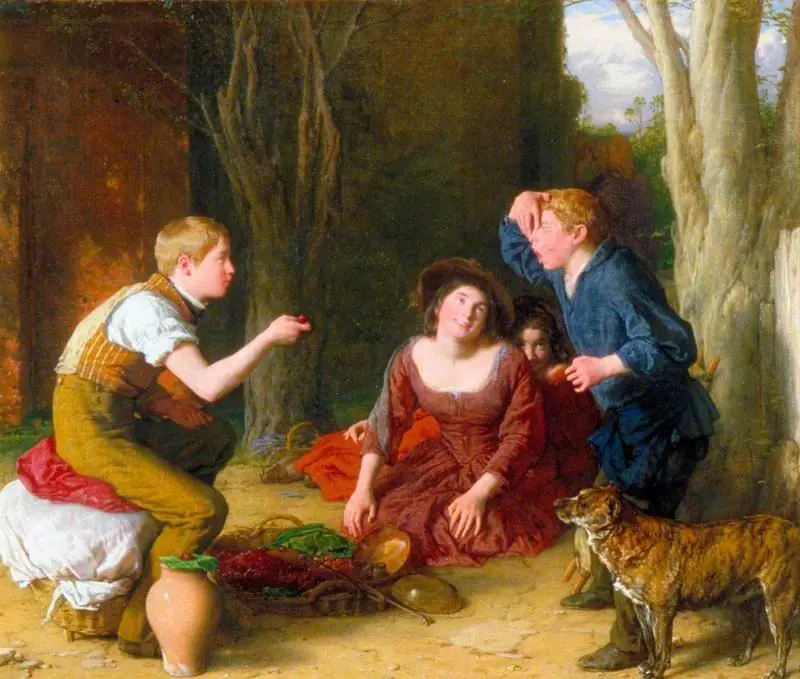 The Butt: Shooting a Cherry
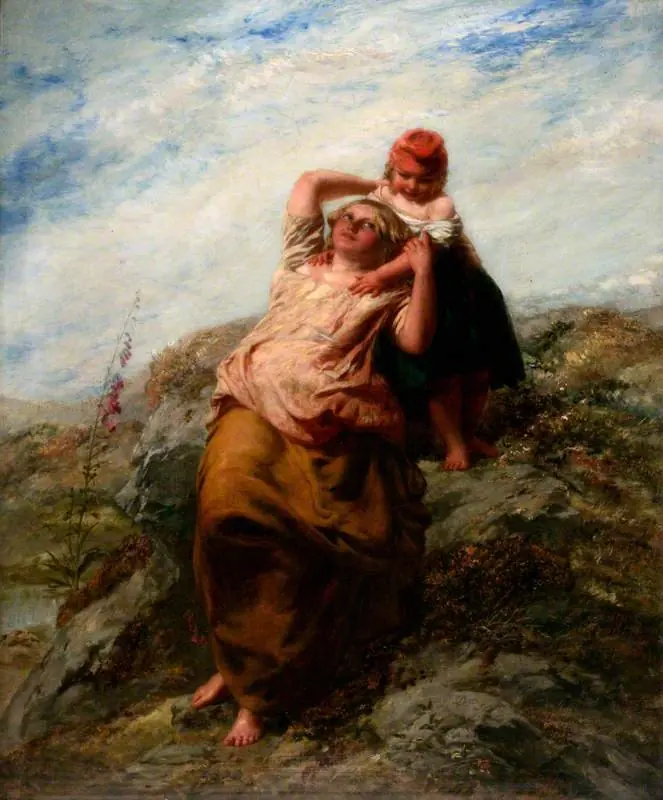 The Rugged Path
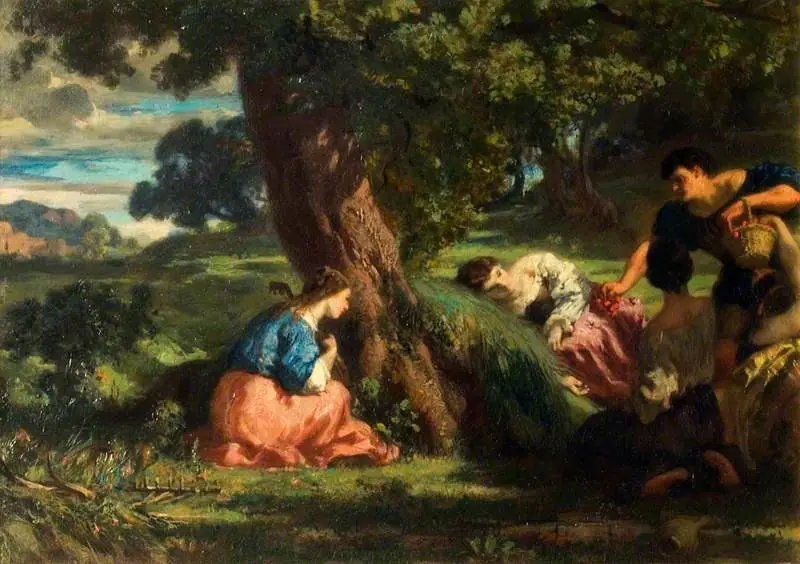 Cherries: A Group of Young Women in a Landscape, One of Them Holding a Basket of Cherries
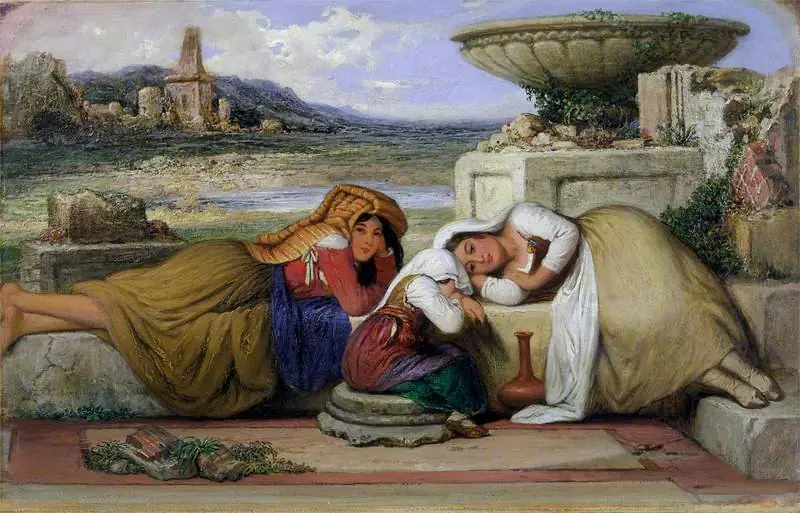 Mendicants of the Roman Campagna
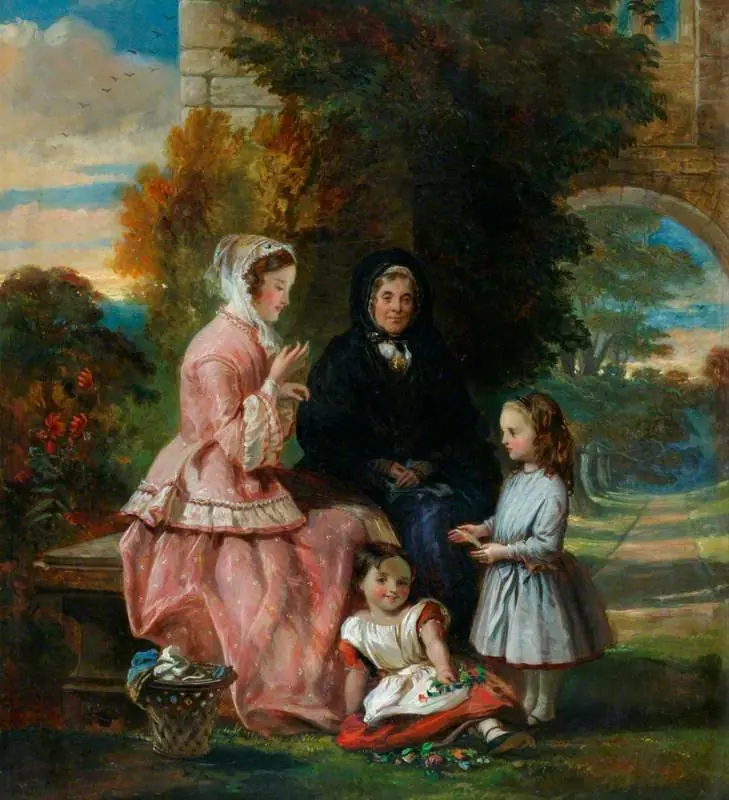 A Garden Scene
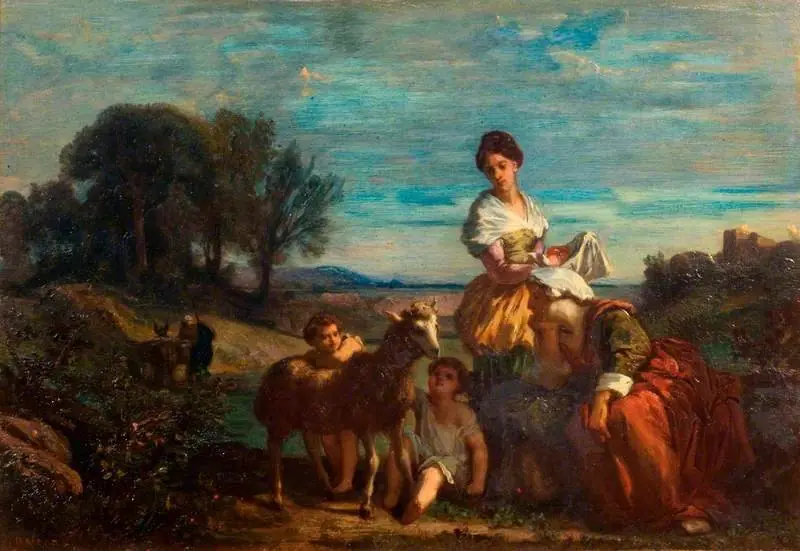 Children Playing with a Lamb
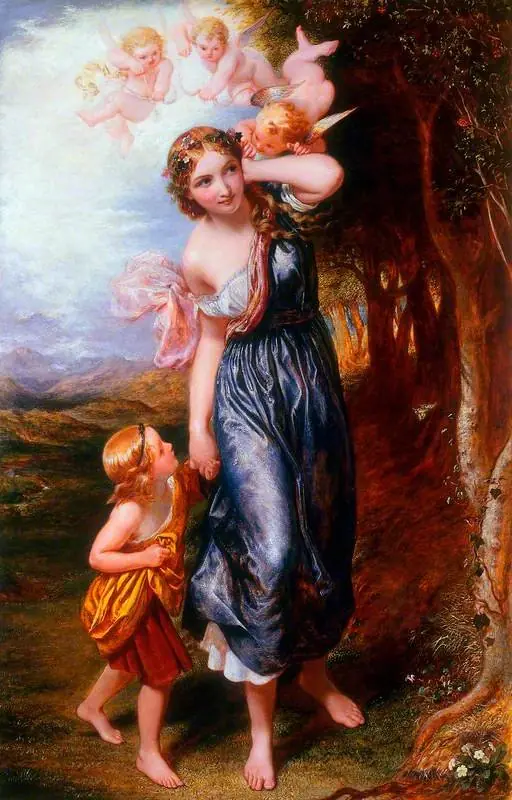 L'allegro
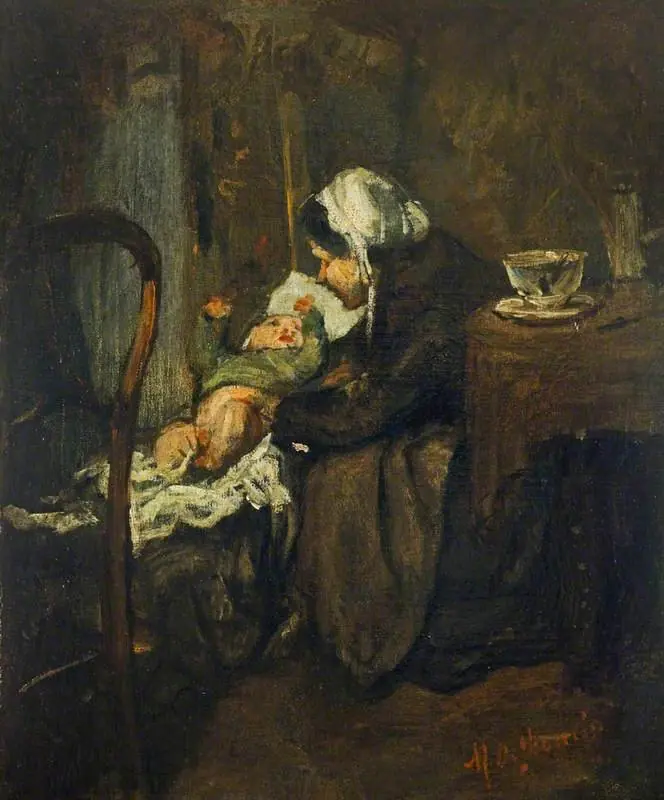 Mother and Child
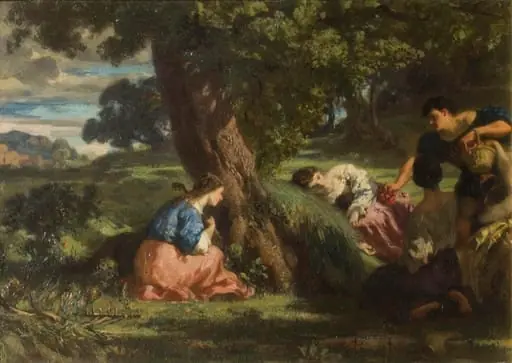 Cherries: a group of young women in a landscape
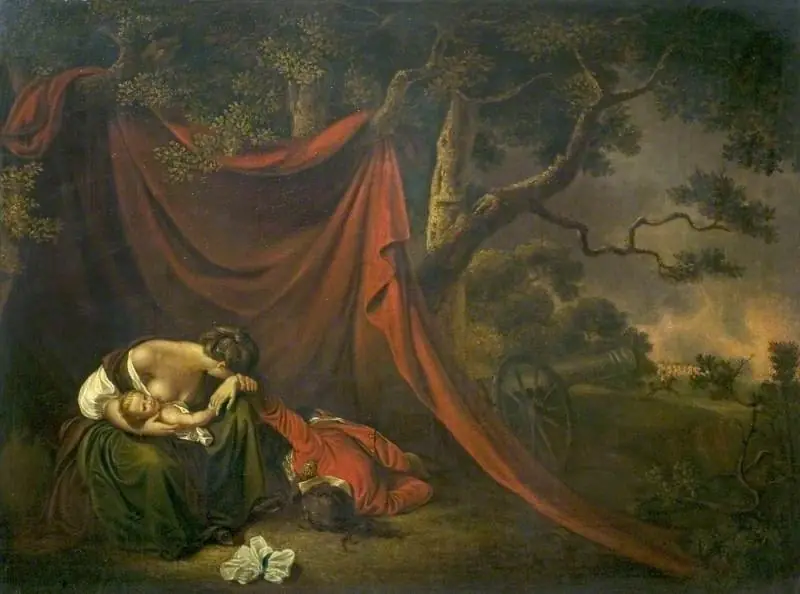 The Dead Soldier, from John Langhorne's 'Country Justice'
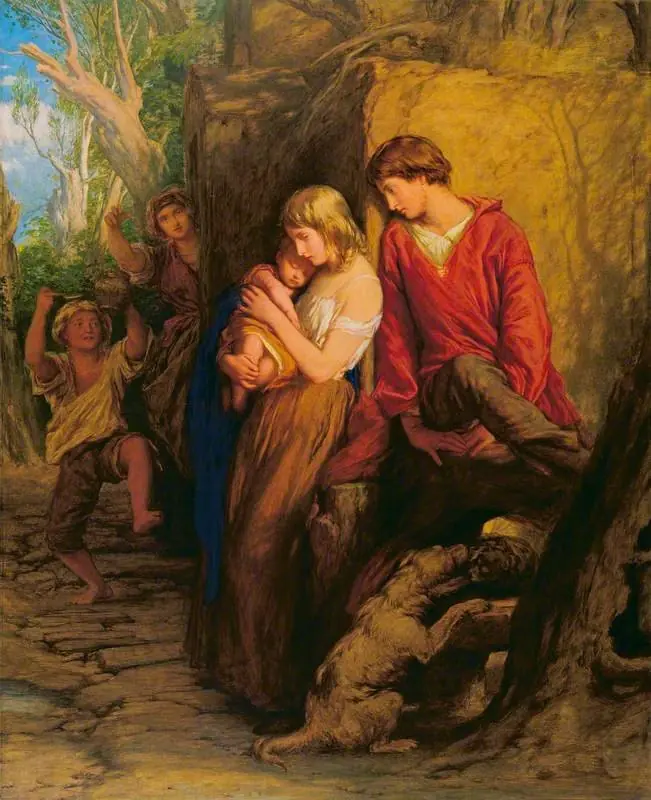 First Love