Artwork
At the Camp—Spinning Yarns and Whittling
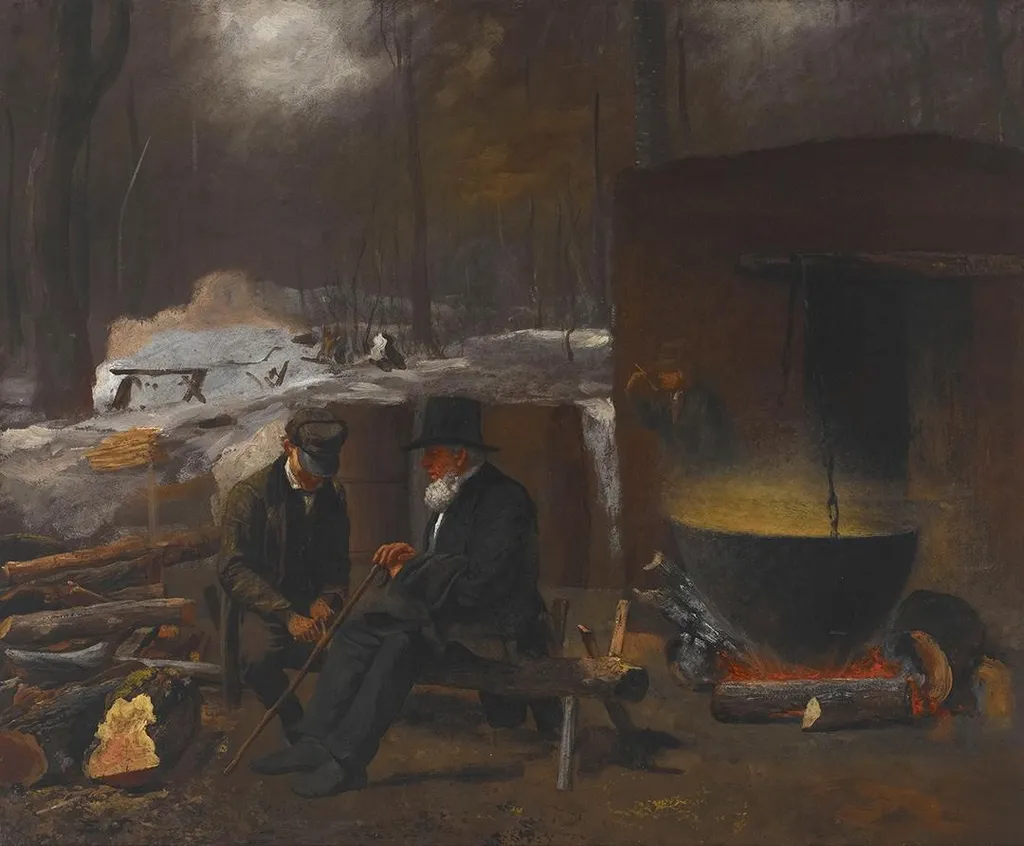
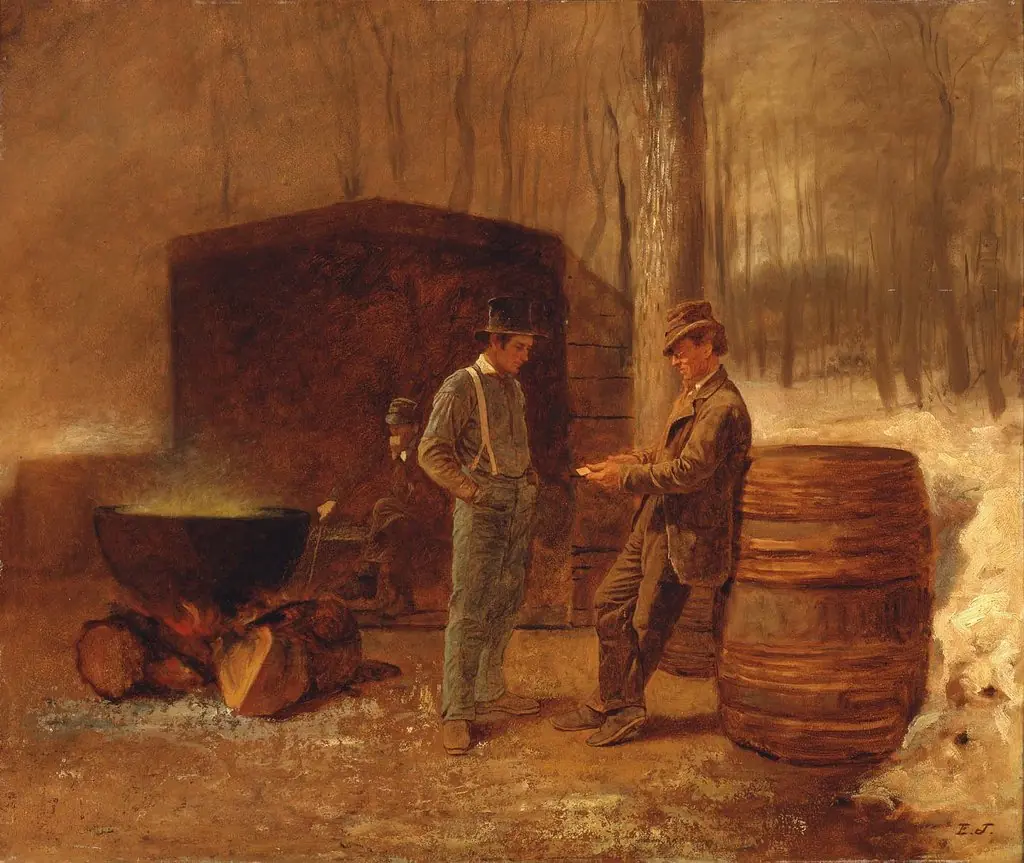
At the Camp—Spinning Yarns and Whittling is an unspecified painting by the Realist artist Eastman Johnson. It dates from 1865 and is held in the collection of the Crystal Bridges Museum of American Art.
About this work
Overview
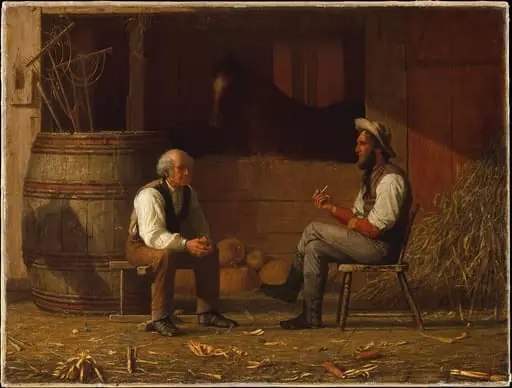
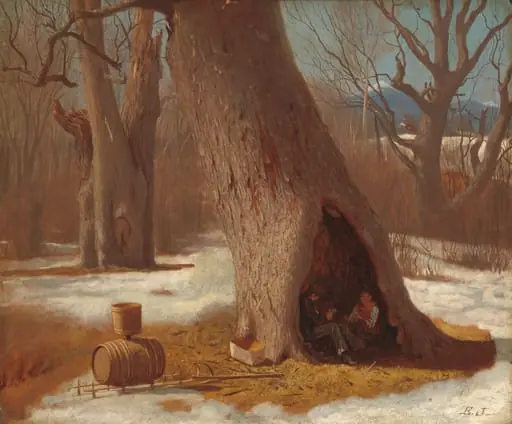
Eastman Johnson’s 1865 canvas *At the Camp—Spinning Yarns and Whittling* captures a tranquil moment of two men sharing a modest campsite. The work, now in the Crystal Bridges Museum of American Art, exemplifies Johnson’s focus on everyday life, rendered with a quiet, intimate atmosphere that invites viewers into the scene.
Subject & Meaning
The composition presents a pair of figures engaged in simple tasks: one turns a spindle while the other carves wood. Their dark attire and hats contrast with the snowy, tree‑lined backdrop, suggesting a winter setting. The subtle gesture of one man as he speaks hints at a conversation, emphasizing camaraderie and the dignity of ordinary labor.
Technique & Style
Johnson employs a restrained palette of soft hues and employs chiaroscuro to model the figures, creating depth and a sense of three‑dimensional space. The gentle lighting falls across the men, highlighting textures of fabric and wood, while the surrounding landscape recedes into muted tones, reinforcing the intimate focus on the subjects.
History & Provenance
After completing the painting in the post‑Civil War period, Johnson, who had studied Dutch genre painters in The Hague, retained the work within his circle before it entered public collections. It eventually became part of the Crystal Bridges Museum of American Art’s holdings, where it is displayed as part of the museum’s American realist narrative.
Artist & collection
Artist
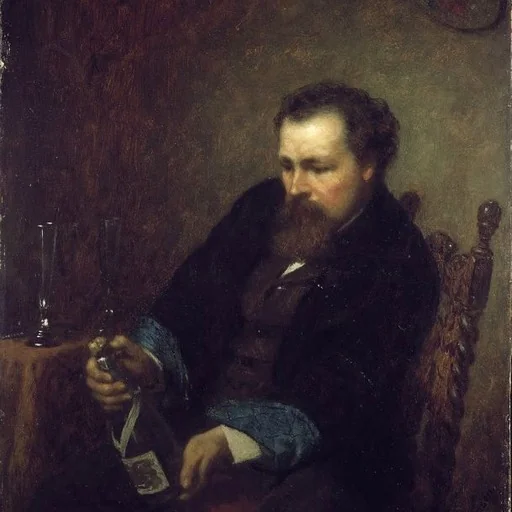
Jonathan Eastman Johnson (July 29, 1824 – April 5, 1906) was an American painter and co-founder of the Metropolitan Museum of Art, New York City, with his name inscribed at its entrance.

Museum
Crystal Bridges Museum of American Art
Continue through works from the same source collection.