Artwork
Measurement and Contemplation
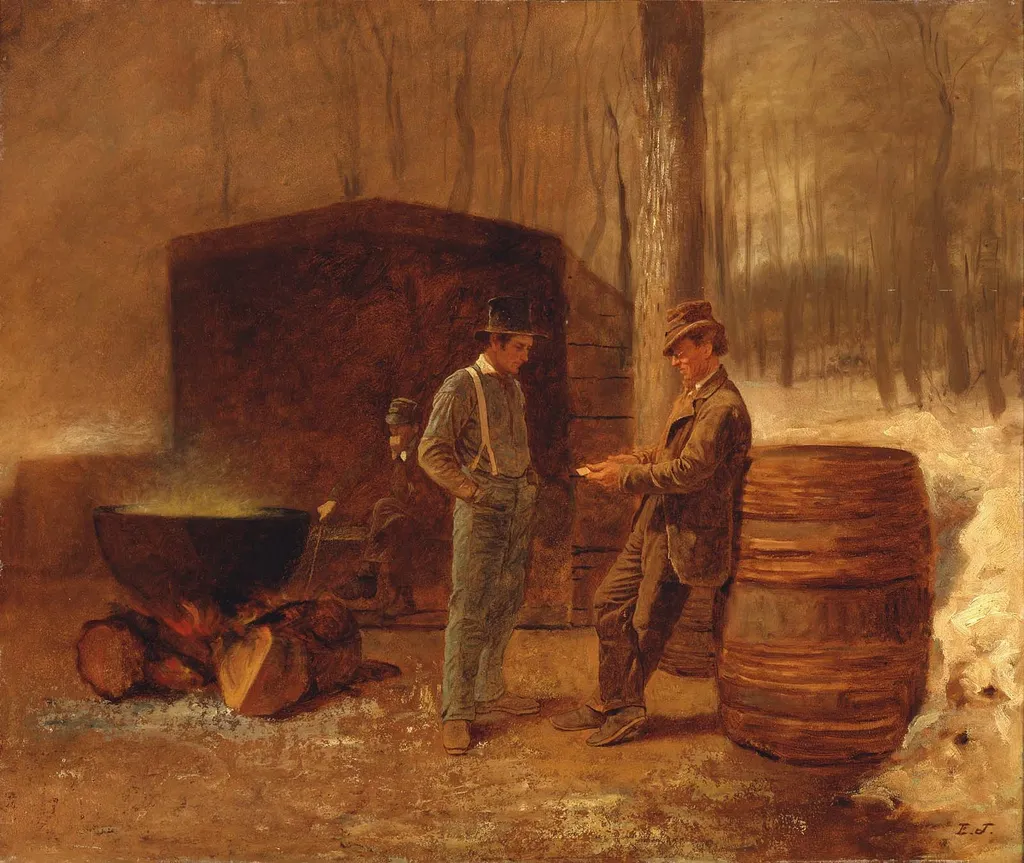
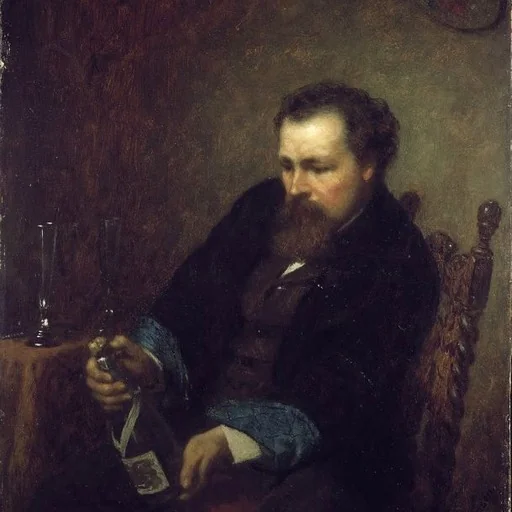
Measurement and Contemplation is an unspecified painting by the Realist artist Eastman Johnson. It dates from 1860 and is held in the collection of the Museum of Fine Arts Boston.
About this work
Overview
Johnson, known for his attention to ordinary life and his training under Dutch realists, rendered this work with restrained emotion and careful observation.
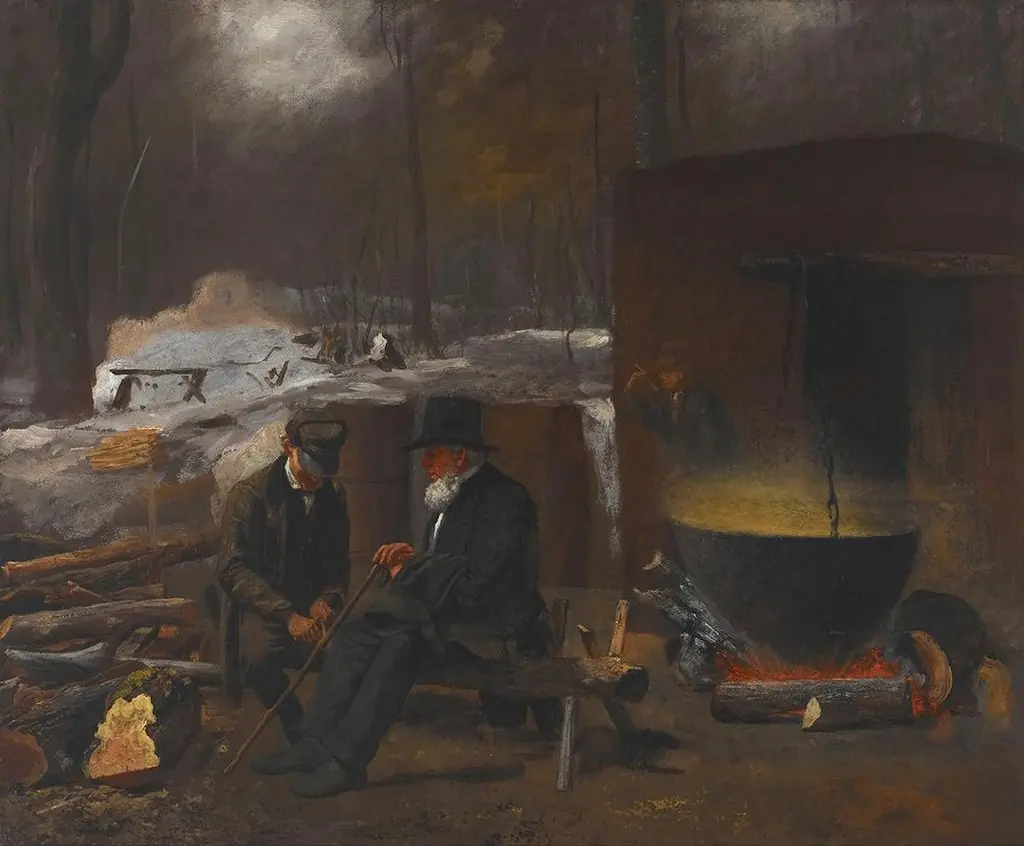
Painted in 1860 by Eastman Johnson, *Measurement and Contemplation* is a quiet genre scene that captures a moment of stillness in a wooded setting. Johnson, known for his attention to ordinary life and his training under Dutch realists, rendered this work with restrained emotion and careful observation. The painting reflects his interest in human interaction within natural environments, avoiding theatricality in favor of subtle narrative.
Subject & Meaning
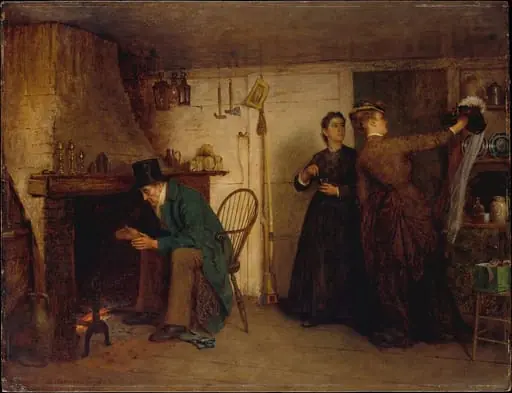
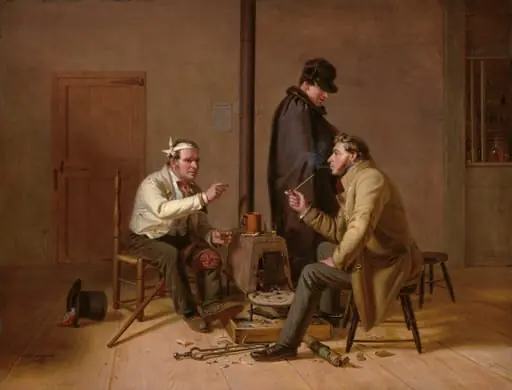
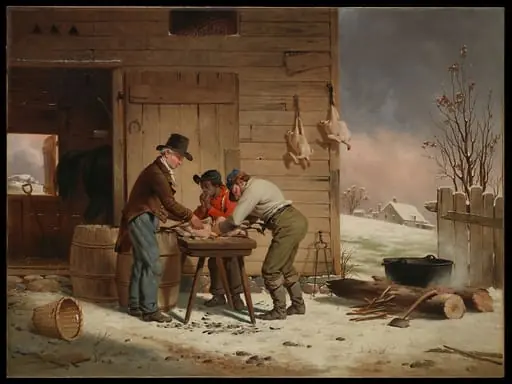
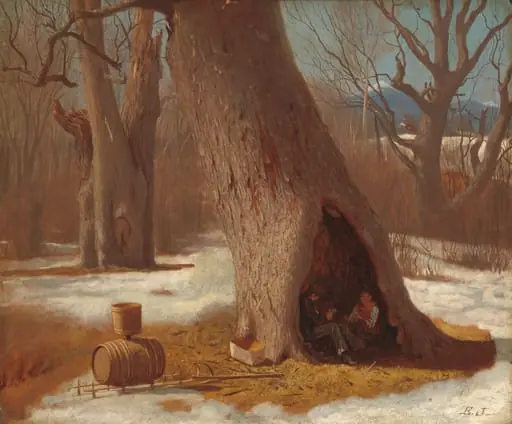
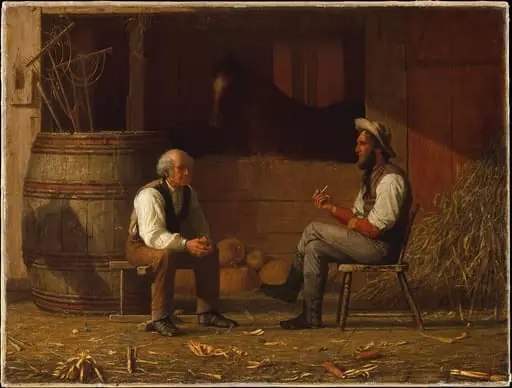
Two men stand in a forest clearing, their attire suggesting differing social positions—one in workwear, the other in formal dress. A third figure sits quietly in the background, adding depth to the scene. Their posture and gaze imply a measured exchange, perhaps about land, labor, or time. The absence of overt action invites interpretation, emphasizing introspection over drama, aligning with Johnson’s broader interest in unspoken social dynamics.
Technique & Style
Johnson employed muted earth tones and diffused natural light to cultivate a tranquil atmosphere. Brushwork is precise yet unobtrusive, with careful attention to texture in fabric, bark, and soil. The composition is balanced, with the barrel and trees framing the figures without distraction. His style, shaped by Dutch Golden Age painting, favors tonal harmony over bold contrast, enhancing the painting’s meditative quality.
History & Provenance
Created during Johnson’s mature period after his studies in The Hague, the painting entered the collection of the Museum of Fine Arts, Boston, where it remains today. While little documentation exists about its early ownership, its inclusion in the museum’s holdings reflects its recognition as a representative example of mid-19th-century American realism. It has not been widely exhibited, preserving its quiet presence in the collection.
Context
In 1860, as tensions rose over slavery and industrialization, Johnson turned to intimate scenes rather than political themes. This work aligns with a broader American interest in rural life and personal dignity amid societal change. Unlike contemporaries who dramatized labor or conflict, Johnson favored stillness, offering a counterpoint to the era’s growing urgency through quiet observation.
Legacy
Though not among Johnson’s most widely known works, *Measurement and Contemplation* exemplifies his commitment to understated realism. It contributes to a body of American art that values quiet dignity over spectacle. Scholars recognize it as a refined expression of his Dutch-inspired technique and his enduring focus on the unremarkable moments that reveal character and connection.
Own this work as a print
Artist & collection
Artist
Jonathan Eastman Johnson (July 29, 1824 – April 5, 1906) was an American painter and co-founder of the Metropolitan Museum of Art, New York City, with his name inscribed at its entrance.