Artwork
Winnowing Grain
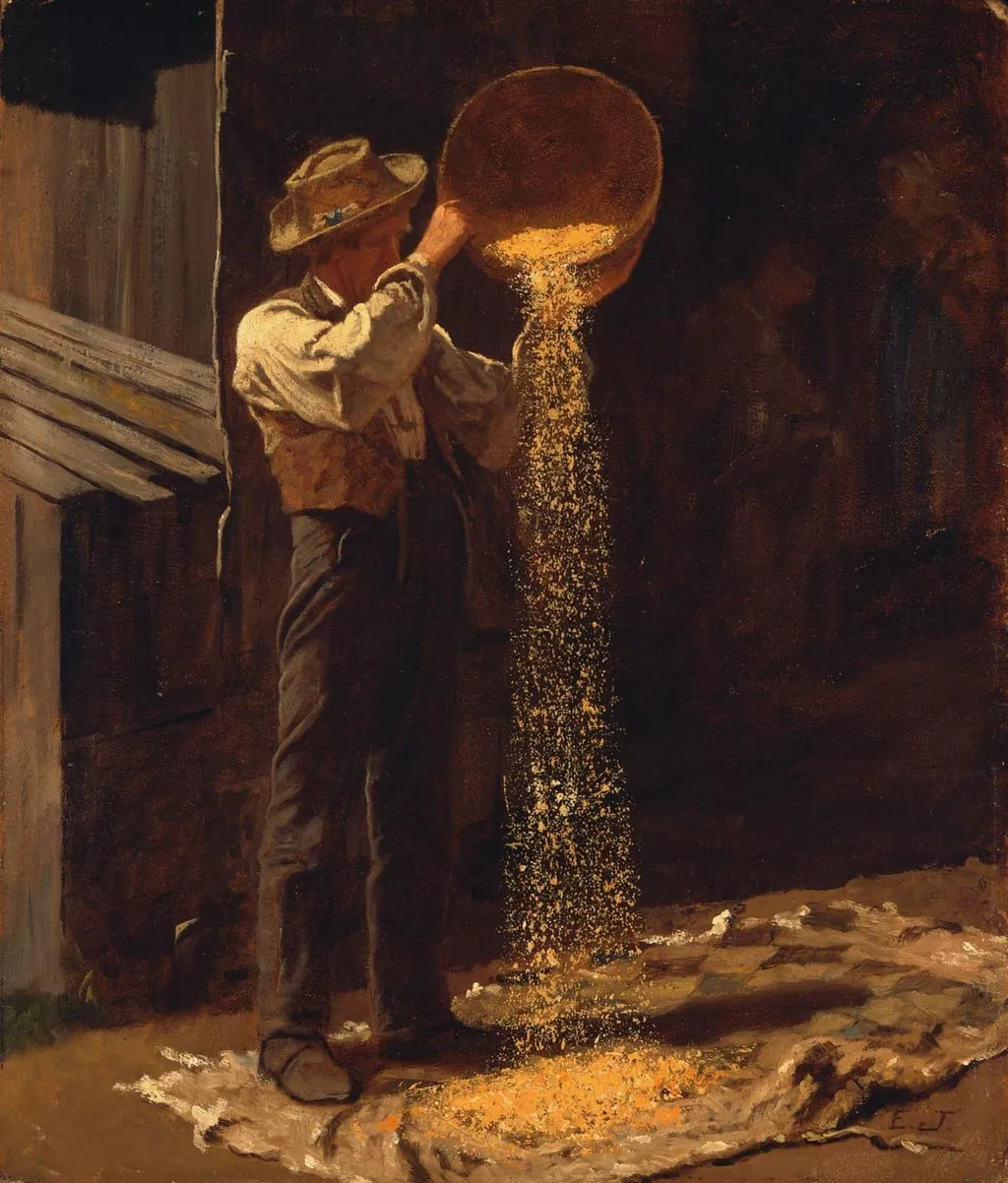
Winnowing Grain is an oil painting by the American Impressionist artist Eastman Johnson. It dates from 1873 and is held in the collection of the Museum of Fine Arts Boston.
About this work
Overview
Eastman Johnson painted *Winnowing Grain* in 1873 using oil on canvas. The work belongs to a series of rural scenes he produced after studying Dutch genre painting in The Hague. It captures a quiet, focused moment of agricultural labor, distinguishing itself through its restrained palette and attention to tactile detail. The painting is held in the collection of the Museum of Fine Arts, Boston.
Subject & Meaning
The painting portrays a single laborer in a barn, pouring grain from a wooden bowl to separate chaff from kernel. The act of winnowing, a traditional method of cleaning harvested crops, is rendered without idealization. Johnson emphasizes the physicality of the task and the solitude of rural work, suggesting dignity in routine labor rather than narrative drama or symbolism.
Technique & Style
Johnson employs a muted, earth-toned palette with strong contrasts between the illuminated figure and the dark, recessive background. The grain falling through the air is rendered with fine brushwork, creating a sense of motion and texture. Light falls selectively, modeling the man’s form and the swirling dust, echoing the chiaroscuro techniques of Dutch Old Masters he admired.
History & Provenance
Created after Johnson’s return from Europe, where he studied 17th-century Dutch paintings, *Winnowing Grain* reflects his deepened interest in everyday subjects rendered with formal precision. The work entered the Museum of Fine Arts, Boston, in the late 19th century and has remained in its collection since, representing a shift in American art toward intimate, observed realism.
Context
In the post-Civil War era, American artists increasingly turned to scenes of rural life as a way to define national identity. Johnson’s focus on unglamorous labor aligned with broader cultural interests in authenticity and the working class. While not overtly political, the painting quietly participates in this movement, valuing quiet endurance over spectacle.
Legacy
Though not widely exhibited today, *Winnowing Grain* remains a significant example of Johnson’s mature style and his role in bridging European realism with American subject matter. It influenced later genre painters who sought to depict ordinary life with technical rigor and emotional restraint, contributing to the evolution of American realism in the late 19th century.
Own this work as a print
Artist & collection
Artist
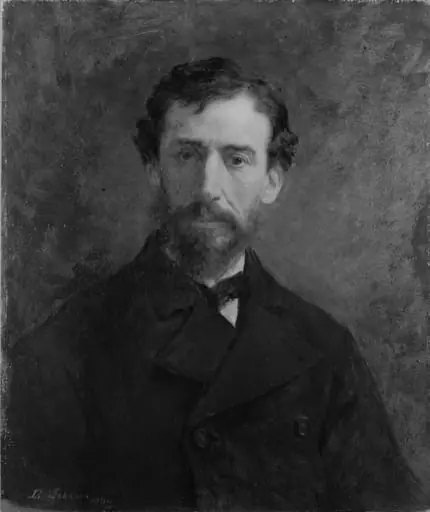
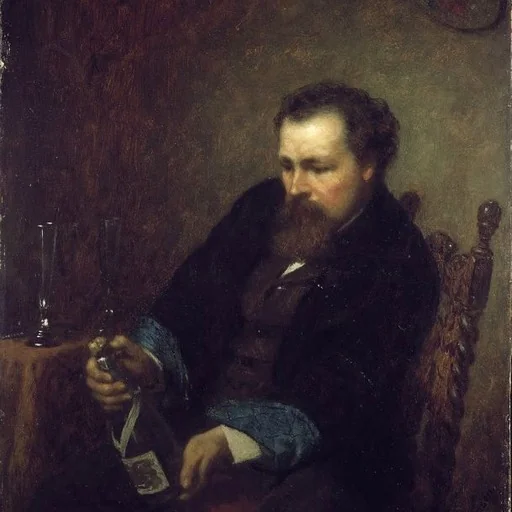
Jonathan Eastman Johnson (July 29, 1824 – April 5, 1906) was an American painter and co-founder of the Metropolitan Museum of Art, New York City, with his name inscribed at its entrance.