Artwork
Harvester
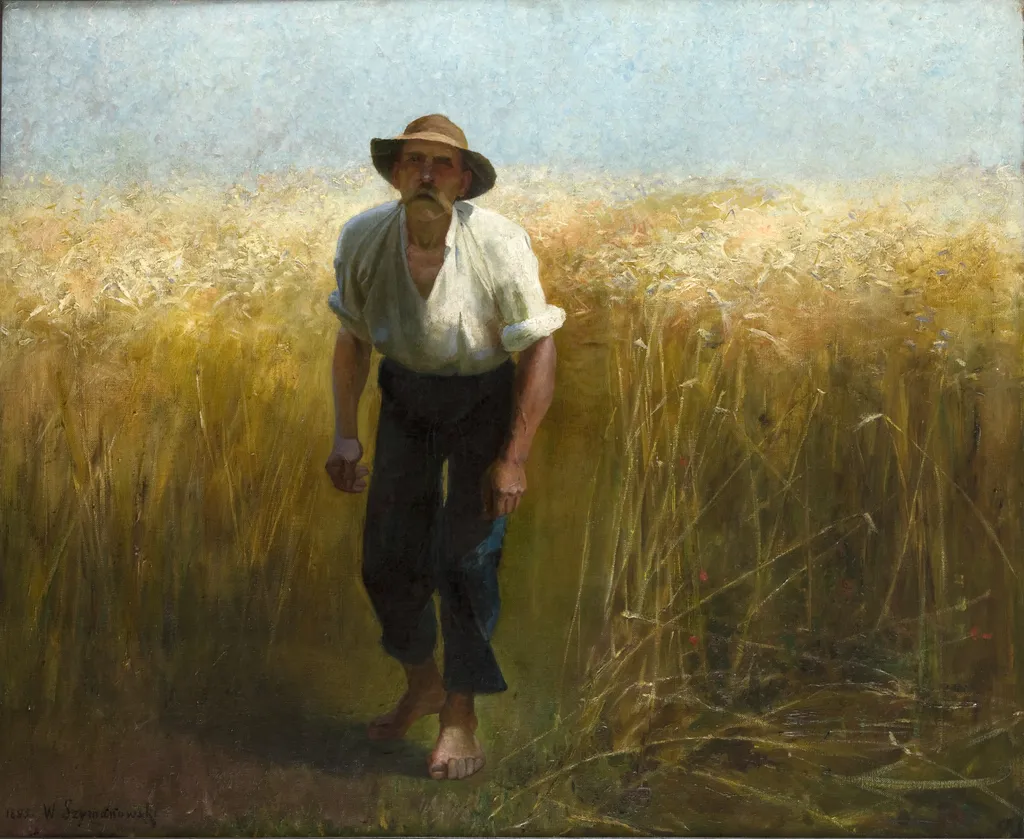
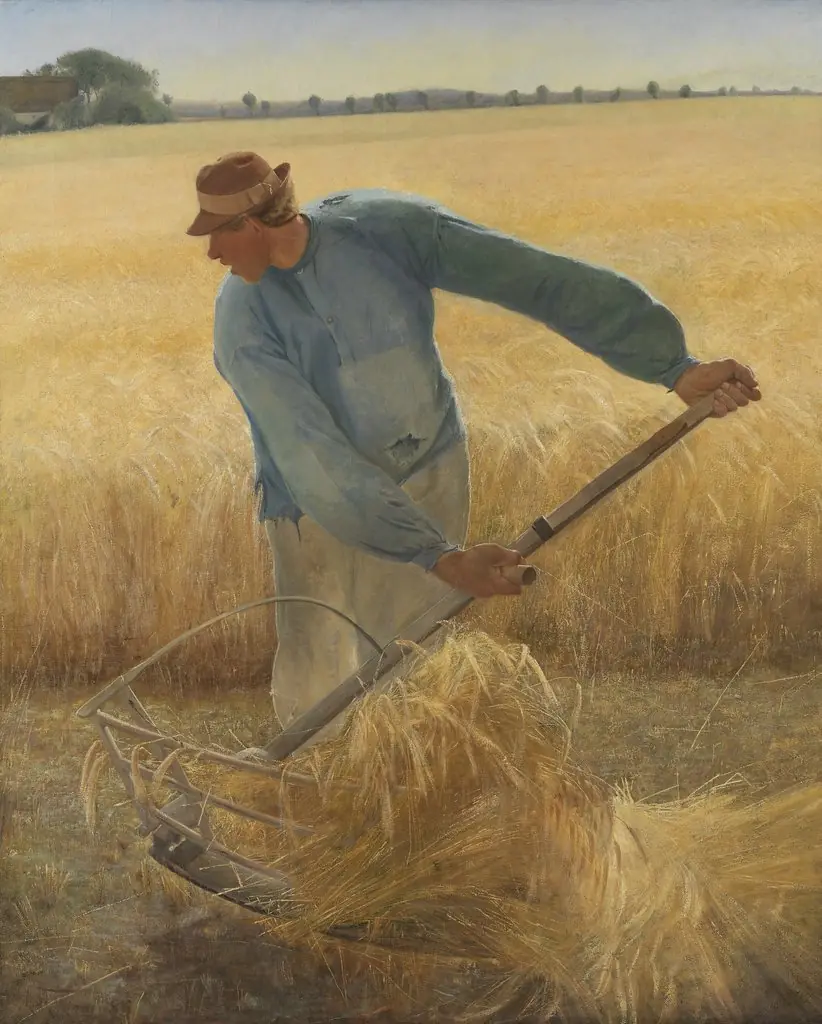
Harvester is an oil painting by the Post-Impressionist artist Wacław Szymanowski. It dates from 1898 and is held in the collection of the National Museum in Kraków.
About this work
Overview
Created in 1898, *Harvester* is an oil painting by Polish artist Wacław Szymanowski. The work is part of the National Museum in Kraków’s collection and is generally classified within the post‑impressionist current that followed the late‑19th‑century French movements. It presents a quiet rural tableau that reflects the artist’s interest in everyday labor.
Subject & Meaning
The composition centers on a solitary figure standing amid a ripening wheat field. He wears a white shirt, dark trousers, a broad‑brimmed hat and a neatly trimmed mustache, suggesting a harvest worker taking a brief pause. The expansive sky and the gentle horizon convey a sense of calm, emphasizing the dignity of simple, seasonal work.
Technique & Style
Executed in oil on canvas, the painting employs loose brushwork and a softened palette characteristic of post‑impressionism. Szymanowski renders the wheat with rhythmic strokes that suggest movement, while the figure is outlined with broader, more defined forms. Light is diffused across the scene, creating a subtle interplay of shadow and illumination that enhances the tranquil atmosphere.
History & Provenance
Wacław Szymanowski, better known for his public sculptures such as the Chopin monument in Warsaw, produced *Harvester* during a period when he explored painting alongside his sculptural practice. After its creation, the canvas entered the holdings of the National Museum in Kraków, where it remains on display as part of the museum’s representation of Polish post‑impressionist art.
Artist & collection
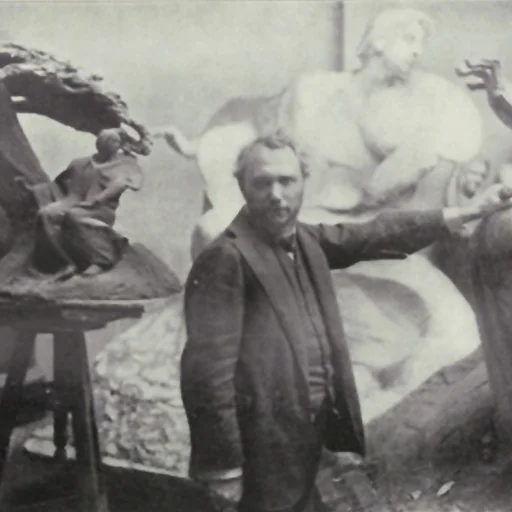
Artist
Wacław Szymanowski (23 August 1859 – 22 July 1930) was a Polish sculptor and painter. He is best known for his statue of composer Frédéric Chopin in Warsaw's Royal Baths Park (Łazienki Park).