Artwork
Writing to Father
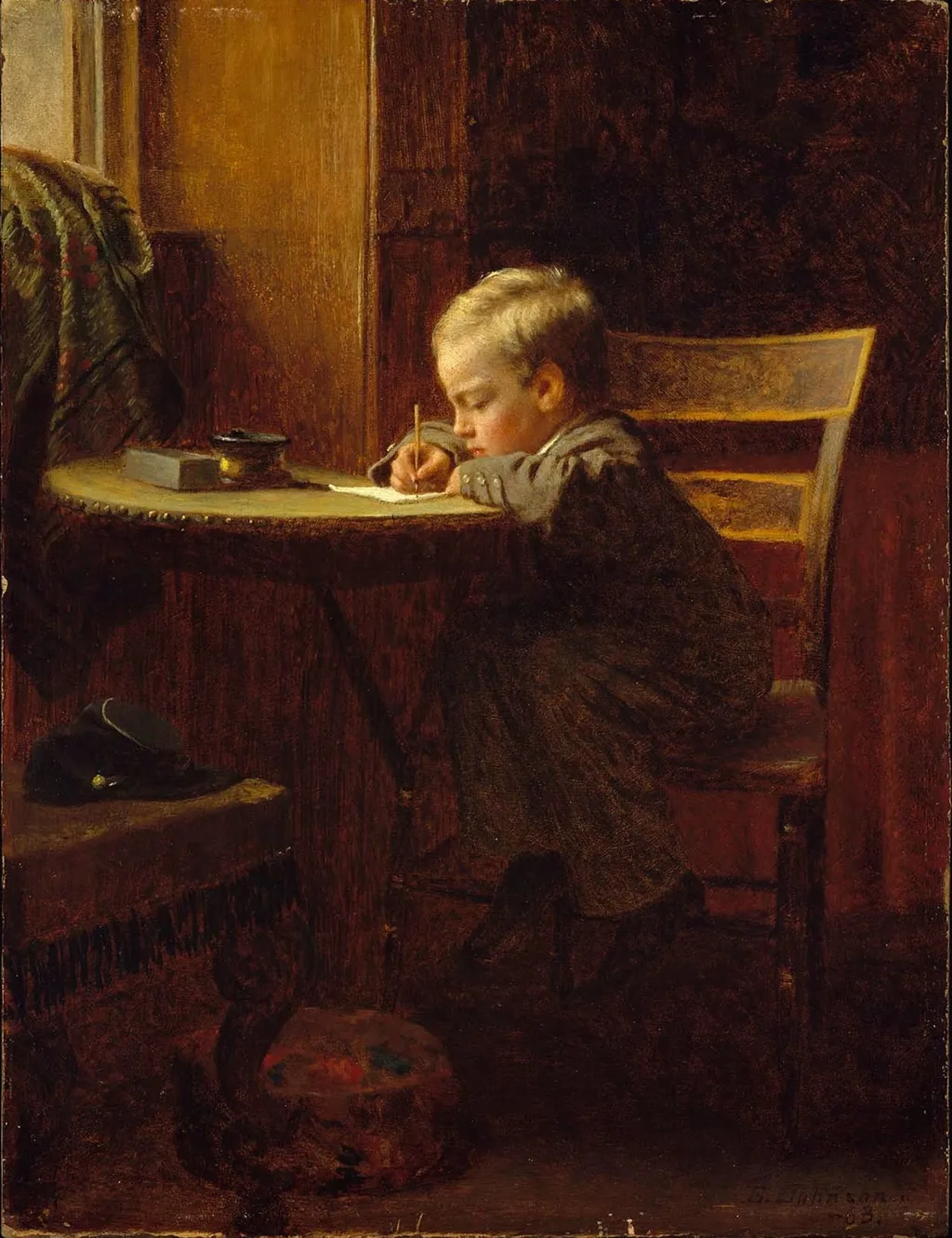
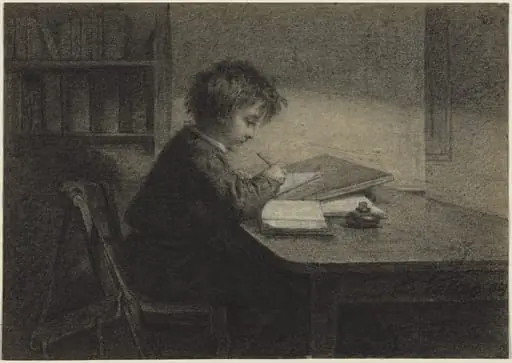
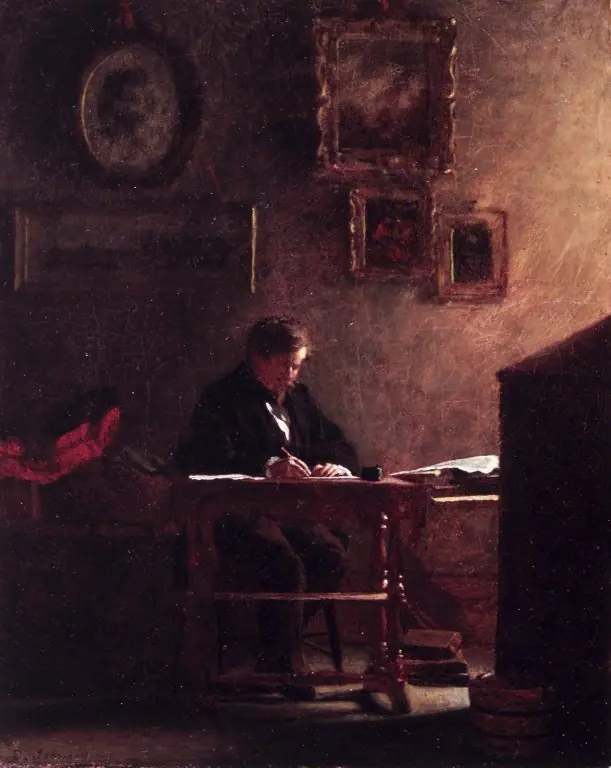
Writing to Father is an oil painting by the American Impressionist artist Eastman Johnson. It dates from 1863 and is held in the collection of the Museum of Fine Arts Boston.
About this work
Overview
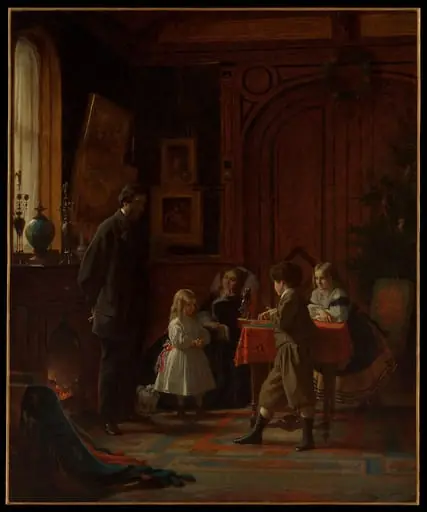
Writing to Father is an 1863 oil painting by Eastman Johnson, depicting a serene domestic scene of a young boy engaged in writing. Characteristic of Johnson's focus on everyday life, the work showcases his ability to capture quiet, intimate moments.
Subject & Meaning
The painting portrays a young boy, likely in a middle-class setting, intently writing at a round desk. The scene reflects Johnson's interest in ordinary life, inviting viewers to contemplate the simplicity and solemnity of the boy's task.
Technique & Style
Johnson employs a predominantly dark color palette, accentuating the boy and his desk. This compositional choice, reminiscent of 17th-century Dutch masters he studied in The Hague, guides the viewer's focus towards the central figure and activity.
History & Provenance
Created in 1863, Writing to Father is associated with the American Impressionist movement. It is part of the collection at the Museum of Fine Arts, Boston, reflecting Johnson's significant contribution to American art.
Context
Following his studies in The Hague in the 1850s, Johnson's work, including Writing to Father, was influenced by the compositional and lighting techniques of Dutch Golden Age painters, adapting these elements to depict American everyday life.
Legacy
As a co-founder of the Metropolitan Museum of Art and through works like Writing to Father, Johnson played a pivotal role in shaping the trajectory of American art, particularly in the genres of genre painting and the early stages of American Impressionism.
Own this work as a print
Artist & collection
Artist
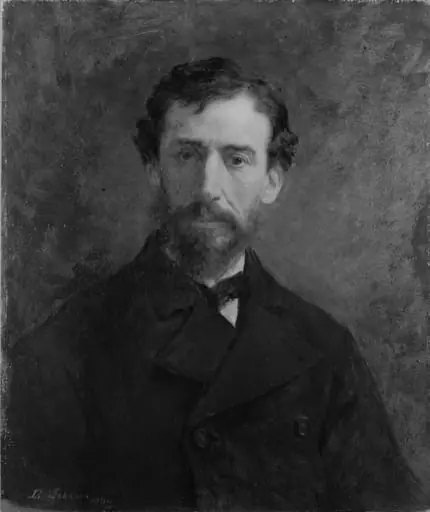
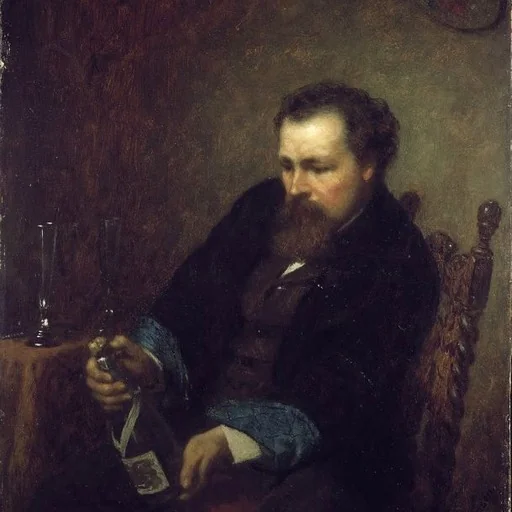
Jonathan Eastman Johnson (July 29, 1824 – April 5, 1906) was an American painter and co-founder of the Metropolitan Museum of Art, New York City, with his name inscribed at its entrance.