Artwork
The Scholar
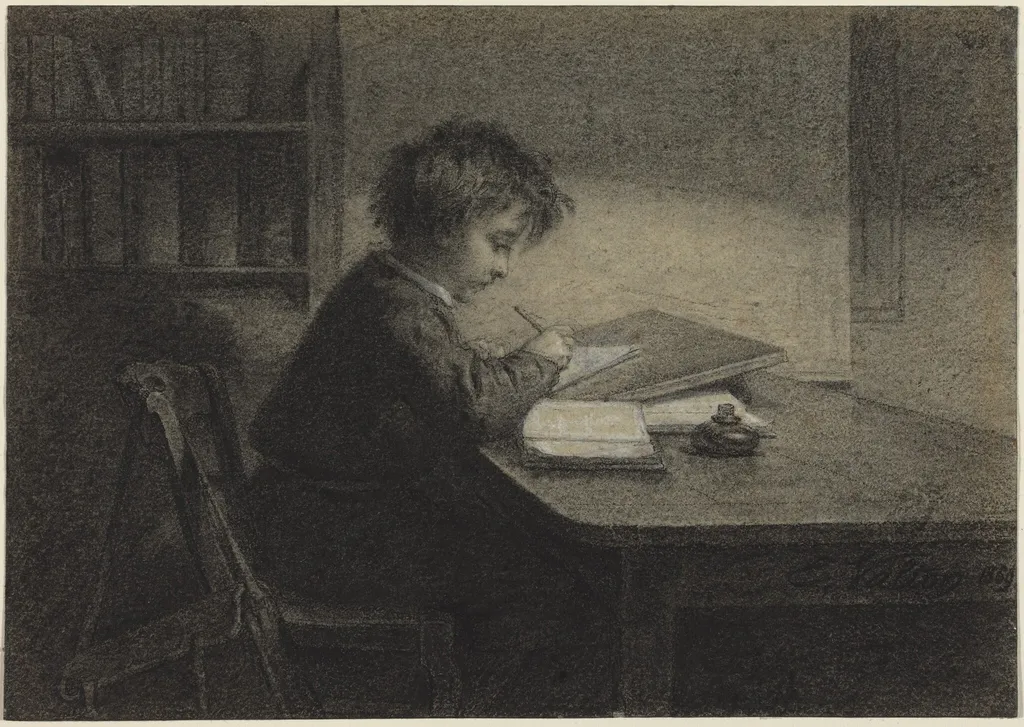
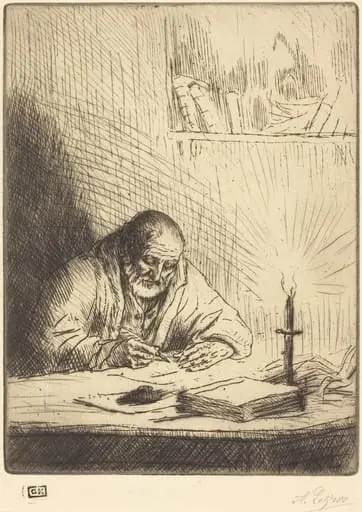
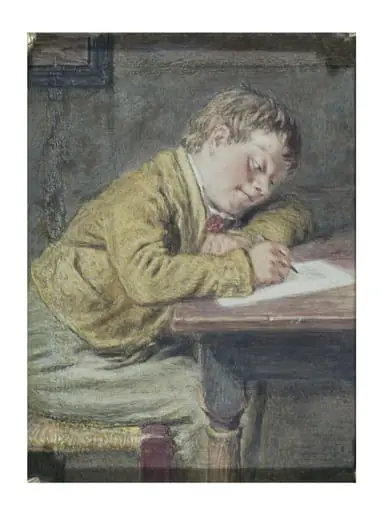
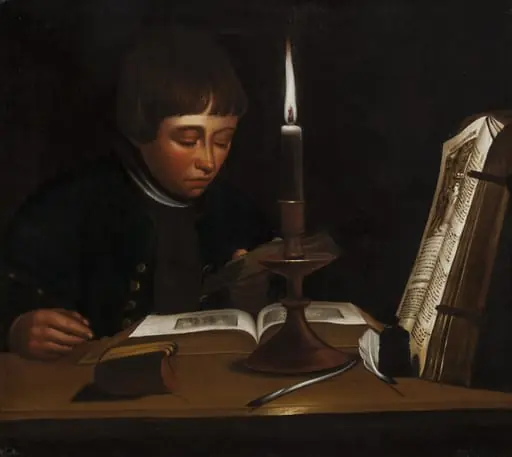
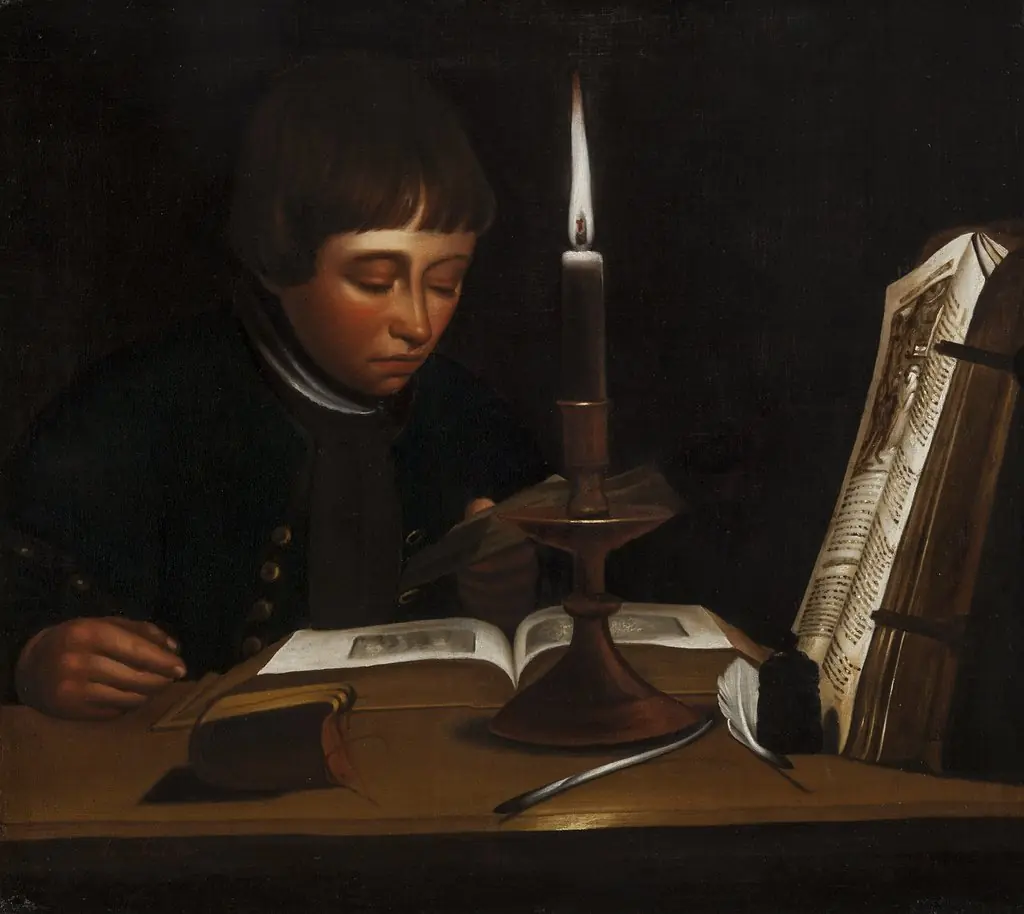
The Scholar is a chalk drawing by the Impressionist artist Edmond Eugène Valton. It dates from 1869 and is held in the collection of the National Gallery of Art.
About this work
Overview
Created in 1869 by Edmond Eugène Valton, this drawing depicts a solitary scholar at work. Executed in black chalk with stumping and enhanced by white highlights on blue wove paper, it captures a quiet moment of intellectual concentration. The medium’s tonal range allows for subtle gradations, emphasizing texture and form without color.
Subject & Meaning
The figure is seated at a modest desk, surrounded by books and scattered papers, suggesting deep engagement with his studies. His forward-leaning posture and downcast gaze convey absorption in thought, not performance. The absence of ornament or distraction underscores the dignity of solitary intellectual labor, a theme common in 19th-century academic art.
Technique & Style
Valton employed black chalk and stumping to achieve soft, blended shadows, while white heightening defined highlights on paper fibers and book edges. The controlled use of tone creates volume without line, relying on chiaroscuro to model form. The blue paper grounds the composition, enhancing contrast and lending a cool, contemplative atmosphere.
History & Provenance
The drawing was completed in 1869 during Valton’s active period in France, though its early ownership history remains undocumented. It entered institutional collections in the 20th century, likely through academic or private donations. Its preservation in good condition reflects its status as a refined study rather than a public commission.
Context
In mid-19th-century France, drawings like this were valued as exercises in observation and technical discipline, often made for study or as preparatory works. The scholar motif resonated with contemporary ideals of education and introspection, aligning with broader cultural reverence for intellectual pursuits in academic circles.
Legacy
Though Valton is not widely known today, this drawing exemplifies the quiet rigor of academic draftsmanship in the post-Renaissance tradition. It stands as a testament to the enduring appeal of depicting intellectual labor with restraint and precision, influencing later generations of draftsmen focused on psychological depth over spectacle.
Own this work as a print
Artist & collection