Artwork
Istuva mies, akatemiaharjoitelma
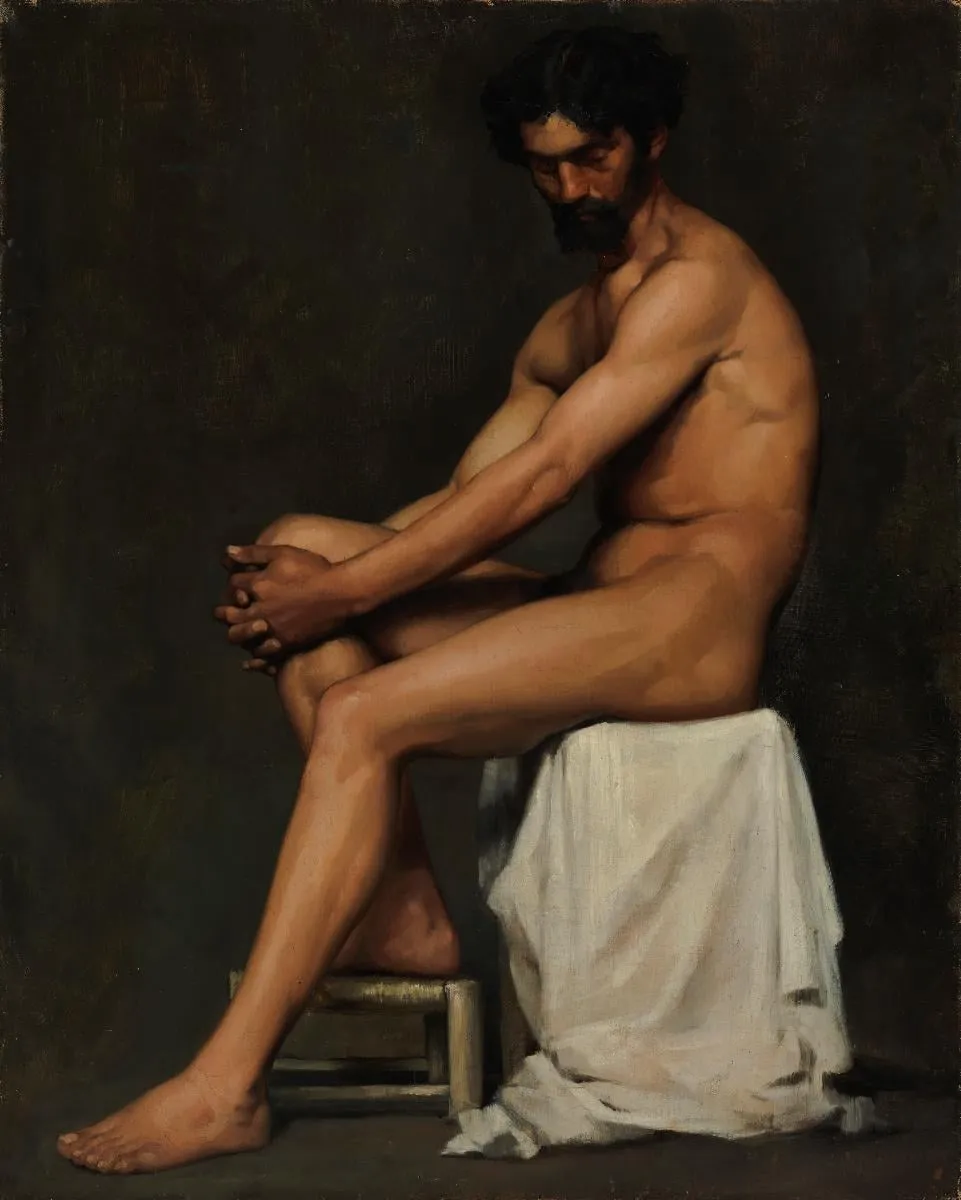
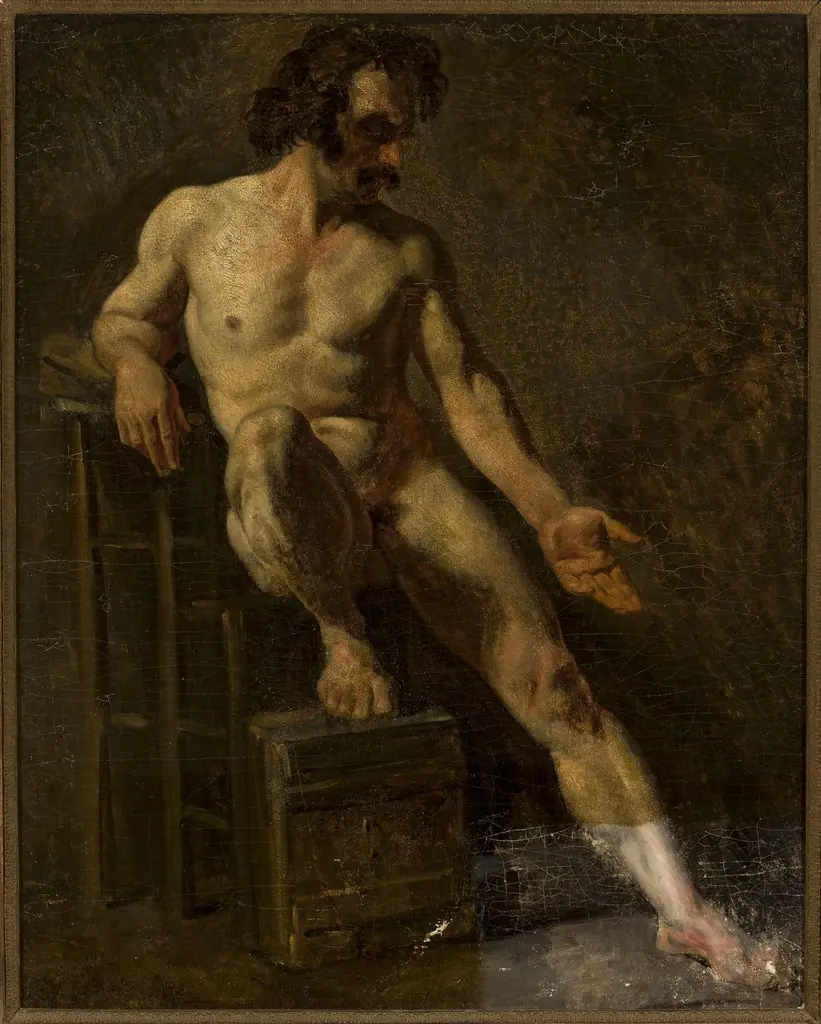
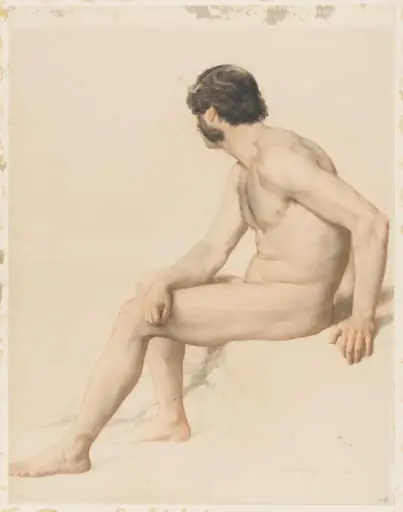
Istuva mies, akatemiaharjoitelma is an unspecified painting by Albert Edelfelt. It dates from 1889 and is held in the collection of the Finnish National Gallery.
About this work
Overview
The subject is rendered without clothing beyond a draped cloth, emphasizing anatomical structure and the interplay of light and shadow.
Painted around 1889 by Albert Edelfelt, this study depicts a seated male figure in a simple, intimate pose. Executed as an academic exercise, the work focuses on the human form under controlled lighting. The subject is rendered without clothing beyond a draped cloth, emphasizing anatomical structure and the interplay of light and shadow. The plain, dark background isolates the figure, directing attention to the subtleties of flesh and posture.
Subject & Meaning
The figure, barefoot and loosely draped, assumes a relaxed yet alert posture, leaning forward with one arm resting on his knee. His expression is neutral, and his gaze is inward, suggesting contemplation rather than narrative. The absence of context or identity transforms the subject into a study of presence—less a portrait of a specific person than an exploration of human stillness and physicality within a confined space.
Technique & Style
Edelfelt employs chiaroscuro to model the figure with precision, using strong contrasts between illuminated areas and deep shadows to create volume. The light falls diagonally across the shoulders and arms, defining musculature without harsh outlines. Brushwork is loose yet deliberate, particularly in the rendering of the cloth and skin, balancing realism with a sense of immediacy. The technique reflects academic training while avoiding excessive polish.
History & Provenance
Created during Edelfelt’s time at the Académie Julian in Paris, this work was likely a student exercise meant to refine observational skills. It remained in the artist’s possession and was later included in posthumous exhibitions of his studies. No record of early ownership beyond the artist’s circle exists, suggesting it was never intended for public sale but valued as a pedagogical artifact.
Context
In late 19th-century European art academies, life drawing from nude or partially draped models was central to training. Edelfelt’s study aligns with this tradition, echoing the emphasis on anatomical accuracy and tonal modeling found in the works of Ingres and Courbet. Yet his approach, with its unadorned setting and naturalistic lighting, also reflects the growing interest in realism over idealized forms.
Legacy
Though not widely exhibited during Edelfelt’s lifetime, this study is now recognized as a refined example of academic figure work from the fin de siècle. It illustrates how traditional techniques were adapted by artists seeking authenticity over ornamentation. Its preservation offers insight into the discipline behind his more famous portraits, revealing the foundational rigor of his practice.
Artist & collection
Artist
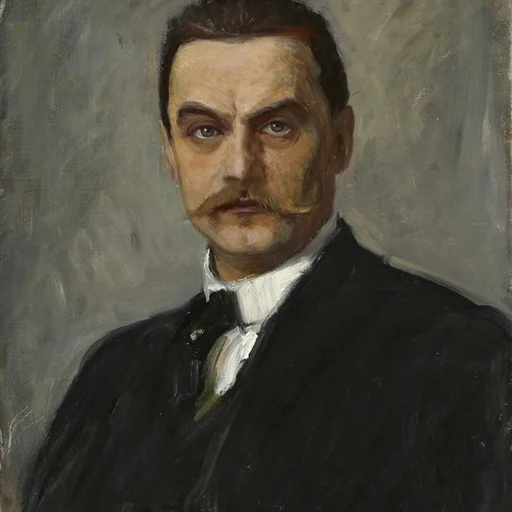
Albert Gustaf Aristides Edelfelt (21 July 1854 – 18 August 1905) was a Finnish painter noted for his naturalistic style and Realist approach to art.